This post is inspired by Episode 2 of Season 3 of The Bear, a drama series about a young chef, Carmy Berzatto, trained in the fine dining world, who comes home to Chicago to run his family sandwich shop after a heartbreaking death in his family. By the third series, the noisy sandwich shop has been transformed into an elegant fine dining restaurant and Carmy is seeking a coveted Michelin star. In this episode, Carmy draws up a massive list of what he calls “non-negotiables”: the things that the restaurant must do on a consistent basis to achieve greatness.

Jeremy Allen White as Carmy Berzatto in The Bear

Looking through the list, while some of the non-negotiables are explicitly related to cheffing and kitchen/restaurant management, a number could apply equally to the musician in pursuit of consistency and excellence in their practice and performance of music.

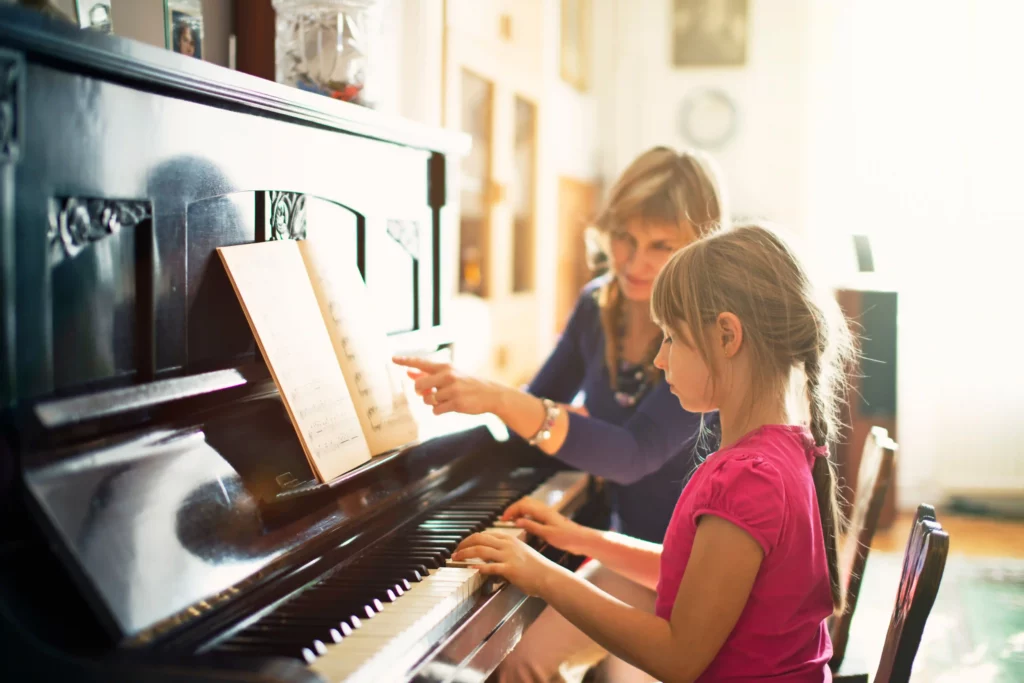
It is a truth universally acknowledged that noticeable progress, at whatever level you play, comes from a well-organised, consistent, focussed and thoughtful approach to practicing. It’s not quantity (of hours spent practicing) but the quality of practicing that counts.

This, for me, is where Carmy’s non-negotiables come in.

These principles, though originally used in contexts like culinary arts or other forms of craftsmanship, translate beautifully into music practice.

Change the Menu Every Day

Boredom is the enemy of progress, so incorporate variety into your daily practice routine. Instead of doing the same exercises daily or beginning with the same piece in the same place, try different approaches to challenge yourself in new ways.

No Repeat Ingredients

Avoid getting stuck in repetitive patterns. Constantly seek new skills, concepts, and exercises to enrich your practice. Challenge yourself with new materials rather than only practicing familiar ones. For example, if you’re used to playing pieces in a specific genre, try something completely different, like a jazz standard if you usually play classical repertoire.

Know Your Sh*t!

Fully understand the fundamentals of music, including theory, notation, and instrument mechanics. This knowledge helps you interpret music more intelligently and aids problem-solving

Respect Tradition

Appreciate and study the foundational pieces and techniques of your instrument. Understanding the work of past masters and traditional techniques gives you a solid framework of musical knowledge. BUT don’t let tradition or orthodoxy stand in the way of your approach to your music making or your personal interpretative choices. Remember, you can use the pedal in Bach!

Push Boundaries

Explore new techniques, unusual genres, or challenging pieces that lie just outside your comfort zone. This pushes your growth and helps you develop your own musical voice and autonomy as a musician.

Technique, Technique, Technique

Build a strong technical foundation. Mastering technique gives you control, precision, and freedom to express yourself without being limited by physical obstacles. But always remember that technique should serve the music, not the other way. Don’t let technique become the be all and end all of your music practice.

It’s Not About You

Remember that music serves a larger purpose – whether it’s storytelling, emotional expression, or creating a shared experience. Approach practice as a way to honour the music, not just to showcase your skills. If we become too emotionally attached to our music and instrument, it can cloud our objectivity: don’t let a bad practicing session translate into general negativity. Reflect and move on.

Additionally, be open-minded about taking advice from others – teachers, mentors, trusted colleagues and friends.

Less is More

Instead of overplaying or adding unnecessary elements, focus on clarity and purpose in each note. Embrace simplicity and avoid cluttering your performance or practice. For example, avoid false sentiment or the over-use of rubato to add more “expression” – it can sound contrived.

Details Matter

It goes without saying that we should pay attention to small details- dynamics, articulation, tempo changes, phrasing, pedal markings. These details bring music to life and distinguish good from great performances.

Confidence and Competence

Cultivate both confidence and competence through thorough preparation (“deep practicing”). Knowing you’ve practiced well allows you to play with conviction, which listeners can feel.

Constantly Evolve Through Passion and Creativity

Approach each practice session with curiosity, open-mindedness, and a willingness to improve. Use your passion to fuel your creativity and push yourself to develop.

Cecily Beer & the Chamber Orchestra of London, arranged and produced by Thomas Hewitt Jones. Conducted by Rupert Gough

SUSSEX CAROL, SILENT NIGHT, BELL CAROL

Thomas Hewitt Jones says, ‘It was a pleasure to arrange and produce these three new Christmas arrangements for the talented Cecily Beer. To accompany Cecily, I brought in players from the Chamber Orchestra of London with whom I have recorded many media projects, and Rupert Gough conducted the session at the chapel of Royal Holloway, University of London in September 2024. We are delighted that Vivum Music Ltd. is releasing this EP which we hope will showcase Cecily’s beautiful harp playing as well as offering a new take on these famous seasonal tunes.’

Cecily Beer says, ‘This new music from Thomas Hewitt-Jones has been the biggest joy to learn and record. We had both agreed we wanted something that sparkled but with familiar melodies which people know and love. For me, the upbeat tracks, Sussex Carol and Bell Carol, are exactly what I want to be listening to while dancing around my kitchen making Christmas lunch; while the final track, Silent Night, has the perfect balance of joy that comes with this sublime new string arrangement, and nostalgia for a melody we all know and love so well.’

Sussex Carol

A rippling harp introduces the famous Christmas tune with a ‘spinning wheel’ of broken chords with forward motion and delicate emotion. The intensity builds with interplay between harp soloist and strings during thematic development which propels the piece towards a satisfying conclusion.

Silent Night

This slow, reflective setting features a rippling version of the melody in the harp underpinned by warm, expressive strings. As the track unfolds a relaxed calmness expands to a quietly emotional feel as we modulate up a tone, leading us gently yet optimistically forward as we approach Christmas.

Bell Carol

The melody of Bell Carol comes from the song “Shchedryk” written by the Ukrainian composer Mylola Leontovych in 1914. We hope this new arrangement for harp and strings can be enjoyed by a wide audience during this challenging time globally.

Released 10 November on the Vivum Music Label. Available on AppleMusic, Spotify and other streaming platforms

(Image credit: A P Wilding)

A Senior Lecturer in Piano at the Royal Birmingham Conservatoire says she’s “delighted” that a new work of music by Frédéric Chopin has been unearthed nearly 200 years after it was written.

The unknown waltz has been dated between 1830-1835 and was found in New York.

Pianist Katharine Lam says it’s an exciting opportunity for generations of Chopin’s fans to hear new music from the Polish composer centuries after his death.

“It’s a noteworthy and precious find, as several waltzes that Chopin original wrote are believed to have been entirely lost or destroyed,” said Ms Lam. “Finding lost works of any great composer reminds us of their unique, musical fingerprint and gives us, no matter how small of fleeting, a fresh and treasured glimpse of their voice and genius.

Like any artist, or even a popstar putting out a new single, it’s really exciting to experience hearing a piece of music for the first time, especially one that you never expected.

In a mere 80 seconds, the waltz captures the listener with Chopin’s beloved and haunting gift for melody, his distinctive harmonies and the opening turbulent outburst which points to the drama and passion infused through so much of his work.”

Listen to Lang Lang playing the waltz here

I’ve been going to live classical music concerts since I was a little girl – and not just professional concerts, but also amateur performances when my dad (a clarinettist) played in a local amateur orchestra. As keen music-lovers, my parents took me to all sorts of concerts – big orchestral performances at Birmingham Old Town Hall (the former home of the City of Birmingham Symphony Orchestra), chamber music, opera and choral concerts in churches. I quickly grew to love the “special occasion” nature of going to a live concert and enjoyed the rituals and etiquette (even if I found some of the music over-long or boring on occasion!).

Going to concerts with other people can be a very special shared experience. There is the pleasure of meeting beforehand, perhaps for a drink in the venue’s bar, purchasing a programme, easing oneself into plush seats and enjoying the hum of anticipation before the performers come on stage. Then there is the interval when one can chat about the first half and enthuse with friends before the music begins again.

When I started reviewing concerts in 2011, I tended to go alone, unless a friend or two happened to be at the same performance. At first I felt slightly awkward, sitting alone in the bar beforehand, a glass of wine in hand, reading the programme, making notes…. but gradually I came to enjoy the experience of attending on my own, and now I actively relish it.

Attending a concert can be a powerful, shared experience that transcends the boundaries of individuality, regardless of the genre of music being performed. While the idea of going to a concert alone might seem daunting to some, there is undoubtedly positivity in the shared atmosphere of live music. Whether you’re surrounded by a sea of familiar faces or standing alone in a crowd, the concert space creates a special sense of community, connecting individuals through the universal language of music.

London’s Wigmore Hall

Perhaps one of the most tangible aspects of this shared experience is the palpable sense of communal energy. The collective anticipation, excitement, and emotions create a shared atmosphere that unites the audience. As the house lights dim, an expectant hush pervades the concert space as the audience anticipate the arrival of the artist or artists. In such an environment, it becomes less about being alone and more about being part of a larger, unified whole.

Regardless of whether you attend a concert alone or with friends, the music itself becomes the common thread that binds everyone together. In a crowd of strangers, the shared appreciation for the artist’s craft creates an unspoken connection, fostering a sense of unity and camaraderie among concert goers. I love those moments when it seems that the entire audience is listening really intently, as if with one, collective ear. Or the sense that the audience is holding its collective breath, so engaged are they with the performance. And then, at the end, a joint exhalation as the audience relaxes, anticipating the applause.

Attending a concert on your own offers an opportunity for personal freedom and self-discovery. Free from the expectations of others – the obligation, perhaps, to express your opinion of the performance during an interval chat – when attending a concert alone, you can fully immerse yourself in the music, allowing it to resonate with you personally. You can choose to listen intently, or allow your mind to wander. The solitude within the crowd provides a space for self-reflection, and an opportunity to experience the music in a way that is entirely your own.

Thus, attending a concert alone is not an act of isolation; rather, it is an opportunity to experience the communal tapestry of music. Even if you never speak to a fellow audience member, there is something very special about experiencing music together.This is because the unifying power of live performance goes beyond individuality, creating an environment where strangers become companions in a collective journey of musical expression and a celebration of shared experience.


This site is free to access and ad-free, and takes many hours to research, write, and maintain. If you find joy and value in what I do, why not