it20may20have20been20album20front20cover201500This new album celebrates the piano music of British composer Paul Burnell, spanning 30 years. Paul had recorded and produced previous albums himself, but in this instance he decided it was time to work with another musician, the pianist, composer and recording engineer James Bacon who runs the Piano Recording Studio. The music was recorded on a Bosendorfer Phoenix Imperial 290, fitted with the Phoenix agraffe system pioneered by Richard Dain at Hurstwood Farm Pianos, which gives the piano greater sustain and clarity of sound, especially in the high registers. This makes it ideal for Burnell’s piano music, much of which explores the timbre and sonic possibilities of the piano rather than melody per se.

“Unembellished, unfussy, unsophisticated…..and short” – Burnell’s own programme note for his Plain Pieces, a triptych dedicated to pianist Natalie Bleicher, could be applied to all the music on this album, though I would hesitate to use the word “unsophisticated”. Short, unfussy these pieces might be, but there is sophistication in the careful placing of notes to create subtle shadings, unexpected harmonies and suspended sounds. “Minimalist” is a description which immediately springs to mind on first hearing Burnell’s music, but this is not the frenetic (sometimes irritatingly so) repetitious minimalism of Philip Glass or Michael Nyman, but rather the more contemplative and spare minimalism of composers such as Lawrence Crane, whom Burnell cites as important influence (It May Have Been, Just Before Dawn). The more up-tempo pieces here (Pacer Nos, 1, 2 and 3) owe more to Howard Skempton (another significant influence) in the use of changing chords and sequences to create energy and climactic episodes. There are also echoes of that other great American minimalist, Steve Reich, in Standing in the Rain. Composed in the mid-1980s, the piece features a persistent rhythmic figure redolent of Reich’s Clapping Music and similar compositions.

Paul was kind enough to send me copies of the scores of the pieces featured on this album and it has been a pleasure to explore the music both through listening and playing. The music is accessible (roughly Grade 3-7) and attractive, but not simplistic (see my earlier comments about sophistication) and it takes a skilled and thoughtful pianist to create the considered sounds which Burnell’s music requires. This music also offers the piano student a good introduction to minimalism and provides a jumping off point for further exploration of this genre.

James Bacon brings the works to life on this recording with clarity, sensitivity and creativity – adding a drone to 2 Ping – combined with his technical expertise in the field of recording and sound engineering, and superb state-of-the-art equipment.

Recommended.

‘It May Have Been’ is available from iTunes, Amazon and other retailers as a download or CD, and can also be streamed on Spotify.

Paul Burnell’s Meet the Artist interview will be published shortly.


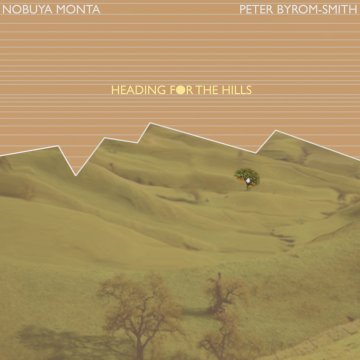
‘Heading for the Hills’ by Nobuya Monta and Peter Byrom-Smith
a1757970457_10
Performed by Strata String Quartet
Violin 1: Oliver Morris
Violin 2: Alexandra Dunn
Viola: Laurie Dempsey / Alice Billen
Cello: Roderick Skipp

Recorded at Blueprint Studios, Salford
Mixed and Mastered by Gaz Hadfield
Cover design by Louis Barabbas

Debt Records, released July 15, 2016

This first classical release by Debt Records celebrates a groundbreaking East-West collaborative partnership between Japanese composer Nobuya Monta and British composer Peter Byrom-Smith. ‘Heading for the Hills’, a suite in 10 movements for string quartet, is the main work on the album, bookended by Sonata Lamentosa and Sinfonia by Monta. Peter Byrom-Smith’s work, which lends its title to the album, is a tribute to the landscape of the Peak District close to where Peter and his wife Gillian, a poet, have made their home in Glossop in Derbyshire.

“The title of the album was taken from a poem written by my wife Gillian Byrom-Smith. The poem was inspired by the frequent rail journeys we have taken across the flat Vale of York towards the beauty of the Pennines.”

The main six movements of the work are musical images of real journeys between the east and west of England, depicting things the composer observed, or thought he had observed during the course of these journeys (Galleons, Swallows, Raindrops, Heading for the Hills Lanterns, Buds). A Prelude and Postlude were added to complete the work – and the journey – so that the suite works as an entire narrative when performed in concert. No. 7, Buds, was composed by Nobuya Monta and Peter Byrom-Smith.

This haunting, expressive and evocative music contains hints of British minimalist composer Michael Nyman, but without the (sometimes tiresome) insistent repetitions. Byrom-Smith seems more intent on using melody, harmony and dialogue between the instruments to create interesting textures and musical interactions. Motifs are stated, restated and developed, for example the dancing figure which opens over a drone in ‘Raindrops’  develops into a playful, twirling dance between the instruments. Here there are more than a few hints of English folksong and dance before the middle section unfolds in a more contemplative manner. Later, the folksy motif returns and an insistent little fanfare is heard in all instruments. 

‘Swallows’ creates a feeling of space, of birds wheeling and circling in the sky, with its contoured melodic lines and delicate fioriture, redolent of the solo violin line in ‘The Lark Ascending’ by Vaughan-Williams. ‘Buds’ unfolds slowly, just as a flower or plant opens to reveal itself. The final work in the suite, Postlude, recalls themes heard previously in the Prelude and introduces new material to bring the narrative and imagery to its conclusion.

Nobuya Monta’s ‘Sonata Lamentosa’ is an emotional response to the tragedies that have occurred all over the world. The textures here are more florid, the mood more urgent with an almost Schubertian melancholy (cf String Quartet No. 14, ‘Death and the Maiden’), though, as in Schubert, there is also a sense of hope. 

The closing work on the album, ‘Sinfonia’, is also by Monta, and once again seems infused with the moods and motifs of late Schubert and the harmonic and rhythmic piquancy of the early twentieth century (Ravel, Debussy). It utilises contrapuntal textures and the second movement is a thrilling fugue.

‘Heading for the Hills’ – CD or download

Composer Peter Byrom-Smith will featured in forthcoming Meet the Artist interview


Piano pieces inspired by Erik Satie

biography-default2016 marks the 150th anniversary of the birth of Erik Alfred Leslie Satie, and to celebrate this occasion British composer Richard Fowles has released a personal hommage to Satie and his musical orginality.

Today Satie’s Three Gymnopedies are amongst the most well-known and much-loved music for piano, but during his lifetime, Satie was relatively unknown to much of the musical world. An unremarkable student, he was bohemian by nature, sceptical of established ideas and authorities, and was considered lazy by his teachers. Despite his relatively low profile during his lifetime, Satie helped shape the music of the 20th century: he was an inspiration and mentor to the group of composers known as “Les Six”, which included Poulenc, Milhaud and Honegger, and influenced contemporaries such as Debussy and Ravel who recognised him as a “new spirit” with a highly original approach to composition. It was not until the mid-20th century that his work became more widely known and appreciated, thanks in part to the endorsement of American composer John Cage.

Composer Richard Fowles was encouraged to pursue this composing project by his piano teacher at Brunel University, Sally Goodworth, after he wrote a couple of Satie-inspired pieces as a student. The result is a suite of 16 piano miniatures in part inspired by Satie’s own music (Knossienne Nos 1-3 being the most obvious, where the eastern melodies of the original Gnossiennes are woven into a harmonic framework redolent of the original, but never an imitation of it) and also by the composer’s life and unusual personality. For example, ‘Sea Bird’ (track no. 6) was the nickname given by Satie to his uncle Adrian, like Satie an eccentric character and an important figure in Satie’s early life. The music juxtaposes quirky melodies which unusual harmonies to create a work which is moody, enigmatic and witty.

In fact, wit pervades these charming miniatures, particularly in the triptych ‘The Velvet Gentleman’ which references aspects of Satie’s attire with which he was most associated, including his identical grey velvet suits:

On most mornings after he moved to Arcueil, Satie would return to Paris on foot, a distance of about ten kilometres, stopping frequently at his favourite cafés on route. According to Templier, “he walked slowly, taking small steps, his umbrella held tight under his arm. When talking he would stop, bend one knee a little, adjust his pince-nez and place his fist on his lap. The he would take off once more with small deliberate steps.”

Robert Orledge, Satie Remembered. French translations by Roger Nichols.

See also: “A Day in the Life of a Musician” by Erik Satie

From: ‘Daily Routines’, a blog by Mason Currey (published in book form as Daily Rituals)

In many of the pieces, Fowles mirrors the “walking beat” that seems to pervade many of Satie’s own piano pieces, a meter which may have been the results of his “endless walking back and forth across the same landscape day after day . . . the total observation of a very limited and narrow environment.” (Roger Shattuck, in conversation with John Cage).

Other pieces in the collection are more melancholy: ‘A Walk to the Chat Noir on a Snowy Day’ conjures up the solitary figure of Satie, dressed in his grey velvet suit, making his customary walk to a favourite haunt in the centre of Paris. Meanwhile the set called ‘Biqui’ recalls Satie’s relationship with Suzanne Valadon and his feelings of devastation when the affair ended. Each piece is offered in Andante and Lento, the slower metres and repeated chord motifs lending a desolate yet intimate atmosphere to the music.

‘Sylvie’, the final track on the disc, is named after one of three poems written by Satie’s friend J.P. Contamine de Latour that Satie put to music in 1886.Its jazz harmonies and winding melody is infused with a tender, almost elegaic air.

Throughout the collection, Fowles avoids pastiche by offering us the essence of Satie’s music, and some of his contemporaries,  viewed through the lens of own originality and inventiveness which fuses eastern melodies with sensuous perfumed harmonies.

The music is performed on this disc by pianist Christina McMaster, whose affinity for this type of music is evident in her crisp articulation, preciseness of touch, and an acute sense of pacing which brings the music to life with vibrancy and atmosphere. And there is an added bonus, for pianists may also purchase the collection as sheet music (roughly Grade 6-8 level). Fowles has scored the music in a traditional way and also without barlines, à la Satie.

There is much to enjoy in this evocative collection, for those who love the piano music of Satie, and for those who are just beginning to explore it.

The sheet music is available now. Order here

The CD is released on 8th April.

Sample tracks here

Richard Fowles is an English composer, guitarist and teacher. He has worked as both a composer and session musician in some of the UK’s biggest recording studios and has provided the scores for a number of films and television programmes. He is also an in demand orchestrator. ‘Un Hommage à Erik’ is Richard’s debut album and book.


Pianist Christina McMaster certainly does not lack ambition, nor innovation. She created her own record label MC|MASTER Records in order to release her debut album Pinks & Blues, the sold out launch of which at St James’s Theatre included a performance by a rapper. This reflects Christina’s eclectic approach, vision and energy in her music making (she has previously collaborated with London Fashion Week and is now joining forces with graduates of Central St Martin’s School of Art & Design).

cunrlhkwiauhvm7

Pinks & Blues presents contrasting music from two key soundworlds in American music in the 20th century: the industrial, pioneering spirit and the rise of the teeming metropolis (demonstrated in works such as Samuel Barber’s ‘Excursions’ and Frederick Rzewski’s ‘Winsboro Cotton Mill Blues’), and Negro spirituals, Southern blues, smoky jazz clubs and the foot-stomping dance scene of New York City. The album also includes new commissions by two exciting young British composers, Freya Waley-Cohen and Richard Bullen, and on two tracks Christina is joined by Jay Phelps (trumpet), Sami Tammilehto (percussion) and Mark Lewandowski (double bass).

The album opens with the first of Barber’s ‘Excursions’, a work whose frenetic “perpetuum mobile” ostinato bassline suggests the fast-moving big city, replete with rattling metro trains, honking taxis and bustling crowds. But by track three, ‘Peace Piece’ by Bill Evans, we’re transported somewhere altogether more calm – the shady deck of a southern villa perhaps. There is a lightness of touch here which suggests both repose and an urging forward. The work is bookended by two Études by Ligeti which contain motifs redolent of Evans, also deftly played.

Richard Bullen’s ‘Scenes from a Deserted Jazz Club’ is highly atmospheric, at once smoochy and unsettling. It is followed by Frederick Rzewski’s ‘Winsboro Cotton Mill Blues’, another work of hypnotic, urgent energy immediately proceeded by the second of Barber’s Excursions, a languid blues number.

Freya Waley-Cohen’s ‘Southern Leaves’ opens with a figure reminiscent of a southern hymn tune which builds in intensity through increasingly plangent chords. It is meditative and dramatic, and provides a good foil for Gershwin’s ‘It Ain’t Necessarily So’ (from Porgy & Bess, which is of course set in the Deep South). Back to the urgency of the industrial city with Stephen Montague’s ‘Songs of Childhood’, while the album closes with another work by Montague’s, ‘Southern Lament: Nobody Knows the Troubles I’ve Seen’, the traditional spiritual given a contemporary twist with fanfare-like repeated figures, strumming and plucking the piano’s strings directly, and a restful hymnlike section to close.

This imaginative selection neatly reflects Christina’s personal musical tastes and her eclectic approach to programming. The American theme ehich runs through the entire album ties together tracks which in another’s hands may seem disparate, but such is Christina’s expertise in moving seamlessly between the percussive and agitated and the meditative and soulful, she achieves a very satisfying and enjoyable whole. The more bluesy numbers have the requisite sense of time standing still with sensitive use of rubato and elastic tempi, while the upbeat, more mechanical works are precise, sprightly and crisply articulated. This album promises much more to come from this exciting and stylish young pianist.

www.christinamcmaster.com

Meet the Artist……Christina McMaster