Pianist Christina McMaster certainly does not lack ambition, nor innovation. She created her own record label MC|MASTER Records in order to release her debut album Pinks & Blues, the sold out launch of which at St James’s Theatre included a performance by a rapper. This reflects Christina’s eclectic approach, vision and energy in her music making (she has previously collaborated with London Fashion Week and is now joining forces with graduates of Central St Martin’s School of Art & Design).

cunrlhkwiauhvm7

Pinks & Blues presents contrasting music from two key soundworlds in American music in the 20th century: the industrial, pioneering spirit and the rise of the teeming metropolis (demonstrated in works such as Samuel Barber’s ‘Excursions’ and Frederick Rzewski’s ‘Winsboro Cotton Mill Blues’), and Negro spirituals, Southern blues, smoky jazz clubs and the foot-stomping dance scene of New York City. The album also includes new commissions by two exciting young British composers, Freya Waley-Cohen and Richard Bullen, and on two tracks Christina is joined by Jay Phelps (trumpet), Sami Tammilehto (percussion) and Mark Lewandowski (double bass).

The album opens with the first of Barber’s ‘Excursions’, a work whose frenetic “perpetuum mobile” ostinato bassline suggests the fast-moving big city, replete with rattling metro trains, honking taxis and bustling crowds. But by track three, ‘Peace Piece’ by Bill Evans, we’re transported somewhere altogether more calm – the shady deck of a southern villa perhaps. There is a lightness of touch here which suggests both repose and an urging forward. The work is bookended by two Études by Ligeti which contain motifs redolent of Evans, also deftly played.

Richard Bullen’s ‘Scenes from a Deserted Jazz Club’ is highly atmospheric, at once smoochy and unsettling. It is followed by Frederick Rzewski’s ‘Winsboro Cotton Mill Blues’, another work of hypnotic, urgent energy immediately proceeded by the second of Barber’s Excursions, a languid blues number.

Freya Waley-Cohen’s ‘Southern Leaves’ opens with a figure reminiscent of a southern hymn tune which builds in intensity through increasingly plangent chords. It is meditative and dramatic, and provides a good foil for Gershwin’s ‘It Ain’t Necessarily So’ (from Porgy & Bess, which is of course set in the Deep South). Back to the urgency of the industrial city with Stephen Montague’s ‘Songs of Childhood’, while the album closes with another work by Montague’s, ‘Southern Lament: Nobody Knows the Troubles I’ve Seen’, the traditional spiritual given a contemporary twist with fanfare-like repeated figures, strumming and plucking the piano’s strings directly, and a restful hymnlike section to close.

This imaginative selection neatly reflects Christina’s personal musical tastes and her eclectic approach to programming. The American theme ehich runs through the entire album ties together tracks which in another’s hands may seem disparate, but such is Christina’s expertise in moving seamlessly between the percussive and agitated and the meditative and soulful, she achieves a very satisfying and enjoyable whole. The more bluesy numbers have the requisite sense of time standing still with sensitive use of rubato and elastic tempi, while the upbeat, more mechanical works are precise, sprightly and crisply articulated. This album promises much more to come from this exciting and stylish young pianist.

www.christinamcmaster.com

Meet the Artist……Christina McMaster



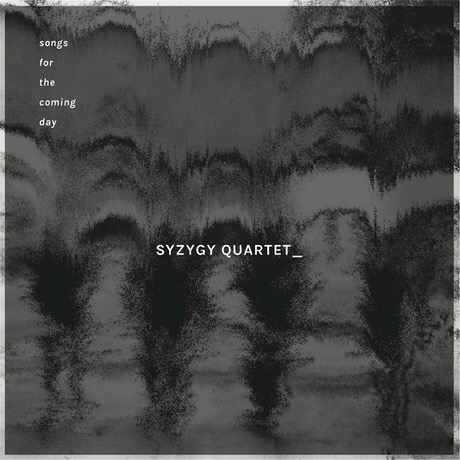
Syzygy Saxophone Quartet formed in 2009 after playing together at the World Saxophone Congress in Bangkok. The quartet aims to promote and perform established contemporary classical works for saxophone, alongside new music written especially for the ensemble. 

At the beginning of 2013 Syzygy Saxophone Quartet were the only ensemble in Europe to be awarded the performance and recording rights to the new 45 minute work by the American composer David Maslanka. Entitled ‘Songs for the Coming Day’, the work  considers ethical and moral issues facing the world today such as the environment and war. Despite such problems, the piece is imbued with hope, reflecting the composer’s belief that “that under the chaotic surface of our world there is a rising creative energy through which is growing a new idea of living in harmony with ourselves and the Earth” (David Maslanka) and that there is still optimism regarding the future of the planet.

  
Lasting around 45 minutes, the work comprises nine movements, relatively brief “songs without words”, with titles such as Breathing, Awakening, Letting Go of the Past, and The Soul is Here for its Own Joy. The movements have hymlike qualities both in the SATB harmonies and ensemble playing, but also because some are actually based on hymns or songs,  adapted and reset for saxophone. Eight of the nine movements have varying degrees of slow tempi and a generally quiet or restrained dynamic palette.

The opening movement, ‘At This Time’, utilises a three-note motif redolent of ‘Nimrod’ from Elgar’s Enigma Variations, and just as in the Elgar, this rising figure sounds a note of hope. All the movements, except for the penultimate one, are reflective and meditative, and Syzygy’s precise and concentrated ensemble playing and exceptionally well-blended, warm tones enhance the sense of contemplataion and stasis. The music itself is melodic and accessible. At times it has a choral quality reminiscent of Renaissance sacred music in it harmonies and simple lines underpinned by ostinato figures or pedal points.

In contrast to the other movements, the eighth, ‘The Soul is Here for its Own Joy’, bursts forth with exuberance and rhythmic excitement, while the closing movement, the poignant and introspective ‘Song for the Coming Day’ returns to the pensive mood of the earlier movements.

The saxophone is often the poor-relation instrument in classical repertoire, rarely utilised in the orchestra and not generally taken up by “famous” composers. In ‘Songs for the Coming Day’, the combination of elegance, restraint and melody and Syzygy’s technical assuredness and musical understanding, we are given the opportunity to appreciate the saxophone as a classical instrument.

Highly recommended

‘Songs for the Coming Day’ is available now 

Syzgy Quartet will feature in a forthcoming Meet the Artist interview

syzygyquartet.co.uk

Pianist Ivan Ilic has already featured music by American minimalist composer Morton Feldman on his previous disc The Transcendentalist. His new disc (released 16 October) is devoted to a single work by Feldman, ‘For Bunita Marcus’, dedicated Feldman’s student who studied with him from 1975-1981. For seven years until Feldman’s death in 1987, he and Bunita Marcus were inseparable (though she refused his marriage proposal), composing side by side and sharing ideas.

The work typifies Feldman’s style: comprising small clusters and units of notes, mainly consisting of 3/8, 5/16 and 2/2 bars – tiny ideas which together form a vast and musical landscape, it is curiously absorbing music. What it lacks in texture, it makes up for in its meticulously placed sounds, and its intensity comes from its repetitive and reiterative qualities, with figures varied but not developed.

As Feldman himself said of this music “It can only work if you go along with the material and see how it is turning out.” There is an exploratory quality to Ilic’s playing, a sense of the music being wrought in the moment, spontaneous and unprepared. His touch is assured yet sensitive. Sounds chime, resonate and glow, and the work’s 22 sections unfold with a subtle and graceful expansiveness.

The disc comes with comprehensive notes to guide the listener through the work, but you, like me, may prefer to simply allow the sounds to drift over you.

‘For Bunita Marcus’ (1985) is released on the French label Paraty, distributed worldwide by Harmonia Mundi. The album is the final installment in Ivan’s Morton Feldman Trilogy, alongside the CD The Transcendentalist (2014) and the Art Book/CD/DVD Detours Which Have To Be Investigated (2014).  

Further information here

Meet the Artist……Ivan Ilic

Flowing Waters – Luke Whitlock
Suite Antique (piano solo)
Flowing Waters (piano solo)
Evening Prayer (piano solo)
The Faust and Mephisto Waltz (piano solo)
Three Pieces for Wind Trio
Flute Sonata

It’s always nice when someone contacts me to tell me about a new CD which they think I will like, and Luke Whitlock’s debut recording Flowing Waters is no exception. It was recommended to me by librettist Ben Kaye, and I have enjoyed exploring it over the course of several days.

This is the first album devoted to Luke Whitlock’s work (in addition to composing, he is also a producer for Radio 3 and 4) and it reveals a composer whose music is firmly rooted in melody, tonality, lyricism and expression. There are hints of folksong in the Suite Antique, as well as a very obvious hommage to the Baroque tradition of composing dance suites in the titles of the individual movements. It is also redolent of works by Debussy and Ravel which also looked back to Baroque antecedents, with quirky nods to Prokofiev and Shostakovich in the ‘Gigue’. The music is lyrical, elegant and witty, at times mininalist and at others more richly textured in the manner of Chopin or Liszt (‘Minuet’, a sensuous Chopinesque waltz), all sensitively executed by acclaimed pianist Duncan Honeybourne.

The title track ‘Flowing Waters’ was a commission from the Arts Council of Wales and the Welsh Government, and is a musical portrait of the River Teign in Devon. The piece opens with simple chords before moving into a flowing passage which owes much to Philip Glass in its spare textures and unexpected harmonic shifts, but also to Beethoven in the repeated LH quaver figure (the ‘Moonlight’ Sonata springs immediately to mind here) and also Liszt’s second ‘Petrarch Sonnet’ from the Années de Pelerinage. There are some Lisztian harmonies in the middle section of the work too, and the music plots a course through different tonal, melodic and harmonic landscapes, reflecting the winding and varied course of the river which inspired it. I was particularly taken with this track because it echoes a number of piano pieces (including several of Philip Glass’s ‘Etudes’) which I am currently working on.

The ‘Three Pieces for Wind’ trio are haunting and reflective pieces which depict certain landscapes and the listener’s interaction and response to them. There is a pleasing balance and sense of conversation and humour between the instruments (flute, clarinet and bassoon). The ‘Flute Sonata’, composed for flautist Anna Stokes (accompanied here by pianist Wai-Yin Lee), is the major work on the disc and reveals hints of Chopin and Poulenc in its melodies and scope. Meanwhile, ‘Evening Prayer’, which comes between the works for wind, is a tender meditation, redolent of some of Satie’s piano music.

The disc closes with ‘The Faust and Mephisto Waltz’, a tongue-in-cheek tribute to Liszt whose music is taken from a score for a silent film. It is jokey and enjoyable in its pastiche, while presenting some technical challenges for the pianist (Duncan Honeybourne), and does indeed have a very filmic quality.

The music contained on this album is very accessible and will certainly appeal to those listeners who may initially shy away from “new music”. Recommended.

Flowing Waters is available on the Divine Art label. Further information here

Composer Luke Whitlock will feature in a future ‘Meet the Artist’ interview