Once again the impeccable musicianship, collective commitment and imaginative and varied programming of I Musicanti impressed with the first concert in their new series at St John’s Smith Square. Entitled ‘Alexandra and the Russians’, each recital in this 4-concert series features a new work by composer Alexandra Harwood, who can trace her Russian heritage back to Catherine the Great.
Bookended by Shostakovich’s taut and impassioned Piano Quintet Op 57 and Glinka’s good-natured and lyrical Sextet in E flat, Alexandra Harwood’s ‘Fiddler in Hell’ was a rollicking, foot-tapping romp and a great platform for violinist Fenella Humphreys’ colourful virtuosity and affinity with new music. Meanwhile, Schnittke’s mysterious and unsettling Hymnus II demonstrated the supreme technical control and musical understanding of Leon Bosch (double bass) and Richard Harwood (‘cello).
I Musicanti’s creative approach proves that it’s possible to present new music in accessible programmes which combine familiar works with lesser-known pieces. Future concerts in the series include music by Tchaikovsky, Arensky, Prokofiev, and Smirnov performed by some of the finest musicians active in the U.K. today.
Who or what inspired you to take up the cello and pursue a career in music?
My parents have a music school, Harpenden Musicale, where we grew up. Music was always going on around the house and inevitably it rubbed off on me and my siblings. The cello has been there as long as I can remember and I simply can’t imagine life without it. We would try all sorts of instruments in the music shop (where my grandmother worked until she was around 90 years old!), but the cello kept my attention most. One day we were in our local town and a lady came up to my mother and started to chat. I didn’t really recognise her and she asked how I was getting on with my new cello teacher. I responded enthusiastically, “Oh, much better than the last”, only to discover that she was my previous teacher! The real turning point was when I was 16 and went to Tanglewood in the States for 8 weeks. I heard the Boston Symphony Orchestra perform each week with soloists from all over the world and heard many great chamber concerts. I enjoyed this experience so much that when I returned home I worked harder than ever and two years later won the BBC Young Musician competition.
Who or what were the most important influences on your musical life and career?
I was fortunate to study with teachers from the same musical tradition, including Nicholas Jones at Chetham’s, Steven Doane at the Eastman School of Music in the States, and Steven Isserlis and David Waterman at IMS Prussia Cove. All of these mentors studied with a wonderfully eccentric musical guru called Jane Cowan at the London Cello Centre and later at her home in Scotland. She was a formidable influence on all of them and her wisdom lives on. Their influence has been so infectious that I now play on covered gut strings and I often hear them on my shoulders when I’m working with students at the Royal Academy of Music. I also studied privately with Ralph Kirshbaum, Bernard Greenhouse and have more recently been playing Bach for Anner Bylsma.
What have been the greatest challenges of your career so far?
I was catapulted into the profession from the age of 19 and the biggest challenge early on in my career was learning repertoire for the first time for important concerts. For example, I remember performing the Walton Concerto live on radio which was the first time I’d performed it with orchestra, but I’ve also performed the Elgar Concerto live on TV opening the BBC Proms in 2001 and broke a string during the live final of the BBC competition! These were immense challenges, as was premiering a new cello Concerto by Charlotte Bray at the Proms. But one thrives off these opportunities and it’s what continues to spur you on every day to learn from the past, live in the present, and dream for the future.
Which performance/recordings are you most proud of?
My debut recital CD with Kathryn Stott is a happy memory, although I haven’t listened to it for years. The disc includes 3 British composers; Frank Bridge, Benjamin Britten and Mark Anthony Turnage. I’m Godfather to Mark’s son, Milo, and we recorded a piece that Mark wrote for Milo’s christening alongside the Sonata of Bridge and Britten. Kathy’s experience is so vast that being my first recording I was grateful to have her guidance and support throughout. I’m now greatly looking forward to releasing this latest CD – it has captured my current journey and has lots of variety on the disc including works by Barrière, Beethoven, Respighi and 3 new commissions.
Which particular works do you think you perform best?
I like to think I’m performing whatever music is in front of me as best I can. It’s hard to answer this question, but I give everything to whatever music I’m communicating in the moment. Premiering a new work is always thrilling because nobody can compare it to another performance and everyone is hearing it for the first time. This is always refreshing and alive. On the other hand, performing the Bach Suites or Beethoven Sonatas is quite terrifying because not only are these works revered by cellists, but they are also so well known and often performed.
How do you make your repertoire choices from season to season?
Some things are planned and others are asked for by promoters. As the years go by, there are certain works I’m more and more keen to get round to performing. For example, works like the Grieg and Franck Sonatas.
Do you have a favourite concert venue to perform in and why?
I’ve been fortunate to perform in many great concert halls in London, Paris, Berlin and Tokyo, but I think that the Concertgebouw in Amsterdam is a particularly special hall. There’s so much history there and the setting and acoustic is a real inspiration to all musicians. I also like the Birmingham Symphony Hall and Bridgewater Hall. If only London could get a new concert hall, although we are lucky with the Wigmore Hall!
Who are your favourite musicians?
I grew up listening to many cellists from Casals to Tortelier, Rostropovich, Du Pré, Fournier, Feuermann etc etc and then living cellists including Yo Yo Ma, Truls Mørk and Steven Isserlis. What an incredible crop from the past and present! I think artists like these have helped to inspire the current generation of cellists that have been emerging in recent years. I also grew up listening to the Beaux Art Trio, Amadeus Quartet and, on the other side of the spectrum, to Sting! Now one can turn to YouTube and not only hear, but also see all these unique artists in action, which is a pleasure to tap into from time to time.
What is your most memorable concert experience?
I think it was when I was a member of the National Youth Orchestra performing Britten’s Young Person’s Guide to the Orchestra and Shostakovich’s 10th Symphony with Rostropovich at the helm at the BBC Proms. That concert knocked all of us youngsters sideways! There are a few particularly special experiences that I can think of. One other I could mention was performing Messiaen’s Quartet for the End of Time in the Concertgebouw with Michael Collins, Kathryn Stott and Isabelle van Keulen when I was 20 years old. This was a great honour, to perform such an extraordinary work with musicians I looked up to in this setting at the beginning of my career.
What advice would you give to young or aspiring musicians?
I think you need to find music from deep within you. Parents, teachers and friends are a big part of your development, but you need to love what you do if it is going to be sustainable in the future. Have fun, read music with friends, work hard and find a teacher who you connect with. Concentrate during your practice session, particularly if schoolwork is taking up much time (and not least sport!). Know what you need to work on and improve. Be patient – this is not a sprint, but a marathon and with daily practice and commitment with the right sort of guidance you will feed off the improvements and be motivated to continue to develop as an artist and a musician. Listen to lots of music and influences, go to concerts and read about composers’ lives. Enjoy your music making and don’t be too hard on yourself. Forget how you’ve learnt things when you go on stage and liberate yourself to live in the moment.
Guy Johnston is one of the most exciting British cellists of his generation. His early successes included winning the BBC Young Musician of the Year, the Shell London Symphony Orchestra Gerald MacDonald Award and a Classical Brit. He has performed with many leading international orchestras including the London Philharmonic, Philharmonia Orchestra, Ulster Orchestra, BBC Philharmonic, NHK Symphony Orchestra, BBC Symphony, Britten Sinfonia, Deutsches Symphonie-Orchester Berlin, Orquestra Sinfônica do Estado de São Paulo, Moscow Philharmonic and St Petersburg Symphony under conductors such as Illan Volkov, Sakari Oramo, Vassily Sinaisky, Yuri Simonov, Alexander Dmitriev, Sir Roger Norrington, Robin Ticciati, Yan Pascal Tortelier, Sir Andrew Davis, Leonard Slatkin, Daniele Gatti.
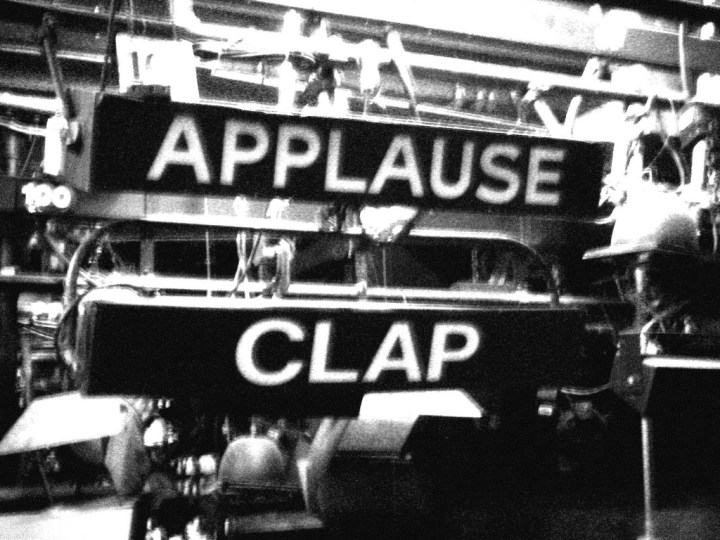
Every year, around the time of the start of the BBC Proms, that wonderful 2-month long festival of music, the thorny issue of when to applaud rears its head. In fact, the debate over the appropriateness of applause is ongoing, but it seems to become more vociferous during the Proms season. And why? Because at Proms concerts clapping may be audible between movements! This year there seems to be more applause between movements than ever before – and more entrenched and noisy views expressing an extreme dislike of this practice……
In a way, the Prom concerts are not like other classical music concerts in the UK. Originally conceived by Robert Newman and Henry Wood to introduce classical music to a wider audience, the atmosphere at Prom concerts tends to be rather more relaxed, though often no less reverent, and the audience demographic far broader than at, say, London’s pre-eminent chamber music venue, the Wigmore Hall. The Proms attracts the classical music newbie and the committed classical music geek, who goes to every single concert in the season, and in between a whole host of other people who enjoy the Proms experience. The etiquette of the classical concert is less rigid at the Proms – it’s much more “come as you are and enjoy yourself”, but in spite of this, the issue of applause remains a tricky one.
“I’ve never experienced anything more embarrassing. After the first movement the hall was silent.”
– Herman Levi, on conducting Brahms’ second symphony, 1878
The custom of not applauding between movements of a symphony or concerto or other multi-movement work developed during the latter part of the nineteenth century. Both Mendelssohn and Schumann made attempts to prevent audiences from applauding between movements. Mendelssohn asked that his ‘Scottish’ Symphony, premiered in 1842, should be played without a break to avoid “the usual lengthy interruptions” and Schumann took charge of the matter in a similar way in his piano and cello concerti as well as his Fourth Symphony, but it was Richard Wagner who really instigated the custom as we know it today during the premiere of his opera ‘Parsifal’. By the turn of the twentieth century the concert hall had become the hallowed place it is today, and the conductor Leopold Stokowski even went so far as to suggest clapping be banned altogether lest it interrupt the “divinity” of a performance. Now if one dares to applaud between movements one may be met with angry hisses of opprobrium, shushing, tutting or very stern looks.
Music evokes emotions and people should be able to express them freely – with respect to the performers of course
– Kirill Karabits, conductor
Some concert-goers regard applauding between movements as ignorant or boorish behaviour, an indication that you do not know the music properly (while the aforementioned concert-goers clearly do!). For some it is downright sacrilegious. Others regard it as disrespectful to the performers or disruptive because it can interrupt the flow of the performance. The curious thing is that this attitude would have been totally alien to Mozart or Beethoven, Brahms or Grieg. In an earlier age, concerts were noisy affairs, the music played to the accompaniment of people talking and laughing, eating and drinking, and wandering in and out of the venue. Applause was given freely and spontaneously, indicating appreciation and enthusiasm for the performers and the music. There was numerous applause during the premiere of Grieg’s piano concerto, while Brahms concluded his first piano concerto was a flop because there was so little audience response (except for the hissing, that is). Today the pauses between movements are often filled with the sound of people coughing or unwrapping cough sweets, and applause is reserved for the end of the work being performed.
For the ingenue concert goer, knowing when to applaud can be stressful. I attended an all-Brahms Prom a couple of years ago, conducted by Marin Alsop, and shared a box with a family who were attending the Proms for the very first time. We got chatting and after some pleasantries about the programme and the performers (the Orchestra of the Age of Enlightenment), one of the party said “We’re really worried about clapping in the wrong place!”. I assured him that it didn’t matter at the Proms, and that he could clap when I did if that helped. I thought it was rather sad that these people, who really enjoyed the concert, felt so anxious about something so trivial, and it is this anxiety about how to behave, and specifically when to applaud, which inhibits some people from attending classical music concerts.
The current director of the Proms, David Pickard, declares that he “loves” hearing spontaneous applause at concerts, while some die-hard concert goers are horrified by his attitude, regarding such behaviour as “barbarous” on the part of other audience members. The curious thing is that at opera no one gets upset if you applaud after a particularly beautiful aria or chorus set piece, and it is almost de rigeur to do so. Ditto in jazz concerts, after some sparkling improvisation or a fine solo by one of the musicians. And conductors and musicians can of course control when applause occurs through their body language: a conductor may keep the baton raised aloft for a period of time after the last notes have faded away, or a pianist may keep his or her hands “in play” over the keyboard, defying anyone to break the spell with premature applause.
In addition to the issue of when to applaud, there is also the how of applauding. Some people seem desperate to applaud almost before the final notes have sounded (this is common at Prom concerts) and it does lead one to wonder whether this is in fact a form of attention-seeking, a “look at me! I know this piece so well I know exactly when to applaud!”. For some this can be really intrusive, especially at the end of the very intense or profound work. Sometimes, as if collectively impelled by an unseen force (in fact, the power of the music), there is a period of silence after the music has ended, and a sense of the audience holding its collective breath, savouring what has gone before. And occasionally (especially in contemporary repertoire in my experience), no one is really sure when to applaud and the impulse to clap is led by a discreet member of venue staff.
I am more bothered by those rare times when people feel the need to rush in to applaud at the final note of a piece without regard for the mood if it is a quiet ending
– Marin Alsop, conductor
At the Proms this year, it seems that the “applaud between movements” faction is gaining more currency. I attended a Prom performance of Schubert’s Unfinished Symphony and Mahler’s tenth symphony and there was applause – spontaneous and appreciative (to my mind) – between every single movement of both works (though as some wag suggested since both works were unfinished, perhaps members of the audience applauded because they didn’t know when the work had ended!), and other Prommers have mentioned there is noticeably more applause between movements this year. For some this is not an issue, but for others it clearly is a problem. Whatever your view, the most important thing is to show appropriate appreciation for the musical performance and those who created it, rather than worrying what the person sitting next to you might be thinking about your concert etiquette! The music, after all, belongs to us, the audience, the listeners – not to the snobs and critics.
Why not go the whole hog and bring back smoking, talking, eating and all the other disruptions that progress has excised – MR via Twitter
I think it will become noteworthy when there isn’t applause between movements at the Proms – HJ via Facebook
If given a choice between people coughing like bastards, the rustling of sweet papers, mobile phones beeping, and talking (!) during quiet movements (when did that become a thing?) or a rapturous applause in appreciation of the music I choose applause… every time – DO via Facebook
“today I finished the Fantasy and the sky is beautiful…..”
Fryderyk Chopin, 1841
The sky was indeed beautiful on perhaps the last day of summer, August Bank Holiday Monday, when I and my concert companion escaped the city heat and embraced the cool elegance of Cadogan Hall for an hour of poetry in music.
Russian pianist Pavel Kolesnikov is still in his twenties, yet he plays with all the assurance, poise and musical sensibility of an artist twice his age. His performance of piano music by Fryderyk Chopin was one to savour, to revisit (thanks to the wonders of the Radio Three iPlayer) and to hold in the memory for a long time to come. It is rare to be so transported, to lose time, suspended in sound, such was the effect of Pavel Kolesnikov’s playing.
A pianist from another era, Phyllis Sellick, declared that a concert featuring only one composer was “a list”. But how can one say that of the music of Fryderyk Chopin, so rich and subtle, so varied yet accessible that each performer, professional or amateur, can find their own personal way into it? Kolesnikov created a programme of pieces which “cast a different light” on Chopin, revealing not only his deeply Romantic mindset but also “an extremely refined, clear, clean style” (PK), perfectly complemented by Kolesnikov’s cultivated playing.
Pavel Kolesnikov (photo: Eva Vermandel)
Some purists may balk at his elastic tempi, pushing rubato perhaps a little too far for some tastes (though not ours). This slackening of tempo, stretching of time, was felt most palpably in the repeats in the Waltzes, proof that no repetition is the same in the hands of a pianist. There were decorations too, sprinklings of improvisation, graceful musical seasonings, though always subtle and delicate as a breath. As a great admirer of Bach, I am sure Chopin would have approved of these embellishments, especially when delivered with such sensitivity and intuition.
From the opening work, a Waltz scored in A flat major but constantly hovering in the minor key, played with a tender poignancy and a caressing touch, Pavel Kolesnikov created a bittersweet intimacy in each work he touched, even in the grander, more expansive measures of the Fantasy in F minor and Scherzo no. 4, whose skittish good-nature closed this exquisite hour of music.
As I said, it is rare to be so transported by sound, by pianist and composer so perfectly in sympathy; yet I have heard Kolesnikov before in Debussy and Schumann, and I have been moved to tears by the poetic refinement of his playing. When so many young players seem to subscribe to the louder-faster school of pianism it is refreshing to hear a pianist who does not rush, who knows how to create breathing space and dramatic suspensions in the music, and who appreciates the smallest details as well as the most sweeping narratives.
Afterwards we stepped out into the Chelsea sunshine, found a shady spot for a drink and a long conservation about music, concerts, art, writing, and had the privilege of meeting the pianist, who was dining at the same cafe, to offer our congratulations for his wonderful, transporting performance.
My review for Bachtrack here and my companion’s response to the concert here
The Cross-Eyed Pianist is free to access and ad-free, and takes many hours every month to research, write, and maintain.
If you find joy and value in what I do, please consider making a donation to support the continuance of the site







 The Cross-Eyed Pianist