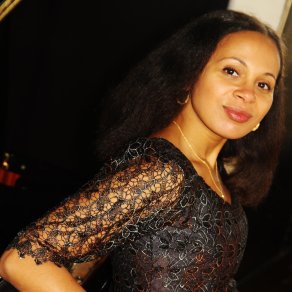
Guest post by Adrian Ainsworth

“10 x 10”: 10 tracks, each around 10 minutes, for the Cross Eyed Pianist’s 10th anniversary.

(I look forward to tackling “20 x 20” in 10 years’ time…!)


1. Berlin Philharmoniker / Kubelik – Wagner: ‘Lohengrin’ Prelude to Act 1.
2. Ravi Shankar, Philip Glass – ‘Offering’.
3. Ruby Hughes, Allan Clayton, Benedict Nelson, Joseph Middleton – Britten / Purcell: ‘Saul and the Witch at Endor’.
4. North Sea Radio Orchestra – ‘Shelley’s Skylark’.
5. John Williams – Sculthorpe: ‘From Kakadu’.
6. The Stone Roses – ‘Fools Gold’.
7. Dead Can Dance – ‘Indus’.
8. Third Ear Band – ‘Ghetto Raga’.
9. Paul Lewis – Schubert: Impromptus, D.899, no.1.
10. Berliner Philharmoniker / Karajan – Debussy: ‘Prelude a l’apres-midi d’un faune’.


Adrian Ainsworth is, by day, a copywriter specialising in plain language communications about finance and benefits. However, he spends the rest of the time consuming as much music, live or recorded, as possible – then writing about it, often on Specs, his slightly erratic ‘cultural diary’ containing thought pieces, performance and exhibition write-ups, playlists, and even a spot of light photography. He has a particular interest in art song and opera… and a general interest in everything else. He is a regular contributor to this site and is also a reviewer for its sister site ArtMuseLondon.com.


Guest post by Doug Thomas

To understand classical music, it is quite obvious where to start. It is a genre that has always been scholar-friendly, well-structured and documented, with the purpose of passing the knowledge to the next generation. When it comes to popular music, however, it is a little different; it is a genre that has, above all, always been centered around the entertainment, the moment.  One could try to understand it historically, but the road backwards is endless and it would be difficult to decide where it really began: some would argue Rock’n’Roll, or Blues, or Jazz, or Folk…..

Or one could study The Beatles. There is no debate; they are the most important and influential figures in popular music. And therefore understanding them, their influences and the influence they had on others, allows us to better understand “pop” music.

The Beatles are a testimony to everything that existed in the popular world before them. They learned their craft by imitating the musicians that they admired. “I’ve Just Seen a Face” is an example of how skiffle formed their early personalities. “Lady Madonna” is a tribute to the Boogie-Woogie of Fats Domino, while “Revolution” reveals the influence of early Chicago rock of Chuck Berry. “Hold Me Tight” is of course influenced by Country music and Rhythm’n’Blues, and “All I’ve Got to Do” displays early influences of female Doo-Wop and Soul — the latter being one of the most important factors in the development of The Beatles’ approach to lead and backing vocals. Finally, “No Reply” shows the influence of Latin music rhythms, prominent in much of 1960s popular music.

The Beatles have influenced so much, it is undeniable. Whether in their music, their songwriting, their production or their image, countless artists have taken from them in order to build themselves. They are in every other musician’s music, and conversely, one can hear in their music what has followed them. “Hey Jude” opened the way to every single stadium anthem, such as “Don’t Look Back in Anger” by Oasis; “Good Day Sunshine” is everywhere in Britpop (e.g. Blur’s “Charmless Man) and “Eleanor Rigby” allowed Coldplay’s “Viva la vida“ to exist. “Get Back” is a slower version of much of heavy metal music (e.g. Judas Priest “Breaking the Law”) and “Come Together” is a blueprint for Queen’s “Another One Bites the Dust”. Finally, most of the psychedelic rock of the late 1960s and early 1970s owes much to “Lucy in the Sky with Diamonds”, “I Am the Walrus” or “Strawberry Fields for Ever”. In 1966, The Beatles released “Taxman”; a year after Jimi Hendrix was using the same chord voicing — now nicknamed the “Hendrix Chord” — on “Purple Haze”.

The Beatles are also a mirror of their times. They took inspiration from the musicians that surrounded them, and, as they evolved, these influences became wider. “Norwegian Wood” is one of the earliest examples of the influence of Bob Dylan on Lennon and McCartney’s songwriting. “Yer Blues” reflects the approach the Rolling Stones took with Blues music. “Helter Skelter” was a direct response to “I Can See for Miles” by The Who — which they had presented as the loudest song ever made. “Two of Us” is of course directly influenced by acoustic Country Rock, in the style of Crosby, Stills & Nash or the Grateful Dead, and “Something” reflects the influence of Eric Clapton and The Band on George Harrison. These influences would extend to Jamaican Ska (with “Ob-La-Di, Ob-La-Da”), Greek traditional music, à la Zorba (with “My Girl”) and of course Indian traditional music (with “Within You, Without You”, and many, many others).

John Lennon once claimed that The Beatles were “more popular than Jesus”. Whether that is true is still arguable; however their influence on every single popular musician and band since the mid-1960s is indisputable. Everyone has at some point, in various genres, covered The Beatles: Johnny Cash, Elton John, Joe Cocker, Aerosmith, Mötley Crüe, Soundgarden, Oasis, Yes, Jimi Hendrix, Jeff Beck, Stevie Wonder, Nina Simone, Otis Redding, Bobby McFerrin, Frank Sinatra, Brad Mehldau, Pat Metheny, Bill Frisell. The list is endless…


GetAttachmentThumbnailSince founding NOOX — or North of Oxford St., a record label, production company and recording studio — in 2014, Doug Thomas has released numerous solo projects, including Short Stories, Vol. 1&2, and the triptych Angles, Cassiopeia and Shapes. For Ballades, he has collaborated with Piano & Coffee Co. as well as pianists Marta Cascales Alimbau, Manos Milonakis, Marek Votruba and Muriël Bostdorp. The Seasons is a collaborative homage to the music of Tchaikovsky; it features twelve pianists from around the world — including Simeon Walker, Garreth Broke and Dominique Charpentier. For Grace, he has collaborated with Sonder House and pianist/cellist Jesse Brown. Portraits, is another homage to his inspirations — and has been released in collaboration with Lonely Swallow and Affan. Studia is the first volume of a collection of contemporary piano études — released with the Italian label Blue Spiral Records (BSR) and featuring Angelo Villari. His latest release with the same label, Anxiety/Serenity (featuring the harp of Mary Dunsford), is a response to the situation that the world experienced in this first quarter of 2020, through the spread of the COVID-19. 

As a writer Doug publishes articles, interviews and reviews, and is a contributor to Interlude as well as a regular guest writer for The Cross-Eyed Pianist and ArtMuseLondon

“Music allows me to express ideas and feelings in a unique way. Each piece I compose is an attempt in finding balance between interest and beauty, within the limits of my own language and experience. I like the idea that music can provide us with an alternative to our daily life, whether it completes it or helps us take some distance from it.”

dougthomas.co.uk

This month, this site reaches its 10th birthday and I’d love it if you would join the celebrations. There are a number of ways in which you can join in and be featured on this site:

  • Send a recording of you playing some music – it can be anything – and if possible include a few lines about the music and why it’s special to you (perhaps you spent the long weeks of lockdown learning it?)
  • Compile a playlist on YouTube or Spotify
  • Write a guest article on any music-related subject

The celebrations will continue all month, so please feel free to submit your contribtions over the  coming days and weeks and I’ll upload them as they come in.

There are also celebrations taking place over on The Cross-Eyed Pianist’s Facebook page and of course I’ll be tweeting all the wonderful contributions you send in.

One of the most significant aspects of this blog for me, as its creator, is the sense of community that surrounds it, and the important connections and conversations it sparks. I’ve made so many new friends as a result of the blog, in the virtual world and in real life – all connected by a shared love of music, and for many, like me, a passion for the piano.

Use the Contact page to get in touch

I look forward to hearing from you.


Frances

The Cross-Eyed Pianist

Who or what inspired you to pursue a career in music?

Hearing the Scherzo from Bruckner 7th Symphony on radio. I was 16 or so, heading for veterinary college; it was very much an “I can’t live without doing this’ rather than a “I must do this” moment.

Who or what have been the most important influences on your musical life and career?

Seeing as musicians need a proper grounding and a healthy ambition, it has to be my teachers – Lilly Phillips and David Strange – for their grounding, and the conductor of my local youth orchestra – Mark Gooding – for encouraging ambition. More recently the pianist Oliver Davies has been a huge influence, revealing that musicianship, not just technique, is teachable as well as inherent.

What have been the greatest challenges of your career so far?

Performing in front of colleagues – always has been and always will be!

Which performances/recordings are you most proud of?

I’m most proud of the work I programme myself – those projects are like children, you nurture them and feel responsibility for their outcome. And like children they can be very hard work and take off in unexpected directions – but are always worth it and so instil real pride. My recent discs of Piatti operatic fantasies are examples of that.

Which particular works do you think you perform best?

I hope it’s the repertoire I love the most; but to be honest it’s also probably the repertoire I don’t take that seriously, because the pressure’s off and then it’s easier to ‘play’. I enjoy technical challenges but I hope cantabile is my stronger suit.

How do you make your repertoire choices from season to season?

Usually by answering the phone and saying yes! But when I’m lucky enough to be programming myself then it’s still often pragmatic choices, based on the venue, the audience and any other concerts around that time. I try to mix novel with staple, and always work with the assumption that you can’t second guess an audience’s taste, so go with sincerely chosen works.

Do you have a favourite concert venue to perform in and why?

The Barber Institute in Birmingham for its acoustic and Bargemusic in New York for its quirkiness (especially when a police boat speeds past)

What is your most memorable concert experience?

A London Sinfonietta concert in the Carnegie Hall where Oliver Knussen, conducting, turned to the audience after a world premiere and said “new works should never be heard just once – you’re now going to hear that again” and we repeated the whole piece. It was electrifying – he had us and the audience in the palm of his hand.

As a musician, what is your definition of success?

Easy – when the composer is happy.

What do you consider to be the most important ideas and concepts to impart to aspiring musicians?

Learn to teach yourself. Assimiliate don’t imitate. And always beware not seeing the wood for the trees.

Where would you like to be in 10 years’ time?

Anywhere that’s covid-free, pollution-free and culture-rich

What is your present state of mind?

Simultaneously elated (so much family time) and terrified (no concerts)

Adrian Bradbury’s latest CD ‘Alfredo Piatti: The Operatic Fantasies, Volume Two’ is out on the Meridian label, available from Presto Classical


Adrian Bradbury is a British cellist, recognized especially for his contribution to contemporary music (Royal Philharmonic Society chamber award, Composers Ensemble), teaching (Cello Tutor, National Youth Orchestra of GB) and musician science (research published by the Royal Society)