This interesting new release from British pianist Duncan Honeybourne, with British-American violinist Leora Cohen, introduces the hitherto little-known music of Jessy Reason, known somewhat cryptically during her lifetime as “J. L. Reason”.
A long-forgotten, enigmatic figure, Jessy Lilian Reason, née Wolton, was born in London in 1878, the daughter of a wealthy hop merchant. In 1902, in Cornwall, she married a gentleman of private means twenty years her senior, with whom she settled firstly in Devon and later in Tonbridge, Kent. In the late 1920s the couple made a final move, to Reading, where Jessy died in 1938.
In May 1992 a writer called Alan Poulton discovered a large stack of handwritten music manuscripts in a second-hand bookshop. He purchased the collection and during the 2020 Covid lockdown, now retired and with time on his hands, he set about exploring and cataloguing the manuscripts, and researching the life of the woman who had composed 70 handwritten works in the early decades of the twentieth century. The paperwork accompanying the collection reveals that Mrs Reason studied composition with the renowned composer and conductor Eugene Goossens; she was then in her mid-40s, her tutor some 15 years younger. How much of Reason’s music was performed during her lifetime remains unclear: all that has come to light so far is a performance of a single song at London’s Wigmore Hall and a song cycle given at a minor concert in West London, all in the early 1920s. (The current catalogue of Reason’s music, compiled by Alan Poulton, can be found on the British Music Society website.
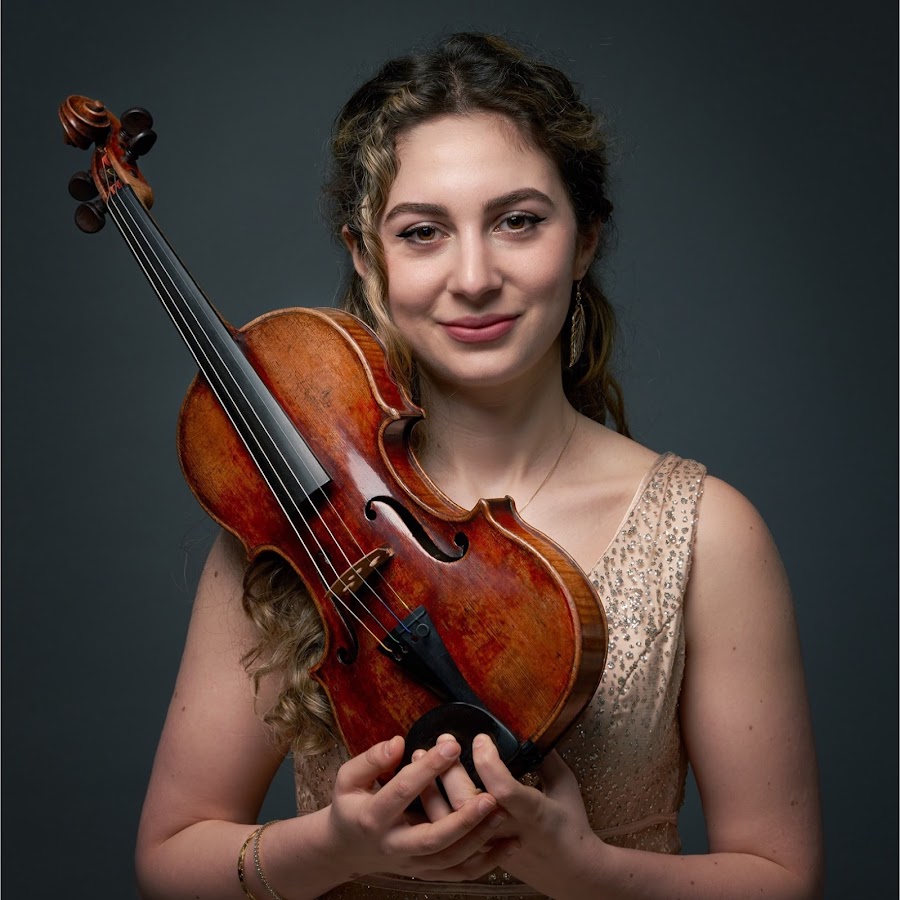
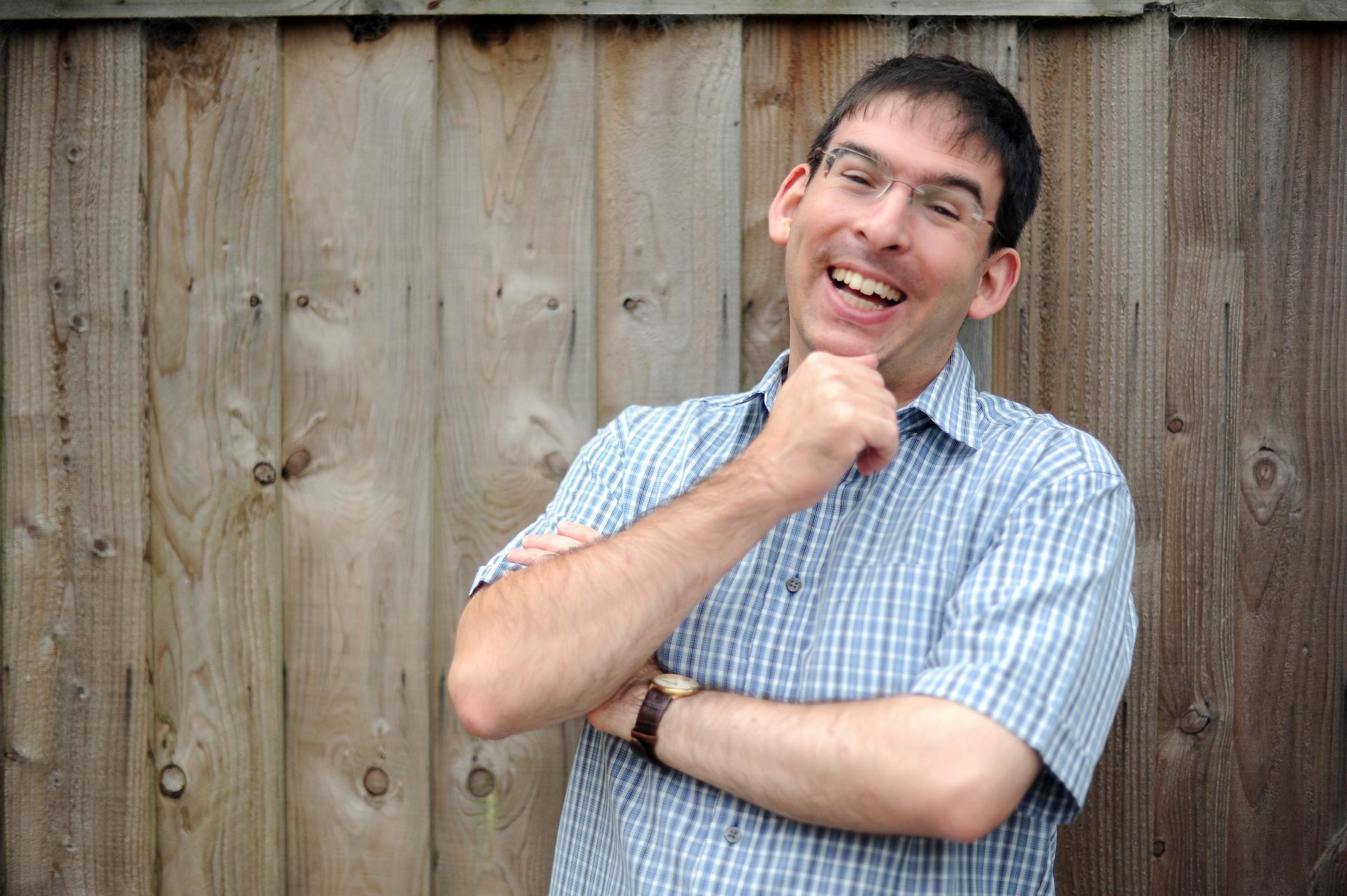
Pianist Duncan Honeybourne is a passionate advocate for lesser-known and rarely-performed music, and this new release by Prima Facie Records reflects his unerring ability to unearth really fine music and bring it to a wider audience by recording and performing it (see also his release, also on the Prima Facie label, of piano music by William Baines). On this recording he is joined by young British-American violinist Leora Cohen. She brings a wonderful range of colours and nuance to the Three Poems for Violin and Piano, matching Honeybourne’s playing with a remarkable sure-footedness, sensitivity and musical maturity.
This disc presents Jessy Reason’s entire output for solo piano, together with the Three Poems, and as such is a wonderful introduction to Reason’s writing. She was clearly a highly-skilled yet largely self-taught composer and musician (her writing for piano reveals an intimate knowledge of the geography of the keyboard): in his biography of his mother, Richard Reason describes her as “an ardent musician, with a fiery style of violin-playing . . .teaching herself the whole technique of writing for full orchestra”. Her scores, some of which I have seen, thanks to Duncan Honeybourne, are elegantly crafted and neatly laid out.
Leora CohenDuncan Honeybourne
By turns richly romantic, impressionistic, darkly lyrical, sensuous and harmonically complex, there are hints of late Brahms, Debussy, Ravel, even early Messiaen in Reason’s sophisticated, inventive music. This inspiring legacy of work is brought vividly to life by Duncan Honeybourne on a piano contemporaneous with the music, a 1922 Bösendorfer.
Piano and Chamber Music by Jessy Reason
Duncan Honeybourne (piano) with Leora Cohen (violin)
Korean-born composer Unsuk Chin is one of the featured artists at this year’s Aldeburgh Festival, which is celebrating its 75th anniversary. Find out more about Unsuk Chin’s influences, working methods, and thoughts about classical music in general in this insightful, thoughtful interview:
Who or what are the most significant influences on your musical life and career as a composer?
The most formative influences are probably those from childhood when the senses react to everything around them in a more ‘holistic’, immediate approach. Then, there was the time of my studies: immersing myself in European avant-garde music in the early 80s was vital, as I had before that known ‘Western’ musical history only until Stravinsky’s Violin Concerto. Conversely, the experience of studying with Ligeti, who denounced the avant-garde, requested utterly original music of excellent craftsmanship from himself and his students, asking me to throw away my prize-winning works, was a pivotal moment. Indeed, moments of crisis and subsequent attempts to find a way out are essential moments and threshold experiences.
The excellent Danish poet Inger Christensen wrote that the major influences on her work were creative stumbling blocks, irritations that, in the long term, made her question and develop her approach. For me, such a moment was when I worked, in the late 80s, and after a writer’s block of almost three years, for a couple of years at a studio for electroacoustic music. Through this, I could re-evaluate the essential elements of my compositional approach and expand the basis of my music. Another significant experience was, in the 90s, longer stays in Bali, where I studied Gamelan music – the acquaintance of a different tradition of great refinement and quality deeply rooted in the society was a discovery.
What have been the greatest challenges of your career so far?
That was to realise my childhood dream of becoming a professional musician and fighting my way out of difficult circumstances – in the 1960s and 1970s, South Korea was a poor post-war country on the periphery, and it was not easy to start as a female Asian composer in Germany.
What are the special challenges and pleasures of working on a commissioned piece?
Without a commission or deadline, I would never compose a work. One needs much pressure from the external world to get through this crazy process. I don’t have any works in my drawer. Writing a new piece is a very demanding process and can take years. I wouldn’t go for it without external pressure and the adrenaline rush. At the same time, I would never accept a commission with conditions that don’t fit into the musical thoughts and goals I am working with during a specific period.
What are the special challenges and pleasures of working with particular musicians, singers, ensembles or orchestras?
I always choose very carefully which commissions I accept. One has to prioritise. It almost needs to be a compulsion: if I don’t have an idea what to write for a certain instrument or concept, I won’t do it. For example, I wrote my First Violin Concerto in 2001 and was convinced I would never write another one. But then, when there was a possibility to write for Leonidas Kavakos, I reconsidered, and the work, 20 years later, is very different from the first one.
Of which works are you most proud?
I move on and try to do something new with every piece. I have removed several earlier works from my work list as I am not content with them. As for the remaining ones, I accept them, but there are also pieces to which I feel more emotional distance than others – which is unsurprising when one revisits works from several decades ago. But I can also name a counterexample – my Piano Concerto, which is from 1995 but which wasn’t much performed before the Deutsche Grammophon recording two decades later. This is a work into which I put all the energy and frenzy of my then 34-year-old self – I wouldn’t compose in this manner any more, but I feel emotionally close to it.
How would you characterise your compositional language?
I prefer not to, as it may make it more difficult for the listener to approach the work without prejudices. Besides, when I compose a new work, the most important thing for me is its unique shape. Of course, as a composer, you have a particular craft; you prefer certain materials and draw on compositional techniques acquired through the years. You cannot and perhaps shouldn’t avoid that. Nonetheless, it is important for me to attempt each work to be singular in character. Pablo Picasso once expressed it this way: style holds the painter captive in the same point of view, in a technique, in a formula, but he always wants to make something that is new and unknown to himself.
How do you work?
With pen and paper. Composing is, above all, waiting — days, sometimes weeks, before the empty staves. And then, suddenly, a door opens in the head. With age and experience, one develops trust that this door opens at some point if one tries hard enough. The music is in my head. I sometimes jot down ideas, plan harmonies, etc., but for me personally, it is an abstract process without piano or other devices. It can take several years for thoughts and concepts to mature. And when the pressure is great enough, it’s like giving birth: the thoughts have to come out, then you write.
As a musician, what is your definition of success?
That I am fortunate to be performed by several excellent musicians.
What advice would you give to young or aspiring composers?
To think carefully if one really wants to have a life as a professional composer. It is usually a back-breaking and lonely job, and the financial prospects are often non-existent. If one really wants to do it, one should, but one should be aware what price it takes.
What do you feel needs to be done to grow classical music’s audiences?
This is not easy since, nowadays, there is a tendency to think more and more in purely economic and functional categories, on top of which you have to add the quickness of modern mass media. Besides, there exists a mistaken notion that classical music would be something ‘elitist,’ which is why the notion that society should support artforms that only a small minority will engage with has lost traction. All of this does not mean that things were better during other times. However, it is concerning and a scandal that music is often no longer even considered a minor subject in schools due to very obscure claims of competitiveness and economic success – claims often made, for example, by numerous politicians. It is wrong to withhold from children the experience of art, which is one of the things that distinguishes human beings from AI, not to mention that art often provides indispensable solace and a utopia. Anyway, there are also ‘late bloomers’, audiences that can be won over with creative ideas and new approaches even if they won’t have had previous exposure to classical music; after all, the experience of great music can be a deeply emotional one. The methods and approaches used to try to develop classical music’s audiences depend on the place and context. But the main thing, I believe, is trust. Trust in quality, the hard work of serious performers and composers, the slow progress of building audiences and overcoming obstacles, an almost aggressive defence of artists’ quality and hard work, the audience’s right to hear this music, and the need for financial support of the whole musical ecosystem.
What is the one thing in the music industry we’re not talking about but you think we should be?
I doubt that such a thing exists as ‘the music industry’ – fortunately, we live in a diverse world. At the same time, of course, certain tendencies exist, but these are intertwined with societal developments. Our times are obsessed with the speed of information, packaging, and the surface, which can be problematic for developing sustainable quality standards. Also, the future of classical music institutions in many places is endangered. That leads often to market-think and occasionally to a winner-takes-it-all mentality. At the same time, fortunately, there are many niches and different initiatives. It was much more polarised in the 50 years after the Second World War: there was the established conservative music world, and then there were the rebellious circles of both the avant-garde and the early-music revival, who not infrequently fractured into warring factions. But every time has its challenges.
What do you enjoy doing most?
Playing the piano. If I need a break during an intense compositional process, I might play fugues by Bach for hours. This helps me clear my mind and persevere.
On Wednesday 12th June Tenebrae give the first UK performance of Unsuk Chin’s Nulla est finis – a prelude to ‘Spem in alium’ in Ely Cathedral as part of this year’s Aldburgh Festival. Find out more about Unsuk Chin’s music at Aldeburgh Festival here
On being a musicologist-pianist – guest post by Dr Samantha Ege
As a musicologist-pianist, my repertoire tends to reflect the areas that I am researching. When I started my PhD at the University of York in 2016 with the goal of writing my dissertation on the composer Florence Price (1887-1953), her piano music instantly became a part of my research journey. I found that studying Price’s scores and playing her music helped me write more insightfully about her life. Reciprocally, my writings then helped illuminate new ideas for interpreting her piano works.
In 2017, I went on my first archival research trip to Chicago, Illinois, and Fayetteville, Arkansas. This was a really exciting adventure as I would be visiting Price’s home state and spending time in the Midwestern city that she moved to in the late 1920s. I visited the Rosenthal Archives of the Chicago Symphony Center to see the documents surrounding the premiere of Price’s Symphony No. 1 in E Minor. I managed to attend a concert too. I remember waiting in the foyer and meeting Sheila Anne Jones. Sheila ran the African American Network of the Chicago Symphony Orchestra and told me about her work. I then told her about my research, and we exchanged details.
A year later, Sheila hosted my first major lecture-recital at the Chicago Symphony Center. It was called ‘A Celebration of Women in Music: Composing the Black Chicago Renaissance’. At this time, I was two years into my doctoral studies and had just recorded my first album, ‘Four Women: Music for Solo Piano by Price, Kaprálová, Bilsland and Bonds’. The musicological and performance strands of my work were moving along, but when I brought them together in this lecture-recital format, I felt like I had really found my identity as a musicologist-pianist.
In this lecture-recital, I discussed key themes that would later surface in my published articles and book projects, i.e., themes of community-building and women’s leadership and advocacy. In my performance, where I played Price’s music alongside works by Margaret Bonds, Nora Holt, and Irene Britton Smith, I realised that my programming choices could really assist in conveying historical narratives, as well as striking up new connections and meanings for modern audiences. (See the blog post I wrote on “Connection not Perfection.”)
In the summer of 2019, I prepared for what would be my last archival research trip before the pandemic. I had a one-month fellowship at the Newberry Library in Chicago where my project entailed looking at women’s contributions to concert life in interwar Chicago. This led to me writing an article called “Chicago, ‘the City We Love to Call Home’: Intersectionality, Narrativity, and Locale in the Music of Florence Beatrice Price and Theodora Sturkow Ryder” (which will be published in American Music journal later this year). I also returned to Fayetteville with a mission: I wanted to find Price’s complete Fantasie Nègre compositions for solo piano and record them with the label LORELT.
My biggest challenge was recovering the third fantasie as it was thought to be incomplete. As I looked through the archives, all I could see were the first two pages of the fantasie. As I puzzled over where the rest of the music could be, I found myself drawing upon my entwined experiences of writing about and performing Price’s music. I thought about her approaches to key, form, and melody, and started looking for loose sheets of manuscript paper that might match the other possibilities I had in mind. And that’s when I located the missing parts of the fantasie. I pieced it together and it was truly magical hearing Fantasie Nègre No. 3 come to life, perhaps even for the first time since Price’s death in 1953.
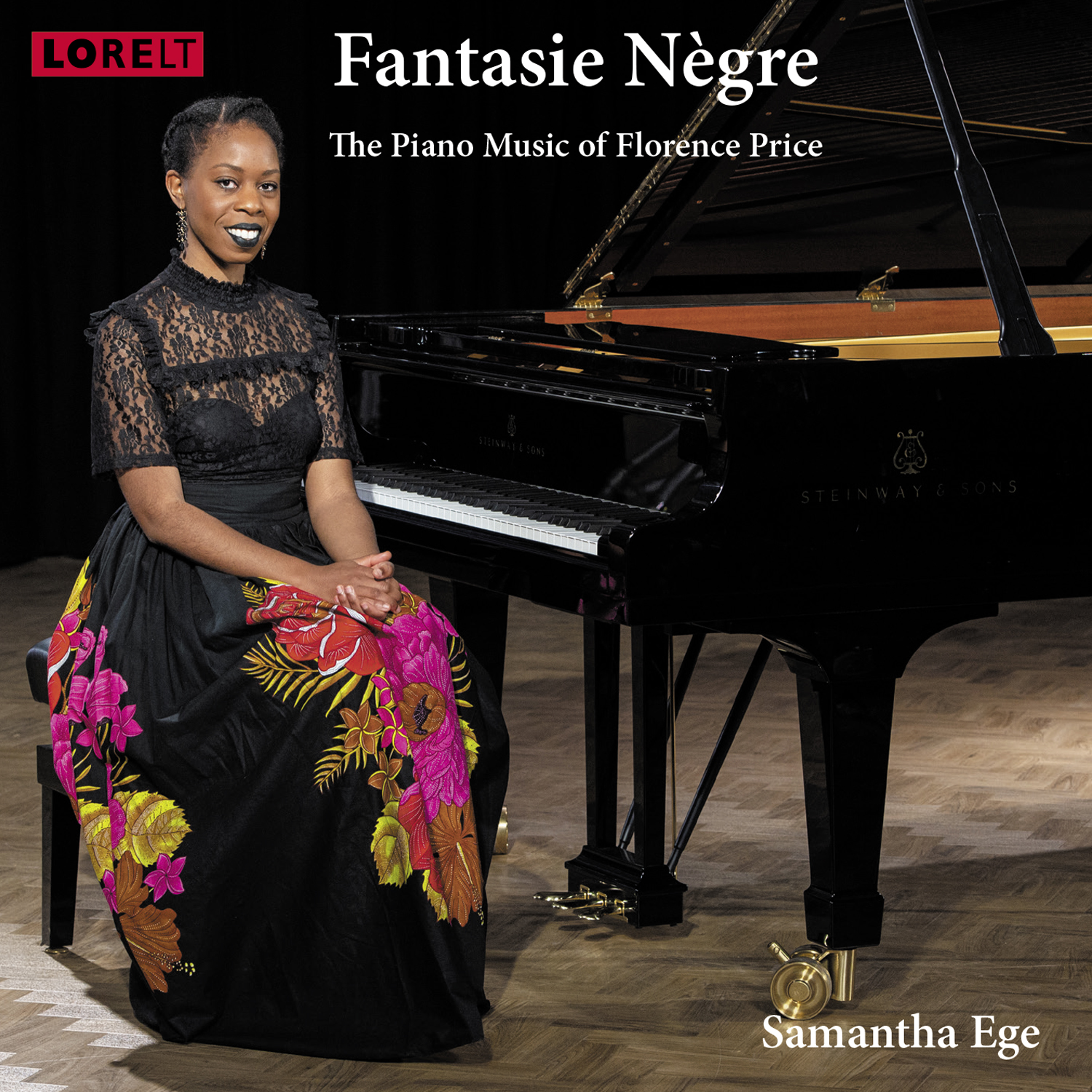
I’m grateful for the opportunities I’ve had over time to shape my voice as a musicologist and pianist. My new album, ‘Fantasie Nègre: The Piano Music of Florence Price’, brings all of these experiences together. Fantasie Nègre combines my passion for scholarship and performance, and demonstrates how both strands can work together to uncover hidden histories.
Samantha Ege’s new album ‘Fantasie Nègre: The Piano Music of Florence Price’ is released on 8 March 2021 on the LORELT label.
Dr. Samantha Ege is the Lord Crewe Junior Research Fellow in Music at Lincoln College, University of Oxford. She is a leading interpreter and scholar of the African American composer Florence B. Price. She received the Society for American Music’s Eileen Southern Fellowship (2019) and a Newberry Library Short-Term Residential Fellowship (2019) for her work on women’s composers in Chicago. She has written for American Music, Women and Music, and the Kapralova Society Journal. She released Four Women: Music for Solo Piano by Price, Kaprálová, Bilsland and Bonds with Wave Theory Records in 2018. Her latest album is called ‘Fantasie Nègre: The Piano Music of Florence Price’.
Women such as Clara Schumann, Amy Beach and Cécile Chaminade are now recognised as a significant pianist-composers, who also enjoyed international performing careers, but in the course of her research, pianist Sandra Mogensen discovered many other women composer-pianists who were well-regarded, but whose names and music are hardly known today. These include Mélanie Bonis, Helen Hopekirk, Agathe Backer-Grøndahl, Luise Aldopha Le Beau, and Laura Netzel. The piano music of these composers was widely known and played during their lifetimes, but for much of the 20th century, their works were rarely played. Now, in the changing climate of classical music, with a greater emphasis on diversity, these once-forgotten composers are being given the recognition they deserve.
The music I have found is again incredibly beautiful….and all of it is new to me
Sandra Mogensen
Released in December 2019, the bicentenary year of Clara Schumann’s birth, the first volume of pianist Sandra Mogensen’s multi-CD and concert project, En Pleine Lumière (“in full light”), focuses on piano music by women composers born in the middle part of the nineteenth century (c.1840-1870). Each composer is represented by two short works and the entire project will have an international reach. Volume one includes composers from France (Chaminade and Bonis), the USA (Beach), Scotland (Hopekirk), Norway (Backer-Grøndahl and Lærum-Liebig), Sweden (Netzel and Aulin), and Germany (Le Beau and Menter). The subsequent two volumes will include music by women composers from Canada, Russia, Australia, Austria, Croatia, Germany, Latvia, Estonia and the Netherlands.
En Pleine Lumière will eventually comprise six albums, each focusing on a 30-year period – rather like a recital disc. En Pleine Lumière Volume 1 was recorded at Immanuelskirche in Wuppertal, Germany in June 2019, produced by an all-female team, and crowdfunded via Indiegogo. The subsequent volumes will be recorded with the same team and also supported by crowdfunding.
En Pleine Lumière is available on CD or digital download.
Canadian pianist Sandra Mogensen is equally at home in two worlds: performing as a solo pianist and co-performing with singers in recital. She has played in concert in both capacities in Canada, the United States, Denmark, Latvia, Iceland, Norway, Sweden, the Netherlands, and Austria. Sandra is also well-known as a vocal coach and piano pedagogue
The Cross-Eyed Pianist is free to access and ad-free, and takes many hours every month to research, write, and maintain.
If you find joy and value in what I do, please consider making a donation to support the continuance of the site







 The Cross-Eyed Pianist