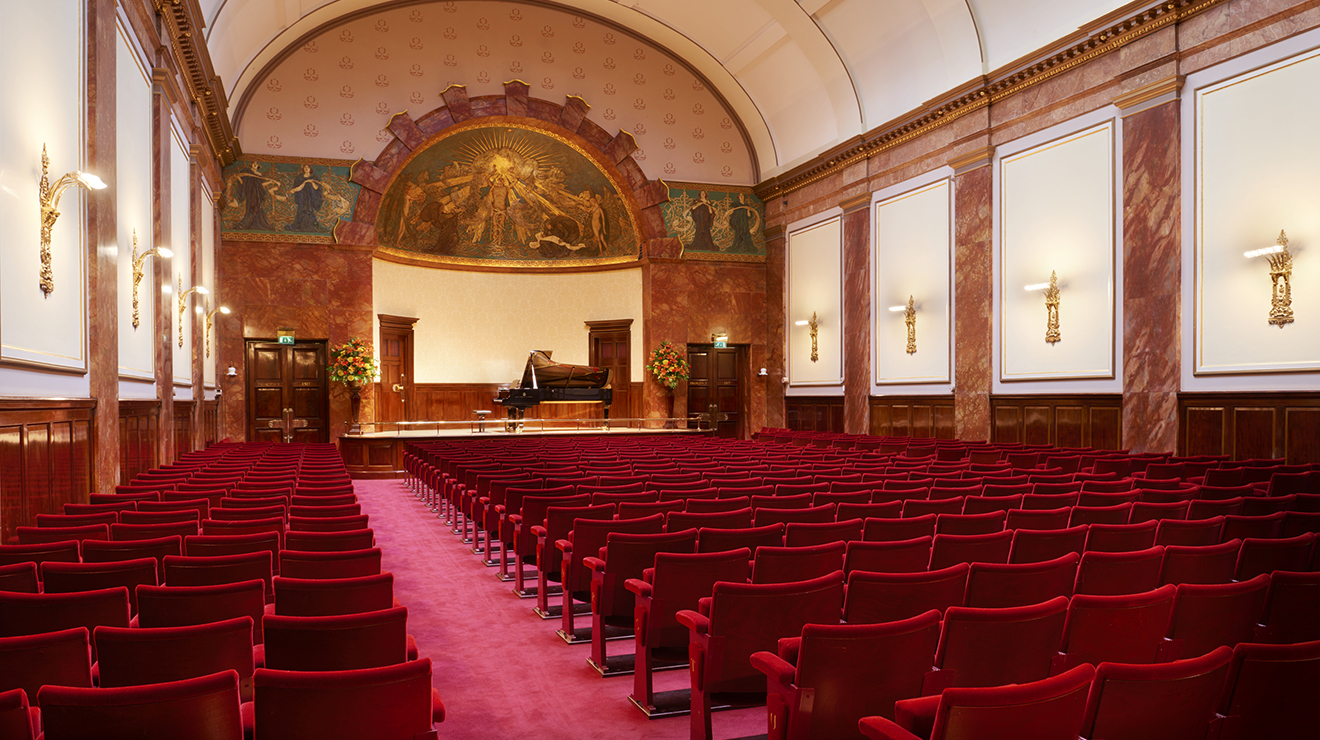
When it’s a socially-distanced concert

I’ve been guilty of it myself, proudly trumpeting “this concert is now sold out!” for the events I have been promoting over the past two months (I work for a London-based arts organisation and a local concert series), and I know I’m not alone. For those of us who have been so bereft of live music this year – musicians, venue owners, promoters and of course audiences – the fact that live music, with audiences, has been able to resume is something to celebrate.

Government restrictions in response to coronavirus mean that venues cannot operate at full capacity, whether this is a church (capacity c80) or a major London venue (capacity c3000). Social distancing regulations require a certain amount of space to be allowed between audience members and in order to adhere to these regulations many venues are operating at less than half their normal capacity. Obviously, venues must be safe for audiences – if audiences feel safe they will come to events – but the maths is simple and very stark: fewer “bums on seats” means lower ticket revenues. And venues and concert promoters rely on this revenue in order to pay artists and cover the other costs of putting on concerts and running a venue. Additionally, venues are restricted regarding F&B service (Food and Beverages), in normal times a significant income stream.

So what to do? Obviously, venues and promoters, and of course musicians, are keen to welcome back live audiences – a concert is not really a concert without a live audience – but balancing the costs of presenting a concert against reduced ticket and other income is a significant headache.

If your venue is less than half full do you charge more than double the usual price for the tickets? Of course not. This would be unfair on audiences, and while a few would be prepared to pay more, to support venue and artists, many would be deterred by a hike in ticket prices and would choose to stay away. With current restrictions in place, many venues and promoters are struggling to break-even.

But for those of us who give or promote concerts, to be able to welcome audiences back through the doors once again is very important and I firmly believe that venues must, if they can, offer audiences something, within the limitations of coronavirus restrictions. Some venues are lucky to have generous patrons and benefactors or have benefitted from government handouts; others do not but are still willing to, in the medium term, take a financial hit and bring audiences back. But this scenario cannot last indefinitely and without proper ticket revenues, many venues and promoters will struggle, along with performing musicians.

The last properly sold out concert I attended before the first UK lockdown was at the Wigmore Hall at the end of February, when American pianist Jonathan Biss gave a thrilling performance of Beethoven Piano Sonatas (read more here). At the time, the coronavirus was not yet headline news; of course people were aware of it, and I recall a friend hugging me in the vestibule of the Wigmore before the concert and saying “oh, maybe we shouldn’t do that!” – and then we both laughed. The hall was full to capacity and the bars downstairs were busy and noisy as people enjoyed pre-concert and interval drinks and conversation. At the time, I didn’t know it would be the last live concert I would attend for seven months. When the Weymouth concert series, which I help to organise, resumed in October, we presented two shorter concerts to allow for a socially-distanced audience of reduced numbers (less than half our usual audience) and while the church looked sparse, it was wonderful to hear live music and also applause. We took the decision not to increase ticket prices and hoped to be able to at least cover our costs and pay our guest artist, without eating into our bank balance. We are fortunately in having low overheads, but we face similar difficulties to other concert organisers and promoters.

Times are tough once again for musicians as the UK is poised to enter another period of lockdown and live events must be suspended. Let us hope that the new year will bring more positive developments regarding the management of the virus, which will allow venues to operate more profitably.

Meanwhile, those of us who love live music can support artists and venues by buying concert tickets, to live and online events, and making a donation where possible.
This site is free to access and ad-free, and takes many hours to research, write, and maintain. If you find joy and value in what I do, please consider making a donation to support the continuance of this site

Make A Donation


Header image by Kilyan Sockalingum on Unsplash
Wigmore Hall/BBC Radio 3 Special Broadcast series

JS Bach, arr. Busoni Chaconne from Partita No 2 in D minor for solo violin, BWV 1004 Schumann Fantasie in C, Op 17

Charles‐François Gounod – Meditation sur le 1er prelude de Bach (encore)

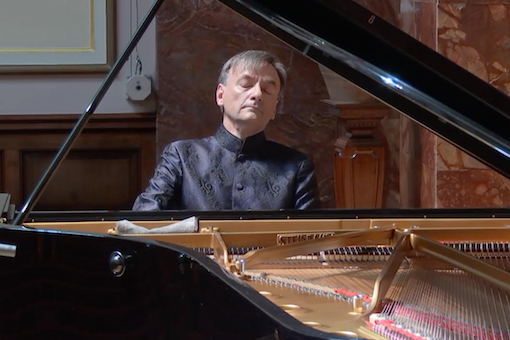
Stephen Hough, piano

Monday 1 June 2020


I admit I welled up as Stephen Hough played the opening measures of the Bach D minor Chaconne, transcribed for piano by Ferruccio Busoni. Yes, that opening has a spine-tingling authority, but the spontaneous tears were less for the music and more the effect of having beloved Wigmore Hall filled with music again – if not filled with an audience. Along with many other people, musicians and music lovers, I miss live music so much: I feel painfully bereft and in order to deal with this emptiness, I have avoided, until now, the many livestream performances and other music making which is going on online all the time now.

This was the first of a much-heralded and eagerly anticipated series of live concerts from Wigmore Hall, made possible by a collaboration with Radio 3, the hall and a generous benefactor. Why is this so significant, so tear-jerkingly meaningful? Because in the third week of March 2020, Wigmore Hall, along with the rest of London’s cultural life, closed its doors in the wake of the coronavirus pandemic. My last visit to WH was at the very end of February to hear, with a good friend, Jonathan Biss scorching his way through Beethoven, a concert which had an edge-of-the seat electricity and immediacy, and left us speechless. I didn’t know then that this would be my last visit to beloved Wigmore Hall for many months; I don’t know when I will be back there.

But, as Stephen Hough said in a conversation with Petroc Trelawny on Radio 3’s Breakfast show, the fact that live music has returned to WH, albeit bereft of an audience but for the Radio 3 presenter and hall director John Gilhooly, is a glimmer of hope, a sign that things may be making tiny, tentative steps to return to normal (I refuse to use phrases like “the new normal”!). Later, in an interview on Channel 4 News, Stephen said that not since the 16th century had we been “starved of” live music in this way; the concert halls remained open and the music played on even during wartime.

173441-bildschirmfoto-2020-06-01-um-13-35-56-kopie

The programme was, of course, exemplary in both its selection and execution. One can guarantee that Stephen Hough will always perform music which is so much more than notes on the page. Ferruccio Busoni was a regular performer at the Wigmore, then Bechstein Hall, in its early years, and indeed played at the hall’s inaugural concert. His transcription of the extraordinary Chaconne is a romantic tour de force, for both instrument and player, a fantasy of sorts, while remaining faithful to Bach’s original conception. Robert Schumann’s Fantasie in C, Op 17, is also a tour de force, of the myriad facets of love, originally conceived as a deep lament for his beloved Clara during a period of enforcement separation.

This music is profoundly moving at the best of times, and now, in what for the music industry is the worst of times, it had a special resonance, emotionally charged, brave yet never showy, authoritative and thoughtful and, in the Schumann, both extrovert and virtuosic and passionately tender. Inspiring, uplifting and painfully wonderful, there was Stephen Hough on stage, immaculate in his usual concert attire, playing beautifully to an empty hall.

As he said in his Channel 4 interview, the audience are a crucial part of the concert experience for the performer. Not only does a hall full of people have a different acoustic, but a living, breathing – and, yes, coughing – audience creates “a very active involvement in the music, and I think a performer senses this, the energy…and that quietness, when people are listening and attentive, and you feel an electricity there that you cannot replicate” (Stephen Hough).

An empty hall has a different kind of quietness, and in that strange solitude Busoni’s architecture seemed all the more monumental, while Schumann’s inner struggles had a greater poignancy.

Apparently, some 2000 people tuned in for the livestream performance, which was notable for the high quality of both sound and filming (for piano nerds like me, close ups of the pianist’s hands were a real treat – you just don’t get that close as an audience member). As a friend of mine, like me a regular at Wigmore Hall, remarked on Twitter:

Of course this makes us ache for performance with an audience again; but it’s also brought home to me that this is the only way some people can *ever* see/hear a Wigmore Hall concert. That so many of us are ‘together’ remotely for this adds something inexpressible to the stream. @Adrian_Specs

There was, via the social networks, indeed a shared experience. Not the same shared experience as one enjoys at a concert with friends, but nonetheless a very palpable togetherness. I knew I was listening with several of my regular concert companions, albeit remotely, and this brought a feeling of solidarity too. Because we will be back at Wigmore Hall. We will once again sink into its plush red velvet seats, open the programme to peruse the evening’s offering, enjoy conversation and wine during the interval, and experience the incomparable thrill of live music.

In the meantime, BBC Radio 3’s Special Broadcast series continues at Wigmore Hall every day until 19 June. Full details here

Watch Stephen Hough’s concert here


John Gilhooly, Director of London’s prestigious Wigmore Hall, has announced a new series of lunchtime concerts at the Hall, starting on 1 June. This is, sadly, not a return to “normal” for classical music – far from it – but it does signal a tiny glimmer of hope for an industry decimated by the global response to the coronavirus.

In collaboration with BBC Radio 3, part of their Culture in Quarantine season, lunchtime concerts will be broadcast from Wigmore Hall, featuring artists who can get to the hall easily, and without, where possible, the need to use public transport. These include pianists Imogen Cooper, Benjamin Grosvenor, Angela Hewitt, Stephen Hough, Mitsuko Uchida and Paul Lewis, singers Lucy Crowe, Iestyn Davies, Mark Padmore and Roderick Williams, violinist Alina Ibragimova and clarinettist Michael Collins. These esteemed artists will perform to an empty hall, with a maximum of two performers on stage and BBC broadcasting and hall staff observing strict health and safety guidelines in order to produce the programmes. A series of 20 concerts will be broadcast on weekday lunchtimes on Radio 3 and livestreamed via the Wigmore Hall’s website and YouTube channel.

John Gilhooly writes:

We are very grateful to our wonderful colleagues at BBC Radio 3 for collaborating with us on this project, as well as the private donor whose magnificent lead gift has made the series possible, helping us to match the BBC’s contribution. Through these concerts we will bring great live music from our acclaimed acoustic to every corner of the nation and overseas.

I hope this project will also provide a glimmer of light for the entire industry, administrators and musicians alike. Arts and culture contribute £8.5 billion to the UK economy, and this complex industry will need to be rebuilt with public and government support, in due course. It is still unclear exactly when we will be able to open our doors to the public again, and although we remain cautiously optimistic about the future, we can only react to events as they unfold.

The intention is to present a larger number of artists in similar future broadcasts, possibly some who are included in the Wigmore’s autumn 2020 programme.

This will bring a degree of cheer to those of us who love the Wigmore and miss live concerts in the “sacred shoebox”: it will undoubtedly be a pleasure to hear the Wigmore Steinway being played once more, and to have the sounds and colours of music flood the fine acoustic. This will be a different kind of live music, a little closer to the “real thing”, perhaps, than the livestreams and  “living room recitals” we’ve grown used to seeing online as musicians strive to keep the music going while also validating their identity during these uncertain times, and beyond.

Nothing can replace the excitement, drama and atmosphere of live music. As pianist Imogen Cooper remarked on BBC Radio 4’s Today programme:

The audience will be completely invisible – hundreds of thousands of people out there cooking their lunch…..We all need the immediacy and the danger and raw emotion of live music at the moment. It’s very cathartic.

Cathartic indeed. Yet I find I cannot listen to and enjoy much classical music at the moment as it reminds me all too painfully of the great hole coronavirus and government responses to it have ripped in our cultural life, and the grave difficulties faced by friends and colleagues in the profession. But of course I will tune in to these concerts (most probably on Radio 3 rather than via the livestream – I don’t particularly want to see my beloved Wigmore Hall devoid of the audience which helps to create its special ambiance).

For those of us who love live music, it is not just the “immediacy and the danger and raw emotion” that we miss. It is also the sense of a shared experience, the communication of emotions, and the celebration of creativity. Sure, one can appreciate those things in a radio broadcast or livestream, but you cannot truly replicate the live concert experience, not in its entirety.

It will be a curious experience for the performers too, playing to an empty space. For most, the sea of faces and the applause on walking across the stage, that special hush of expectation as the house lights dim, the feeling of collective listening and concentration, is as much a part of the live performance as the music itself. Imagination may go some way to create atmosphere in the mind of the performer (and this kind of ‘mental performance’ is a key part of the performer’s skillset in preparing for concerts) but I imagine playing to an empty hall, with only a few microphones and a handful of staff to be the “ears” for the performance, will feel quite strange. Yet, the artists giving these lunchtime concerts are respected, highly skilled professionals and I do not doubt that they will give their all to bring the music to us. British pianist Stephen Hough opens the series (programme TBC).


Further details of Wigmore Hall lunchtime concerts


noun

Music

noun: fermata; plural noun: fermatas

  • a pause of unspecified length on a note or rest.
  • a sign indicating a prolonged note or rest.

“It’s not the notes you play; it’s the notes you don’t play.” – Miles Davis

John Cage’s 4’33” may be the most infamous example of the use of silence in music (or rather the use of silence to create music), but composers have always recognised the power of silence and musical silence is as meaningful as interruptions and pauses in the language we speak. And because music is also a language, we recognise and understand the significance of those silences in music – a momentary breath, a witty or rhetorical stop-start, a pregnant, portentous pause, false cadences, an interruption to the flow of music which has you guessing before the composer strikes off in another direction. All these devices add meaning, drama, humour and emotion to the music. They also sharpen our attention and keep us listening, for the ear is constantly asking “what comes next?”.

5f4abe3691cbefc5214a04dcca372ff6
Fermata marking in music

A fermata marking above a note is generally understood to mean a longer pause – i.e. longer than the note value. Exactly how long to wait is at the discretion of the performer and there is a fine line to tread between creating dramatic, meaningful silence or suggesting that you might have forgotten what comes next in the music!

There is an even greater fermata at work at present, thanks to the global coronavirus pandemic. It has created an unprecedented, in peacetime at least, rupture to normal daily and cultural life. Concert halls and opera houses are closed, those places which until a few weeks ago resounded with music, and silence – not just the silences between the notes but that special hush of anticipation before the music begins or that magical concentrated, almost inexplicable silence which occurs during a particularly intense performance when it seems as if the audience is listening, and breathing, as one, or that special quiet at the end of a particularly arresting performance before the applause comes.

For those of us who love live music, the closure of the venues and its effect on our cultural life, has come as a huge blow, and not just in the absence of live music but also the social aspect of attending concerts. I had tickets to hear Chick Corea and Yuja Wang at the Barbican in March; both concerts were cancelled, and I do not anticipate returning to the London venues which I love (especially Wigmore Hall) until the autumn now, at the earliest. Summer music and opera festivals are now being postponed or cancelled (sadly, it seems highly likely that the BBC Proms will be cancelled), and one wonders how venues will cope when they are eventually permitted to reopen while audiences must continue to observe social/physical distancing. Auditoriums are not really designed to observe a 1- or 2-metre apart rule, and in older halls such as London’s Wigmore, audiences sit hugger mugger in tightly-packed rows. How will venues square this tricky circle? Will they perhaps sell only every other seat to ensure some distance between people? And how will orchestras, ensembles and choirs, for example, observe appropriate physical distancing on stage?

And there’s another conundrum for the venue managers – managing the social spaces where people meet and congregate before and during a performance, spaces which are often crowded, especially at a sold-out concert or the opening night at the Royal Opera House. It will be a challenge for sure – but I have a feeling that when the venues begin to reopen, music lovers and keen concert-goers like me will flock back to them. And some of us may take a gamble with our health in doing so.

image
Wigmore Hall, London

In the meantime, while coronavirus has forced the closure of the places where musicians and audiences come together to share in the experience of live music-making, it has not silenced the musicians who are determined to play on, their music broadcast via YouTube, Zoom and similar platforms, often with interesting and innovative results, and, it would appear, large audiences. Classic FM reports that a recent “living room” concert by their Artist-in-Residence violinist Maxim Vengerov has been viewed by more than 20,000 people, with 1,500 peak live viewers – more than can fit comfortably into a medium-sized concert hall. Such performances also bring the musicians closer to their audiences and break down the traditional barriers and notions of elitism associated with classical music and the rituals of its performance and presentation. Audiences see musicians at work in their own homes and discover that away from the formality of the concert stage, these people are normal – they live in normal homes, not Lisztian salons, wear normal clothes, have kids and pets. By the same token, musicians can forge stronger connections with audiences by bringing their music to the living rooms of their fans and supporters. If these online viewers translate into paying concert-goers when the venues eventually reopen, this could signal a marvellous resurgence for classical music and perhaps even encourage new audiences, a perennial issue for the artform. So maybe the coronavirus could have a positive impact on the way music is presented and enjoyed – we can but hope….

As a postscript, readers may be amused to learn that an alternative Italian word for fermata is corona…. And fermata is also the Italian word for bus stop.