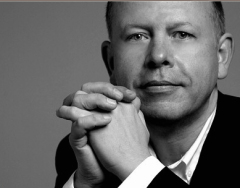
grahamfitchWho or what inspired you to take up the piano and make it your career? 

I was destined to read modern languages at Oxbridge but my heart wasn’t really in it. The piano was an all-consuming passion by my mid teens, and I’m afraid once the blinkers went on I couldn’t see myself being happy doing anything else.

Who or what were the most important influences on your musical life and career? 

Apart from my wonderful teachers Stephen Savage, Peter Wallfisch and Nina Svetlanova (each of whom gave me different parts of the puzzle), I was very influenced by András Schiff. Not only his playing (which blew me away the first time I heard it) but having the privilege of studying with him at Dartington in 1982 and then privately afterwards. Another profound influence was Leon Fleisher’s weekly piano class during my Peabody year, studying Chopin with Ann Schein and having some marvelous lessons with Julian Martin. Playing chamber music with some amazing string players and also playing the song repertoire have made me a more rounded musician than if I had just played solo.

What have been the greatest challenges of your career so far? 

I think juggling the various elements of what I do – playing, teaching, writing, adjudicating and now in my role as a principal tutor on the Piano Teachers’ Course (EPTA) UK. There never seems to be enough time to practise!

Which particular works/composers do you think you play best? 

I have played a wide variety of styles in my time, from the French and German baroque through to contemporary music. If push comes to shove I would have to say I identify most with the mainstream Classical and Romantic repertoire. I can’t imagine a world without Bach, Haydn, Mozart, Beethoven, Schubert, Schumann, Chopin – to name but a few.

What is your most memorable concert experience? 

If you mean as a listener, it would have to be Schiff’s Goldbergs at Dartington in 1982. One of the most memorable of my own would probably be playing the same work in Perth, Australia in the late 90’s – in front of an audience of pianists.

What do you consider to be the most important ideas and concepts to impart to aspiring musicians? 

A love of music, an appreciation of how music is built and how to communicate this in your playing. Aspiring musicians need a heck of a lot of discipline if they are going to amount to anything, but so often they don’t really know how to work. Part of my mission seems to be helping them learn how to practise.

Your ‘Notes & Notes’ recital on 14th September includes works by J S Bach and Haydn. Tell us a little more about why you selected these particular composers and works? 

I chose to play these particular works because I think Bach and Haydn go very well together. The B flat Partita and the G major French Suite are very often played, and I find I often teach them. The Haydn C major is such an inventive work – I just love the humour in it.

Why perform and talk about the music? How do you think this approach illuminates the music and composers for the audience? 

There is a growing trend for performers to talk about music, and to engage with their audience on a more personal and intimate level. If the venue is small enough, it can be a great way of enhancing the listening by offering what are basically spoken programme notes – and maybe some personal observations and anecdotes.

Graham Fitch’s ‘Notes&Notes’ recital is on Sunday 14th September 2014 at 3pm at Craxton Studios, Hampstead, north London. After the concert, the audience is invited to join Graham for a cream tea and a chance to socialise with other music lovers. Further information and tickets here. This concert marks the launch of the 2014/15 season of the innovative and popular South London Concert Series.

Graham Fitch, now based in London, maintains an international career not only as a pianist, but also as a teacher, adjudicator and writer. He has been appointed to the piano staff at the Royal Welsh College of Music and Drama, and runs private teaching studios in South West London, and the West End of London.

A published author, Graham has written several articles on aspects of piano playing and musical style. He has also produced a generation of teachers through his influence as a teacher. He is a regular contributor to Pianist Magazine, and is the author of a very successful blog, http://practisingthepiano.com/
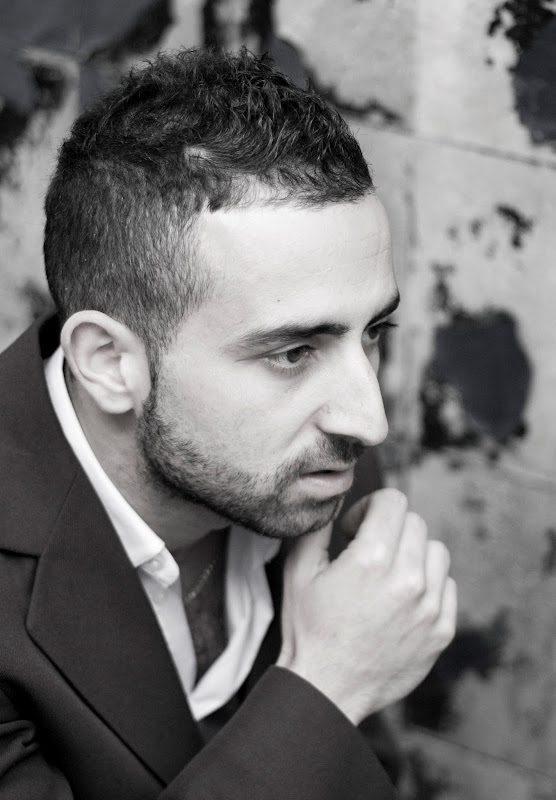
www.grahamfitch.com


Who or what inspired you to take up the piano, and make it your career? 
I cannot pin point where the inspiration came from, I guess I was just very passionate and still am about the piano.

Who or what were the most important influences on your musical life and career? 

My first teacher, Edvin Alamshah, who was a former student of Arturo Michelangeli, was a huge influence in my younger days.  But I think the greatest influences are the great composers, and great music.

What have been the greatest challenges of your career so far? 

I like to think of the challenges more like journeys; however I think for most pianists the greatest challenges are communication.  Once you have the ability to communicate with your audience you have overcome one of the greatest challenges.

Which performance/recordings are you most proud of?  

I haven’t recorded a CD yet but I have made many videos for YouTube and radio broadcasts. I think my favourite performances/recordings have to be the Scriabin and Janáček piano works.

Which particular works do you think you play best? 

It depends on how the coffee tastes in the morning!  There is no work I think of in that way, each piece of music has a soul and its own personality which breathes like we do, and on many occasions I’ve been proven wrong with a work I thought I could play best. However, Janáček sits very closely to me and agrees with me.

How do you make your repertoire choices from season to season? 

By reading lots and lots of music and seeing what speaks to me. I never listen to recordings to make these decisions.

Do you have a favourite concert venue to perform in and why? 

I have to say the Sydney Conservatorium of Music Verbrugghen Hall. It has lots of memories and a huge acoustic which fits my personality on stage.

Favourite pieces to perform? Listen to?  

I absolutely adore Haydn and all of his works, and I have so much fun with him while I perform.

Who are your favourite musicians? 

Really don’t have favourites, just very open/honest interpretation from many musicians young and old.

What is your most memorable concert experience? 

I think my most memorable was a recital where I performed lots of Galina Ustvolskaya’s chamber works. She was a student of Shostakovich.

What do you consider to be the most important ideas and concepts to impart to aspiring musicians? 

My friends and colleagues will laugh at this, but I always believe you must spend more time outside your practice room, meet people, go to concerts, classic or not, drink lots of whisky and take it easy.  I am not saying you should never practice – it’s very important: however some people really lose the sight of how it really is in real life. Spending 8-9 hours in a practice room can get very lonely: how are you supposed to communicate with people on stage when you can’t do that in real life?

What are you working on at the moment? 

I am working on the complete works of Janáček to perform and record in 2015.

Where would you like to be in 10 years’ time? 

Where I am now, happy and healthy.

What is your idea of perfect happiness? 

Where I don’t feel happy 24 hours of the day.

What is your most treasured possession? 

My piano scores

What do you enjoy doing most? 

Eating

What is your present state of mind? 

Panic (about to start teaching)

Vatche Jambazian performs works by Shostakovich, Mozart and Ustvolskaya at the 1901 Arts Club on Friday 16th May as part of the South London Concert Series. This concert is now **sold out**. Details of future South London Concert Series events here

Vatche Jambazian recently completed his BMus at the Sydney Conservatorium of Music and is now based in London performing many recitals in the UK and abroad. He has been a prizewinner in many international piano competitions such as The Russian Music Piano Competition in San Jose and the Australian National Piano Award. He is a highly dedicated piano teacher who aims to bring enjoyment as well as discipline to the lessons.

Vatche has recently been appointed Ambassador for the Commonwealth Piano Foundation.

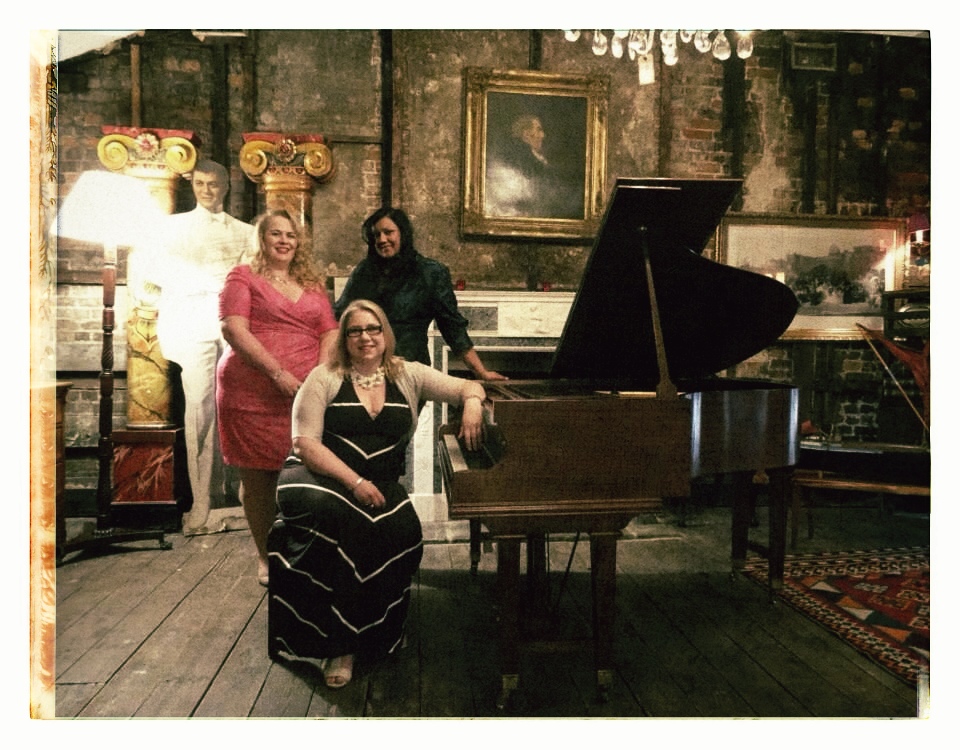
A stag with an impressive set of antlers surveys the room, while a white-tuxedo’d Tony Curtis keeps watch over the proceedings from his niche in a corner near the piano, a John Hopkinson baby grand with a rosewood case. Glittering chandeliers hang from the ceiling, illuminating the exposed brickwork on two walls of the room and highlighting the colours of the stained glass panels in the elegant sash windows. Exotic oriental rugs are draped over vintage British Rail first class seats, and at the back of the room, a glass cabinet is filled with antique pharmacy jars. Welcome to Brunswick House, part of the London Architectural Salvage and Supply Co, a Georgian mansion just five minutes from London’s Vauxhall Station, flanked by the brand new 5-star hotel and luxury apartments of One Nine Elms. Brunswick House is a treasure trove of antiques and salvaged curiosities, and on Thursday night last week, it provided a wonderful and eclectic venue for a fine evening of music making and conviviality.

IMG_2438
Lorraine Banning, Frances Wilson & Lorraine Liyanage (and Tony Curtis) at Brunswick House

“A superb evening – huge fun was had with a mix of musical genres in a delightfully decrepit and stylish Georgian mansion. Best of luck promoting these salon recitals, the way music is meant to be played and heard.”

Rosalind, audience member

The concert was part of the South London Concert Series, and featured a recital by BBC Music Magazine’s “rising star” Emmanuel Vass, together with supporting performances by three talented members of the London Piano Meetup Group, who despite not being “professional” pianists, played with equal poise, musical sensitivity and professionalism. The diverse programme matched the unusual setting, with music by Bach, Chopin, Turina, and Mozart together with Emmanuel’s own transcriptions of pop songs by Queen and The Prodigy. In keeping with the SLCS ethos of recreating the nineteenth-century musical salon, an hour of music was followed by much conversation and socialising in the ante-room next to the Saloon, and continued downstairs in the restaurant adjacent to the house.

View more photographs from the Brunswick House concert


Emmanuel Vass
Emmanuel Vass

The 2014 season of the South London Concert Series (SLCS) got off to a rollicking start with a sell out concert on Friday 24th January, featuring guest artist Emmanuel Vass. Described by The Independent as “one to watch”, Emmanuel, or Manny to his friends, is a rising star and with a deal with ClassicFM to promote his debut CD ‘From Bach to Bond’, the omens are good for this young Filipino/Yorkshire pianist.

The format of the event was the same as our launch concert: a guest recital of around 35 minutes, bookended by performances by “supporting artists” (we have dropped the moniker “amateur” because so many of our amateur pianists play to a very high level – and last night was no exception). And now that we have already run one successful event, the second one seemed much easier in comparison; in fact, the event basically ran itself. It helped that the bar at the beautiful and intimate 1901 Arts Club was open before the concert, which allowed guests to have a drink and socialise while the performers warmed up downstairs. And as an added benefit, which contributed to the convivial atmosphere, patrons were allowed to take their drinks into the music salon.

The concert was opened by Marina, an amateur pianist and violinist who works in financial services, playing an Etude in G minor by Moszkowski. This proved a lively opener, which caught the audience’s attention. Julie, a piano teacher from Surrey, took to the stage next, with Gershwin’s evergreen standard ‘The Man I love’, which had a lovely romantic lilt. Then it was time for our headline performer, Manny, who introduced his programme engagingly before launching into the bright and haughty first movement of Bach’s popular Italian Concerto. The middle part of his programme was all Spanish, an exotic Orgia by Turina and a sensuous Secreto by Mompou. Manny rounded off his performance with his witty and luxuriant James Bond Concert Etude, complete with Lisztian fiorituras and some vertiginous cadenzas, all of which were applauded very enthusiastically by the audience.

From Bach to Bond and then back to Bach with Alan’s measured and elegant performance of the Prelude & Fugue in C# from the first book of the Well-Tempered Clavier. The concert closed with a piece by Japanese composer Kozaburo Hirai called Sakura Sakura, which translates as Cherry Blossom, appropriately. Performed by Kyoko, it was atmospheric and arresting.

In keeping with the nineteenth-salon atmosphere of both event and venue, most of the audience retired to the upstairs bar and sitting room where the conversation grew louder as more Prosecco was consumed. It was lovely to chat to friends, old and new, and to be amongst so many music lovers and piano fans. Manny signed copies of his CDs and charmed everyone. The stalwarts amongst us then proceeded to the pub, where the conversation continued…..

The Spring edition of the South London Concert Series is on 21st March, featuring guest artist Anne Shingler, and a limited number of tickets are available.

Tickets are now on sale for our May event. Entitled ‘Eastern Accents’, it has a distinctly Russian flavour and includes music by Shostakovich, Ustvolskaya, Szymanowski and Stanchinsky, performed by Armenian-Australian pianist Vatche Jambazian, myself and Lorraine Liyanage. Buy tickets

Future SLCS concerts feature Angelo Villani and Daniel Roberts, and a new concert format ‘Notes&Notes’, in which a guest artist will give a short recital with talk. Full details on the South London Concert Series website. There is also the opportunity to hear Emmanuel again in a solo concert at a unique London venue. Again, details are on the SLCS website.


