Guest post by Frances Jones

As a big fan of Poulenc’s music, I’m delighted to see his Concerto for Two Pianos on the Proms programme this year. It’s an exciting piece, both for performers and audience alike, and great to see in concert. But it’s the solo repertoire that occupies my thoughts at the moment, as I try to get to grips with another of his Nocturnes. I mentioned in a previous article back in May that I was working on the first Nocturne and although I haven’t made as much progress as I might in learning the rest, snatches of these sublime musical portraits have been flitting around my head like moths around a camp-fire (more on moths later).

There are eight Nocturnes, composed between 1929 and 1938 when Francis Poulenc was in his 30s. Some of them have descriptive titles, suggesting glimpses of civilised nocturnal scenes, and they alternate between the serenely beautiful and the fast and furious.

Number 1 falls into the first category; Poulenc’s ability to write a beautiful melody is proven in the opening bars, and he uses the range of the piano and takes unexpected harmonic turns as the music progresses. It is at once original, with an edge of melancholy, and also deeply comforting to listen to. Despite the discords, the music always resolves but almost never to a straightforward major chord; there’s always a note that ‘jars’ slightly with the rest. I like to think this is Poulenc’s way of telling us that, whilst there might be great beauty in the world, there is no such thing as perfection in life and his music does not intend to escape this.

Number 3, ‘Les Cloches de Malines’, gives us the bell-like sound promised in the title. He sets up an almost-repeated bassline to represent the bells, switching from 3 time to 4 time and back so it feels out of kilter; with Poulenc, there is always a twist. After being lulled into a false sense of security with the bells’ gentle music, there is a bar of complete silence, followed by a passage of brash accented chords, marked agité. It is as if the bells have gone rogue, and reminds me of one of Charles Dickens’ Christmas stories, in which the traveller is tormented by incessant ringing and imagines climbing up the church tower to the bells which have taken on frightening forms. He awakes in the morning and, of course, it’s all been a dream. So it is in this nocturne; after the clanging and clashing there’s another bar of silence and the familiar bassline of the opening returns; all is well, and normality has been restored.

The fifth nocturne is a portrait of moths (‘Phalènes’) and, as the music is both presto and staccato in the opening section, these insects seem to be clamouring around a light; a street-lamp perhaps, or a glint from a window. The music is animated and there’s no real let-up until the end. It switches between pp and f, even ff, from legato to staccato, until finally coming to rest with a big sforzando chord.

Number 7 is another of the faster pieces but this one is joyful from the outset. It was written in August, 1935; perhaps the composer was enjoying a summer holiday in the country or at the coast – but this is speculation. The music runs up and down the keyboard in a friendly chase. Even the middle section, steady and perhaps somewhat cautious if a depiction of a character was intended, lasts only a short time before the carefree melody of the opening returns. This nocturne has no title; it’s up to the listener to make their own conjectures.

The final nocturne, Number 8, was written as a coda to the collection. It’s another lyrical melody, but concise; a final moment of gentle beauty after the antics of the previous piece. Number 8 brings the cycle full circle, using the ending of the first nocturne to draw the piece, and the collection, to a close. Having listened to these pieces countless times, I feel I’ve gained a glimpse into the composer’s life. But only a glimpse and, after all, that’s what these nocturnes are; sounds of the evening, auditory shapes in the twilight. I like that about them; the titles of some give us ideas but, for the rest, we can make our own suppositions. I haven’t yet come close to learning all eight, but I feel much better acquainted with them, and that’s a good start.


Frances Jones read music at York University followed by a PGCE at Cambridge. She teaches piano in SW London.
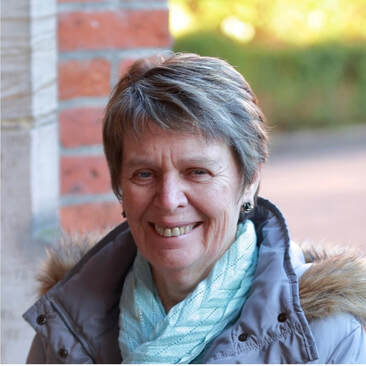
Guest post by June Armstrong

My ‘meet the composer’ project – June Armstrong’s Play for the Composer! – is now entering its fourth year. Originally created in 2021 to provide a much-needed performance opportunity for young pianists during lockdown, it has now become a platform for expression, not only of the music itself, but also the meaning behind the music, taking it to a higher level through visual representation, poetry and prose. Each performer makes a video of themselves performing their chosen piece. In return, they receive a certificate with feedback from myself and are included in a Celebration Video. They may opt to accompany the video with an artwork, a poem or prose piece representing the music they have chosen.

When a young person engages in this option, I feel that it enhances the performance, and when I receive an entry with artwork or prose, I always love to look at that first, before listening to the performance of the music. There is something so magical about the connection of the music to its visual representation or expression through words.

Firstly, of course, the music needs to be ‘learnt’. Secondly the music needs to be shaped and polished for performance. And then, the third dimension – taking the time to think about what the music is really saying, or expressing – adds to the understanding and to the performance itself. Knowing that the young performer has really thought about what the music is trying to express is just wonderful.

The concept of the melding of music and visual art and literature together is of course not new. “Music is no more the art of combining sounds to please the ear than painting is the art of combining colours to please the eye.” wrote Jean-Jacques Rousseau in his Essay. “More and more parallels between music and graphic art force themselves upon my consciousness” wrote Paul Klee in 1905, years after abandoning a promising musical career and dedicating himself to painting. The impressionist theories of Degas and Manet on the representation of light, found expression in music by Fauré, Debussy and Ravel, art and music forging an even stronger bond.

To find out more about June Armstrong’s Play for the Composer project and hear performances of her music, please visit https://playforthecomposer.jimdofree.com/previous-events/

June Armstrong’s Play for the Composer! 2024 is now open for entries up until 27 January 2024. Full details at https://playforthecomposer.jimdofree.com/.


June Armstrong is a composer and piano teacher living in Belfast. She studied music at Queen’s University Belfast, graduating with a BMus and an MA.

June has had compositions included in all the major examination board syllabi and has received commissions from ABRSM, Red Leaf Pianoworks in Canada, Edition Musica Ferum, EVC Publishing and Hal Leonard in the USA. She specialises in composing music focusing on atmospheric playing, using colour, shape, and impressionistic sounds rather than traditional harmony.

She especially enjoys playing Bach, playing the violin, jazz, walking . . . and watching the sea.

www.junearmstrong.com

www.playforthecomposer.jimdofree.com

Sergei Rachmaninov (1873-1943) is surely one of the greatest – if not the greatest – composers for the piano in the history of the instrument.

It probably helped that Rachmaninov was an extraordinarily talented pianist himself and the instrument dominated his creative thinking from the outset. He began playing the piano at a young age and by his early teens he was already performing in public. He went on to study at the Moscow Conservatory, where he received a rigorous musical education that included extensive training in piano performance. This background gave him a deep understanding of the instrument, both technically and artistically, which is clearly reflected in his piano music.

As a master of the piano, who fully understood its capabilities, one of the hallmarks of Rachmaninov’s piano music is its virtuosity. His music is technically demanding and requires exceptional skill and dexterity to perform. But he was also careful to ensure that his virtuosity always served the music, rather than being an end in itself, and his works for piano – from the miniatures and salon pieces to the great piano concertos – are not just impressive displays of technical prowess, but also deeply expressive and emotionally evocative, full of brooding passion that remained a powerful force in his music throughout his compositional life. His music is often intimate and personal. He wrote many of his pieces as a way of processing his own emotions and life experiences. His pieces are full of passion, nostalgia, and a sense of yearning; they plumb the depths and scale the heights of emotion, and they speak of and to the human experience in a way that is both universal and also highly intimate.

Another important aspect of Rachmaninov’s music is his use of harmony. Reacting against the trend towards modernism and the avant-garde, which dominated classical music at the turn of the 20th century, Rachmaninov remained true to the late Romantic style of which he was a master. His music is replete with lush harmonies and emotional expressiveness, and he used a wide range of complex chords and sweeping arpeggios to create a sense of richness, vivid colours, depth and emotional power.

He also had a wonderful gift for melody, and his piano pieces are full of beautiful, memorable themes which are often developed over the course of the piece, becoming more complex and intricate as the music unfolds to create a sense of narrative and emotional progression.

For the advanced amateur, and even the professional, his music can be daunting. Many pianists believe they cannot play Rachmaninov’s music because of the physical demands it places on the player – a misconception to which I subscribed for a long time, until I decided to include two of the Op. 33 Etudes-Tableaux in one of my performance diploma programmes.

I believed my hands were too small for Rachmaninov, that I didn’t have a big enough hand stretch (a ninth, at a stretch; Rachmaninov could famously stretch an octave plus 4) or the necessary power and stamina to manage the big, hand-filling chords or the tempi. So what did I do? I selected a piece (op. 33, No. 7) which included both of these challenges – and I rose to them, with the help of my then teacher who showed me that one needs neither hands like shovels nor a specially-adapted piano keyboard to play this magnificent music.

Yes, technique is crucial in mastering Rachmaninov’s music, but perhaps the harder aspect is interpretation – and for that one can hear the master himself playing his own music. Recordings of Rachmaninov playing Rachmaninov offer some remarkable insights into his approach to tempo, phrasing, dynamics, interpretation, a gift for counterpoint, and so much more. There is much expressive freedom in his performances coupled with a profound emotionality (as opposed to sentimentality), rendered with great clarity and drama. He offers us the best interpretation possible of his own music. It is therefore surprising to learn that Rachmaninov declared, “I can’t play my own compositions.”

His most famous works for piano are surely the second and third piano concertos, the Rhapsody on a theme of Paganini, and the Preludes in C-sharp minor and G minor. But his oeuvre for piano is extensive and varied – the opp. 23 and 32 Preludes, two sets of Études-Tableaux (opp. 33 and 39), transcriptions, salon pieces like the Morceaux de fantaisie and Moments musicaux, the Symphonic Dances, works for four and six hands piano, variations (on themes by Chopin and Corelli), two piano sonatas, and many other miniatures and shorter works.

Which pianists should we turn to for inspiration in this remarkable repertoire? Of today’s pianists, Evgeny Kissin is, for me, one of the finest Rachmaninov players – an opinion which was fully reconfirmed when I heard Kissin in concert at the Barbican in March; the second half was all Rachmaninov (to mark the composer’s 150th anniversary). Kissin’s technical virtuosity and musical understanding allow him to reveal the full range of Rachmaninov’s music, from hauntingly beautiful, intimate melodies to thunderous climaxes.

This Etude-Tableaux, from the Op. 39 set, is one of my favourites:

When preparing for my diploma, John Lill’s recording of the Etudes-Tableaux was one to which I returned many times, but I also very much like Nikolai Lugansky in this repertoire. His performances of Rachmaninov’s music in general are marked by a rare combination of technical mastery, emotional breadth, and interpretive insight which showcase the full range of the composer’s vision. Steven Osborne is another pianist whose recording of the Etudes-Tableaux I much admire for its clarity, multi-hued dynamic palette and beautiful quality of sound, coupled with a thrilling “in the moment” spontaneity.

Pianists from an earlier era must surely include Vladimir Horowitz, who was greatly admired by the composer himself, and who helped bring the third piano concerto to prominence in the USA. His recordings of the Prelude in C-sharp minor and the Vocalise in particular are also widely admired for their emotional intensity and technical brilliance.

And no collection of favourite Rachmaninov recordings should be without Sviatoslav Richter. Renowned for his technical command and expressive power, and his ability to create a sense of “controlled risk”, Richter’s performances of Rachmaninov’s music are considered some of the finest ever recorded.

Other pianists to seek out in this repertoire include Emil Gilels, Cyril Smith, Vladimir Ashkenazy, Yefim Bronfman, Byron Janis, Martha Argerich, Arcadi Volodos, Daniil Trifonov, Yuja Wang, Peter Donohoe, Khatia Buniatishvili, Valentina Lisitsa….. Each of these pianists brings their own distinct interpretive style to Rachmaninov’s music, resulting in memorable performances that are technically fluent and emotionally rich.

Are there pieces that are simply too challenging for non-professionals to even attempt?

Guest post by Caroline Wright

There are those who believe that, yes, there are indeed pieces that amateurs should leave well alone. Hugely technically challenging pieces – of which there are many in the piano repertoire –  should be respected by those who cannot hope to do them justice. We should all be aware of our limits, and leave the tough stuff to those who can handle it!

I think most musicians probably disagree with this position. Personally I don’t think any repertoire should be off-limits, to anyone. We all need to be aware of our level and personal limitations, but that’s true of professionals and amateurs alike. Many individuals have physical limitations that mean they will never be able to play certain pieces, but that has no effect on their ability to play other repertoire – for example, having small hands is a curse for pianists who wish to play Brahms, Rachmaninoff and Ravel, but may actually bean asset in Bach, Scarlatti and Mozart. Finding and expressing the beauty of a piece of music can be both a challenge and a joy for anyone, irrespective of it’s technical demands.

I cannot think of a better way of respecting the music of great composers than by dedicating many hours to playing and memorising it. Listening to recordings and live concerts given by great performers is wonderful too, of course, but undoubtedly a more passive way to experience music than playing it and internalising it yourself. Learning the music, to such a level that you can see the score in the mind’s eye and listen along without the need for external sound, is surely a greater mark of respect than playing it note-perfect in every performance?

In reality, the boundary between amateurs and professional musicians is blurred. Many amateurs are highly skilled, qualified musicians, and many professionals rarely perform in public. At the end of the day, any musician (particularly soloists!) must decide what repertoire they are happy to play in concert in front of strangers, versus that which they prefer to play for their own enjoyment, in the safety of their own home. And here, I believe, is where the most stark difference occurs between amateurs – literally ‘lovers’ of music – and professional performers who must make a living from music. Those of us who have the (dubious!) ‘luxury’ of earning a living outside of performing can afford never to play to a fee-paying public, if we so desire. We may play to friends and family, students and colleagues, or simply to ourselves, without having to conquer performance anxiety and the very real possibility of making fools of ourselves on stage. This choice should certainly not act as a barrier to playing particular repertoire. Professional performers, on the other hand, must make a living from performing and accept that anything less than a polished performance is unlikely to help their career progression or recording sales.

As an amateur pianist, there is no doubt that there are many pieces that I will never be able to play well enough even for my own satisfaction (and wouldn’t dare inflict on anyone else!), and others that I believe I play well enough both for myself and others to enjoy. There’s a balance that I find hard to strike between painstakingly learning more challenging repertoire and playing technically easier repertoire to a higher musical level. The guidance of a teacher to steer any unwary students towards repertoire that they will find challenging yet satisfying is crucial. But no music should be off-limits and, regardless of one’s ability, it is a privilege to be able to study some of the greatest works that have ever been created by the human mind.


Caroline Wright is a musician (MMus, LTCL) and scientist (MSci, PhD). Her compositions have a diverse range of influences, from classical and contemporary to blues and jazz, film and folk, dance and electronica.