First published in 2013, The Musician’s Journey by Dr Jill Timmons is a handbook for musicians who want to make the most of their specialist training to carve a successful professional career.

A celebrated pianist, who studied with, amongst others, György Sebők, Jill Timmons is also an acclaimed educator and leading consultant in arts management and mentorship. Her profound appreciation of the sensibilities of musicians and the exigencies and challenges of the musician’s life – from physical and emotional health to the importance of self-care and personal autonomy – together with years of experience within the music profession, make her the ideal guide and mentor.

The musician’s training, usually undertaken at specialist music school and/or conservatoire, is still largely focussed on learning to be a performer. Yet, today more than ever in the highly competitive world of professional music, musicians embarking on a professional career (and even those already established) need a good handle on the business side of the profession. Little practical support or teaching is offered in the other important areas of shaping one’s professional career – from learning how to create a website or develop a social media presence to entrepreneurship, and business and marketing skills – leaving many musicians on graduation thinking, (and often being asked), “So what do you do now?”.

Unfortunately, an attitude still prevails that taking a more businesslike approach to one’s career “devalues” the music. Fortunately, Timmons successfully debunks this absurd notion in The Musician’s Journey, and offers a wealth of practical information, inspiring case studies, and insights drawn from personal experience to help musicians develop, enhance and broaden their careers while retaining a strong self of personal autonomy, individual integrity and artistic vision – themes which run, fugue-like, throughout the book.

Organised in short, focussed chapters, with clear subject sections within each of them, and written in an accessible, conversational style, Timmons draws on numerous resources from religion and mythology to neuroscience, physiology to Feldenkrais, and much more, to illustrate her approach. This is not a self-help book in the traditional sense, and it is refreshingly free of “woo woo” pseudoscience and cod coaching. Instead, Timmons presents a meticulously researched, highly readable and non-elitist handbook which takes the reader on a detailed journey with specific goals and plans showing how to steer a path through the myriad complexities of the profession.

Too much is written on practicing music, finding one’s creative voice and finessing one’s performance skills; too little is written on the practicalities of forging a career in music (and in the arts more generally) in the 21st century. This book is a sensible yet inspiring manual on how to live a vibrant, fulfilling and successful life as a professional musician. Timmons gives much pause for thought with ideas and suggestions musicians may not have considered before, or were discouraged from considering during their training. In encouraging a good portion of “thinking outside the box”, Timmons’ book will also appeal to people outside the profession: her pragmatic and inspiring approach is applicable to anyone embarking on a freelance career.

Key points

  • Offers a strategic combination of creating a vision and then formulating a plan to help guide musicians in successfully developing a thriving career
  • Includes diverse true-life stories of music professionals who have used the process successfully
  • Focuses on entrepreneurship as a means for career development
  • Suggests general tips on grant writing and financial development
  • Guidelines for teaching entrepreneurship
  • In addition, the updated second edition considers the impact of the COVID-19 pandemic on the lives of musicians, and the arts in general

Additional resources, including downloadable forms and worksheets, are available from the book’s companion website

The Musician’s Journey (second edition) is published by Oxford University Press

I have been very touched and moved by the many responses I received via this site and also on Twitter and Facebook in response to my article about my own estrangement from the piano during the past year, and I’m very grateful to people for writing with so much honesty – like David, a friend from my piano group, who has felt the loss of live music and singing with his choir really acutely:

Music was my release, my passion, my individuality and this was all taken away from me. Overnight. – David, amateur pianist & singer

Like me, David has found it difficult to engage with music via livestream, and regards making music, either solo as a pianist or with other people through his choir, as a more than just notes, but rather a “lifestyle” – something which brings not only pleasure, stimulation and self-fulfilment but also a sense of living a full life.

Others told me how the piano has been a lifesaver for them during a very challenging year. For Andrew, who was made redundant and had to move house, the piano has provided important continuity in his life:

I have played everyday through this whole traumatic period and I simply went back to the beginning. Bach. I opened book 2 of the ’48’ (I always seemed to play from book 1 in the past) and selected 2 preludes and fugues to start with and have slowly added another as I gained some sort of mastery over each one. The concentration, attention to detail, constant twists and turns in the part writing, compelled me to focus on this, and this alone for 60- 90 minutes a day. It was time away from the outside world and the pressure that surrounded me… without it I would have collapsed.

(It is interesting to note that several other people cited the music of Bach in providing much-needed stability and focus on their life, and I do think there is something about the structure of Bach’s music, coupled with its depth and beauty, that perhaps makes it a good choice for the long days of lockdown.)

It was my friend Rhonda who articulated so well what I had been feeling

In my experience, the loss of the music industry as I knew it feels as if the world has been upended. What had great meaning the day before the first lockdown felt drained of all relevance a month later. 

***

Few people would dispute that the last year has been difficult. Many of us have lived under extraordinary restrictions for months, unable to see family and friends and enjoy social and cultural activities. Largely confined to our homes, we have had to adapt to new ways of working, socialising and interacting with colleagues and friends.

For professional musicians, the last 12 months have been very challenging indeed. The almost complete shut down of concert venues and opera houses has led to loss of work and has highlighted the precariousness of the working life of musicians in an already insecure profession. The disruption from such a big external event as a global pandemic, and the loss of the music industry as they knew it, feels as if the whole world has been upended, and this has caused many to question whether live music will ever recover, and if so, what will it be like in the future? Some musicians are even considering leaving, or have left, the profession altogether.

In addition, many musicians – and I include amateur players in this too – have felt estranged from their instrument and the music they love. At times of stress, many of us turn to music for comfort and refreshment, as a listener and/or player. Yet the pandemic has, for some of us, put a huge gulf between us and the music we used to love to play and/or hear in concert. It no longer speaks to us or is meaningful in the way it was previously.

Rekindling that love will take time and patience. I felt a huge sense of loss when the London concert halls were forced to close in March 2020 and for many months I simply did not want to listen to or engage with classical music. It was akin to a sense of grief. Finding a way back to enjoying and playing music has been slow for some of us, and at times frustrating, but it is possible to rekindle the love.

b6cc09a3d891e6cc9836f646db5955a8

I am grateful to the people who have contacted me in response to my earlier article, who’ve shared their experiences, and who have offered practical advice, some of which I am sharing here:

  • Don’t feel guilty about not wanting to practice or listen to music. Be kind to yourself and accept that these feelings of dismotivation/disengagement will pass.
  • Seek out music that speaks to where your mind is now, even if it’s not what you would usually play or listen to. In recent months, as I’ve re-engaged with classical music, I have found myself drawn to more gentle, meditative or ambient “post-classical” repertoire.
  • If practicing feels like a huge chore, revisit previously-learnt repertoire which you like and know you can play well. Give yourself permission to just play, not make progress.
  • Try to gradually re-establish a routine, even if you’re only playing for 30 minutes a day. Routine fosters creativity and can also be very steadying in times of stress.
  • Talk to others. Many people are feeling the same and knowing you are not alone can be very supportive.
  • Listen to music – and listen randomly. Some of the music streaming services create random playlists based on your listening; this is a great way to discover new repertoire and may even encourage you to learn new pieces.
  • Be patient. The passion will return, don’t force it.

Most of us have had to live in lockdown or under various restrictions on our daily lives due to the coronavirus pandemic for over a year now. It has been a particularly difficult time for musicians, in an already precarious profession, and the knock-on effect of restrictions leading to the shut down for months on end of concert venues and opera houses, rehearsal spaces and other workplaces, has really highlighted the fragility of the musician’s life and how woefully unprepared the industry was to adapt to the challenges created by a global pandemic and governmental responses to it.

The lockdown has offered plenty of time – perhaps too much time – to reflect, and for many of us it has led to a reappraisal of how we work and what our priorities might be. I spoke to a number of musician friends and colleagues in the process of researching this article: it was heartening to learn that many have been able to find positives amidst the difficulties, but equally nearly everyone has faced challenges, often financial, over the past year.

As freelancers and self-employed people, musicians have felt undervalued and excluded by the UK government, which seems not to care about the arts nor really understands how the profession works. And to add insult to injury in a profession already feeling the bruising effects of lockdown restrictions, a further body blow was inflicted when a number of government ministers suggested that those who work in the arts were not “viable” and that they should seek employment elsewhere or retrain. This, understandably, was met with derision; what my conversations with musicians have revealed is that far from “unviable”, most have demonstrated that they are resilient, adaptable and resourceful, utilising skills developed through their training, a strong work ethic and a willingness to support one another. Some have had to take work outside the industry in order to survive financially; it cannot be easy trying to retain a sense of oneself as musician when one is working as a delivery driver or in a supermarket.

One of the hardest aspects of lockdown has been the lack of face-to-face contact with colleagues. Music is a collaborative, ensemble activity and in addition to rehearsing and playing, discussions and conversations with others are an important and stimulating part of the process of creating music. Something is lost when such conversations take place via a computer screen. Alongside this, regular interactions with musician colleagues allow ideas to flow and offer an important support network. Amateur musicians feel this strongly too, with the suspension of orchestras, choirs, piano clubs, meet-ups and music courses.

both my musical activities (choral singing, very socially-oriented) and piano playing (not so much) lose much of their meaning if I can’t physically do them with others

M-N

To try to counter this, ‘Zoom choirs’ and ensembles have been formed to allow people to sing and play together, albeit virtually. It’s an imperfect way to make music, when the activity is about working and playing collectively, in the same space, but it has at least offered an important sense of connection, and of course the opportunity to actually make music; some of these Zoom performances are really quite impressive. Their success relies on people who are fully conversant with the technology to create performances which are both glitch-free, and, as this example below by composer Thomas Hewitt Jones proves, communicate powerfully – which is what any musician seeks to do in a live performance.

Many musicians have had to get to grips with new technology to facilitate remote teaching and rehearsing. Venues too have had to learn how to present livestream performances; again, some of these have been really impressive with high-quality audio-visual effects which help to create atmosphere as well as convey the music to the audience in the best possible way.

although it is suspiciously easy to deliver orchestral recordings without any live players from my studio in the short term, it completely misses the point of what music-making really is, and there is no substitute for the real thing

Thomas Hewitt Jones, composer

For those for whom performing is their life-blood, their identity and a source of income, the loss of public performances has been particularly difficult. While many musicians have been quick to adapt to livestream and video concerts, almost everyone I spoke to profoundly misses the experience of live performance with an audience. Livestream offers a different way of giving concerts, and it has led to an increase in people engaging with classical music, but what all the musicians I spoke to agreed on is that no technology can ever replace the experience of live music – as a performer and listener. And an ongoing issue with livestream is how to monetise performances. Again, progress is being made here as musicians and venues explore ways to offer ticketed livestream performances, and for many, musicians and venues alike, livestream will continue to be an important part of the concert experience after the venues have reopened to live audiences.

When face-to-face working/rehearsing/performing was (and will be) permitted again musicians have, like the rest of us, had to adapt to measures such as social distancing – which means players are much further apart in an orchestral or ensemble setting, presenting its own challenges for players and conductor (and no page-turners for pianists) – wearing masks, taking regular Covid tests (and dealing with the consequences of a positive test result and loss of work/income), playing to much smaller, socially-distanced audiences, travel restrictions and myriad other issues which can add to the stress of an already stressful profession. In these scenarios, musicians have proved their willingness to be adaptable and, in their desire to be making music once again, have accepted the changes or restrictions to their working practices.

In terms of managing the day-to-day “sameness” of lockdown, many musicians cited the importance of having a daily routine. The loss of concert bookings has meant not only the loss of income but also the motivation to practice regularly, but equally this has offered more time to explore new repertoire or refresh previously-learnt music. And with all this extra time on their hands, many musicians have allowed themselves a much-needed break from the rigours of daily practicing, rehearsing, travelling and performing. This has also led some to reappraise their career in a profession with often unsociable hours and unattractive working conditions.

having personal projects and focusing on what is important for ME is still possible and that’s where where my growth as a musician is

Eleonor Bindman, pianist

Those musicians who also teach have perhaps fared better, as teaching at least offers regular income, but many have had to adapt very quickly to online teaching and learning new technology in order to continue to work. This has added to their skill set and allows them to be more flexible in their approach to teaching: when face-to-face teaching is not possible, they can at least continue to offer online teaching. Many have also reported that students seem more motivated and relaxed when playing at home on their own instruments.

online courses bring together musicians from all over the world, which is particularly important during the pandemic and post-Brexit

Penelope Roskell, pianist & professor of piano at Trinity-Laban Conservatoire of Music & Dance

The overriding comment in response to my question What have musicians learnt from lockdown? is that there is no substitute for live music, before a live audience, and that we should never take for granted the importance of music and music-making (and the arts in general) is in our cultural, social and economic life.

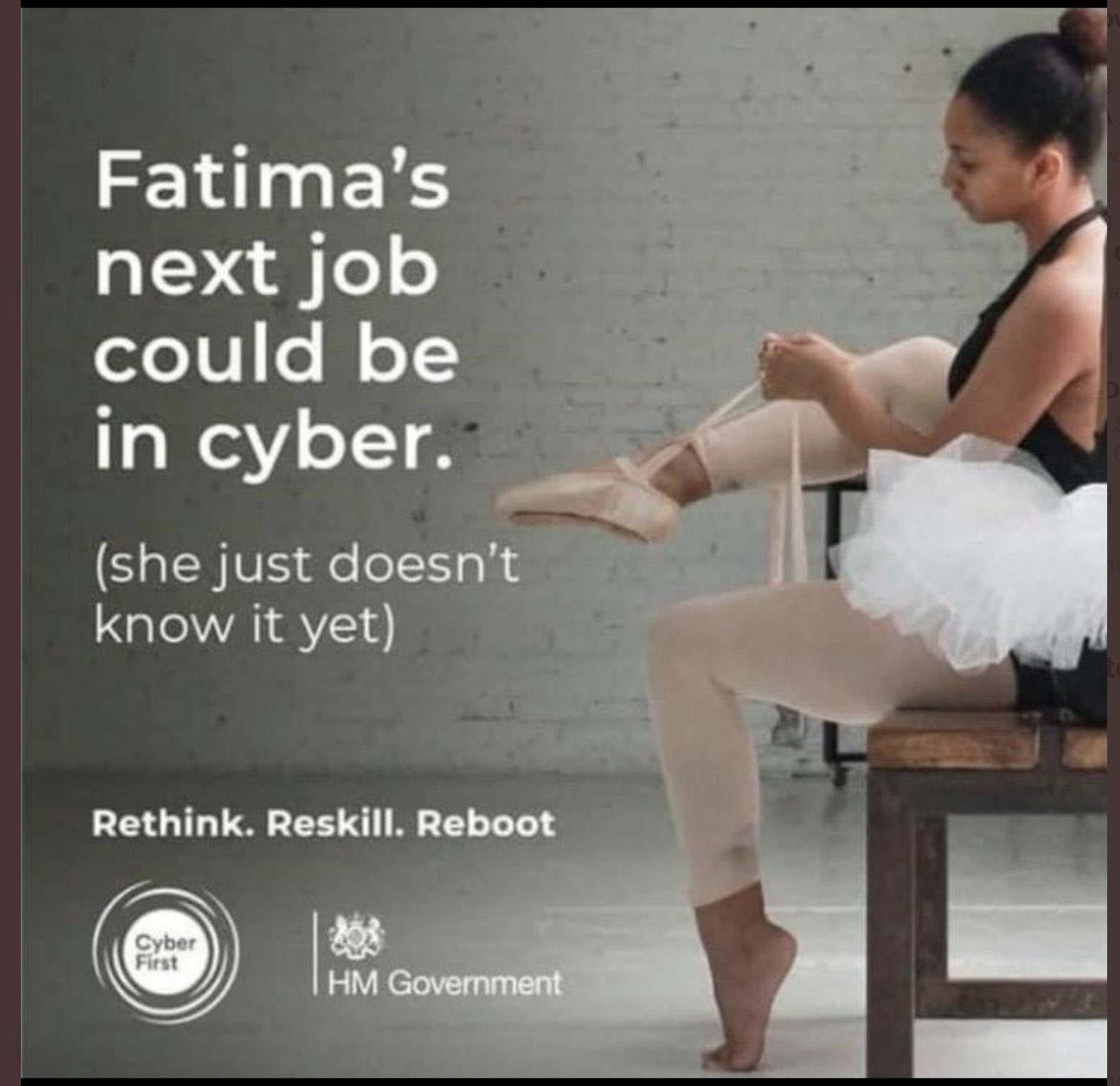
Over on Twitter this week this government advert on a skills and training website started doing the rounds:

Musicians, and others who work in the arts, are, justifiably, feeling extremely anxious, undervalued and largely ignored by government at a time when the arts sector in general is in a perilous position due to the UK government’s response to the coronavirus pandemic (and yes, it is government response which has caused the current situation, not the virus: viruses don’t make policy.).

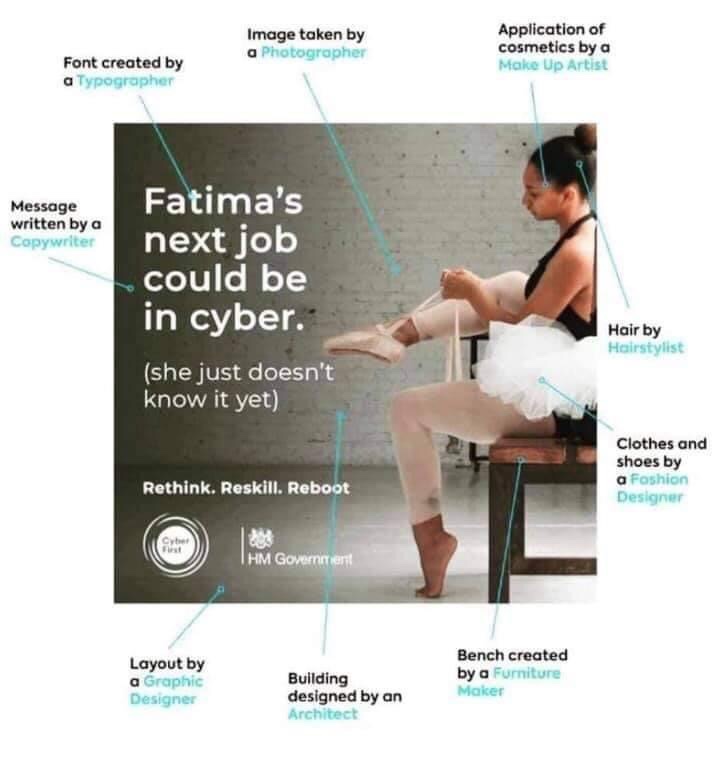
This insensitive, ill-thought advert, which actually originates from 2019, comes just a week after Chancellor Rishi Sunak inferred that working in the arts is not “viable” (for which read: “not a proper job”, thus ignoring the huge contribution the arts makes to the UK economy). He later attemped to clarify what he had actually said by offering some emollient words to theose who work in the arts – and Oliver Dowden, the Culture Secretary (who reminds me of Blinky Ben from tv political comedy The Thick of It) apologised for the “crass” advert. I note that this advert, together with others of the same style, have now all been pulled from the website in question.

Ever since I became more involved with the UK classical music scene, via this blog and my work with professional musicians, I have sensed an attitude that persists in the UK in particular that working in the arts is some kind of “hobby job”, rather than a “proper” profession. I think this comes, in part, from the perception that many of us who work in the arts love what we do, and thus we are not “serious” about our work.

This couldn’t be further from the truth. The many musicians I know, as friends and colleagues, and others who work in the industry, are incredibly committed, serious and, above all, professional people; that we enjoy our work is a bonus, but it does not mean that our work is not viable, nor has value.

The trouble is, for those outside the profession and, it would seem, politicians, creative people like musicians or artists or writers don’t always display outward productivity – the fruits of their labours may not be immediately visible and as a result there is a societal attitude which suggests these people are “lazy”, “unproductive”, or “don’t contribute to society”.

So to counter the suggestion that we are not viable, that we need to “reskill”, here are just some of the very important skills which musicians possess:

Well-organised

Self-starting

Self-motivated

Self-determined

Good time-managers

Adaptable

Flexible

Collaborative

Team players

Hard-working

Resilient

Mental toughness

Physically dextrous with fine and large motor skills

Highly developed memorisation skills

Able to take initiative

Thinking creatively/thinking on their feet

Goal setting/achieving

Used to working to very high standards

Able to cope with stress

Imaginative

Persevering

Determined

Empathetic

Good listeners

Able to cope with failure/setbacks

Diligent

Patient

Able to concentrate for long periods of time

Detail-oriented

Intuitive

Analytical

Entrepreneurial

Pattern recognition skills

Lateral thinking

And let’s not forget all the others in the creative industries:

This site is free to access and ad-free, and takes many hours to research, write, and maintain. If you find joy and value in what I do, please consider making a donation to support the continuance of this site

Make A Donation