Guest post by Lorraine Augustine


I am aware that this is a very contentious issue/question for many; however it is something I personally feel very strongly about and believe that it should be addressed and discussed widely within the profession.

To that effect, in preparation for my article, I posed the question on an online piano forum as to whether or not piano teachers ought to have achieved a minimum level of piano specific qualifications in teaching and/or performance before setting themselves up as piano teachers, and whether or not the profession should be regulated to ensure that teachers do have the minimum piano specific qualifications. 

The post drew some pretty strong reactions, and I must admit I was very surprised at the number of piano teachers who strongly disagreed with me. However, there were many who strongly agreed, one of whom is eminent concert pianist and Professor of Piano, Karl Lutchmayer, who has kindly agreed to share his thoughts and views for this article below: 

 “Would you send your child to a ‘paediatrician’ who only had an A level in biology? Of course not, and neither would you be able to because it is a regulated profession. Yet, anyone can set up as a private music teacher. As such, every year, professionally qualified music teachers take on students who have been poorly taught and have to put them through the utterly disappointing process of unlearning bad teaching. This may turn the student off music entirely, and occasionally, particularly at higher levels of study, the student has endured long-term psychological or physically damaged that will seriously undermine their future learning. Yet, as long as the first teacher has done nothing illegal there is no way to prevent them doing the same to hundreds of other students.

Such a situation would be intolerable in other forms of teaching. Various commentators point out that there are bad qualified teachers. This is certainly true, and only means that regulation should set the bar higher, particularly with CPD, than it is at the moment, it is not a reason to avoid regulation. Others point out the cost for teachers, but such regulation is required, for instance, for osteopaths who bear the cost as part of their costs. Would you really want osteopathy without regulation? If we are going to accept that bad teaching can cause both psychological and physical damage, then the lack of the requirement for a regulatory body is not only bizarre, it is a derogation of our duty of care as professionals educators..”

I wholeheartedly agree with Karl. Like many piano teachers I regularly inherit transfer students from other teachers, and whilst many have been well taught, and have strong foundations on which to build, at least an equal number have not. The majority of those students who come to me with poor technique, notes written in the score, no idea about phrasing, articulation, tone production, balance and voicing etc, have been taught by unqualified teachers. By this I mean people who have set themselves up as a teacher with a very minimum level of skills themselves, perhaps a playing level of below even grade 5 standard, and very little understanding of the instrument and its repertoire, nor of pedagogy or andragogy.

Sadly, many of these students will not have realised that their teacher does not have the necessary skills required in order to help them build the strong foundations they will need to be able to play the piano well, and by the time they transfer to a teacher who does they are already frustrated at not being able to play the repertoire which they are learning as they lack the technical and musical skills to do so, unfortunately many find the task of rebuilding those foundations too daunting and will give up. I find that incredibly sad as they will have started out with enthusiasm and joy for the piano.

To add to my concerns, I frequently see job advertisements stating ‘piano teachers required, no qualifications or experience necessary’ this is a very worrying situation and not only will lead to more poor teaching and the increased risk of physical injuries due to poor technique, but it seriously undermines our profession.

Every interview I have ever attended has required me to perform and to teach to a panel of highly qualified professionals, followed by rigorous questions on technique, repertoire, my entire teaching ethos and also questions on child protection/ safeguarding issues. This is in addition to evidencing my qualifications and experience, so for me this is answers the argument that others are raising about qualifications not guaranteeing good teaching, they don’t always, but evidencing them in some way, and a requirement to undergo CPD goes a long way towards doing so.

As Karl mentions, other professions require qualifications and have a system of ensuring that standards are upheld. For example, I have recently completed a Coaching course at Guildhall School of Music and Drama where I teach piano, the course is not specific to piano but I have a great interest in studying and in a wide range different educational approaches so I decided to delve deeper into the coaching approach. On completion of this course I received a certificate from GSMD, but to gain the Foundation level qualification I must now complete another 20 hours of coaching which I must record and send for assessment, then this will be submitted to the EMCC for accreditation, if I did not pass then I would need to complete further training and resubmit an application to gain my qualification. This qualification still does not mean that I would be a qualified Coach, the ‘coaching’ which I have experience of within my teaching does not count at all for this qualification, I must evidence that I am competent in order to call myself a Coach. This first course is just a start, I must then complete another course and another 100 hours of (non paid) coaching practice before I can give myself the title of coach. Do I think this is wrong or unfair, no absolutely not and I believe that a similar system would work well for piano teachers.

Another example is that I sing and have done so all my life – from madrigal groups to London theatre choirs and bands; I have been in many professional shows within these choirs but I would never attempt to teach singing lessons. I know how to use my own voice but I do not have the first clue of how to teach someone else to use theirs so it would be morally and professionally wrong of me to try and do so.

There are other professional issues which are really important to consider, one of which is that without professional status it would be more difficult to obtain public liability insurance and the enhanced DBS certificate along with the necessary child protection/safeguarding training that one should have if teaching children one to one in private practice. It will also not be possible to belong to a professional body such as the ISM as a professional member with private teacher status.

Finally, unfortunately because anyone can set themselves up as a piano teacher, it does lead to us being seen as having a lovely ‘hobby job.’ There is much discussion in the press and within music education in general of how music continues to be downgraded, how it is seen as unimportant and more as an add on hobby than a serious subject. By continuing to allow this situation of unqualified piano teachers setting up to continue are we not perpetuating this school of thought?

I am proud of my career and my hard-earned qualifications, I continue to study not only because I am passionate the piano and my lifelong journey with it as a player and teacher, but because I strongly believe that we owe it to our students to offer the very best teaching we can give them because the students, the music and the piano deserve no less.

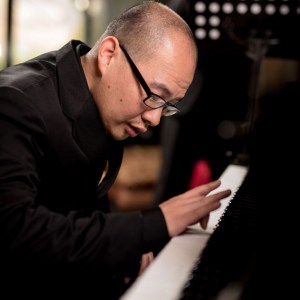
This article first appeared on Lorraine Augustine’s blog

Lorraine Augustine is a Pianist, teacher and adjudicator based in Bedfordshire, with over 40 years’ experience of teaching and performing she teaches piano at the Guildhall School of Music and Drama in London and runs a busy private practice in Bedfordshire.

www.lorraine-augustinepiano.com

Episode 2 of the Piano 101 podcast with The Cross-Eyed Pianist and Dr Michael Low is now available on YouTube, Spotify and SoundCloud


This site is free to access and ad-free, and takes many hours to research, write, and maintain. If you find joy and value in what I do, please consider making a donation to support the continuance of this site

Make A Donation

At the beginning of this year, my son (24) passed his driving test, his achievement made more remarkable by the fact that, due to the covid restrictions, his test was postponed 6 times over the course of 18 months. He displayed a dogged pragmatism towards the disappointment of the cancelled tests (he was ready to take his test in July 2020) and simply carried on practicing his driving whenever he could – in my car, his own car, and with his driving instructor.

While my son was having his lessons, I was reminded of my own driving lessons, some 30-odd years ago, and how my instructor stressed the importance of “time at the wheel” – that any driving practice was useful. My son certainly appreciated this and we enjoyed lots of excursions in the car which relieved the monotony of lockdown while also giving him useful driving experience.

While we were out and about, I pointed out to my son that one of the most important aspects of having lessons is so that one learns how to pass the test. A good instructor knows what needs to be covered to ensure the candidate is well-prepared. I remember my instructor made me practice manoeuvres like parallel parking and three-point turns over and over again so that the all the processes, physical and mental, became fixed in my procedural (muscle) memory, were almost intuitive, and ensured that I was not nervous on the day of the driving test. The same was true for my son – his parking abilities impress me no end (especially as I can no longer parallel park successfully!)

What does this have to do with the piano and music practice? Well, playing an instrument, like driving, is a series of movements and processes, which utilise and train the procedural memory. Most of us know well the old adage “practice makes perfect”, but, more importantly, practice also makes permanent, so that movements, processes and gestures become intuitive – we do them without (apparently) thinking.

This permanence comes, of course, from practicing – not mechanical note-bashing, (or mindlessly driving around Tesco’s carpark) but from thoughtful, careful practicing to ensure we are well-prepared.

The great Russian pianist Vladimir Horowitz apparently had a little phrase which he repeated ahead of a performance – “I know my pieces” – meaning he knew he had done his preparation. It’s a helpful mantra, and one which I have used in my own preparation for performance.

It is this preparation which gives us perhaps the most useful skill of all – confidence – which enables us to perform to the best of our abilities in an exam or concert situation, can help allay nerves, and ensures that the odd error or slip will not derail the overall performance.


This site is free to access and ad-free, and takes many hours to research, write, and maintain. If you find joy and value in what I do, please consider making a donation to support the continuance of this site

Make A Donation

Long read guest post by Dr Michael Low (read Part 1 here)


My journey back to playing the piano started when I casually suggested to a new colleague that perhaps we should play some chamber music together. I honestly didn’t think that she would take me seriously, but the next day I found the scores of Schubert lieder and Puccini arias in my pigeon-hole. Although one part of me wanted to go back on my word, the other told me to just get on with learning the notes, and I was grateful for the latter. The most valuable lesson I learnt from working with a singer is the shaping and the breath of the musical phrase, no melodic line is rushed, and the sense of rhythmic pulse is often relative to the direction of the music. Following my brief appearance as a repetiteur, I founded a chamber ensemble amongst my colleagues to perform the chamber music versions of Mozart piano concertos and movie soundtracks.

My new musical project was not without obstacles, both logistically and musically. Because initially there were only six of us, the piano has to ‘fill in’ the missing parts – this meant that I had to play both the solo part as well as the orchestral tutti, a challenge that I relish (having studied my fair share of Romantic transcriptions, the orchestral reduction of the tutti passages were to be the least of my worries). However, nerves still presided over my performance, but the ensemble was generous in their support and patience. ‘It gets better with every rehearsal’, was one member’s assessment of my playing. Another told me that it is just a matter of ‘practising performance’, and I will never forget the words of our leader (sadly no longer with us) when I felt that I could have played better after one particular rehearsal. ‘That’s why we are here to practise’, he smiled at me. Away from the music and the piano, I met Laverne, who was to become my wife in the not-too-distant future.

I was no longer the rhythmically wayward student, yet something was still not clicking. Physical tension still existed which translated into uneven semiquaver passages. I found myself with a sense of musical déjà vu, but told myself that I was no longer that hot-headed student: ‘Everything is difficult at the beginning, but once you have worked it out, then it is easier.’ I also reminded myself that my repertoire was predominantly 19th-century, and Mozart still a composer I had yet to study in detail. I turned to my doctoral supervisor, Hendrik Hofmeyr, for advice. Hendrik told me that in order to eliminate the tightness in my playing, I would have to adopt a different mindset. He showed me a way of playing the piano which utilises the bigger muscles of the body, especially the weight of the arm.

https://youtu.be/7HzzoLTZJCY

I eventually understood what Hendrik was after but only after weeks and months of frustration and tears: every time I felt strain and pressure during practise, I would stop and retrace my steps, and play even slower. The primary objective was now to find a position of the hand (and body) that enabled me to play with the greatest ease whilst freeing myself of any physical tightness. The biggest breakthrough came when I adjusted the way I sit at the piano, but it was to be at least another two and half years before I could feel the difference in my playing.

For over two years I studied Mozart piano concerti and very little else. More importantly, I relearnt the significance of one particular musical gesture that makes up so much Classical and Romantic music – the Mozartian slur, sometimes known as the classical slur; this completely changed the way I view and interpret music especially when I revisited old repertoire. The Mozart concerti were followed by Beethoven’s first and last piano concerti. I then studied Schumann’s Opus 54, which is more akin to an augmented piano quintet, and what a glorious one it is! The Schumann Concerto was followed by Rachmaninoff’s second and third piano concertos, as I finally got comfortable with my new way of playing the piano.

As patient as the ensemble were, they were beginning to wonder if there would at least be some performances at the end of all the rehearsals. Although I was tentative, a concert was eventually scheduled and we made our debut in front of an audience of about two hundred people. The performance was well received but old musical wounds resurfaced. Yet again I walked off stage haunted by musical discrepancies despite the standing ovations and calls for an encore. I recalled the words of a former professor, ‘Something very intense inside you is preventing you from playing the intensity of the music’. Laverne encouraged me to keep going and play further performances, but I was reluctant, and a heated argument ensued. I told her my belief of how some were chosen whereas other chose to perform and faced a backlash, ‘This is such b***sh**t! The people who get it right on stage are those who get up there and do it over and over again until they are comfortable. As talented as you are, you are not going to play the “Emperor” Concerto brilliantly on your first attempt!’ Furthermore, Laverne also assured me that it is the audience’s perception of my performance that is ultimately more important than my own: ‘You have the ability to connect to the audience through your playing, surely this is more important than the odd wrong notes and occasional memory lapse?’

Laverne’s insightful words were of great comfort to me, and it was on her recommendation that I began to address my musical wounds in the formal setting of psychotherapy. ‘I think it will help you to reconnect the dots and explained why certain things happened the way they did,’ she told me before my first session with my psychologist. Ultimately, Laverne was right. It was not Christianity or God, nor was it table tennis, golf or CrossFit, but the work that I did with my psychotheraphist that provided me with the most conclusive explanation to my performance anxiety and stage fright.

I agree with Zach Manzi that there is plenty to dislike about the Classical music industry – an industry resistant to change, safeguarded by numerous holier-than-thou gatekeepers who have placed themselves on a musical pedestal. I like Manzi’s idea of making Classical music more ‘accessible and inspiring,’ and I certainly would like to find out more about his ‘audience first’ concert format design. However, it is my humble opinion that audiences around the world don’t attend live concerts just to hear Bach, Beethoven or Wagner anymore. This has partly to do with the fact that there is no definitive way of interpreting a piece of music. What the Classical music industry has been promoting since time immemorial is the cult of the personality. People now go to concerts to hear the performer rather than the composer: Schiff’s Bach, Barenboim’s Beethoven, Trifonov’s Rachmaninoff, Thielemann’s Wagner, etc. And this is perhaps the main reason why concert agents and managements are more likely to look for a ‘performer’ than a musician when filling their concert diaries. In other words, if we don’t think you can sell tickets, then why the hell should we book you? Performers are more sought after than musicians, as the commercial value of the former trumps that of the latter.

Please don’t get me wrong. I am not, for one second, suggesting that some of the great performers are not great musicians first and foremost, but if you look at the artists signed by major recording and distributing companies in the last decade or so, you will find that many of them fit a certain marketable profile in terms of looks, dress code, and perhaps the most importantly, being able to say the right thing at the right time, especially in front of the cameras.

There is one side of me who believes that the route currently taken by the Classical music industry is inevitable, as it has to adapt and keep up with increased commercialism, and Classical music has never been the art form for the masses. At the same time, I find it problematic that some of those who hold the industry’s most prominent positions are not often the best people. It is an industry that still favours nepotism and the ‘old-boys’ network’ (if I may use such a term), which means that it is often a case of who you know, or rather whose ego you are willing to stroke (and, by the same token, how successful you are at negotiating politics), that gets you places. I also don’t think that it is right when so much power is placed in the hands of those in authority, especially teachers: the one person who can make a student feel completely sh*t about him/herself is the only person who can also galvanise the student. There is something fundamentally unhealthy about this, and when it is coupled with the abuse of power and trust (which has been shown in amongst numerous high-profile musical cases in recent times), it only makes the Classical music industry even less desirable. Hence it is not difficult to see why the more sensitive artists are less inclined to trade their souls, knowing full well that Mephistopheles doesn’t deal in refunds.

Despite its unpleasantness and Weinstein-esque overtones, I have never regretted my decision to pursue a career in Classical music. I knew that the cards were stacked against me, yet I was determined to make something of it. When I swallowed the red pill and saw the industry for what it is, I realised that I have one of two choices: b*tch and cry that life is unfair or find another way forward, and I am glad that I did the latter. To borrow Laverne’s phrase, ‘Once you have decided what the system is, then you can choose how far removed or how far involved you want to be.’

I am eternally indebted to all my professors, especially Graham and Hendrik, but my greatest teacher has been life itself. It has taught me that there is no such thing as a timeline or timeframe in my quest for artistic truth. If you are not an international prize-winner by the time you are in your late twenties it doesn’t necessarily mean that you haven’t ‘made it.’ By the same token, if ‘it’ doesn’t happen for you now (whatever ‘it’ may be) ‘it’ might still happen: when the future is uncertain, anything is possible. You might not necessarily end up where you envisaged, but it is exactly the place you need to be in the present moment. Ultimately, the one person truly responsible for your own musical ambition is you yourself: don’t sit around waiting for the phone to ring, go out and make things happen. Be bold, promote yourself, build communities, surround yourself with like-minded colleagues, and embrace your musical flaws and technical limitations as an artist. Allow yourself the license to play wrong notes and have the odd memory lapse, and try not to crucify yourself after every performance, as there will always be people who will do that for you. Music is a reflection of life, and life itself is far from perfect.

When Laverne and I visited the heritage part of Penang in 2018, we were humbled by way of lives of the street food vendors, who spent their life perfecting one local dish with the recipe handed down from past generations. There is something very humbling about knowing your place in your community and doing your best to be part of that. We often underestimate our own work, but someone else may deem our contribution invaluable. I know of many excellent musicians and performers who are not part of the world’s ‘famed’ orchestras, nor do they regularly perform at venues such as the Carnegie Hall or London’s Royal Festival Hall, but this doesn’t mean their performances are any less committed or engaging. At the end of the day, I think it is the beauty of music as well as the desire to keep on learning that keeps all musicians going.

I leave you with a conversation that took place between a former student and myself.

Student: ‘Dr Low, I am going to stop piano lessons now, is that OK?’

Me: ‘Sure, I have never believe in making someone do something they don’t want to, but at least tell me the real reason behind you wanting to stop.’

Student: ‘Well Sir… I will never be rich and famous if I play the piano, right?’

Me: ‘(The student’s name), the joy is in the playing.’

Student: (Blank stare)

Michael Low, January 2022


As a teenager, Michael Low studied piano under the guidance of Richard Frostick before enrolling in London’s prestigious Centre for Young Musicians, where he studied composition with the English composer Julian Grant, and piano with the internationally acclaimed pedagogue Graham Fitch. During his studies at Surrey University in England, Michael made his debut playing Tchaikovsky’s First Piano Concerto in the 1999 Guildford International Music Festival, before graduating with Honours under the tutelage of Clive Williamson. In 2000, Michael obtained his Masters in Music (also from Surrey University), specialising in music criticism, studio production and solo performance under Nils Franke.



An international scholarship brought Michael to the University of Cape Town, where he resumed his studies with Graham Fitch. During this time, Michael was invited to perform Tchaikovsky’s First Piano Concerto for The Penang Governer’s Birthday Celebration Gala Concert. In 2009, Michael obtained his Doctorate in Music from the University of Cape Town under the supervision of South Africa greatest living composer, Hendrik Hofmeyr. His thesis set out to explore the Influence of Romanticism on the Evolution of Liszt’s Transcendental Etudes.

In 2013, Michael started a project in Singapore collaborating with The Kawai School Elite in a series of masterclasses and workshops for teachers and students. Having grown up in the East and lived his life in the West, Michael believes that both cultures has much to offer and envisage an exchange between Singapore and Cape Town in the future.

Michael is also the co-founder of the Elvira Ensemble – a Classical Chamber Orchestra specialising in the Piano Concertos of Mozart and Beethoven as well as Soundtracks from Blockbuster Hollywood Movies. The Ensemble have given performances at several high-profile events such as the wedding of Justin Snaith, South Africa’s leading race-horse trainer. In January 2020, the ensemble was engaged to perform at the wedding of the former Miss Universe and Miss South Africa, Miss Demi-Leigh Nel Peters.

Michael has also worked with numerous eminent teachers and pianists, including Nina Svetlanova, Niel Immelman, Frank Heneghan, James Gibb, Phillip Fowke, Renna Kellaway, Carolina Oltsmann, Florian Uhlig, Gordon Fergus Thompson, Francois du Toit and Helena van Heerden.

Michael currently holds teaching positions in two of Cape Town’s exclusive education centres: Western Province Preparatory School and Herschel School for Girls. He is very much sought after as a passionate educator of young children.

Michael has also served as a jury member in the 2nd WPTA Singapore International Piano Competition in 2020. He has been engaged for a series of talks and masterclasses with the WPTA Indonesia in September of 2021.

Michael Low’s website