Guest post by Charlotte Tomlinson

January 2025 will mark the 3rd anniversary of the Oxford Piano Weekends, and the thirteenth weekend. I can hardly believe that what started on the back of an envelope in late 2021, has developed into such a fixture in the piano course market that pianists return again and again.

We started in 2021 with the legacy of Covid and all the social and musical anxiety that came with that. It was essential to find a way of getting people to know each other quickly so I devised a mini workshop to be held before supper on the first evening, in which people get into pairs to chat about a particular musical and performing issue. Within a short space of time, the conversations are animated, social anxiety disappears and people feel relaxed and comfortable. By the time we start the evening session, a united and supportive group has already established itself.

It can’t be underestimated how important this group bonding is. A good number of pianists who come on the Oxford Piano Weekends struggle with performance anxiety and physical tension, and feeling emotionally safe within the group is essential to move through these issues.

I used to have crippling performance anxiety and now I really enjoy performing, something that would have been previously unimaginable. The weekends have helped me immeasurably.

Right from the start, Oxford Piano Weekends have had a wonderfully diverse pool of advanced and committed pianists taking part: bankers, medics, piano teachers, lawyers, choir directors, pianists returning after many years, battered and bruised pianists from a legacy of harsh teaching, students preparing for final recitals and many, many more. Pianists come from all over the UK, as far afield as Dublin, Finland, Malta and most recently, Canada.

The weekend is a chance to reflect deeply on your playing with expert guidance to take away and improve your practice.

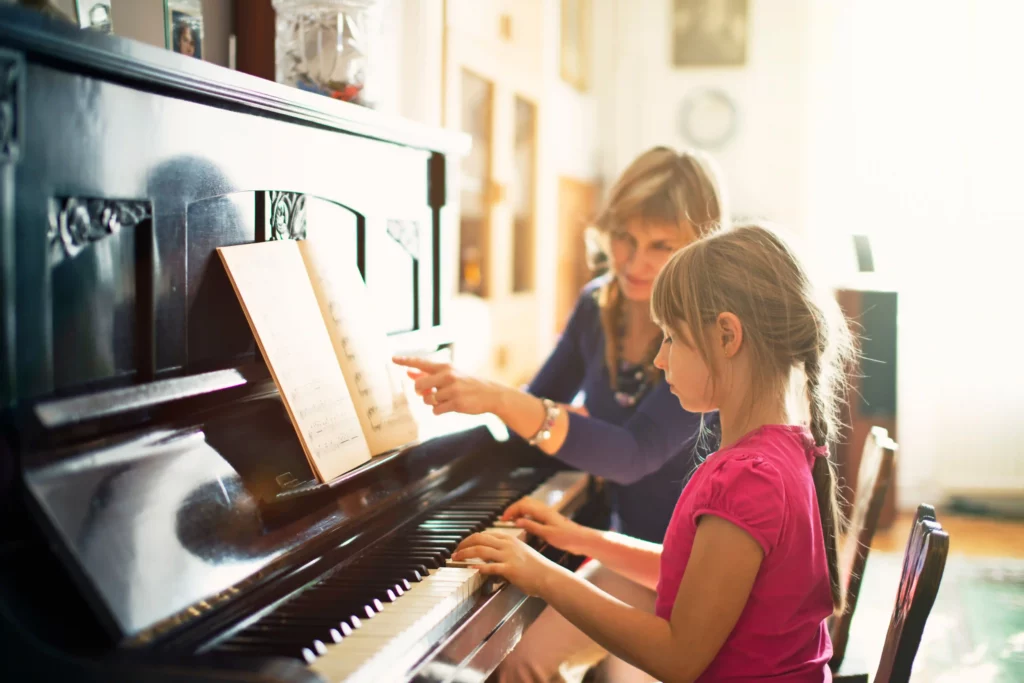
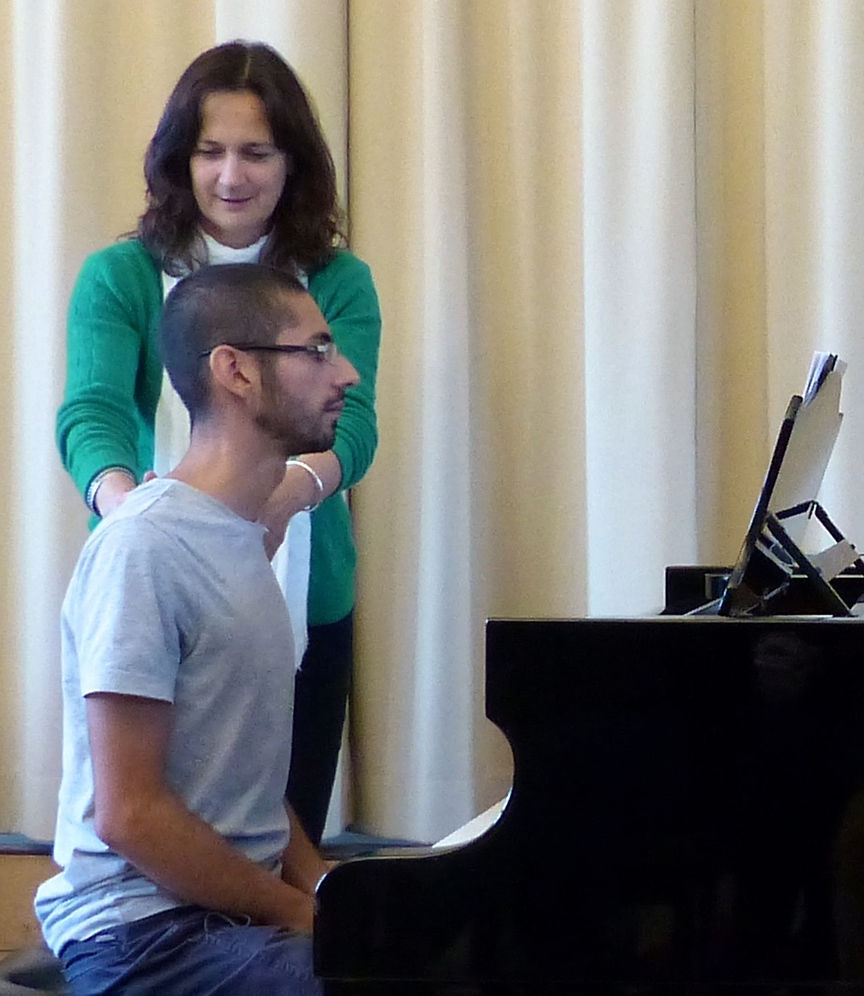
On any one Oxford Piano Weekend, the numbers are kept deliberately low with six or seven as the ideal. Each pianist has twenty minutes teaching within the group, in rotation over the weekend, and it’s extraordinary how much can be packed into that short time. I listen to each pianist to see what they need, and then make sure that my response is valuable not just for the pianist themselves, but also for the group. Participants learn so much from watching and listening to each other, seeing their own challenges reflected in other pianists and then observing that pianist transform in front of their eyes.

A truly wonderful weekend. Charlotte is so caring, and teaches with such empathy, understanding & musical knowledge and expertise.

And what’s more important than the meal times? Homemade, tasty, nutritious food with free flowing wine in the evenings, the now-famous homemade flapjacks for coffee breaks, all provide a wonderful back drop for lively, stimulating conversations among like-minded people. They truly are full and rich weekends, and I, for one, come away at the end of each one feeling exhilarated and all ready to go for the next one.

Next weekend: January 17th -19th 2025

For more details go to: https://www.charlottetomlinson.com/oxford-piano-weekends

Watch a podcast with Charlotte Tomlinson and The Cross-Eyed Pianist

In this episode we discuss gesture in piano playing – when it’s useful and when it’s most definitely not!

Find all previous episodes here


This site is free to access and ad-free, and takes many hours to research, write, and maintain. If you find joy and value in what I do, why not

Guest post by Dakota Gale. The latest article in Dakota’s series Notes from the Keyboard, aimed at adult pianists


I recently attended a piano performance, during which I spoke with a 92 year old woman sitting next to me. She’d played and taught piano for decades. When I mentioned that I take lessons online, her eyes widened. “ONLINE lessons? But…that is the most amazing thing!”

She’s not the only one surprised. “Wow, you take lessons online?” is a common response from most people, even after the nuclear proliferation of pandemic Zoom meetings.

Yep, ever since I began taking lessons in spring of 2021, I’ve done them online. My teacher, Antonio, is located in southern Brazil; I’m in the Pacific NW in the U.S, thousands of miles away. And it’s not just me; plenty of people do it, including:

  • Those looking for specific expertise (e.g. Chopin etudes from a professional)
  • Those being careful while going through chemo or with a disease affecting their immune system.
  • Those who travel a lot (tougher if you’re flying, obviously)
  • If you have a favoured, dear teacher, but one of you moves, going online allow you to continue lessons.

Me and Online Lessons

For me, initially I took online lessons because of two things: to save money and to avoid COVID.

Since then, I’ve seen additional benefits. For one, they’re much more time efficient. No travel across town! For parents, I imagine this would be a huge benefit since you’d avoid shuttling kids around. (Actually, one of my friend’s kids is taking lessons with Antonio.)

I travel fairly often and like to keep lessons going. In fact, I’m currently rolling around the Pacific NW with my wife for three months in a Airstream travel trailer. Between mountain bike rides, hikes, and hanging with friends, I’m both continuing to play consistently and still taking my weekly lesson. Courtesy of Starlink satellite internet and a digital Kawaii piano, I’m not skipping a beat.

When my teacher is on vacation, I’ve also taken lessons with professionals such as Grzegorz (Greg) Niemczuk, who I found on YouTube. You might be surprised how many YouTubers offer lessons (a friend takes lessons with the popular Heart of the Keys YouTuber.)

You know what makes piano better? Playing outside!

Beyond all those boring logistical things, Antonio being Brazilian brings a fun perspective to my experience. (I’ve learned a few choice phrases in Portuguese, for one!) I’ve also learned about (and love!) Brazilian music that I would otherwise not know, including tangos, the music of Tom Jobim and Ernesto Nazareth, and folk songs arranged for piano.

It inspired me to start a listening quest of different genres and international composers that has deepened my relationship to piano. Perhaps a local teacher would have provided that, but certainly it would have been different.

The nuts and bolts of online lessons

For those wondering how this is possible, allow me to describe the situation:

  • Antonio uses a Yamaha grand piano to teach. On it, he has four cameras for his face, top down on his hands, sideways on his hands, and another on his pedal. He even uses software that allows the camera to track his hands (AI magic!).
  • The sound quality is quite good–the nuances he can hear and comment on astonish me.
  • For my setup, I use a different system depending where I am. At home, it’s my computer with a webcam plus my phone on a stand looking straight down at my hands. While traveling, I just go with my phone on a small tripod set up to the side and occasionally my laptop in front of me. It works great.

The benefit of all this: the only time I’ve missed a piano lesson is when I’ve taken bikepacking trips. I challenge you to carry a full-size digital piano through the mountains…no thanks. A pianist needs to take a break from the keyboard SOMEtimes!

Resources:

To find an instructor, just type “piano lessons online” into any search engine. A few popular services: Superprof or Wyzant; a fellow traveler I met on this trip used Preply to find her ukelele instructor. (If you want to work with Antonio, just ping him on Whatsapp at +55 48 9181-9164.)

Cheers to piano on the road!


This site takes many hours each month to maintian and update. If you find value and pleasure in what I do, why not

Find all previous episodes here

This site is free to access and ad-free, and takes many hours to research, write, and maintain. If you find joy and value in what I do, why not