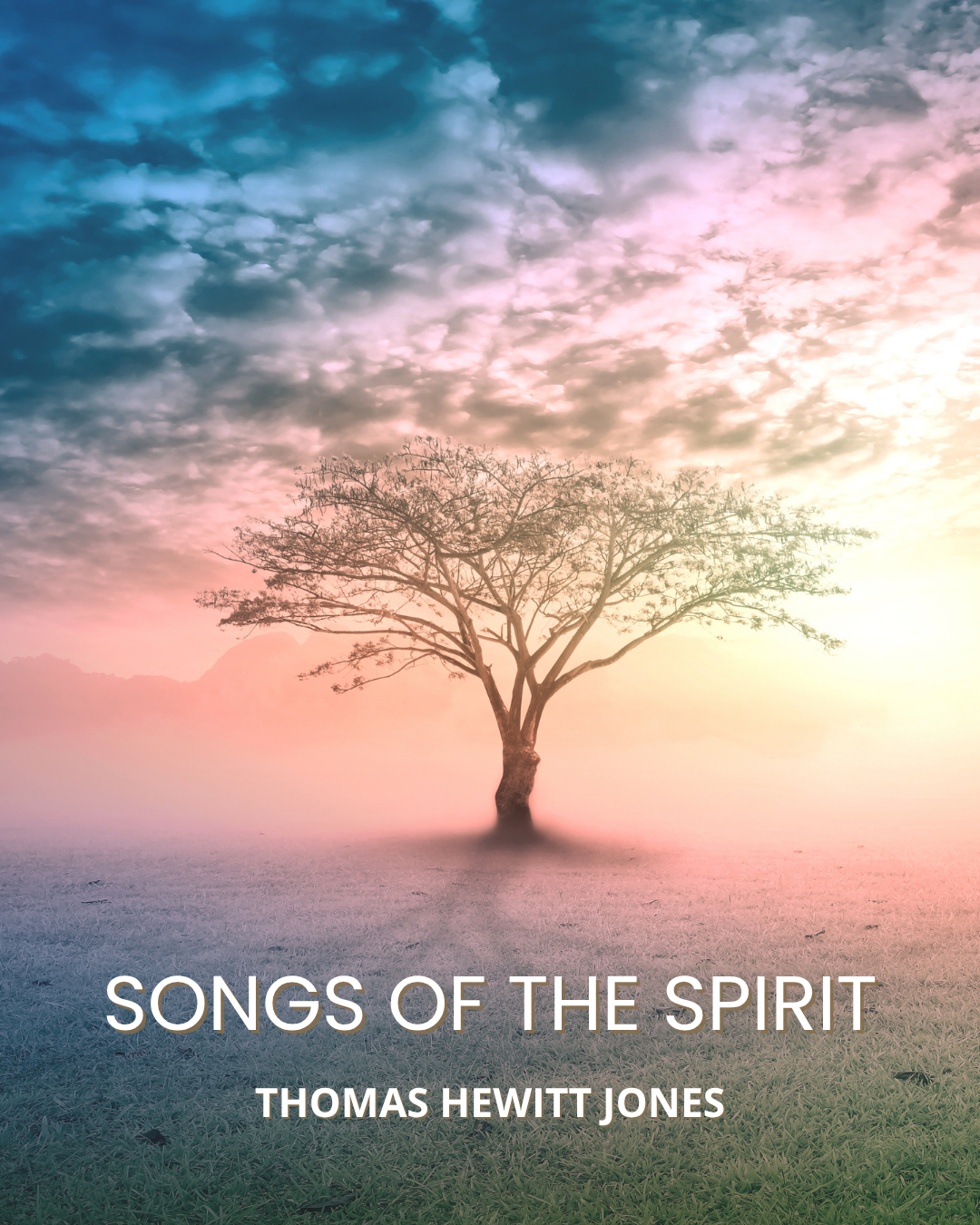
SONGS OF THE SPIRITMusic & words by Thomas Hewitt Jones
The Royal School of Church Music launches a major new choral commission as part of its centenary celebrations in 2027.
Songs of the Spirit is an exciting new suite of songs by award-winning British composer Thomas Hewitt Jones, created to uplift and inspire singers of all ages and backgrounds. With accessible yet impactful music, this 40-minute piece is perfect for community choirs, youth ensembles, chamber choirs, church choirs and can be performed in a wide range of settings.
At its heart, the work explores a deeply human theme – the longing for safety and belonging in an increasingly complex world. Rooted in Christian values, the piece offers a message of kindness and hope, whilst inviting reflection on profound questions about identity, purpose and the human spirit in 2026 and beyond.
Unforgettable melodies, lyrical clarity, and radiant harmonies will all weave into a musical tapestry expressing the emotional weight and beauty of the themes at play.
The piece is scored for SATB but is flexible and will include movements suitable for children’s choir alone, and a rousing final hymn-like movement with the option of audience participation. It will be suitable for performance either as a whole, or as standalone movements, with scoring options for piano, organ and strings.
Listen to an excerpt here:
Following the success of A Season to Sing, the RSCM’s previous co-commissioning project with composer Joanna Forbes L’Estrange and over 50 choirs worldwide, the RSCM now invites choirs to be part of its centenary celebrations. In exchange for a donation of £300, co-commissioning choirs will have the exclusive right to perform Songs of the Spirit during its first year, and also receive the following benefits:
A commemorative, hard-bound signed score
Your choir’s name in the list of commissioners in the printed score
30% off all scores purchased for your choir within the first year of publication.
Access to full support resources to aid learning
Media promotion of your choir and its performance of the piece
A personalised video message from Thomas Hewitt Jones for your choir
This is an exciting opportunity to bring a powerful, appealing and uplifting new work to the contemporary choral music repertoire while allowing choirs to share their journey with the RSCM to ensure choral music stays accessible and widespread.
Songs of the Spiritwill be available from September 2026
The success of a previous jointly commissioned work, A Season to Sing by Joanna Forbes L’Estrange (premiered in Spring 2025, with over 50 performances world wide to date), demonstrates the value of this model, with co-commissioning choirs praising the excellent resources provided, efficiency, and feeling valued throughout the process.
Hastings International Piano is thrilled to announce the 40 pianists who have been selected to take part in the 2026 Hastings International Piano Competition, which takes place from 26 February to 7 March 2026 at the White Rock Theatre, Hastings.
Chosen by an experienced pre-selection jury, who watched video auditions of 356 applicants from 46 countries, these 40 pianists – aged between 19 and 29 – will travel from 18 nations to compete in one of the world’s leading competitions for rising stars. This year marks the 18th competition since its revival in 2005, continuing a proud tradition that began over a century ago with the Hastings Musical Festival.
Under the artistic direction of Professor Vanessa Latarche since 2020, the competition is a highlight in the international music calendar. Renowned for its unique format , requiring competitors to perform concertos from the very first round; it offers a platform for young artists to perform with orchestras including the Sinfonia Smith Square and the Royal Philharmonic Orchestra.
The 2026 competitors represent a remarkable breadth of talent, with participants from countries including China, South Korea, Russia, Taiwan, the USA, Ukraine, Japan, and beyond. Full list here
● Competition rounds will run as follows: ➔ Round 1: 26–28 February – 40 competitors perform extracts from two concertos ➔ Round 2: 1–2 March – 20 competitors perform a solo recital including a new work by Sir Stephen Hough ➔ Semi-Finals: 4–5 March – 10 competitors perform a classical concerto with Sinfonia Smith Square ➔ Finals: 6–7 March – 5 finalists perform a Romantic or 20th-century concerto with the Royal Philharmonic Orchestra
All five competitors who reach the final will receive a prize, with first prize worth approximately £35,000.
Tickets for the first two rounds are free, and the public is encouraged to attend and experience world-class music in a seafront theatre.
Through its Learning & Participation programme, Hastings International Piano remains committed to bringing classical music to all – from school workshops and community concerts to pop-up pianos across the town – ensuring that the joy of music continues to inspire every generation.
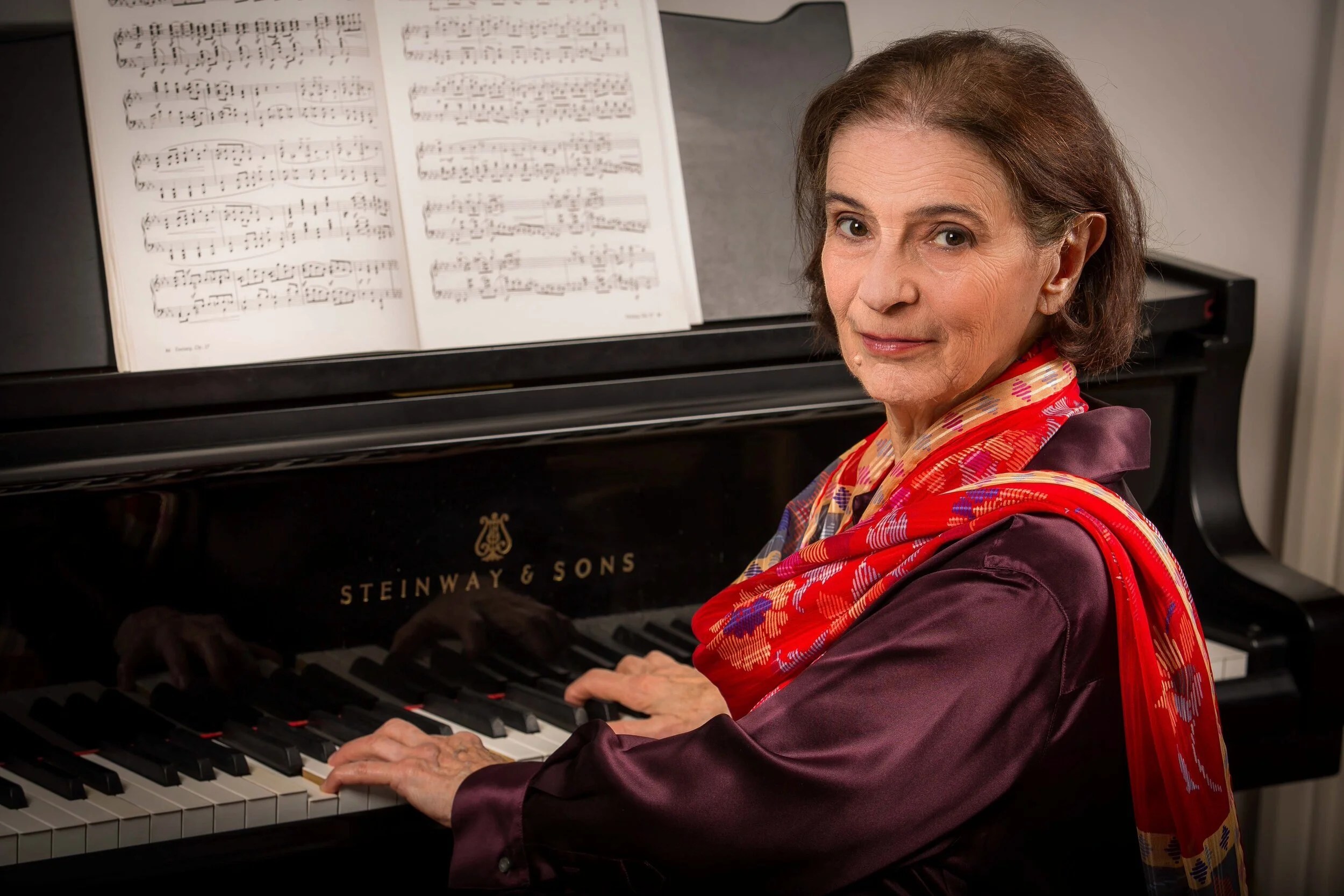
The competition is generously supported by Steinway & Sons and numerous sponsors and benefactors, including the Kowitz Family Foundation, which has supported the competition since 2009.
Vanessa Latarche, Artistic Director, says: ‘We are thrilled to announce forty remarkable young pianists coming to Hastings in 2026. The standard of applications this year was exceptionally high, reflecting the competition’s growing stature. It’s no easy task picking from over 350 applications, but it is inspiring to see so many gifted musicians from around the world share their artistry and passion for piano performance. We look forward to hearing them bring their music to life on the White Rock Theatre stage.’
Ailsa Dixon’s sonata for piano duet Airs of the Seasons, is the latest work to be published by Composers Edition, in a new edition by pianist Waka Hasegawa. This is part of an ongoing project to bring Ailsa Dixon’s music to a wider audience; the publication of scores of her music coincides with the release of The Spirit of Love, a landmark recording of her chamber music and songs on the Resonus Classical label. (Find out more here)
Airs of the Seasons is in four movements, each prefaced by a short poem, evoking in turn the magical stillness after a winter snowfall, the first stirrings of spring, a dragonfly darting over the water in summer, and finally amid the turning leaves of autumn, a retrospective mood which recalls the earlier seasons and ends with the hope of transcendence in ‘Man’s yearning to see beyond death’.
The sonata was unperformed in Ailsa’s lifetime, but in the months before she died in 2017 the score was sent to pianists Joseph Tong and Waka Hasegawa, who would give the work its posthumous premiere at St George’s Bristol in November 2018. A week before her death, Tong wrote with the news that they were already rehearsing: ‘It is a beautiful set of pieces and each of the movements evokes aspects of the seasons suggested in the poems in an original and imaginative way – the musical language itself and the way in which Ailsa creates four-handed piano textures are absorbing and distinctive.’ For a composer who received very little recognition in her lifetime, it was a poignant indication that her music would survive her.
Waka HasegawaJoseph Tong
In a review of the premiere, Frances Wilson (AKA The Cross-Eyed Pianist) wrote ‘The opening chords of the first movement are reminiscent of Debussy and Britten in their distinct timbres, and the entire work has a distinctly impressionistic flavour. Ailsa’s admiration of Fauré for his “harmonic suppleness” is also evident in her harmonic language, while the idioms of English folksong and hymns, and melodic motifs redolent of John Ireland and the English Romantics remind us that this is most definitely a work by a British composer with an original musical vision. The entire work is really delightful and inventive, rich in imagination, moods and expression.’
Airs of the Seasons has subsequently been performed for Wye Valley Music in 2019, for Wessex Concerts at St Mary’s church in Twyford near Winchester in 2022, and in a concert in 2024 celebrating Ailsa Dixon’s musical legacy at St Mary’s College, Durham University where she studied in the 1950s.
Social media, for all its faults, is also a force for good and can throw up unexpected encounters and delights. One such gem is Andy Lewis’s Proms blog, which I discovered via the music critic of The Spectator, Richard Bratby.
Andy Lewis is blogging about every single Prom of this year’s season, mostly via the broadcasts on BBC Radio 3. He hasn’t missed a single one and is now in the home straight, as it were – the final week, and the close of this year’s at the Last Night of the Proms.
What is so wonderful about Andy’s blog is that it’s not trying to be a serious critique or dry academic appraisal of each concert, but rather a personal reaction to and reflection on the music. He publishes his posts soon after each concert has taken place and as a consequence, his writing is fresh and spontaneous, entertaining, engaging and intelligent (and it reminds me of how and why I started blogging, back in 2010).
“And the Sibelius doesn't go wrong. At one point I'm transported to that spinning shed on the Wizard of Oz, and for that evocation alone he earns his stripes with me.”https://t.co/mfMuA5beI9pic.twitter.com/M2VHOTStzT
I caught up with Andy to find about more about his motivation for writing about the Proms and what he’s enjoyed in this season’s programme….
What made you decide to blog about every single Prom of the 2025 season?
It came about for a few different reasons. I was taken with the premise of the Proms; the fact that it is still possible to buy a ticket on the day for just a few pounds. I used to think to myself, ‘I’d be at the box office every morning if I lived around here.’ This triggered an ambition of one day attending every Prom at the Albert Hall, and this idea has laid dormant in my mind for years. I like to keep myself occupied, and this year my diary was nearly empty for the eight or so weeks when the Proms were happening. To fill my free time, I decided I would ‘attend’ every Prom, whether it be watching it on TV, listening on the radio, or actually getting down to the Royal Albert Hall in person. To make it more meaningful, I decided to create a record of it – hence the idea of the blog. As the weeks have progressed, the blog has also evolved into including little diary snippets from my daily life. If I’m still alive and well in thirty years, it will hopefully be interesting (for me) to read it back. Maybe my opinions on things will have changed by that time. Maybe I’ll be living a completely different life.
Have you attended/followed the Proms before this year?
I had only ever attended one Prom before, and I can tell you exactly which one it was!
It was Prom 48, Sunday 21st August 2016. The programme was Reflections on Narcissus by Matthias Pintscher to start, and then the second half was Mendelssohn’s theme to A Midsummer Night’s Dream. As I remember it, the music was blended with pop-up dramatic performances in different areas of the hall. Going to this Prom was what initiated my desire to see all the acts in one given year, but I had not gotten round to it until now.
What have been the challenges and pleasures of this project?
The pleasure has been discovering new composers, and getting a deeper understanding of composers I only half-knew before. Additionally, looking up the history and origins of the Promenade concerts themselves has been fascinating. In terms of challenges, it has often been exhausting to keep up with the schedule on a daily basis. Early in the run, I was having doubts as to whether I would be able to keep up with it all. If I miss a Prom one day, the momentum will very quickly snowball against me, so I need to make sure I am on top of blogging every day; trying to keep my writing fresh, avoiding repetition where possible, and keeping my grammar in reasonable check against a tight schedule.
And what have been the stand-out moments/performances for you?
It has honestly all been great and varied, but if you really tortured me I think I would say that the best Proms, for me, have been the ones that took me by surprise – those Proms that I thought were going to be boring and difficult to document, but turned out to be the exact opposite. Who would have thought that ‘100 Years of the Shipping Forecast’ would turn out to be so contemporary and engaging? There were packets of surprises hidden in the ‘Bruce Liu plays Tchaikovsky’ Prom – I was gleeful at the inclusion of Maple Leaf Rag amongst others. And Joe Hisaishi’s Proms debut introduced me to music I already knew. Music in the Studio Ghibli productions such as My Neighbour Totoro offer something gorgeously meditative.
Why do you think the Proms is “the world’s greatest classical music festival”?
I think it’s a combination of accessibility, variety, diversity, and longevity. The fundamental idea of the festival is that it opens up classical music to your ‘average Joe’ like me. I can grab a ticket for £8 (in 2025) and enjoy an evening of world-class entertainment. The variety of the performances across the summer weeks makes sure there is something for everyone. The diversity on the stage has ensured the Proms have kept up-to-date with the world around us, and this in turn has kept the Proms running for as long, and successfully, as they have been.
What would you say to people who are unsure about classical music or who have never attended a Prom before?
I would say, ‘don’t be afraid of getting classical music wrong’. If you enjoy what you hear, go and see it played live, just like you would a pop or rock act. Even pass comment on it if you dare to do so. There may well be a bunch of Oxbridge academics looking back at you like that Leonardo DiCaprio meme, but the truth is that music is subjective and – when offering an opinion on it – they are as clueless as the rest of us.
Would you do it all again in the same way for next year’s Proms?
Right at this moment I would say absolutely not! However, I do think I have opened a new relationship with the Proms, and in future years I will be more liable to be looking through the catalogue, choosing which Proms I would like to watch, listen to, or attend.
With regard to my writing, this is likely to be a one-off. But I would never say never. It would be nice to do something with a similar twist. For example, another one of my cultural challenges has been to watch every Shakespeare play, performed live. At time of writing I am on thirty-one plays, seen at different venues around the country. Given the number of operas based on Shakespeare and his characters, it could be an idea to review them with an amusing twist, comparing a production at the Royal Opera House to, say, the time I saw the same play at Gordale Garden Centre.
My name is Andy Lewis, I am thirty six years old. From the Wirral but living and working in Runcorn. I work in Medical Information for a multinational healthcare company, and in my spare time I like to attend rock concerts and theatre. I also play guitar, piano and harmonica. I am a music lover with my main genre being blues-rock, but I do also love classical and orchestral music.
The Cross-Eyed Pianist is free to access and ad-free, and takes many hours every month to research, write, and maintain.
If you find joy and value in what I do, please consider making a donation to support the continuance of the site