Guest post

PianoMe: The Smart Way to Share Rehearsal Spaces and Earn Money with Your Music Room

What can you do when rehearsal rooms and instruments stand empty for hours or even days?

The answer is simple: share them through www.piano.me/en and turn unused space into income.

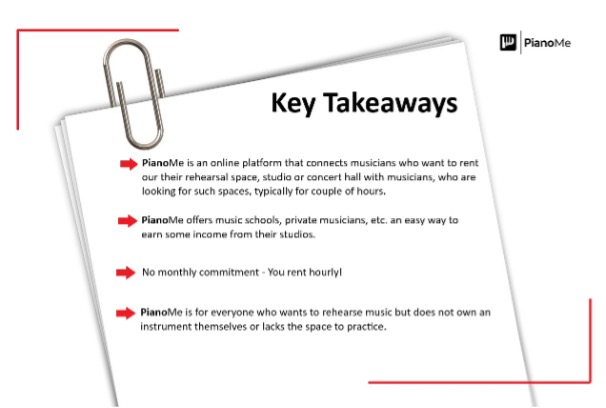
PianoMe is a growing online platform that enables musicians, music schools, studios, churches, and private hosts to rent out rehearsal spaces with instruments by the hour. At the same time, musicians can book affordable practice rooms exactly when they need them—no long-term contracts, no unnecessary costs.

Rehearsal Spaces Sharing Community – Built by Musicians for Musicians

PianoMe was created by musicians who experienced the same problem many artists face: finding a suitable place to practice is often difficult, expensive, and inflexible.

The idea behind the platform is based on the sharing economy: if a room and an instrument are not in use, they can be shared with others.

This creates a classic win-win situation:

  • Hosts generate additional income from otherwise idle rooms
  • Musicians pay only for the time they actually use
  • Cities benefit from a reduction in rehearsal room shortages

Traveling musicians, in particular, appreciate being able to book a nearby practice room within minutes, whether for an audition, an exam, or a recording session.

Monetize Your Empty Rehearsal Room

If you own a rehearsal room or a studio that is not used 24/7, PianoMe offers an easy and secure way to earn money.

Creating a listing takes only a few minutes:

  • Upload photos
  • Set your availability
  • Define your own rental rules and cancellation terms
  • Start receiving bookings

All processes—from request to payment—are fully digital and automated, which means no paperwork and minimal administrative effort.

A Lifeline for Music Schools

Music schools are facing increasing financial pressure due to rising costs and reduced public funding. PianoMe helps them:

  • Generate additional revenue from unused rooms during off-peak hours
  • Digitize and automate their rental processes
  • Reach new target groups such as freelance teachers, ensembles, and choirs

For some institutions, hourly room sharing has already become a second financial pillar that helps stabilize operations.

Flexible Solutions for Music Teachers

Freelance music teachers benefit from a highly flexible, on-demand room model:

  • No long-term rental contracts
  • No deposits
  • Hourly bookings based on actual teaching needs
  • Easy cancellations within the respective host’s policy

This supports the growing agency model in music education, where teachers operate independently and require adaptable teaching spaces.

Growing Demand and a Diverse Rehearsal Space Marketplace

The response on social media has been overwhelmingly positive. The general consensus is clear: without PianoMe, many rehearsal rooms would remain unused for hours or even days, generating costs instead of value. With PianoMe, this situation is reversed. As one private host wrote in a Google review, their grand piano used to be played only on weekends, but thanks to the platform, both the instrument and the room are now actively used during the week as well.

As the PianoMe network continues to expand, the range of available spaces is becoming increasingly diverse. Today, the platform offers far more than single piano practice rooms. Musicians can find studios equipped with drum kits, electric guitars, or even full recording setups. Room sizes vary widely—from small attic spaces and basement studios to full concert halls and modern event venues with stage and seating.

Browsing PianoMe feels like discovering the hidden musical infrastructure of a city. Many users are surprised by how many rehearsal rooms and instrument-equipped venues exist behind the scenes—places they would never have found without the platform.

Despite this wide selection, choosing the right room remains simple. User reviews provide real insights into the quality of the space and the instruments. In addition, each listing includes detailed information such as available equipment, room size, hourly price, capacity, concert suitability, rental conditions, and real-time availability.

The platform is used not only by professional musicians but also by hobbyists. And it is no longer limited to pianists—singers, amateur bands, choirs, violinists, composers, and many others are now part of the growing PianoMe community.

Free Music Event Promotion and Digital Tools for Musicians

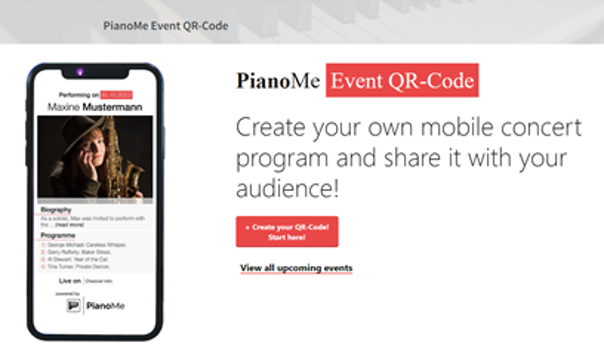
Every musician wants to perform live—and ideally to a full audience. PianoMe makes this easier by allowing users to promote their music events completely free of charge. The platform’s event promotion page, together with its integrated event QR code feature, has recently been expanded with additional functions. Event announcements can now be created on any device within minutes and shared directly across social media channels.

For those who prefer physical promotion, PianoMe also offers a one-click poster generator. Users can design, download, print, and display posters without needing external design tools. Concert programs can be distributed digitally via QR codes, enabling audiences to access them instantly on their smartphones—saving both printing costs and large amounts of paper.

By combining rehearsal spaces with digital promotion and content sharing, PianoMe goes far beyond room booking. It creates a connected ecosystem where musicians support each other, exchange ideas, and present their work.

Read PianoMe’s interview with Frances Wilson (The Cross-Eyed Pianist)

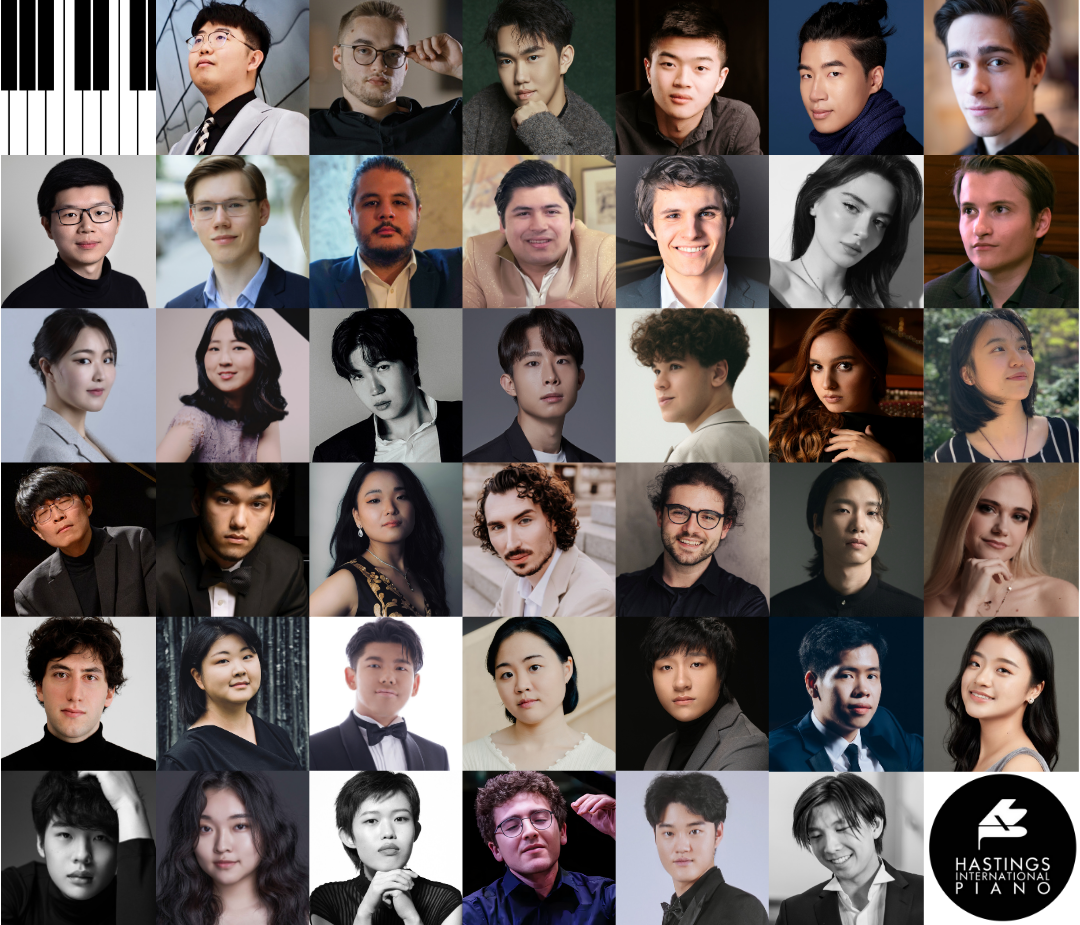
Hastings International Piano is thrilled to announce the 40 pianists who have been selected to take part in the 2026 Hastings International Piano Competition, which takes place from 26 February to 7 March 2026 at the White Rock Theatre, Hastings.

Chosen by an experienced pre-selection jury, who watched video auditions of 356
applicants from 46 countries, these 40 pianists – aged between 19 and 29 – will travel from 18 nations to compete in one of the world’s leading competitions for rising stars. This year marks the 18th competition since its revival in 2005, continuing a proud tradition that began over a century ago with the Hastings Musical Festival.

Under the artistic direction of Professor Vanessa Latarche since 2020, the competition is a highlight in the international music calendar. Renowned for its unique format , requiring competitors to perform concertos from the very first round; it offers a platform for young artists to perform with orchestras including the Sinfonia Smith Square and the Royal Philharmonic Orchestra.

The 2026 competitors represent a remarkable breadth of talent, with participants from countries including China, South Korea, Russia, Taiwan, the USA, Ukraine, Japan, and beyond. Full list here


● Competition rounds will run as follows:
➔ Round 1: 26–28 February – 40 competitors perform extracts from two concertos
➔ Round 2: 1–2 March – 20 competitors perform a solo recital including a new work
by Sir Stephen Hough
➔ Semi-Finals: 4–5 March – 10 competitors perform a classical concerto with
Sinfonia Smith Square
➔ Finals: 6–7 March – 5 finalists perform a Romantic or 20th-century concerto with
the Royal Philharmonic Orchestra

All five competitors who reach the final will receive a prize, with first prize worth
approximately £35,000.

Tickets for the first two rounds are free, and the public is encouraged to attend and
experience world-class music in a seafront theatre.

Through its Learning & Participation programme, Hastings International Piano remains committed to bringing classical music to all – from school workshops and community concerts to pop-up pianos across the town – ensuring that the joy of music continues to inspire every generation.

The competition is generously supported by Steinway & Sons and numerous sponsors and benefactors, including the Kowitz Family Foundation, which has supported the competition since 2009.

Vanessa Latarche, Artistic Director, says: ‘We are thrilled to announce forty remarkable young pianists coming to Hastings in 2026. The standard of applications this year was exceptionally high, reflecting the competition’s growing stature. It’s no easy task picking from over 350 applications, but it is inspiring to see so many gifted musicians from around the world share their artistry and passion for piano performance. We look forward to hearing them bring their music to life on the White Rock Theatre stage.’

Find out more here

[Source: press release]

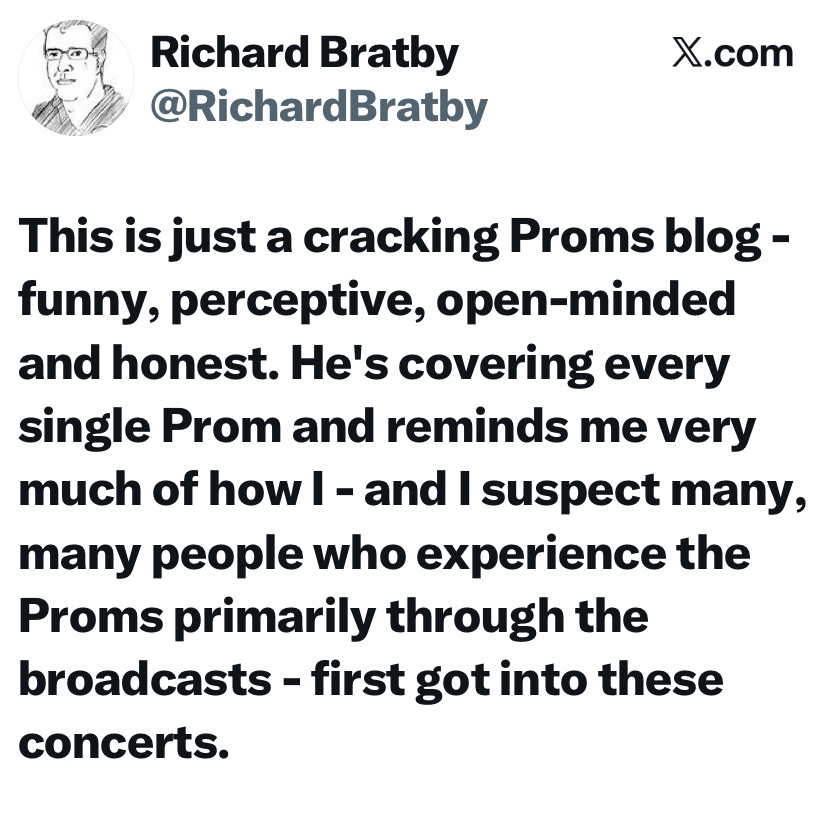
Social media, for all its faults, is also a force for good and can throw up unexpected encounters and delights. One such gem is Andy Lewis’s Proms blog, which I discovered via the music critic of The Spectator, Richard Bratby.

Andy Lewis is blogging about every single Prom of this year’s season, mostly via the broadcasts on BBC Radio 3. He hasn’t missed a single one and is now in the home straight, as it were – the final week, and the close of this year’s at the Last Night of the Proms.

What is so wonderful about Andy’s blog is that it’s not trying to be a serious critique or dry academic appraisal of each concert, but rather a personal reaction to and reflection on the music. He publishes his posts soon after each concert has taken place and as a consequence, his writing is fresh and spontaneous, entertaining, engaging and intelligent (and it reminds me of how and why I started blogging, back in 2010).

I caught up with Andy to find about more about his motivation for writing about the Proms and what he’s enjoyed in this season’s programme….

What made you decide to blog about every single Prom of the 2025 season?

It came about for a few different reasons. I was taken with the premise of the Proms; the fact that it is still possible to buy a ticket on the day for just a few pounds. I used to think to myself, ‘I’d be at the box office every morning if I lived around here.’ This triggered an ambition of one day attending every Prom at the Albert Hall, and this idea has laid dormant in my mind for years. I like to keep myself occupied, and this year my diary was nearly empty for the eight or so weeks when the Proms were happening. To fill my free time, I decided I would ‘attend’ every Prom, whether it be watching it on TV, listening on the radio, or actually getting down to the Royal Albert Hall in person. To make it more meaningful, I decided to create a record of it – hence the idea of the blog. As the weeks have progressed, the blog has also evolved into including little diary snippets from my daily life. If I’m still alive and well in thirty years, it will hopefully be interesting (for me) to read it back. Maybe my opinions on things will have changed by that time. Maybe I’ll be living a completely different life.

Have you attended/followed the Proms before this year?

I had only ever attended one Prom before, and I can tell you exactly which one it was!

It was Prom 48, Sunday 21st August 2016. The programme was Reflections on Narcissus by Matthias Pintscher to start, and then the second half was Mendelssohn’s theme to A Midsummer Night’s Dream. As I remember it, the music was blended with pop-up dramatic performances in different areas of the hall. Going to this Prom was what initiated my desire to see all the acts in one given year, but I had not gotten round to it until now.

What have been the challenges and pleasures of this project? 

The pleasure has been discovering new composers, and getting a deeper understanding of composers I only half-knew before. Additionally, looking up the history and origins of the Promenade concerts themselves has been fascinating. In terms of challenges, it has often been exhausting to keep up with the schedule on a daily basis. Early in the run, I was having doubts as to whether I would be able to keep up with it all. If I miss a Prom one day, the momentum will very quickly snowball against me, so I need to make sure I am on top of blogging every day; trying to keep my writing fresh, avoiding repetition where possible, and keeping my grammar in reasonable check against a tight schedule.

And what have been the stand-out moments/performances for you?

It has honestly all been great and varied, but if you really tortured me I think I would say that the best Proms, for me, have been the ones that took me by surprise – those Proms that I thought were going to be boring and difficult to document, but turned out to be the exact opposite. Who would have thought that ‘100 Years of the Shipping Forecast’ would turn out to be so contemporary and engaging? There were packets of surprises hidden in the ‘Bruce Liu plays Tchaikovsky’ Prom – I was gleeful at the inclusion of Maple Leaf Rag amongst others. And Joe Hisaishi’s Proms debut introduced me to music I already knew. Music in the Studio Ghibli productions such as My Neighbour Totoro offer something gorgeously meditative.

Why do you think the Proms is “the world’s greatest classical music festival”?

I think it’s a combination of accessibility, variety, diversity, and longevity. The fundamental idea of the festival is that it opens up classical music to your ‘average Joe’ like me. I can grab a ticket for £8 (in 2025) and enjoy an evening of world-class entertainment. The variety of the performances across the summer weeks makes sure there is something for everyone. The diversity on the stage has ensured the Proms have kept up-to-date with the world around us, and this in turn has kept the Proms running for as long, and successfully, as they have been.

What would you say to people who are unsure about classical music or who have never attended a Prom before?

I would say, ‘don’t be afraid of getting classical music wrong’. If you enjoy what you hear, go and see it played live, just like you would a pop or rock act. Even pass comment on it if you dare to do so. There may well be a bunch of Oxbridge academics looking back at you like that Leonardo DiCaprio meme, but the truth is that music is subjective and – when offering an opinion on it – they are as clueless as the rest of us.

Would you do it all again in the same way for next year’s Proms? 

Right at this moment I would say absolutely not! However, I do think I have opened a new relationship with the Proms, and in future years I will be more liable to be looking through the catalogue, choosing which Proms I would like to watch, listen to, or attend.

With regard to my writing, this is likely to be a one-off. But I would never say never. It would be nice to do something with a similar twist. For example, another one of my cultural challenges has been to watch every Shakespeare play, performed live. At time of writing I am on thirty-one plays, seen at different venues around the country. Given the number of operas based on Shakespeare and his characters, it could be an idea to review them with an amusing twist, comparing a production at the Royal Opera House to, say, the time I saw the same play at Gordale Garden Centre.


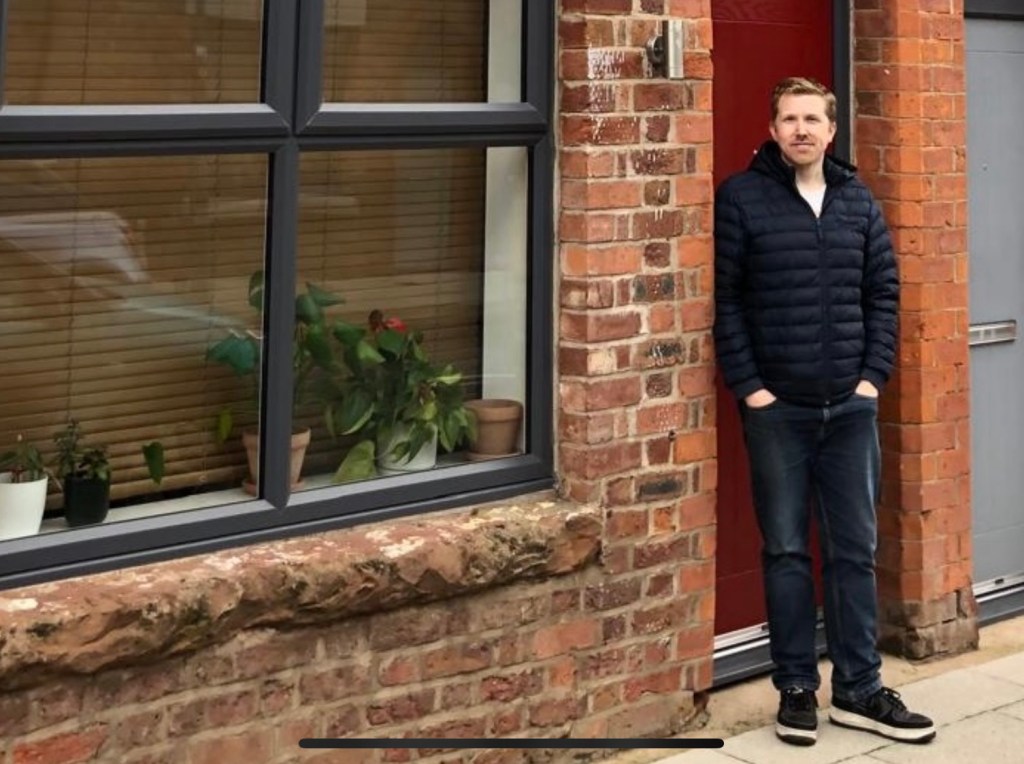
My name is Andy Lewis, I am thirty six years old. From the Wirral but living and working in Runcorn. I work in Medical Information for a multinational healthcare company, and in my spare time I like to attend rock concerts and theatre. I also play guitar, piano and harmonica. I am a music lover with my main genre being blues-rock, but I do also love classical and orchestral music.

Follow Andy on X

Read Andy’s BBC Proms Marathon 2025 blog

Andy Lewis

VIVUM MUSIC RELEASES CHORAL SINGLE TO CELEBRATE LINDSAY GRAY AND HIS CHORAL MUSIC LEGACY

‘May the Spirit Sing in Your Heart’ by Thomas Hewitt Jones is a choral single, originally composed for the 70th birthday of Lindsay Gray on 22 July 2023. This release marks the retirement of Lindsay from his role as founder and conductor of Caritas Consort, and celebrates his choral music legacy. The anthem is in the rich key of A-flat major, and sets a new text by Gordon Giles, which celebrates spirituality and the value of music. The piece was commissioned by Lindsay’s daughter Susanna, who sings soprano on the recording, and the music is published by Encore Publications.

Lindsay Gray says, ‘I feel very honoured indeed to have been the recipient of such a fine piece of music written for my 70th birthday by such a highly regarded composer! It has been fabulous to work with Tommy [Hewitt Jones] over the years, and we have greatly enjoyed performing his music in Caritas ever since the choir’s very first ever concert in March 2013, which Tommy so kindly attended. Warmest thanks; this is massively appreciated by me, by Caritas and by the Nepal charity which has also benefited so much!’

Thomas Hewitt Jones says, ‘Lindsay’s wonderful legacy in choral music needs to be celebrated, as does his tireless work raising money for good causes. As well as an esteemed musician. Lindsay has championed countless young musicians over the years (including me, when I started out). I am delighted to call him both a friend and colleague and very pleased we could release this recording to help celebrate the legend that is Lindsay Gray!

MAY THE SPIRIT SING IN YOUR HEART

Music by Thomas Hewitt Jones, words by Canon Gordon Giles

Caritas Consort conducted by Lindsay Gray

Recorded in St German’s Church, Cardiff, by Thomas Hewitt Jones for Vivum Music

Available now on all major streaming platforms


ABOUT LINDSAY GRAY AND CARITAS CONSORT

Lindsay Gray has had a distinguished career as singer, conductor, musical director and educator. He served as Director of the Royal School of Church Music (RSCM) from his appointment in 2007 through to 2012, having previously been a school headmaster for sixteen years, including fourteen at The Cathedral School, Llandaff. After his tenure at the RSCM, he continued to promote choral excellence through initiatives such as the Caritas Consort, embodying his lifelong commitment as an educator, enabler and supporter of sacred music and charities.

In 2013, Lindsay founded the Caritas Consort, a chamber choir that performs concerts to raise funds for charities and other good causes, directing it with a focus on high-quality sacred and classical music. Under his leadership, the ensemble has supported a wide range of causes, with over £80,000 raised from performances and donated to over 70 charitable organisations working in areas such as health, community support and education; in the case of this recording, £500 was raised for a project which supports disadvantaged families in Nepal.

In September 2025 Lindsay hands over the reins of Caritas Consort to focus on his other charitable work, in particular as Director of the Cardiff and District Branch of Samaritans, a leadership rôle in which he oversees 140 volunteers; this release helps celebrate his musical legacy.

www.caritasconsort.org