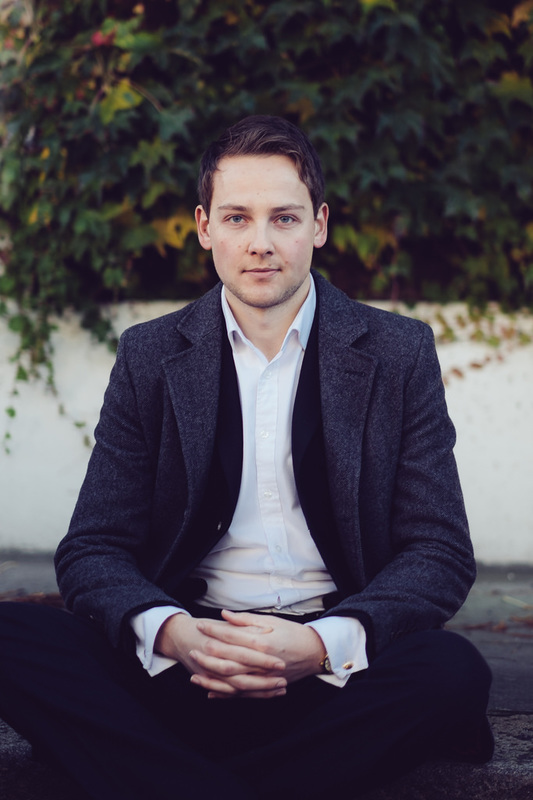
Following one of those wonderfully serendipitous encounters on the internet, I am delighted to present “Notes from the Keyboard”, a series of articles for adult amateur pianists, by Dakota Gale, chronicling his own experiences of learning the piano as an adult.


Four years ago, my wife surprised me with a digital piano for my birthday. I’d mentioned my desire to learn a few times and, ever the muse, she called my bluff.

I couldn’t read music. Finding middle C was a quest. I was a B-E-G-I-N-N-E-R.

And yet…she was right. At 38 years old, I tumbled rapturously into the world of piano. 

Four years later, the honeymoon phase is over, and yet I remain motivated to play every day and am still loving the journey. (<–understatement: I’m head-over-heels for it.)

I even do stuff like learning to do portraits by drawing musicians! (My wife tells me that’s eccentric…) 

I’m playing pieces by Chopin, Debussy, Beethoven, Liszt, and other famous composers that I thought were a decade off. Even facing the inevitable frustrations of piano study, I’m finding joy in piano every.single.day.

Learning piano transcends fun – I feel like I’ve unearthed a gift, a path to access some of the most beautiful music ever written. Accessing the pieces revealed a fountain of satisfaction that isn’t tied to money or achievement, a much-needed oasis of play as an adult.

In fact, I’ll often drop into a flow state for 30 minutes and be surprised when my timer goes off. Where else do we get that feeling once we’re done playing with Legos or mud pies?

You, mega-savvy adult reader, can do it too!

Adults CAN learn to play piano

I share my achievements not to brag (many pianists young and old far outshine my abilities), but to offer hope to adult learners. If you’re telling yourself, “Oh, I could never learn to play” or “I’m not musical” or “only kids can learn piano,” let me persuade you otherwise.

I’m shocked how many people tell me only children can learn. Well, kids are “naturals” at learning because:

  1. They don’t over-complicate things, focusing on foundational blocks that are small and approachable. (Be it music, language, or other skills.)
  2. Kids are able to practice more undistracted hours because an adult provides housing, food, and does their laundry. Their job is to be curious sponges; our Adult Role is often yawn-tastic Tuesdays, repeated.

Adults lack those luxuries. We put pressure on ourselves, try to play songs that are too hard for us, question if the time investment is worth it, and simply don’t have as much time to practice.

I’m an adult. (It snuck up on me.) On top of all the typical adult stuff, I have far too many hobbies. Sometimes friends do annoying things like interrupt my piano reverie to invite me to dinner or on bike rides. *sigh* The inconsiderate louts, I must practice!

And yet by carving out time each day to study piano, in a few months I reached a deeply satisfying level of proficiency that kept me coming back. After four years, I’m frankly astonished sometimes at what my fingers can do.

As a bonus, it’s beautiful for people to listen to (or so they pretend). A skill I’ll enjoy and develop for a lifetime, long after I’m done taking irresponsible risks on my mountain bike.

Beyond that, I’m fired up! I look forward to enjoying creating music the rest of my life and only wish I’d started earlier.


Dear reader, welcome to “Notes from the Keyboard: Adult Piano Chronicles” on The Cross-Eyed Pianist. This will be an ongoing series about my journey learning piano as an adult. I’ll share my journey (ups and downs!) and headaches with pieces and how I resolve them. I promise to absolutely not take myself too seriously—after all this is a hobby, not a vocation.

If you have ideas for topics you’d like to hear about from a dedicated amateur student of classical piano such as myself, please don’t hesitate to reach out. I’m looking forward to sharing this journey with you!


Dakota Gale

When he isn’t playing piano, Dakota Gale enjoys learning languages (especially Italian) and drawing. He also writes about reclaiming creativity as an adult and ditching tired personal paradigms in his newsletter, Traipsing About. He can often be spotted camping and exploring mountain bike trails around the Pacific Northwest.


This site is free to access and ad-free, and takes many hours to research, write, and maintain. If you find joy and value in what I do, why not

Weymouth Lunchtime Chamber Concerts (WLCC), which celebrated its 20th anniversary in 2022, is undergoing a ‘rebrand’ to reflect exciting expanding plans to bring more high-quality classical music and musicians to the popular Dorset seaside resort.

The series, founded by Weymouth-born pianist Duncan Honeybourne on his return to his hometown at the age of 25, has become well known as a platform for young professionals and established artists, and is now taking its activities up a gear. Last year’s summer concert, featuring chamber musicians coached by Duncan at the Royal Academy of Music Junior Department, was such a success that this year a special summer series of four extra Sunday afternoon concerts is being presented under the organisation’s new name CHAMBER MUSIC WEYMOUTH.

In addition to two Young Artist Showcase events on 9th and 16th July, Chamber Music Weymouth will also present a special concert of sea shanties and music inspired by or evocative of the sea and coastal landscapes with Lyme Bay Moonrakers and Duncan Honeybourne (14th July). The summer series will conclude on 28th July with a song recital given by baritone John Barker and pianist Helen Cawthorne.

Artistic Director Duncan Honeybourne says, “We’ve always made a point of welcoming young musicians, and last year’s young piano trio thoroughly enjoyed their trip to the seaside, eating ice cream on the beach after playing Mendelssohn to a large, supportive and enthusiastic audience. Everyone loved the event, and there were calls for a repeat, so this year we decided to expand the enterprise.”

Frances Wilson, herself a major voice in the piano world through her blog ‘The Cross-Eyed Pianist’, joined Duncan in 2019 as Concerts Manager, and together they plan to put their stretch of the Jurassic Coast firmly on the musical map. Frances says, “We have enjoyed record audiences since we returned to our regular monthly concerts following the challenges of the covid lockdowns, and we look forward to capitalising on this enthusiasm for what we do here with an expanded programme of concerts and other related events as we approach our 25th anniversary in 2027.”

Thanks to a generous donation from the Weymouth Music Club, which closed in 2023 after presenting concerts in the town for almost 80 years, Chamber Music Weymouth will, in addition to the regular monthly lunchtime concert series, offer further opportunities to young musicians at the start of their professional careers. Future plans also include a music festival, piano competition and masterclasses/piano courses.

The first Young Artist Showcase concert, presented by Chamber Music Weymouth, takes place on Sunday 9th June at 3pm at St Mary’s Church in central Weymouth. Students of Duncan Honeybourne from the Royal Academy of Music Junior Department and the University of Southampton will perform music by Mozart, Lalo, Paganini, and Beethoven. Tickets cost just £5, available online or on the door.

Book tickets

Full details of all concerts/events and a detailed history of the series can be found at weymouthchamberconcerts.com

a really special concert series” – Joseph Tong, pianist

“Weymouth is truly fortunate to have a concert series that benefits both local people and the wider musical community…..this is a valuable initiative that deserves continuing support and celebration.” – James Lisney, pianist


Launched in 2002 by concert pianist and Weymouth resident Duncan Honeybourne, Weymouth Lunchtime Chamber Concerts presents high-quality chamber music in the heart of Weymouth and offers a platform for musical partnerships with friends and colleagues. The concerts also give young musicians, often recent graduates from conservatoire or university, valuable performing experience to a friendly, loyal audience.

Programmes are varied and imaginative, mixing well-known works with lesser-known repertoire and composers, and all concerts take place in the attractive surroundings of St Mary’s Church, an early 19th-century church in central Weymouth, built of Portland stone.

Since its return to normal concert-giving following the covid lockdowns, the series has enjoyed record audience numbers with concerts by, amongst others, pianists Margaret Fingerhut, Joseph Tong, Allan Schiller and John Humphreys, Viv McLean, Penelope Roskell, James Lisney, Matthew Schellhorn and Katharine Lam, cellist Joseph Spooner, bass-baritone Timothy Dickinson, violinists Peter Fisher, Christopher Horner and Leora Cohen, and clarinettist Poppy Beddoe, as well as talented young musicians or recent graduates from conservatoire. Featured contemporary composers include Sadie Harrison, Adam Gorb, Ben Gaunt, Liz Dilnot Johnson and Fazil Say.

The series receives no funding or sponsorship, and all artist fees and other costs are met through ticket sales alone.

Award-winning British composer Thomas Hewitt Jones releases a new version of the much-loved hymn Abide With Me on the 80th anniversary of D-Day, the invasion of Normandy by Allied forces which marked a crucial turning point in the Second World War.

American troops arriving in Normandy on D-Day (National Geographic)

Originally written in 1847 by Scottish Anglican cleric Henry Francis Lyte, with words based on Luke 24: 13–35, ‘Abide with Me’ is a prayer for God to stay (“abide”) with the speaker through the trials and tribulations of life and death. Traditionally sung at remembrance events and services, and at funerals, it offers comfort to the bereaved and hope for the coming weeks. The hymn speaks to the universal human condition, and it is that feeling of hope and assurance which makes this hymn so special. It is most often sung to the tune “Eventide” by the English organist William Henry Monk.

Abide with me; fast falls the eventide;
The darkness deepens; Lord with me abide.
When other helpers fail and comforts flee,
Help of the helpless, O abide with me.

This new version by Thomas Hewitt Jones is performed by the Scottish Session Orchestra, conducted by Adam Robinson, recorded remotely in Glasgow – with Thomas on solo cello and pipe organ from his home studio.

Composer Thomas Hewitt Jones says, “‘Abide with Me’ is such a well-loved tune which typically has resonances with wartime and remembrance. However, as my friend Gordon Giles, Canon at Rochester Cathedral, reminded me, the words also allude to the resurrection. As such, I think it can be seen as a song of great comfort in trying times. I have given it the unashamedly rich string treatment here, with nods to Vaughan Williams but also a couple of subtle harmonic twists. I have also showcased the Lammermuir pipe organ, which is in my studio, and it is wonderful to have the excuse to get the cello out again! I hope you enjoy this new take on the beloved melody.”

‘Abide with Me’ – arranged by Thomas Hewitt Jones (solo cello & organ), with the Scottish Session Orchestra conducted by Adam Robinson.

Full text of ‘Abide with Me’ here

Bach’s Goldberg Variations caused me misery – but I still can’t get enough

– Jeremy Denk, pianist


Our relationship with our repertoire is personal and often long-standing. Connections with certain pieces and composers may be forged in our early days of learning our instrument, which remain with us throughout our musical lives. Many of us can clearly remember some of the earliest pieces we learnt as children, and returning to repertoire learnt in childhood and during student years can bring an interesting, and sometimes uncomfortable rush of memories. Opening the score of the first book of Bach’s Well-Tempered Clavier, I saw my teacher’s markings, her explanation of the structure of a fugue, and for a moment I was transported back nearly 40 years to her living room and the big black Steinway grand piano on which she taught me.

Sometimes these repertoire relationships forged during early study can be detrimental to our learning as mature players. Bad habits from childhood and student days are deeply ingrained, and all too easily recalled, and thus very hard to shift later on. This is interesting in itself as it demonstrates how carefully (or not) one has learnt the music previously, and sometimes the only way to step aside from these habits is to buy a new score and start the music afresh, as if learning it for the very first time.

Jeremy Denk’s comment on the Goldberg Variations is interesting and will resonate with many musicians, I’m sure. We all have pieces which have a particular hold over us, which fascinate and compel us to revisit them over and over again. Yet their technical and musical complexities make the learning and practicing process difficult and sometimes less than rewarding. Some repertoire, however beautiful, satisfying or intriguing, is simply a slog, and the more progress one makes, the more “just out of reach” it seems.

Other works, in comparison, feel relatively easy, the music flows in practice and performance, gives satisfaction to player and audience, and enters into one’s personal catalogue of “favourites”.

However, “easy” can be a myth, because everything, even the simplest little prelude by Bach, can be taken up a level each time we revisit the music. This setting aside of and returning to repertoire also affects our relationship with it, and we may observe how that relationship changes over time and with the benefit of artistic maturity. I have gone back to previously-learnt works and wondered what I found so difficult before. The passing of years, and accumulated experience and wisdom make the process of reviving repertoire stimulating and enjoyable. We are reminded of what attracted us to the music in the first place, while also continually finding new aspects to it. This curiosity also helps to keep alive our relationship with the repertoire.

Then there are pieces which we may never play, but, rather like the books you haven’t read, and may never read, remain special. Just knowing the score is there, on the bookshelf, can foster a particular relationship with that music (I often buy scores of music I know I will never play simply for the pleasure of reading the music or admiring the organisation of it on the page), and maybe one day you will open it, set it on the music stand, and start the process of learning it….