Guest post by Luca Bianchini


Mozart is said to have written a catalogue of his works, which he reportedly began in 1784 and completed in 1791—or so it was believed until recently.

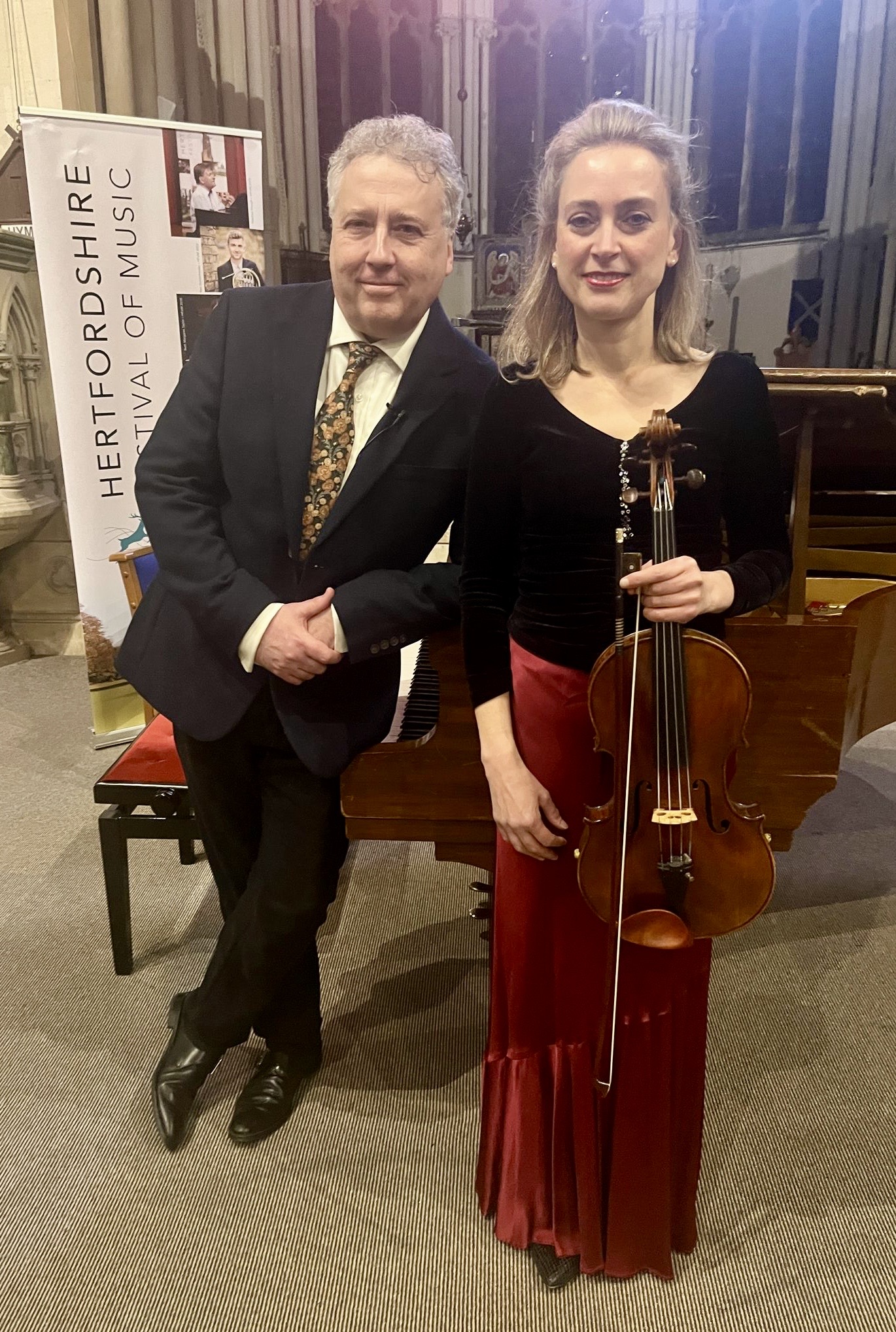
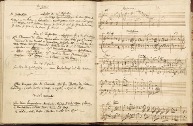
The Thematic Catalogue, held in the British Library in London, is a small, ninety-page book in excellent condition. It is bound and features an elegant part-leather cover. Fifty-eight of its pages contain text and music. The catalogue is arranged with detailed descriptions of the instrumentation on one page and the incipits of the pieces—typically four bars written on two staves—on the opposite page.
All major books on Mozart, including the recently updated Köchel catalogue, which officially lists and dates his compositions, rely on this so-called autograph catalogue as a critical source. It serves to document and certify Mozart’s most important works, including, for example, the Jupiter Symphony. Mozart’s Clarinet Concerto is attributed to him precisely because it is included in this thematic catalogue, supposedly in his own handwriting.

A recent study by Professors Luca Bianchini, Anna Trombetta, and Martin Jarvis, published in the prestigious Journal of Forensic Document Examination (JFDE), introduced an innovative method of ink analysis. This study revealed that the catalogue is a forgery, fabricated around 1798 and written by multiple hands.

To verify the authenticity of a document, one must first examine the paper’s watermark. In the case of the Thematic Catalogue, no identical watermark has been found from before 1802. Furthermore, Mozart never mentioned or wrote about the catalogue during his lifetime, nor did any of his closest relatives or acquaintances. The catalogue was not included in the inventory of Mozart’s possessions compiled by court officials after his death in late 1791. In fact, there is no record of the catalogue until 1798—seven years after his death.

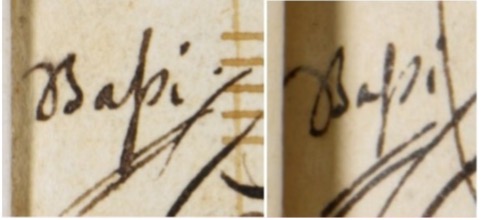
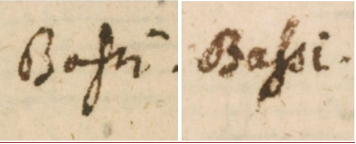
At the IGS 2023 international conference on forensic handwriting analysis, Professors Bianchini and Trombetta demonstrated, using new software developed by Bianchini in C#, that the handwriting in the catalogue does not match Mozart’s own. (For instance, consider how Mozart wrote “Bassi” in his autographs, compared with how it appears in the catalogue.)

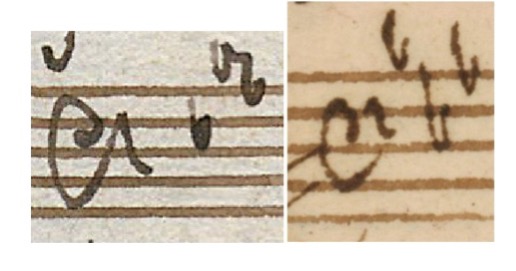
At the same conference, held at the University of Évora, Professor Anthony Jarvis presented another article, also subjected to rigorous double-blind peer review. He showed that all the bass clefs in the catalogue were not written by Mozart. If Mozart did not write the bass clefs on every stave, it is unlikely he wrote the rest of the catalogue. (Compare: on the left is an autograph, on the right the catalogue.)

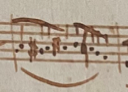
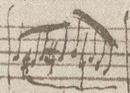
Professor Heidi Harralson, a leading authority in forensic document examination, co-authored another article with Professor Martin Jarvis of Charles Darwin University in Australia, who is also an expert in the field and a Board Member of the Australia and New Zealand Forensic Science Society Northern Territory Branch. They presented evidence suggesting that Mozart could not have authored the catalogue. (For example, the regular strokes in The Marriage of Figaro autograph differ from the tremulous lines in the Thematic Catalogue, indicating copying or forgery.)

Bianchini and Trombetta had already published a book in 2018 highlighting numerous contradictions between the catalogue and Mozart’s original manuscripts.

For instance, the catalogue claims that a well-known aria was sung by the bass Albertarelli. However, it was written for the tenor Del Sole, since the higher notes would be unsuitable for a deep bass voice. Tempo markings, notes, rests, and musical themes often differ between the catalogue and the original manuscripts. Additional instruments are also listed in the catalogue, though they do not appear in the autographs.

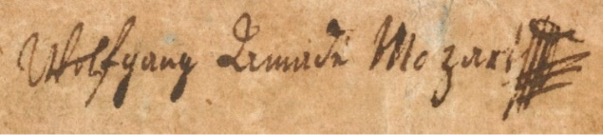
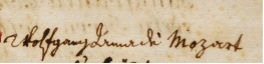
Even the signature on the cover is forged.

Signature in the catalogue:

Mozart’s verified signature (from his marriage certificate):

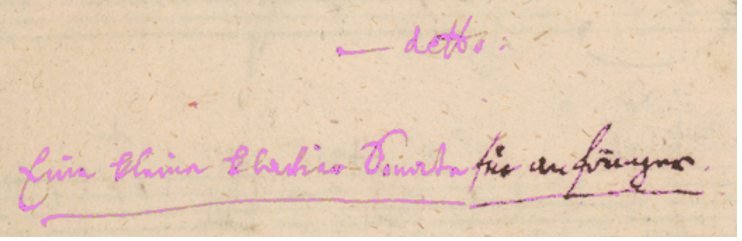
Furthermore, certain entries were added later using different inks. These discrepancies are invisible to the naked eye but become evident when computer filters are applied, as demonstrated in the recent scientific article by Bianchini, Trombetta, and Jarvis. (For instance, the initial text highlighted in pink differs in ink composition from the darker addition at the end of the line.)

It is no wonder that the musical world, especially Mozart scholars, is in turmoil. The revelation that the catalogue is a forgery challenges long-held assumptions.

For the sake of accuracy, the newly published Köchel catalogue must be revised to account for these findings. All works attributed to Mozart from 1784 to 1791 must be re-examined, as their dates and attributions have so far relied on this forged document. Given that Mozart often left his autographs unsigned and undated, the authenticity of many works is now in doubt, potentially revolutionising the history of music.

For those interested in exploring this topic further, please refer to the press release available at: https://www.mozartrazom.com/mozarts-legacy-under-scrutiny-groundbreaking-forensic-study-published/


Luca Bianchini is a musicologist from the University of Pavia, Italy, specializing in historical musicology and document analysis.

Guest post by Karine Hetherington


With, ‘Variations’, pianist Joanna Kacperek has chosen to focus on the humble variation. Like many other composers before them and since, Beethoven, Robert and Clara Schumann, Brahms and Chopin, composed many variations. On this album, Kacperek artfully displays the creative possibilities of these variations, which were a way of exploring a theme for these composers, often not their own, and taking it to the next sublime level.

Variations have also been the means by which one composer honoured another. Thus, we hear Robert Schumann’s little-known variations, based on a theme by Beethoven, in this case, Beethoven’s Symphony no.7 and more precisely the Allegretto movement. To hear Beethoven’s solemn theme being repeatedly played and tweaked and then transformed by Schumann, is a thrill and gives the much-loved Beethoven melody a new mesmeric quality.

Clara Schumann’s variations meanwhile, celebrate the rich relationship (musical and emotional) she enjoyed with her husband, Robert. These intimate variations reveal every facet of their emotional life; joy, pain, yearning, eventually unfolding into a marvellous resolution where gratitude seems the overriding emotion.

Impressed by Kacperek’s debut album, Karine Hetherington from ArtMuseLondon went to interview this breakthrough artist.

Had you always planned to have a musical career and become a professional pianist?

Actually, yes! I started my private piano lessons at the age of 6. From the age of 7 onwards, I was educated in state music schools in Poland that are quite strict and take your musical development very seriously. 

Of course all this wouldn’t’have happened without the support of my parents. 

What led you to the idea of doing an album of musical variations? What does it bring to the listener?

I really love the idea of taking something really simple, like a 16-bar theme, and developing it in any way possible; I find it really exciting from both a pianistic and musical point of view. In a way, it feels like pushing the boundaries – how far can we go? How creative and expressive can we be, starting with such simple musical material? 

The album started with my obsession with Clara Schumann’s Variations Op. 20 which she composed on her husband’s theme – I just knew this piece was special. The other thing that influenced this programming was my discovery of Robert Schumann’s Studies on a Theme by Beethoven – a composition that survived (thanks to Clara) and was not published during Robert’s life. It is such a tremendous set that deserves more spotlight! Then, I started adding other sets of variations that complemented the ones by the Schumanns – hence Beethoven Op. 34 (which links to Schumann-Beethoven Studies), and Brahms Op. 18b (the birthday present from Brahms to Clara Schumann). 

Because all of the works I have mentioned had a personal story behind them, I decided to add Dutilleux’s Choral and Variations from his Sonata Op. 1 – the piece dedicated to, and premiered by his wife, concert pianist Genevieve Joy. Then – Cecile Chaminade’s Thème varié Op. 89  – a little gem, so rarely performed and recorded (my recording is only the 4th in the world!) showcasing yet another brilliant pianist-composer; finally Chopin – which is not only a nod towards my Polish roots, but at the same time it links to Dutilleux and Chaminade through their Paris residency. 

Where are you performing next? What musical projects do you have in the pipeline?

2025 looks exciting. I have performances planned in France, Germany, the Netherlands, Poland, Ireland and of course in the UK. January will start with two performances in West London of Beethoven’s 3rd Piano Concerto with an incredible arrangement for a string quintet.

How do you relax?

Playing the piano can be a lonely profession, so to relax, I love being around people.I enjoy the gym and group fitness classes that involve cardio, boxing or dance. Apart from that – quiet evenings with my cat on my lap is also one of my favorite things. 

Joanna Kacperek’s album Variations is available on the Rubicon label and via streaming

joannakacperek.com


This article first appeared on The Cross-Eyed Pianist’s sister site ArtMuseLondon.com

(Artist photo by Paul Marc Mitchell)

Guest post by Dakota Gale, the latest article in his series aimed at adult amateur pianists


Soon after I started piano lessons in 2021, my teacher showed me a clip from a Beethoven Sonata to demonstrate a technique. “Is this piece hard?” I asked? “It’s a Beethoven sonata!” he replied. 

The meaning was clear: they’re ALL hard.

Since then, I’ve listened to the entire series of 32 sonatas, which are a trip through Beethoven’s entire career. They’re simply fantastic.

In his autobiography, masterful pianist Andras Schiff says that he didn’t feel mature enough to learn them until he was well into his professional career. I’ve heard the sonatas called the Bible of music—The New Testament, as compared to Bach’s Well-Tempered Clavier as The Old Testament. 

So it was with some trepidation, plenty of respect, and low expectations that I decided to step into the ring with Opus 14, No. 1 in E major, his 9th sonata. Sure, it’s a Grade 6 Henle, which I’ve played many times… but a) I haven’t played much classical era music b) it’s 13 pages of music c) it’s fast d) IT’S A BEETHOVEN SONATA.

In short, my expectation stepping into the ring: fast and furious blows to the body from this serious dude:

A quick doodle of Beethoven that I did.

Also, Opus 14 wasn’t my favorite sonata, but I liked it…and the others were technically out of reach at the moment. (Some, forever.) I prooobably should have started with Scarlatti or Haydyn, but just couldn’t motivate myself to learn a piece I wasn’t excited about.

Anyway, I just spent a month doing a first pass on all three movements and here’s my experience. May it help your attempts to learn this piece or others.

My approach to learning Beethoven’s Opus 14. No 1

Fear not, dear reader! I’m not so over-confident as to tackle a big task like a Beethoven sonata without a clear approach. I tried that with other pieces and wound up playing insecurely or poorly.

This time around, my approach was:

  1. Starting with the first movement, I did a basic analysis of structure and harmony, finding the main and secondary themes, development, and recapitulation.
  2. I identified the fast sections that I suspected would take the most time and discussed with my teacher to confirm. For me, those were bars 4-6 and 39-45, 50-56 and the fast arpeggios starting on bar 65 in the first movement. The second movement isn’t so bad, but the third movement is fast and the opening and fast runs halfway through the piece needed some solid hands separate practice.
  3. Using the techniques on memorization from The Fundamentals of Piano Practice, I memorized the entire sonata. It was the first time I’d taken such a dedicated approach and it worked wonders. I won’t go too deep with detail here, but I can’t recommend it enough! 

In short:

  1. I’d play through one bar of music with one hand, keeping the sections short enough that I could bring it up to speed quickly. Then I’d close my eyes and play through it in my head without touching the keyboard.
  2. Reinforce a time or two, perhaps singing the melody or harmony, then switch to the other hand. Repeat… move on to the next bar. Learn a few lines per day, reinforcing them the next day and moving on to other sections.
  3. Using this technique, I could play through the seven-page first movement hands together in my head the first week and the remaining six pages the second week. It felt like magic! (That book is so good.)
  1. At the same time, I practiced the fast sections I mentioned every day. Once I decided on fingerings, I kept the speed fast from the start. If I couldn’t play it at full speed with one hand, I decreased the length of the section. (ala Kenny Werner’s great book, Effortless Mastery.)

  2. After three weeks, with hands separate I could play the entire sonata (movement 1-3) at tempo, so I started putting hands together. The usual brain breaking occurred and I had to slow down to 50-75% tempo, but I trusted the process.
  3. Another two weeks and movements 1 & 2 were close to tempo, with some notable spots where building speed will take time (those fast LH arpeggios in bars 65-75 with octaves in the RH feel like careening madly along without brakes!). Movement 3 is fast and playing at tempo will take another round of revision.
  4. My progress had slowed, not to mention my drive, another indication it was time to set the piece aside for a few weeks and let it rest. Onward! (For me, that meant polishing Chopin’s Opus 9. No 1 for a masterclass.)

At this point, I felt elated that I could do ANYthing with this sonata that had seemed like hopping in the ring against Mike Tyson. I’d survived!  Was it to performance standards? Absolutely not! Did I expect that? Nooope.

Also, was I sick of the sonata? Ohhh yeah, it was time for a break and some lighter fare. I gobbled up a Yann Tiersen piece from his wonderful album EUSA and waded into Chopin’s Raindrop Prelude so I could entertain annoy my wife with the booming middle section. 

Overall, I’m both pleased and surprised how well the piece went. Even better, I grew to enjoy the piece’s nuances and wound up liking it much more than when I started learning it. I also picked up new skills, including:

  1. Better memorizing techniques.
  2. Smoother fast LH arpeggios and Alberti bass technique.
  3. Better staccato playing.
  4. Better multiple voice playing via the fugue-y section. 
  5. Better grasp of how new themes vary, develop and morph.

I definitely expected a much longer process. Luckily, I’m an amateur pianist and don’t need to nail down a piece to perform at a set time. I play for myself and for friends/family. 

As with any difficult piece, my primary goal for round 1 was simply to get the piece into my fingers and brain. The artistry and expression happen during later revision. In fact, as annoying as it is, I’ve found it’s often at least a year before I feel confident performing a piece live! Perhaps you’ve experienced this as well? 

Regardless, I survived my first round with a full Beethoven sonata and hope to play many more of his pieces in the future. Opus 26 beckons with its siren song of variations!


When he isn’t playing piano, Dakota Gale enjoys learning languages (especially Italian) and drawing. He also writes about reclaiming creativity as an adult and ditching tired personal paradigms in his newsletter, Traipsing About. He can often be spotted camping and exploring mountain bike trails around the Pacific Northwest.

HANDEL’S MESSIAH

The Echoing Air and Music for Awile

Thursday 19 December at 6pm at St Mary’s church, Bruton, Somerset

A rare intimate chamber performance of Handel’s great work, ‘Messiah’, featuring world-class musicians.

The Echoing Air, a vocal ensemble of eight singers will sing both the choruses and solos, accompanied by the instrumental ensemble Music for Awhile, a quartet of baroque string players, led by Margaret Faultless, a harpsichordist and a trumpeter. This is an abridged performance of Messiah, with significant cuts, but including the famous ‘Hallelujah’ chorus. Running time approx. 1.5 hours.

Performers: Amy Carson (soprano), Timothy Dickinson (bass-baritone), Frederick Long (bass-baritone), Emily Vine (soprano), Rebecca Leggett (mezzo-soprano), Edmund Hastings (tenor), David de Winter (tenor), Margaret Faultless (violin), Rachel Stroud (violin), Francesca Gilbert (viola), Jonathan Rees (cello), Katie Lodge (trumpet), Oliver John Ruthven (continuo).

This performance follows popular performances by The Echoing Air at Wyke House in Somerset, and at St Mary’s church, Bruton.

Praise for The Echoing Air (audience comments from previous performances)

‘Really great performance and we couldn’t have enjoyed it more.’

‘I came to the Messiah concert in Bruton. Absolutely superb! I have never heard it sung with such meaning or passion.’

‘Absolutely brilliant performance….such a high standard.’

‘Superb. The chamber music atmosphere made one really engage with the music. The standard of the players was amazing and the whole performance was totally engaging. I found it both emotional and hugely enjoyable.’

‘It was a huge privilege to attend a performance of The Messiah. An extraordinary experience.’

Thursday 19 December 2024, 6pm (doors 5.30pm)

Tickets £12.50 in advance/£15 on the door

Booking link: https://www.ticketsource.co.uk/theechoingair/handels-messiah/e-dqyjgq