London’s Wigmore Hall celebrates its 125th birthday on 31st May 2026

Early days

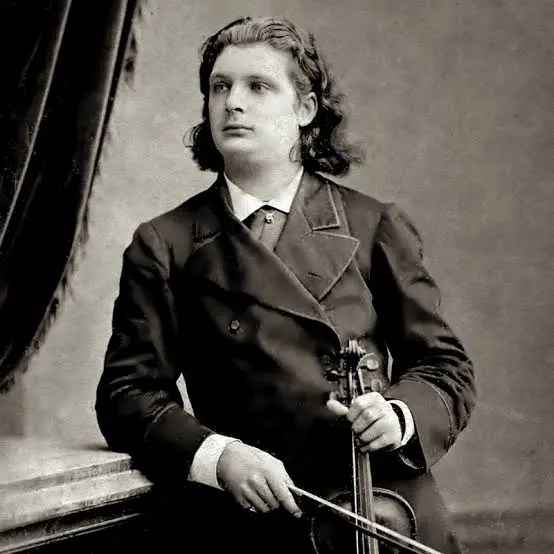
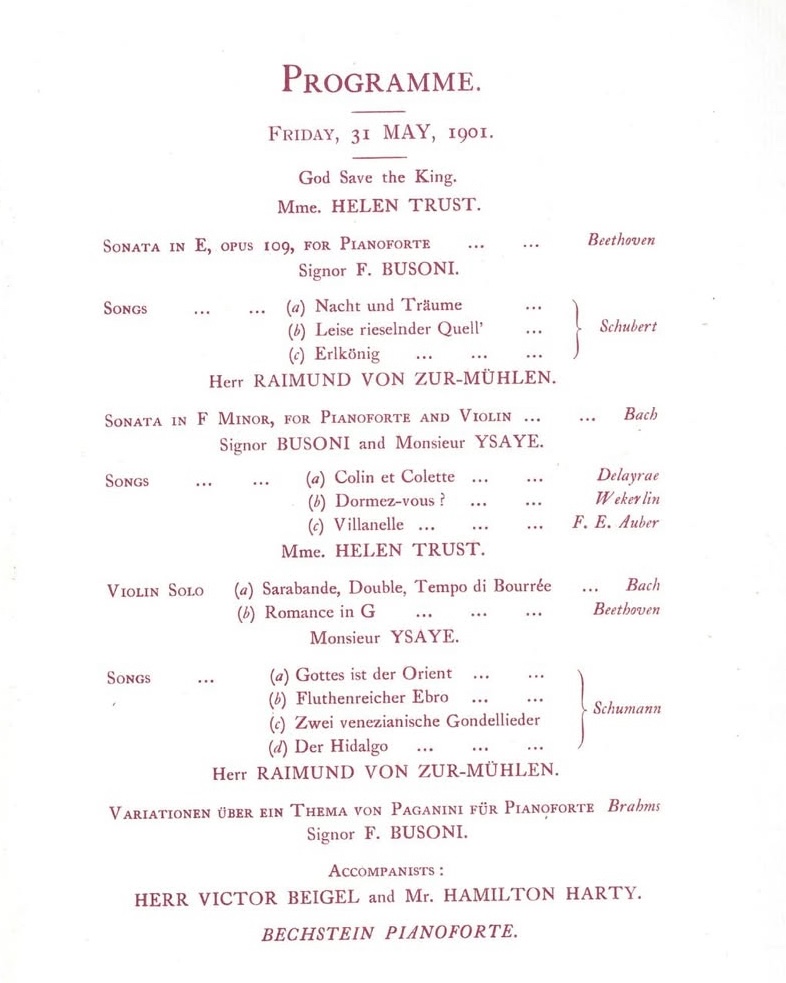
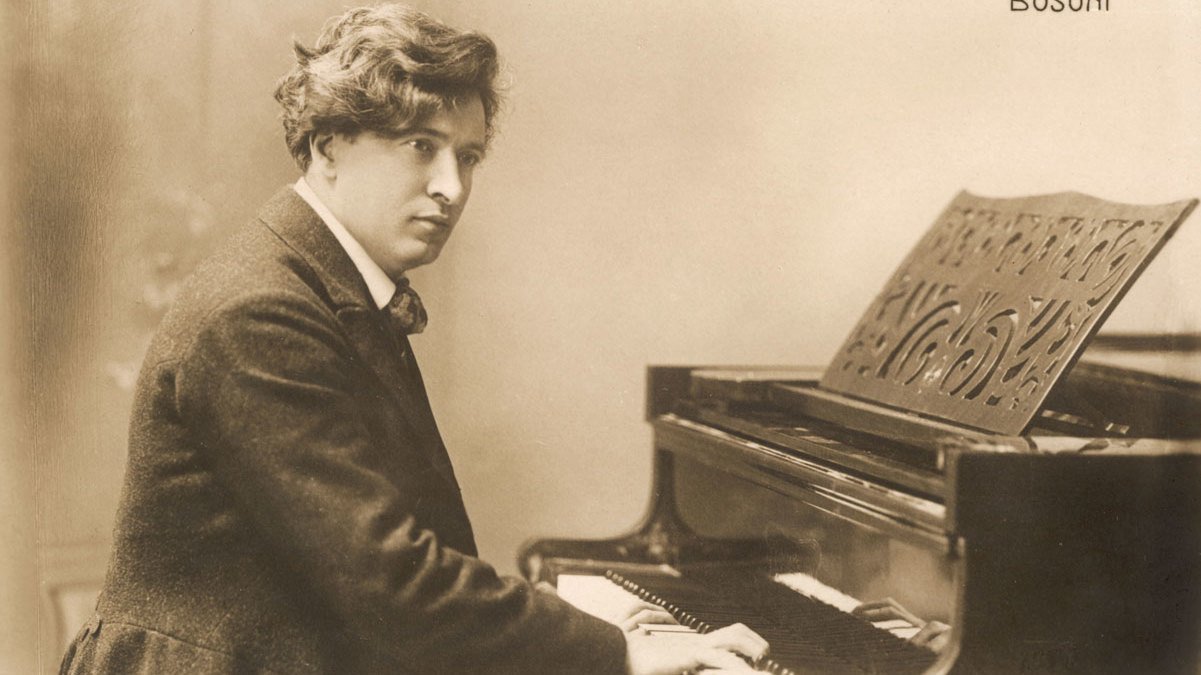
The first concert at the new Bechstein (now Wigmore) Hall took place on 31st May 1901. The performance featured English soprano Mrs Helen Trust, ‘king of the violin’ Eugene Ysaye, and composer-pianist Ferruccio Busoni – an impressive line-up that promised well not only for the opening night but also for the future of London’s newest concert venue. The audience at that first concert comprised wealthy patrons, aristocrats and the intellectual elite of London. It would surely have been a glamorous event. The first public concert took place on 3rd June 1901, and from that date until October 1915, when Bechstein Hall was forced to close, it hosted some two hundred concerts a year.
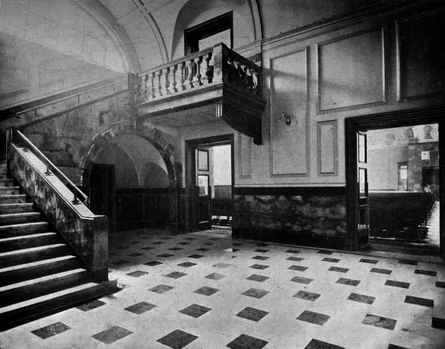
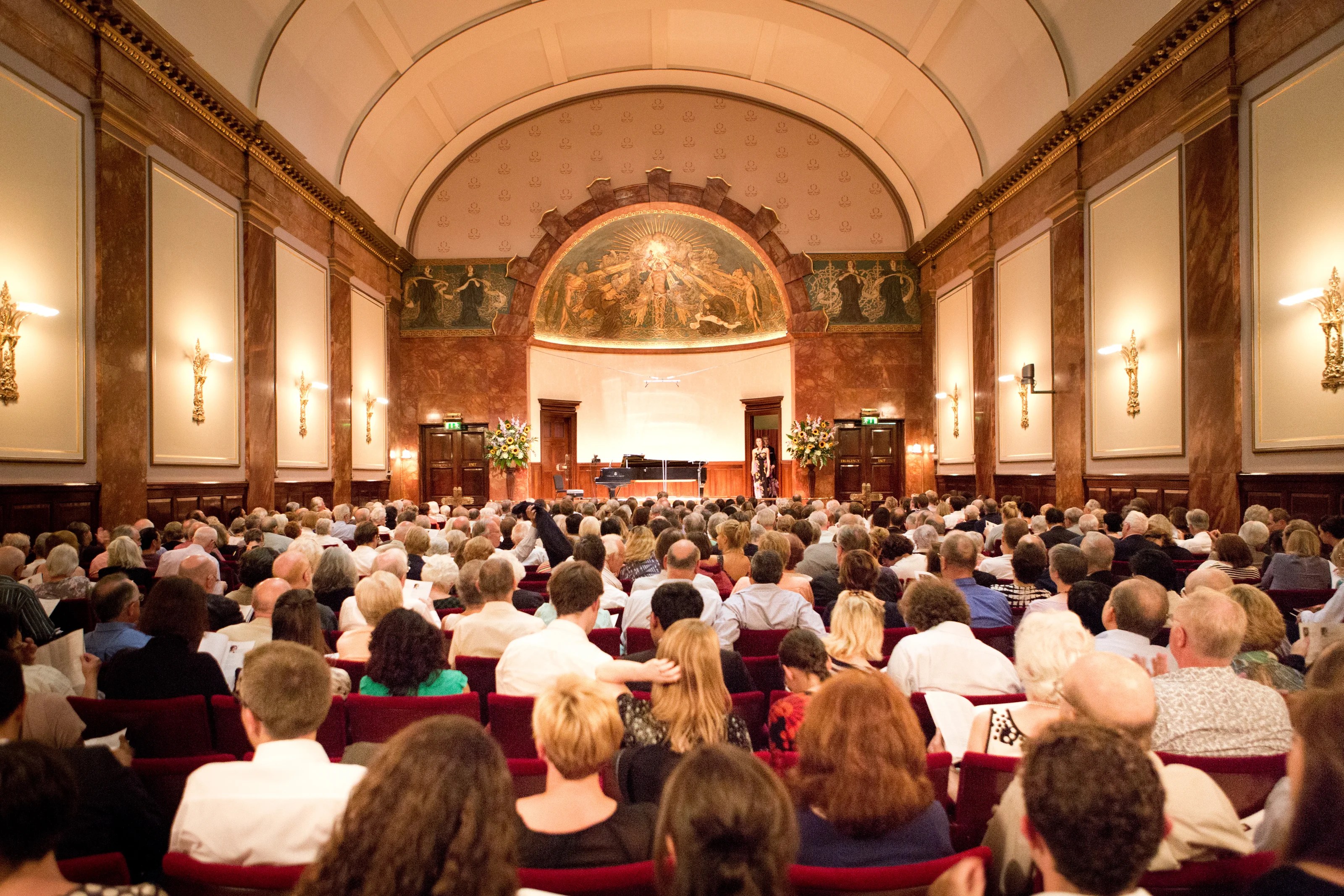
At the beginning of the twentieth century, Bechstein Hall on London’s Wigmore Street – a prime location in the fashionable Marylebone district – was promoted as the best place for intimate music-making, boasting unrivalled comfort and facilities for patrons and artists, with its elegant green room up a short flight of stairs behind the stage (so that singers did not arrive on stage breathless). At the time of its opening, concert life and leisure in London were undergoing something of a revolution. Theatres and music halls were opening across the West End, a wide public was being introduced to the experience of shopping for pleasure in the new “department stores” (Selfridges is a mere 10-minute walk, at most, from Wigmore Street). With cheap and efficient public transport, it was easy for people to enjoy these delights in the centre of the metropolis.
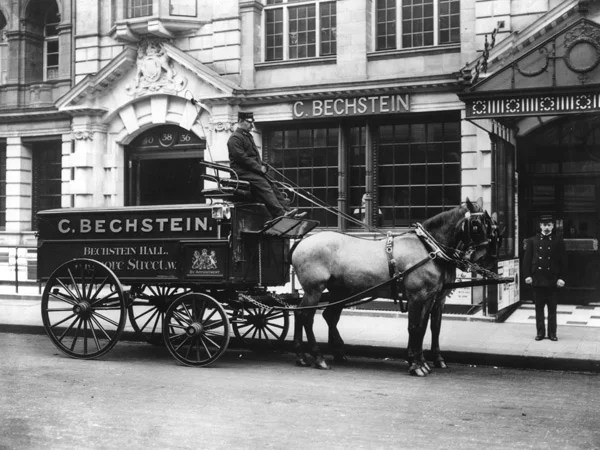
At the time of the hall’s opening, C. Bechstein was Europe’s leading piano maker (it produced 5000 pianos in 1901), and its instruments were preferred by most pianists outside America, where Steinway predominated. The Bechstein piano company built similar concert halls in Paris and St Petersburg to showcase its instruments and the leading performers and singers of the day. With its distinctive barrel-roof “shoebox” design, beloved of many musicians and audience, Wigmore Hall still boasts a fine acoustic. At the same time, its small size (its capacity is c600 seats) makes it the perfect place to enjoy intimate chamber and piano recitals.

“…wherever you sit, the acoustics are wonderful for the piano”. (Lorraine Banning, pianist and piano teacher)

“…the classic shoebox-shaped hall with the most marvellous acoustics – it sounds very good when you’re rehearsing, and then you come on stage and find that with the audience it’s even better….a jewel” (Madeleine Mitchell, violinist)

War time and changing hands

During the First World War, it became increasingly difficult for Bechstein Hall to trade successfully. Strong anti-German sentiments and the passing of the Trading with the Enemy Amendment Act 1916 led to the hall’s closure in June 1916, and all property, including the concert hall and the showrooms, was seized and summarily closed. The hall was sold at auction to the Debenhams department store, which rechristened it Wigmore Hall, and it opened under its new name on 16th January 1917. Instead of a German C. Bechstein piano, a French Erard graced the stage.

Although a German instrument was forbidden, German music certainly was not, and the programme included works by Schubert and Schumann – composers whose music continues to appear regularly in concert programmes at the hall
Wigmore Hall today

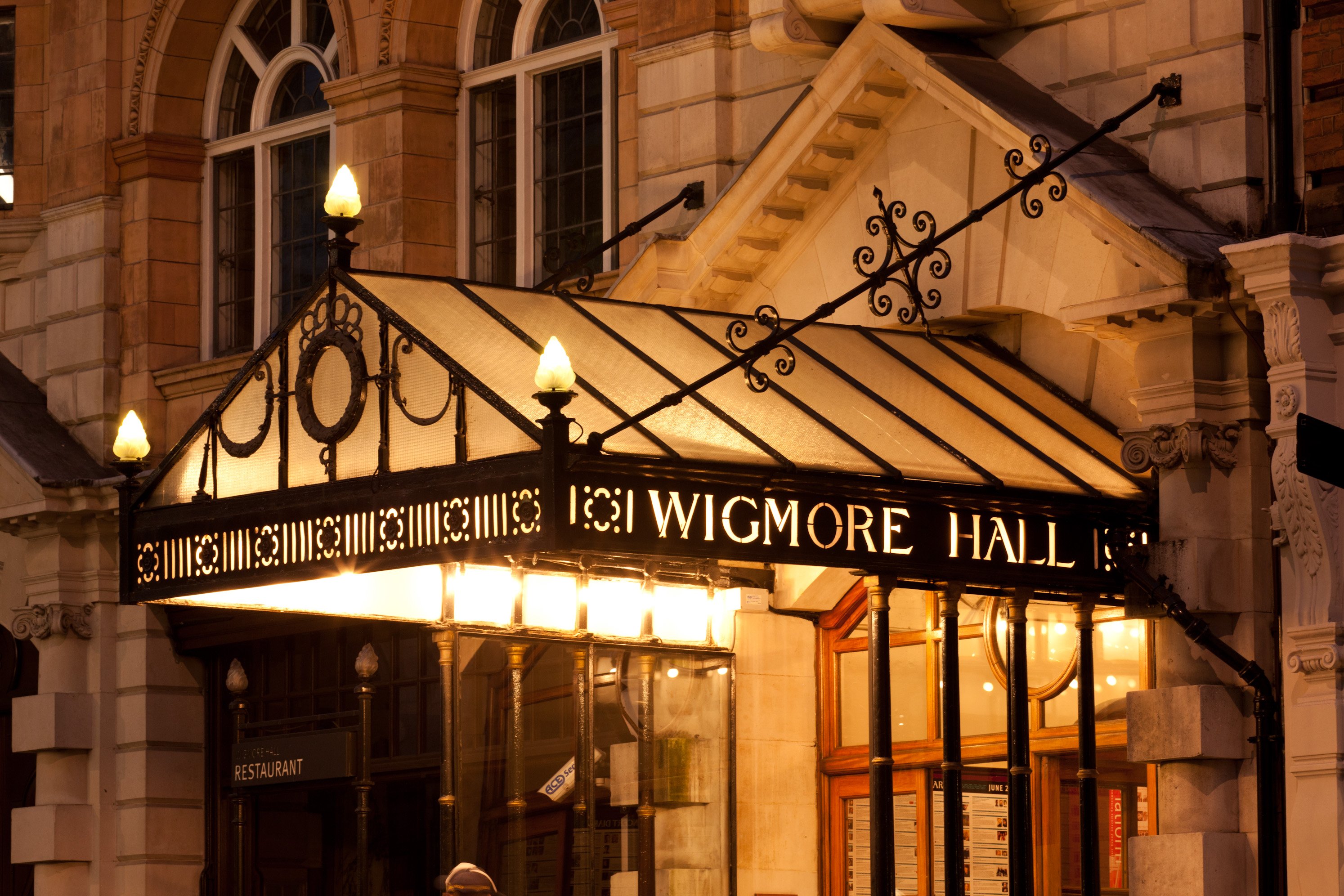
Nestling unobtrusively just a stone’s throw from the bustle of Oxford Street, within a row of tall Edwardian façades, Wigmore Hall enjoys a position of pre-eminence not only in London but across the international classical music scene, and a debut at Wigmore Hall is the long-held dream of many young and up-and-coming performers. While other, newer or more modern concert halls may boast state-of-the-art acoustics, the acoustics of Wigmore Hall remain one of the best and most beloved. No matter that the distant rumble of tube trains can be heard during performances (underground lines run directly beneath the street where the hall is located), one feels cocooned from the outside world in that special red-and-gold space.

“I have never been fortunate enough to perform there, but have wonderful memories of being in the audience. Every note sparkles.” (Lucy Melvin, violinist)

“It’s the only hall I know where the best seats (from the listening point of view) are in the balcony. Judging by the conversations I’ve had up there, quite a lot of people know this.” (Orlando Murrin, author)

The hall and its audience

Alongside its reputation for chamber music of the highest quality, the Wigmore’s audience is famous for its loyalty, intelligence and discernment. It is considered by many musicians to be one of the most demanding audiences of any concert hall, which brings its own unique set of pressures, and many performers will play a programme in regional venues and for local music societies before “doing a Wigmore”.

But the hall holds a special place in the affections of many performers, who regard it as their artistic home in London. There are no rough edges in this beautifully proportioned hall, no jarring modern architectural details to confuse and distract. The tread of the thick crimson carpets is complemented by the red Verona marble frieze, the noise and litter of Oxford Street and the West End forgotten in the spacious vestibule and elegant green room. Playing at the Wigmore or being in the audience, one feels a sense of history and heritage, for the Wigmore inhabits a different era and ethos from other concert venues in London. All the time, one is aware of the great performances that have taken place in the hall, and the walls of the green room are lined with photographs of musicians and composers, honouring the hall’s history and legacy.

“…the place is so full of musical ghosts.” (Caroline Swinburne, author)

As a member of the audience, attending a concert at the Wigmore has its own special rituals from the moment one steps through the glass doors. For many of us who are regulars at the “sacred shoebox” (Vikram Seth, author), it feels like our musical spiritual home. The richly carpeted vestibule is a place where people meet, queue for tickets, and buy programmes, CDs or gifts. Sometimes, if you arrive early, you might hear the soloist warming up or the piano being tuned, which can lend a special frisson to the evening, a glimpse of what is to come.

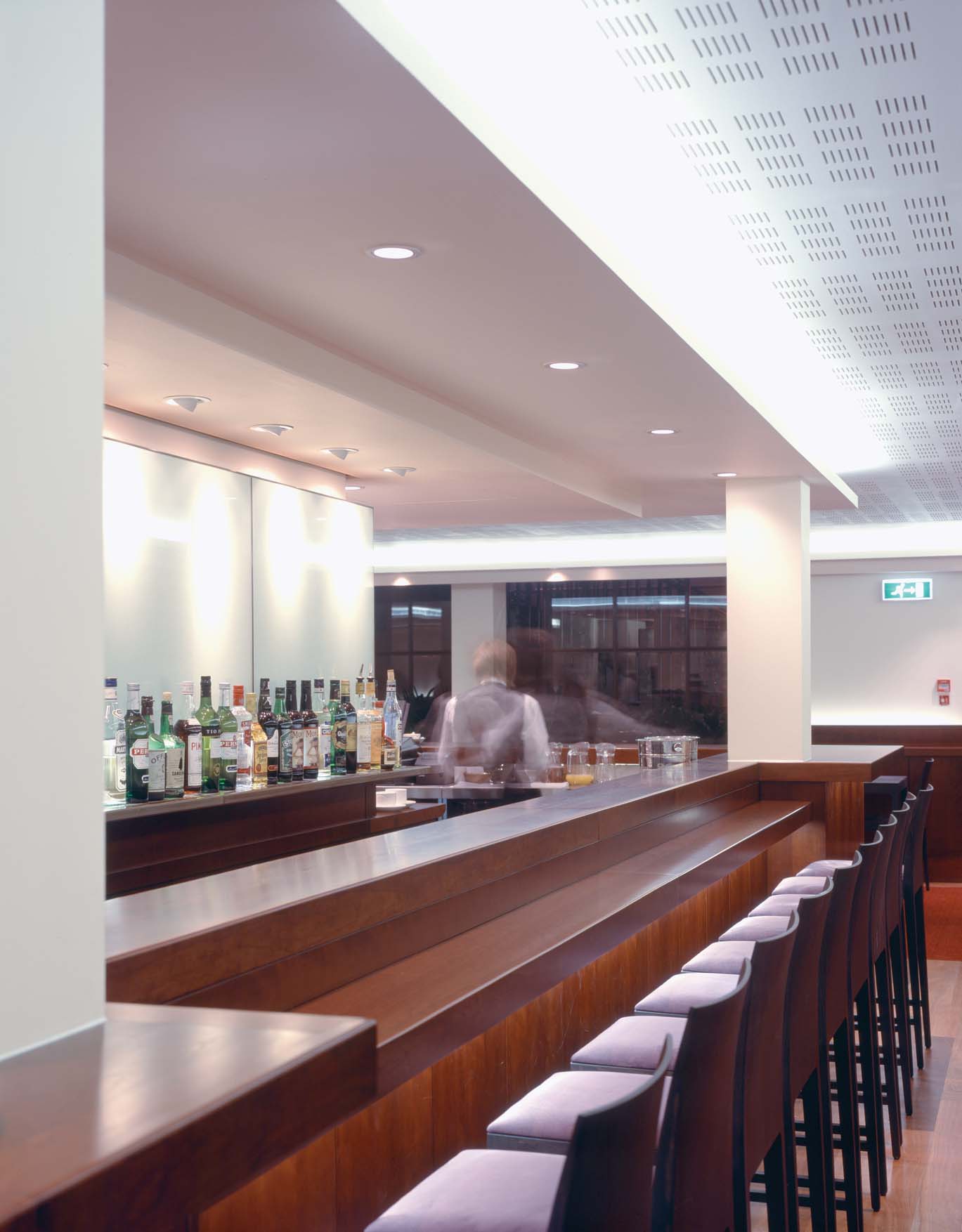
Downstairs, the bars and restaurant hum with pre-concert chatter, and sometimes, when you visit, you might spot a “musical celebrity” – Steven Isserlis, Alfred Brendel, Julian Lloyd Weber, or Steven Kovacevich.

I like to arrive in good time for drinks and chat with friends before the bell summons us to the hall, when we sink into the plush comfort of the crimson seats. In the auditorium, in the moments before the concert begins, one senses the audience’s collective breath of expectation. 

“The restaurant is great for socialising with fellow concert goers, and of course, as it is so popular with other musicians, you always see someone you know there, but mostly it is the sense of intimacy and history which, combined with wonderful acoustics wherever one sits, makes it unique.” (Lorraine Banning, pianist & piano teacher)
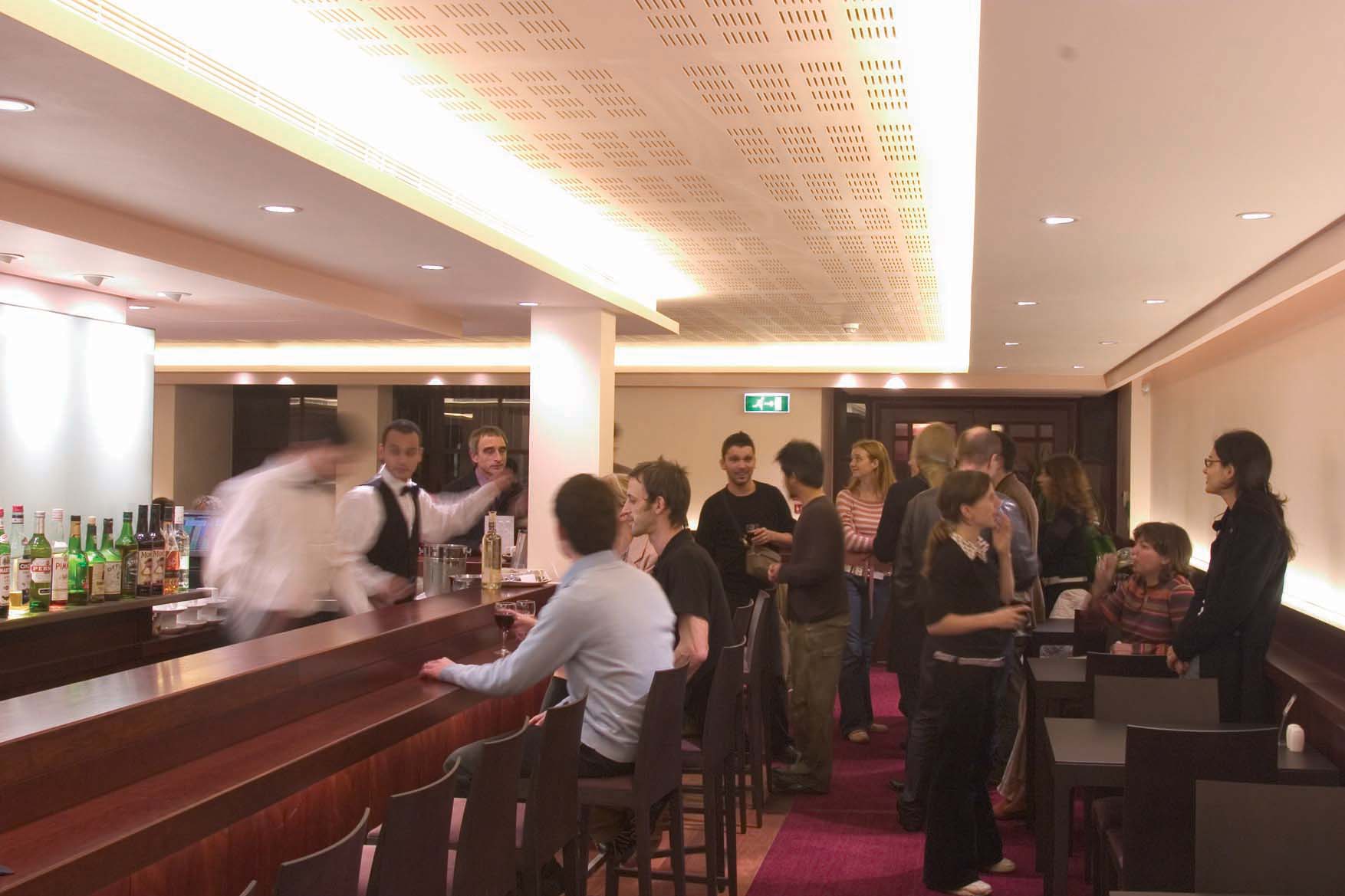
For many of us, Wigmore Hall is special because it holds emotion as much as music. The intimacy, the acoustics, the history, and the feeling that every performance truly matters create something unforgettable for both the audience and the performers.

People, usually those who have never stepped through Wigmore’s discreet entrance, let alone enjoyed a concert there, grumble about the audience’s age or its being overly highbrow, snobbish or elitist. But get talking to the person next to you (spying my reporter’s notebook is usually enough to start a conversation) and you will find that the average Wigmore audience member is none of these things, simply someone who really enjoys and appreciates live classical music.
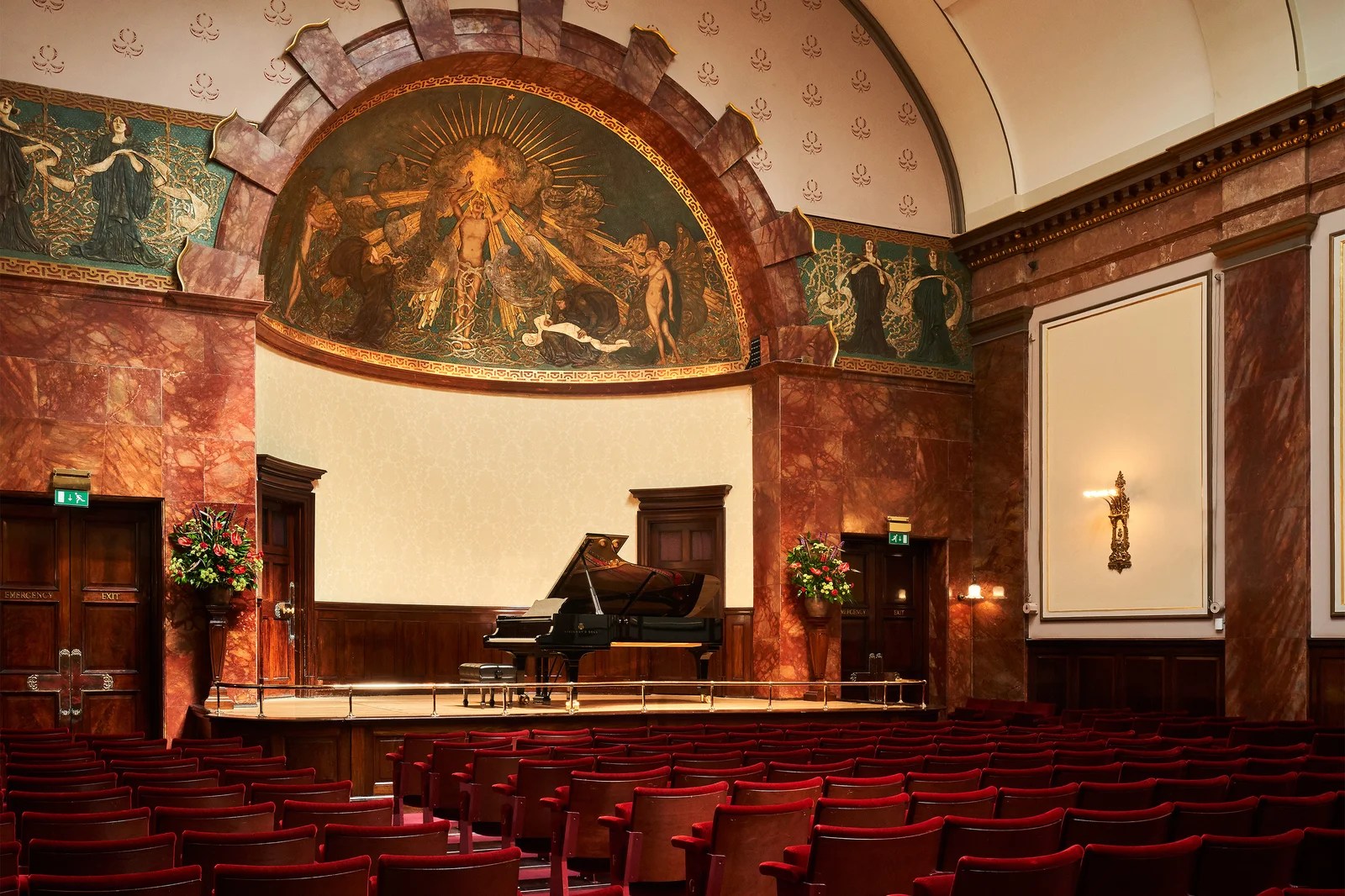
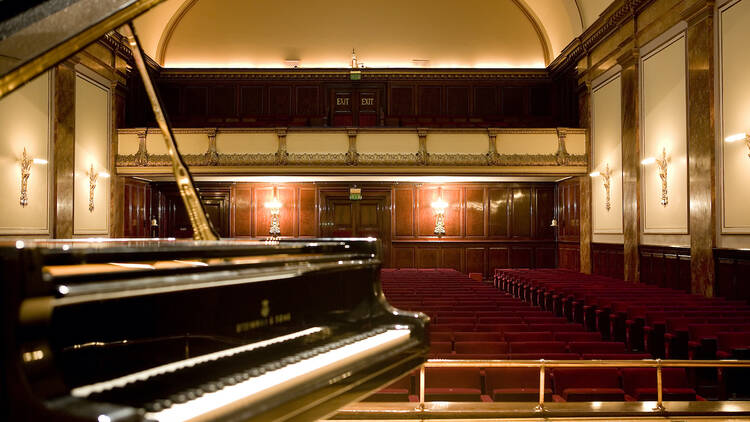
And the management of Wigmore Hall really do “know” their audience. No trendy marketing to attract the elusive “yoof audience”; instead, stylish, understated brochures announcing the new season and a clear identity across its social media. So confident is Wigmore Hall, and such is the loyalty of its core audience, that it does not need to resort to gimmicks to attract and retain its audience. It knows exactly how to cultivate and nurture, and, importantly, to trust its audience (and indeed many others in the hall’s ecosystem) – something many other venues and concert organisations could learn from. 

That said, Wigmore Hall has a broad remit and, in addition to lunchtime, evening and Sunday morning concerts, offers a lively education programme, masterclasses and study days, music for small babies and toddlers, and “Wigmore Lates”, concerts that start at 10pm and feature not only classical music but also jazz, folk and world music. A broad range of performers is presented – from the “big names” of international classical music (Igor Levit, Andras Schiff, Stephen Hough, Angela Hewitt, Sarah Connolly, Christina Gerhaher…) to younger artists at the start of their professional careers, and to musicians from other cultures (the African Concert Series, for example, is a popular regular feature in the hall’s programming). 

In 2025, Director John Gilhooly revealed that he would no longer receive funding from Arts Council England, citing ACE’s “crippling”, “onerous”, and “exhausting” policy demands and red tape. The hall is now self-sufficient, thanks to a major campaign that raised £10 million. Freed from the restraints of ACE, the Wigmore can consistently deliver superb artistic quality and a wide range of programming.

COVID-19 dealt a terrible blow to live performance. I was at Wigmore Hall on the last day of February 2020, for a concert by American pianist Jonathan Biss, scorching his way through Beethoven’s piano sonatas. The house was packed, and many friends and colleagues from the piano world were there. There was little talk of the “novel virus”, and when a friend hugged me in the vestibule, we both laughed and said, “maybe we shouldn’t have done that!” At that time, neither of us knew that within three weeks concert halls, opera houses and theatres around the world would be shuttered and silent.

In summer 2020, 11 weeks after closure, music filled Wigmore Hall again. John Gilhooly, the energetic and inspiring director since 2005, refused to be defeated by the virus and, in the spirit of Dame Myra Hess’s concerts from the National Gallery during the Second World War, on 1st June, Sir Stephen Hough played the first of a series of livestreamed concerts from an empty hall (the hall had had its own broadcasting facilities from 2011). It was poignant and moving for all sorts of reasons, not least because his opening piece was the Bach-Busoni Chaconne, which Busoni himself had played in the hall in November 1902. Inspiring, uplifting and painfully wonderful, there was Stephen Hough on stage, immaculate in his usual concert attire, playing beautifully to an empty hall. The return of live music offered a glimmer of hope. [Read my review here]

The livestreamed series proved hugely popular (Hough’s concert received some 800,000 views) and gave those of us who ached for the return of proper live concerts an opportunity to enjoy music from the beloved “sacred shoebox”. But anxieties were raised about the number of people watching online concerts and livestreams: would those enjoying music from the comfort of their living rooms (and not paying £10 for a glass of wine in the bar) return when the concert halls reopened? In fact, audiences surged back to the Wigmore, with a marked increase in the number of younger people attending concerts.

Today, Wigmore Hall seems more popular than ever, and my only regret is that, now that I no longer live in London, I can’t simply nip on a train and be there in an hour. When I worked in London and reviewed regularly for Bachtrack.com, I was at the hall several times a week, sometimes twice a day! – at lunchtime and in the evening. Now, concert trips have to be planned more carefully, but I still love Wigmore Hall’s unique atmosphere (known affectionately amongst some of us as “the Wiggy”) and enjoy its ambience from afar, through its social media presence and reviews and reports from friends and acquaintances who are regulars at the hall. 

“As a piano music collector, some of my favourite recordings have come from live recitals at the Wigmore…It is a treasured venue, even from this side of the pond.” (T Weir, Illinois)

To coincide with Wigmore Hall’s 125th birthday, Julia Boyd’s new book, There is Sweet Music Here: The World of Wigmore Hall, tells the story of Wigmore Hall, one of the world’s most beloved concert halls, in vivid, enthralling detail, from its opening in 1901 to the present day. An enjoyable, fascinating and affectionate read, the book is a wonderful tribute to Wigmore Hall, the many musicians who have graced its stage, and the audiences and others who make the venue so special. 

Happy Birthday, Wigmore Hall!

There is Sweet Music Here: The World of Wigmore Hall is published in the UK by Elliott & Thompson.

“The only disappointment of the evening was that, on leaving the hall, the sounds of Elgar were immediately assailed by other events elsewhere in the building. The Southbank management should show more aesthetic sensitivity to its classical audience”

This is a quote from a review in The Guardian of a performance of Elgar’s ‘Dream of Gerontius’ at London’s Royal Festival Hall last weekend. It’s true that the foyer and “ballroom” area of the RFH were busy and noisy as we left the building after a deeply arresting two hours of very moving and profound music. Outside the venue, it was even noisier: this was a Saturday night in the Big Smoke after all. Pavement cafes spilled people, drinking, chatting, laughing; there were kids busking in the railway arches on the way to Waterloo station; and all around us were the sounds of a vibrant city enjoying itself. Yes, it did feel a little jarring to be plunged into a city having a night on the town after such an absorbing musical experience, but for me this is one of the great pleasures of concert-going in London – and it’s also a good reminder that London is an eclectic and culturally diverse city.

Back to the Royal Festival Hall for a moment and it’s important to consider what this building is actually for. True, it is largely associated with classical music, but that is only a part of what it does, and currently the Summertime festival is in full flow offering a range of activities from song and dance to workshops and talks. The foyer area and café are open all day for people to drop in, socialise or join in one of the many activities within the venue. There are spaces for meetings, lectures and exhibitions, a fine dining restaurant, a library and a gift shop. There’s a very pragmatic reason for this: the venue draws important revenue from food and beverage services and other add-ons (ticket sales alone cannot and do not cover the huge running costs of such a building).

To suggest that the RFH should “show more aesthetic sensitivity to its classical audience” does several things, in my opinion. First, it reiterates the already very entrenched view that classical music is exclusive and special, the preserve of the few not the many, its gilded cage polished with regular doses of reverence. Why should the place in which this “special” music takes place be kept so sacred…..? Let’s not forget that people leaving church in the “olden days” would have been assailed by the noises and smells of life outside its hallowed walls – beggars, peddlers, whores and more.

Better if all concert halls/opera houses were built in parks, away from city throng. Wagner had the right idea

– MR via Facebook

Secondly, it ignores the fact that arts venues like the RFH, the Barbican et al have to function on several levels, offering a diverse range of concerts, events, lectures and other activities, and that they do not exist simply to serve classical music audiences. What we experienced on leaving the RFH after the ‘Dream of Gerontius’ was the reality of concert-going in an arts complex in a big city. If you want to savour the experience of the music a little longer, remain in your seat in the auditorium.

For me, the experience of live music – and if you read this blog regularly you will know that I absolutely love live music – is not just the music itself but the “complete experience”: traveling to the venue, meeting friends, having drinks and socialising beforehand, and, once inside the auditorium, the accompanying sounds of a living, breathing audience listening, engaging and responding to what they are hearing. Afterwards, the walk back to the station with friends, stepping out into that vast, noisy ecosystem of the living city, is also part of the live concert experience for me. Admittedly the late train home, replete with its swaying drunks, leering blokes, snogging couples and people eating smelly food can take the shine off the evening, but on balance the whole package is an experience which I cherish and enjoy. When I’ve heard something as profound as the ‘Dream of Gerontius’ or Messiaen’s ‘Quatuor pour la fin du temps’, or indeed any other performance which has moved me, I carry the memory of the music away with me. Yes, the noise of the street can jar, but it can’t really touch the music which continues to resonate in the memory for a long time afterwards.


The Dream of Gerontius – review in The Guardian

Another music-filled year, many hits, a few misses, some new discoveries – musicians, venues, repertoire and people – and a couple of memorable performances of my own, solo and with colleagues…..

January

Pavel Kolesnikov (Wigmore Hall) – What impressed me in Pavel Kolesnikov’s performance was his clarity, control, lightness of touch and musical understanding which revealed the hidden nuances and subtle embroideries in Debussy’s writing. His elegant, sensitive pianism created a concert which was highly engaging and deeply intimate. Review here

The Pink Singers (Cadogan Hall) – a gloriously uplifting evening of fine singing and the premiere of a piece for choir written by a colleague of mine.

Deyan Sudjic (Wigmore Hall) – This was the pianist who asked the Washington Post to remove what he felt was an unfavourable review, and I admit I was curious to hear this pianist after reading about this furore….. Review here

Warren Mailley-Smith (St John’s Smith Square) – A concert in Warren’s series exploring Chopin’s complete piano music.

February

Steven Osborne (St John’s Smith Square) – The first of two wonderful concerts by this exceptional pianist which I enjoyed in 2016. Review here

Piotr Anderszewski (Wigmore Hall) – Always a pleasure to hear this thoughtful and sensitive pianist – and an added pleasure was meeting him briefly after the concert. Review here

Nikolai Demidenko (Cadogan Hall) – Chopin Piano Concerto No. 1. Review here

Mark Swartzentruber (Kings Place) – music by Bach, Ravel and Schubert (D959- one of the may performances of this work which I have been studying)

Divine Fire – The Story of Chopin and Sand told in music and words, performed by Viv McLean (piano) and Susan Porrett (narrator). More about this 7 Star Arts mixed media concert here

Denis Kozhukin (Wigmore Hall) – “sweet sonorities and ravishingly spacious phrases, creating a sense of relaxed ecstasy” Review here

March

Akhenaten (ENO/Coliseum) – an enthralling new production of Philip Glass’s opera. Review here

Leif Ove Andsnes & Friends (Dulwich Picture Gallery) – an engaging and varied concert of music by Nordic composers to coincide with an exhibition of paintings by Nikolai Astrup. Review here

Francoise-Green Duo (St John’s Smith Square) – part of the FG Duo’s Viennese Salon residency, appropriately as I flew to Vienna the day after this concert. Review here

Pierre-Laurent Aimard (Vienna Konzerthaus) – I couldn’t go to Vienna and not go to a concert! A romantic and uplifting performance of Beethoven’s 5th Concerto by PLA.

Nazrin Rashidova (violin) & Daniel Grimwood (piano) (St James’s Piccadilly) – lovely mixed programme of music by Mozart and Poulenc, plus Daniel’s Nocturne, which was, for me, redolent of Liszt and Ravel. Beautiful colourful playing by Nazrin, sensitively accompanied by Daniel. I was lucky enough to hear this fine duo again in November in Wimbledon.

Peter Jablonski (Cadogan Square) – Ravel’s glorious G major Piano Concerto and Gershwin’s exuberant hommage to New York, Rhapsody in Blue, performed by a pianist whom I had the pleasure to meet and interview shortly before the concert.

Beethoven Choral Fantasy Op 80 & Brahms German Requiem – a wonderful performance of Beethoven’s Choral Fantasy by my friend Elspeth Wyllie, followed by an absorbing German Requiem, at St Luke’s Balham

St John Passion/Bach (SJSS) -Polyphony and the OAE, conducted by Stephen Layton. A stunning and very moving performance of Bach’s greatest Passion, on Good Friday.

April

Andras Schiff, The Final Sonatas (Wigmore Hall) – the penultimate piano sonatas of Haydn, Mozart, Beethoven & Schubert. My first encounter with Andras Schiff live in concert. Review here

Iphigénie en Tauride (Drayton Arms Theatre) – startling and immediate “opera in a pub”, by Euphonia Opera Co. Review here

St John Passion/Bach (SJSS) -Polyphony and the OAE, conducted by Stephen Layton. A stunning and very moving performance of Bach’s

Rolf Hind (Wigmore Hall) – unusual and sometimes challenging contemporary music for piano by the pianist with the deepest, most elegant bow in London 🙂

Pierre-Laurent Aimard/Vingt Regards (Milton Court) – my first visit to Milton Court at Guildhall. A remarkable concert in a fine acoustic. Review here

May

The Dark Mirror: Zender’s Winterreise with Ian Bostridge (Barbican Theatre) – a wonderfully quirky yet sensitive and highly atmospheric reworking of Schubert’s late great song cycle. Review here

Concert for North-West Music Trust (Altrincham) – me at the piano in this instance, playing music by Mendelssohn, Cheryl Frances-Hoad and Schubert (D959). My first “proper” concert of my fellowship diploma programme to a very friendly audience and lovely welcoming hosts.

BBC Young Musician Final – an inspiring and uplifting final to the 2016 BBC Young Musician Competition. Review here

Richard Goode – Schubert’s Last Three Sonatas (Royal Festival Hall) – a perfect evening of beautiful piano playing. The finest reading of the D959 for me….. More here

Steven Osborne/The Music of Silence (Milton Court) – back to Milton Court for music by George Crumb and Morton Feldman. Review here

June

The Threepenny Opera (National Theatre) – a delightfully dirty, louche, foul-mouthed and witty production with fine performances by Roy Kinnear and Haydn Gwynne

Piano 4-hands at Conchord Festival (St Mary’s Twickenham) – a new local music festival in Twickenham. Review here

July

Daniel Grimwood/Markson Pianos Series – Sonatas by Schubert, including the great G major, D894, performed on a magnificent Bosendorfer piano by a pianist who really understands this repertoire

August

Louis Lortie/Chamber Prom (Cadogan Hall) – my first live encounter with this pianist whose programme spoke of Italian holidays and sunshine. Review here

Scenes from the End (Camden Peoples Theatre) – one-woman opera with Heloise Werner. Review here

The Makropoulos Case/Proms

September

Proms in the Car Park – a very unusual concert experience: music by Steve Reich performed in a disused multi-storey carpark in Peckham. Review here

Music Marathon (St John’s SMith Square) – I was delighted to have the chance to perform at SJSS, albeit for 15 minutes (!) as part of the music marathon for London Open House weekend. Great to hear and meet other pianists and I made new friends too!

Nick van Bloss (Wigmore Hall) – intense and athletic Beethoven, and lovely to meet Nick in person afterwards

Igor Levit/Beethoven (Wigmore Hall) – the launch of Levit’s Beethoven sonatas cycle. Review here

October

Steven Isserlis & Olli Mustonen (Wigmore Hall) – a chance to catch up with a friend who used to be my most regular concert companion (now resident in Spain).

Liszt’s B minor Sonata – lecture & concert (Kings Place). An insightful and revealing talk by Alfred Brendel followed by a performance of a sonata which I have never liked! Review here

Two-Piano Extravaganza (Kings Place) – Part of the inaugural London Piano Festival, this concert was a feast of high-class pianism. Review here

Don Giovanni (ENO/Coliseum) – a splendidly raunchy production, made even better by our Secret Seats in the front row of the Dress Circle, plus interval champagne!

Quartet for the End of Time (SJSS) – a privilege to turn the pages for my friend the pianist Daniel Grimwood, and to enjoy the pianist’s perspective of this extraordinary work. Profound and moving.

Dina Duisen and Friends (1901 Arts Club) – music for piano and clarinet at my favourite small venue

The Prince Concert with Stephen Hough (Wigmore Hall) – atmospheric and varied songs by Stephen Hough, including the premiere of his ‘Dappled Things’. Review here

November

Steve Reich (Barbican Hall) – Electric Counterpoint amongst other minimalist wonders

Lulu (ENO) – a visually stunning new production by William Kentridge

Winterreise in English (Wigmore Hall) – revelatory performance by Roderick Williams and Christopher Glynn, the English translation bringing a startling immediacy to the narrative of Schubert’s song cycle.

December

Concert for SPIN/Specialists in Pain International (St John’s Waterloo) – I performed in a fundraising concert with a pianist colleague and soprano Anna Cavaliero. A really wonderful evening of shared music making (www.spiners.org)

Melvyn Tan at Spitalfields Music (St Leonard’s Spitalfields) – fine pianism and three premieres. Review here

Helen Burford (St Nicholas, Brighton) – a typically eclectic and imaginative concert of “global exotica” including a Tarantella for Toy Piano by Stephen Montague. Atmospheric,  quirky and elegantly presented

Russian Winter Weekend Concert (Dorich House, Kingston) – Russian music arranged for flute and harp with Alena Lugobvkina (flute) and Anne Denholm (harp) and a chance to explore the Art Deco home of artist Dora Gordine. A delightful evening

In addition, I have also enjoyed….

Discovering the organ at St John’s Smith Square (more here)

Some fine concerts at my local music society by performers including Ben Socrates, Joseph Tong, Peter Murdock Saint and Jennifer Heslop, Jelena Makarova, amongst many others

The Magic Flute (directed by Simon Burney) at ENO. Magical, quirky and beguiling.

Fine performances at London Piano Meetup Group events by people who are not professional musicians but for whom the piano is a passion, an obsession and more….

Brave (and occasionally tearful!) performances by adult amateur pianists at my workshop at the 1901 Arts Club on 3 December

Accompanying one of my students who played Massenet’s ‘Meditation’ from Thaïs in a special retirement mass for her headmistress, and accompanying a friend at her Grade 5 French Horn exam (which she passed with distinction!).

Making new friends via social media who are proving enjoyable and stimulating concert companions.

The launch of the Music into Words project which explores writing about classical music today – next event is on 12 February 2017 with a great line-up of speakers (book tickets)

And I am very much lo0king forward to 2017 when I will hear

Martha Argerich (for the first time)

Daniil Trifonov

Anna Tsybuleva (winner of the Leeds Piano Competition)

Boris Berezovsky

Pierre-Laurent Aimard

And no doubt much more besides…..