I am that most unfortunate of creatures: a pianist without a piano. And the longer I procrastinate, the more and more out of practice I become. I doubt I’ll be trying out my next piano with one of Haydn’s great English sonatas or Rachmaninoff’s Polichinelle. Oh no.
There’s another piece I’ll be pulling from my satchel when time comes to explore The Next Piano’s sonority and touch. It’s charming, it’s intriguing and I love it to bits. (It also has the virtue of falling beautifully under the fingers, no matter how dormant one’s technique.) That piece is Les Baricades mistérieuses by François Couperin le Grand, a rondeau from the sixth ordre (or suite) in his second book of Pièces de Clavecin. Harpsichord music, in other words, but harpsichord music that happens to work beautifully on piano.
But it was on harpsichord that I first got to know this piece, and that’s probably how it should be:
This performance by Hanneke van Proosdij is synchronised with a facsimile of the 1717 edition – follow along and enjoy!
Why do I adore this piece?
On a purely tactile level, I love the way the two hands must operate so closely together on the keyboard. It’s like stroking a cat.
I love the style brisé (or broken style) texture, which Couperin uses to weave a carpet of legato sound. It’s an effect the French harpsichordists stole from the lutenists and Wanda Landowska in her recording from the 1940s nods to the theft by using the lute stop for the refrain.
And I love – as an extension of those endless broken chords – the way the different voices are entwined. The composer and pianist Thomas Adès has described Les Baricades mistérieuses as an object lesson in generating melody from harmony and vice versa. He pays tribute in an intriguing and revealing arrangement for low instruments: clarinet, bass clarinet, viola, cello and double bass.
That’s something else I’ve always loved about this piece: it sits low on the keyboard, never going above the G above middle C. It sits so low that Couperin notates the right hand part in alto clef. On both harpsichord and piano, the result is a rich, chocolatey sound. Then there’s the title – ‘Mysterious Barricades’ – what can it mean? There are as many theories as there are performers, some wild, some vaguely plausible. Perhaps, as Tom Stoppard’s Arcadia says of Fermat’s last theorem, it was simply a joke to make us all mad!
I’ve always believed the clue must lie in the character of the music itself. And the music is so seductive, I can’t help but agree with those who see in the title a kind of double entendre – a suggestion of feminine eyelashes and flirtation echoed in the coyly swaying lute figurations and the teasing suspensions, which offer a literal barricade to the basic harmonic progressions.
Yet not everyone agrees. There are those – especially pianists, because they can! – who ripple through the piece, barely pausing for breath. Alexandre Tharaud does so most impressively on his Tic Toc Choc album, while Marcelle Meyer in a recording from 1954 shows this approach is nothing new. In their hands the piece becomes a kind of toccata, beautiful in its own way but not, I think, what Couperin had in mind.
But let the harmony shape the musical conversation with lulls and pauses and forward movement, and Couperin’s music rewards with sounds that are haunting, spontaneous and utterly delicious. Which is why I love Les Baricades mistérieuses. Want to try playing it yourself? Download the 1717 edition; Les Baricades begins on page 6 (page 12 of the PDF). If alto clef isn’t your thing, an edition with modern clefs can be found here.
Yvonne Frindle’s background as a musician, orchestral programmer and concertgoer informs her work as a harmonious wordsmith – writing and speaking for ordinary music lovers. Her words have been published by Limelight magazine and all the major Australian concert presenters, as well as in the United States.
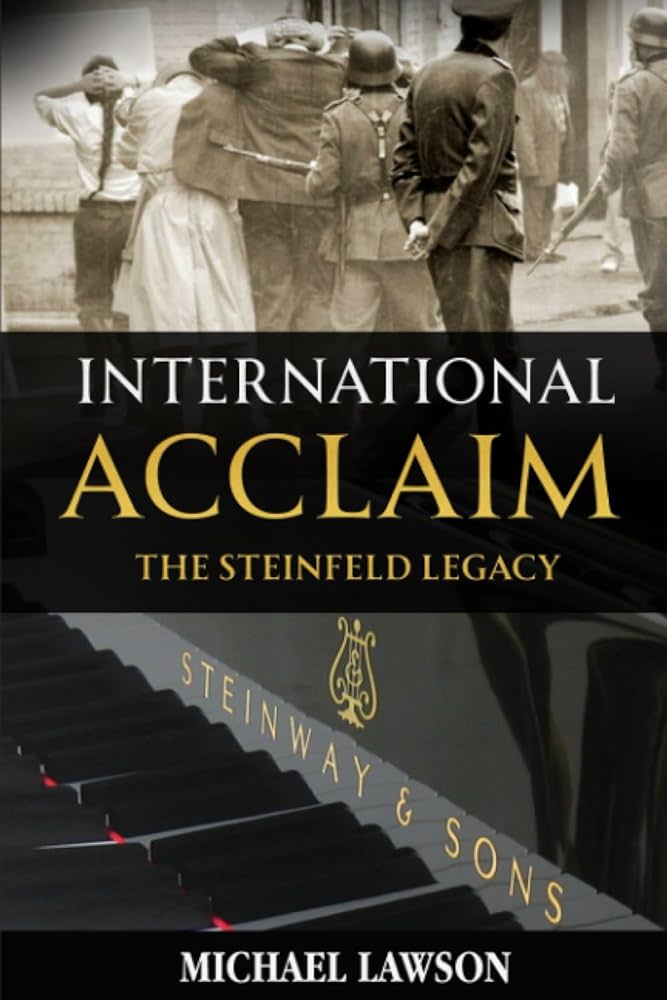
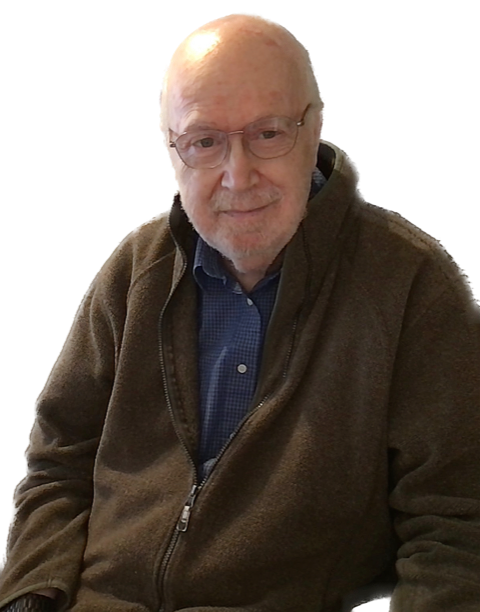
English musician and polymath Michael Lawson has established a reputation in a diversity of professions – composer, pianist, psychotherapist, documentary filmmaker and archdeacon of the Church of England. As a therapist, he has worked with a variety of individuals, ranging from child prodigies to sex offenders. His remarkable new novel, International Acclaim: The Steinfeld Legacy, is an ambitious work of ‘faction’, combining real-life giants of the Romantic music era with his family story of the “Steinfelds”—four generations of brilliant Jewish Polish concert pianists.
What drives this man? “I am definitely an enthusiast for the things I love to do,” he says in the interview below. “Does that make me a workaholic? Maybe, maybe not…. I can also be something of a sloth.”
His narrative chronicles the tumultuous story of Europe’s composers and performers through political change and wartime crises on the Continent. Leading his parade of historic figures are, among others, Alexander Siloti, Josef Hofmann, Sergei Rachmaninoff, Theodor Leschetizky, Ignacy Jan Paderewski, Sergei Taneyev, Leopold Godowsky, Huw Weldon and of course Nadia Boulanger.
In response to questions that led to his novel, Lawson granted an email interview:
How long a gestation period preceded the writing of your first novel, International Acclaim?
In short, about 40 years! I had always been fascinated by the great Romantic pianists. As a teenager, I’d listen for hours, enthralled by extraordinary virtuosity which shone through the hisses and scratches of their early 78 rpm recordings. I not only amassed a huge record collection, I researched and read everything I could find about them. So initially, I didn’t know where to begiin the novel but I’d worked out how it would end— a passage inspired by the death of Simon Barere, one of the last of the late Romantics, who tragically died during his performance of the Grieg piano concerto. at Carnegie Hall in 1951.
What took you so long to write these nearly 500 pages?
The novel remained unwritten as my growing family and day job took precedence. Yet an editor’s stimulus kept the aspiration alive, and the story gradually emerged in my imagination. Yes, the process started 40 years ago. And then in 2020 came the first coronavirus lockdown. That was my opportunity. I researched and wrote non-stop for six months till International Acclaim was complete and published. After six more months thinking about it and taking advice, I began the revisions. That is how the novel came to be republished recently – with a new subtitle to celebrate it: International Acclaim: The Steinfeld Legacy.
Was this story always in the background as you proceeded with your composing, church and psychotherapy careers?
Yes, it was on a slow boil but I knew that one day its time would come. Accumulated observation has taught me so much about human life and living, which I have worked into my story of the world of musicians. And to take on these different roles in parallel has enabled me to explore the passions that I have discovered within myself. This is why I don’t normally speak of “my career in music”. Music touches a deeper passion and informs my very identity. I feel the same about my work in psychotherapy and ordination.
Isn’t this what you therapists would call a split personality?
No, the worlds are different and yet at times so complementary. A prime learning experience for me has been my work in private practice with musicians of all kinds including child prodigies. Many of these have sought help feeling the unravelling of their emotional complexity may be assisted by someone who can understand the peculiar pressures of the performing piano world. Later in my career, my seven years in the prison service meant working with broken people with exceptionally convoluted life stories. For them rehabilitation is the goal. My therapeutic aim is the same with prisoners as it is with musicians – to bring support, to unravel self-understanding and thus to alleviate suffering.
You must have been a lifelong student of music history. What was your training?
Alongside my conservatoire training at the Guildhall School of Music, and the Écoles d’Art Américaines in Fontainebleau, France, my first degree in music was at the University of Sussex. Over my lifetime, I have built up quite a library about the whole of Western music and especially the composers and pianists of the late Romantic era. Although I had no other models in mind when I wrote International Acclaim, I included real figures of history alongside my fictional Steinfeld family. Allowing for literary license, I aimed for the best verisimilitude I could imagine. Bringing in the key figures of the era helped tell the story. We meet Alexander Siloti, Theodore Leschetizky, Sergei Taneyev, Leopold Godowsky, Sir Henry Wood, Huw Weldon and others. In a class by herself is my teacher Nadia Boulanger.
Workaholism seems to be your driving force, right?
I have thought about that, and my answer is I am definitely an enthusiast for the things I love to do. Does that make me a workaholic? Maybe, maybe not. I recognise I can also be something of a sloth. It’s only then that I say with Jerome K Jerome, “I love work. It fascinates me. I can sit and look at it for hours!” It’s my family that should take the credit. They are my reason to come up regularly for air.
From the age of 8, you knew you wanted to be a composer. Wasn’t that before you had started piano?
It didn’t take long for me, as a youngster, to discover that it was more enjoyable to create tunes of my own than to play others’ compositions. Some three years before I began piano lessons, I composed a set of “Hungarian dances”. On a family vacation there was an excellent pianist who played every night in the lounge of our hotel. I noticed that he often played requests. Without consulting my parents, this rather bold 8-year-old, with Hungarian dances in hand, asked the pianist to try them out. He was very nice and said that he would look them over.
Was that the end of it?
Not at all. As my parents were sipping Asti and my sister and I were exploring the ice cream menu, I heard a tune I recognised, looked up and realised this pianist was playing my music. It was thrilling to hear it played by such a good musician. But I was resistant to the effort that piano lessons might require. Finally, I gave in and started lessons. So, yes, that’s how it worked out – composer first, and piano second.
Did this lead to something of a career as a pianist?
Yes and no. My father, in his quest to get me to learn the piano, bought me a Kazoo! I could hum away and out would come music. I loved it. A few weeks later my dad popped the question, “Wouldn’t you like to be able to make music as easily on the piano?” My time had come.
Were you some kind of late-blooming prodigy?
I may not have been a child prodigy but I was certainly like a duck to water. I fell in love with the piano, and practised all hours, seemingly night and day, and passed grade 8 (by the skin of my teeth) at only 14 months after my first lesson. At age 14, I remember playing Bartok’s loud and ferocious Allegro Barbaro in public. In the audience was David Wilde, winner of first prize in the Liszt Bartok piano competition in Budapest in 1961. David was encouragingly complementary, but frank also. If I wanted to become a concert pianist I would need to develop considerable reserves of technique. To that end, he generously took me on as a private student and for several years taught me so much about the beating heart of the music as much as the mechanics of playing.
Didn’t you mix with some of the great players?
Yes. Through David, I met conductors such as Pierre Boulez and other leading musicians. I learnt so much from observing them in rehearsal. And there was another spin-off. Around this time, while I was a student, concert organisers often asked me to turn pages for some of the world’s greatest pianists, including Artur Rubenstein, Sir Clifford Curzon, Daniel Barenboim, Vladimir Ashkenazy, and others. I also turned pages for Geoffrey Parsons when he accompanied Elisabeth Schwarzkopf, and for chamber musicians like the remarkable American pianist, Lamar Crowson.
As a music student, you were in a position to learn informally from some of the greats.
I learnt much from all of them – by closely watching their hands, asking questions about interpretation and technique, and occasionally even getting a mini-lesson in return. On one occasion I asked Sir Clifford Curzon, the perfect English gentleman, how he recommended practising the demanding octave trills in the Brahms D minor piano concerto. “I don’t know,” he said, “I just do them.” But he did know really, and he showed me – in musical slow motion. When his fingers shook, his arms and shoulders shook with them. The facility flowed from the extraordinarily looseness and relaxation of his arms and shoulders. The effect was electric.
How close were you to Nadia Boulanger?
I was fortunate indeed to have studied with Mademoiselle for five very fruitful years. That is, during the summers at Fontainebleau, and while pursuing my other studies by flying back and forth to Paris during the rest of the year. During all that time she refused to let me pay for my lessons. The list of Boulanger pupils reads like a Who’s Who of many of the greatest figures in 20th-century music. The composers include Walter Piston, Aaron Copland, Elliott Carter, Virgil Thomson, Roy Harris, Philip Glass, Darius Milhaud, Jean Françaix, Thea Musgrave, Lennox Berkeley, Joseph Horovitz, and Emile Naoumoff. Her conductors include Igor Markevitch and John Eliot Gardner. She and I kept in touch until the end of her life.
Have you always considered yourself a writer?
Socially, I was quite shy. But something clicked in my brain and released all kinds of creative energy hitherto so dormant that my teachers thought was non-existent. I had been particularly poor at English. That quickly changed. I had been a poor reader but was encouraged by an older friend who had taken an interest in me. He was knowledgeable about literature and was an excellent classical pianist too. He introduced me both to novels and poetry. I began to read everything I could get my hands on. This all had an almost explosive effect on my use of language. And I began to write—words as well as music.
What was your introduction to music criticism?
By the time I went to Sussex University, I was appointed music critic of the University’s weekly newspaper. I’m not too proud of my youthful arrogance which surfaced in some barbed reviews. I admit I took some ungenerous liberties with the power of my pen. A lady in orchestral management helped me see the error in my ways, and after that I learned to be more encouraging in my writing. It was an exercise in understanding how your words are received. Eventually I was able bring all the rigour that I had learnt in composition and performance to producing regular material for sermons, script writing and presenting for the BBC Radio 2, which I did uninterrupted for 20 years. And for filmmaking and for eighteen books – so far.
International Acclaim: The Steinfeld Legacy by Michael Lawson is published by the Montpélier Press, and is available exclusively from Amazon
MICHAEL LAWSON is a Composer, Writer, Psychotherapist, Film Maker and Broadcaster. His varied career began in music as a composer and concert pianist in the early seventies, having studied with the great French teacher, Nadia Boulanger, at the Paris and Fontainebleau conservatoires, with the British composer, Edmund Rubbra, at the Guildhall School of Music, and at Sussex University with Donald Mitchell, the leading Britten and Mahler scholar. His piano professors were the distinguished British pianists, David Wilde and James Gibb.
MICHAEL JOHNSONis a music critic and writer with a particular interest in piano. He has worked as a reporter and editor in New York, Moscow, Paris and London over his journalism career. He covered European technology for Business Week for five years, and served nine years as chief editor of International Management magazine and was chief editor of the French technology weekly 01 Informatique. He also spent four years as Moscow correspondent of The Associated Press. He is a regular contributor to International Piano magazine, and is the author of five books.Michael Johnson is based in Bordeaux, France. Besides English and French he is also fluent in Russian.
BEETHOVEN: Piano Sonata No.17 in D minor, “Tempest”Op. 31 No. 2
ROBERT SCHUMANN: Bunte Blätter Op. 99
SCHUBERT: Piano Sonata in B-flat major, D960
Jia Ning, a young pianist from Singapore, studied at the Royal Conservatoire of Scotland. She graduated top of her class in 2022 and was awarded her Artist Diploma, having previously gained her Master of Music (Piano Performance) and Bachelor of Music with First Class Honours. She also won several awards and competitions, including the RCOS concerto competition, allowing her to make her debut with the Royal Scottish National Orchestra. In addition to embarking on her solo career, Jia Ning regularly collaborates with other musicians as a keen chamber musician and is also a staff accompanist at the Conservatoire in Glasgow. Her recital at Biggar Music Club formed part of an RCS Governor’s recital tour, including performances in Peebles, Kelso and Falkirk, and forthcoming concerts in Inverness and at Strathearn Music Society in November.
Her performance was keenly anticipated in Biggar, after she received a standing ovation in Peebles, and deservedly so; her performance of the same programme here, tackling some very profound works, showed immense maturity, poise and mastery. Right from the sorrowful Largo opening phrase of the first movement of Beethoven’s Sonata in D minor, Op.31 No. 2 (Tempest), she captivated the audience, who didn’t move a millimetre from the beginning to the end of the concert. Indeed, it was one of those rare openings to a recital where it was apparent from the first few notes that it was going to be something very special.
One of several notable aspects of Jia Ning’s playing, which immediately stood out in this first motif, was the quality of her tone production – a feature that was evident and a highlight throughout the whole recital, in the vast spectrum of soundworlds called for – as she created a mysterious atmosphere, with such a gentle, but clear touch. This immediately gave way to the dramatic, agitated contrasting material that followed. The frequent alternation of the stormy and peaceful sections was well managed and varied throughout this movement. Passages where a lighter, more articulated touch was called for were wonderfully nuanced, with an interplay between melodic and harmonic lines in impressive balance at other times, such as at the end of the exposition. There was an other-worldly quality to the recitative-like section, a solo right hand line over an arpeggiated pedal, often attributed to Beethoven’s own words, but according to Dr Barry Cooper perhaps erroneously so, as being, “like a voice from the tomb.”
In the noble, hymn-like, ravishing slow movement, the audience remained entranced and completely silent, as Jia Ning achieved a splendid purity of tone in her long cantabile melodic lines, which unfolded organically, allowing the music to speak for itself. The triplet drum-like figures in the accompaniment, alternating in register, towards the end of the first subject were played with admirable articulation and an extraordinary, shimmering delicacy. Chords were voiced exquisitely throughout, with so many tangible layers to her sound, even just in this movement. The graceful sweep of the left hand demisemiquaver descending accompaniment in the recapitulation, was stunningly beautiful and elegant, creating one of many memorable moments in this introspective and sometimes poignant movement. Moreover, it was also obvious throughout the evening that Jia Ning possesses an intelligent attention to detail and faithfulness to the score in all aspects of her playing, yet her interpretations were never predictable.
We were always left with an impression of spontaneity and a feeling of discovery, with Jia Ning finding numerous special moments and delightful details, in order to portray her evocative exploration of many different emotions. In the final movement, she presented us witha contrast between lyrical lines and the stormier material, where there were bold torrents of sound. There was tension in the climaxes and a spine-tingling control in the quietest of passages. We were treated to a full range of expression to end this turbulent Sonata. It was a magnificent start to the recital, leaving a wonderful first impression of her astonishing pianism and ability to communicate meaning.
To end the first half, Jia Ning turned to Schumann and his uncommonly heard Bunte Blätter, Op. 99 (which translates as ‘Colourful Leaves’). She presented the first 10 of the 14 miniatures in the set, and each was expertly characterised with a vast array sentiments and moods, that often shifted abruptly. The opening to the first was extremely tender and moving, yet with a joyful simplicity and perfectly judged flexibility in the rubato. It was a splendid introduction to the rich and vivid world of Schumann. There was a meticulous approach, with every phrase precisely contoured, yet her playing always unfolded naturally and was never forced. The playfulness and liveliness achieved in the Novelette was particularly enchanting. An energetic conclusion in the Präludium brought this remarkable first half to an end and, for a while, the audience sat quite stunned, taking in what they had just heard before turning to each other with smiles and praise.
The second half was entirely given to Schubert’s monumental Sonata No. 21 in B flat, D960. This was his final sonata, written in a frenzy of activity during the last months of his life, a time wracked with poverty and ill-health before his premature demise. It is cast in four expansive movements, classical in overall structure, but romantic features are evident, such as the cyclic material unifying the movements, and also the harmonic language. It was pleasing to hear the exposition repeats in the long opening movement. Jia Ning explained that she had included them so as not to miss out important motivic details. The movement is notable for its mercurial shifts in harmony, colour and thematic material, which were handled with a staggering intensity and artistry, as we were drawn into the gentle drama that unfolded. The opening of the development section, in the remote key of C-sharp minor, was played with a celestial beauty and, as it progressed, contrasting motifs gave way to the climax of the development which was imbued with real pathos and serenity. At other moments, warmth radiated from long flowing lines over well-balanced and muted bass figurations. The dynamic and emotional range throughout the movement was boundless.
From the outset, we were drawn right into the reflective, sombre and sometimes tragic second movement. At times the playing was barely audible, yet with an ethereal clarity of sound that still reached the back of the hall. This considerable dynamic control was effortless and there to serve the music, with its spiritual inclination. The rich textures of the middle section signalled yet another shift in temperament. The change of timbre towards the end of the movement for the move to C major was hauntingly sublime.
The Scherzo of the third movement skipped along with a luminosity of sound and lightness of touch, interspersed by the momentarily darker mood of the Trio. The concert was brought to an end by a tumultuous reading of the mighty final movement. Just as in the Beethoven, Jia Ning handled the unpredictable shifts of mood, key, dynamics, texture and timbre astoundingly, yet there was never an excess of ideas. There was a real drive in the turbulent themes, which contrasted with the jubilation elsewhere. It was refreshing to heara player at the beginning of their professional career tackle this repertoire, rather than opt for more obvious showmanship, which she is clearly capable of, as shown in the rapid flourishes in the encore, (Balakirev/Glinka, The Lark). This left me speechless as we were taken to yet another stratosphere. However, it takes a pianist of outstanding skill to be able to play these works of great depth in the way that she achieved, with much of what astounded me being difficult to portray in words, because it was found in her deep communication with the audience. She balanced her ability to have something to say, with letting the music just be. How blessed are the music lovers in our community, and those surrounding us, to have been able to witness such fine creativity and artistry.
There is surely a bright future ahead for this pianist and I will look forward to attending a future concert given by Jia Ning.
During a practice rut that felt particularly more existential than others, I became obsessed with one question: ‘Can classical musicians ever graduate from their role as ‘craftsman/craftswoman onto that of creative artists? And if so, how may this be done?’
Turns out that this question was an urgent one and resonated with every strand of the classical music industry, from my student peers at London conservatoires to the musical stars of today. Famous pianist Kirill Gerstein posed this exact question to his guest, legendary artist Ai Wei Wei in one of his online seminars for the Krönberg Academy, where the latter had spoken at length about the responsibility of artists to shape the world through creation. I noticed a frustration amongst classical music interpreters of seemingly being some of the only artists deprived of the right to create. In reality of course they are not the only ones: classical actors, dancers, and interpreters of all types share this condition. The question is one of relevance: if classical performers are unable to create, how can they be instrumental in shaping culture and the world? How are they relevant as a cultural force?
For classical music performer, this inability to create in a poietic way (this means ‘to create something original’ as opposed to creating a variation on something that already exists, like an interpretation of a piece for example) is unhelpfully combined with a certain disdain of the profession towards behaviours that could bring attention to oneself, due to a conflation, in the minds of many people in the profession, of the presence or lack of interpretative integrity with certain onstage and offstage behaviours.
To be a classical performer is to be a professional interpreter. When interpreting a score, it is useful to forego one’s subjectivity and replace it by a more appropriate subjectivity instead in order to get closer to capturing what the composer had in mind. When we read Beethoven it is useful to park our most immediate instincts for a moment and try to figure out what Beethoven might have meant by his markings using not our contemporary understanding of the markings but a ‘historically informed’ (for lack of a better expression) reading of those same markings. In a way, at the point of exegesis of the musical text, this process is indeed one of – momentary – self-effacement. But in classical music, for some reason, we have collectively decided to performatively self-efface in a more general sense, ad absurdum, to show our audience just how committed we are to the process of conscientious interpretation.* Thus, anything that a performer does that might be considered to bring too much attention to themselves, such as flashy concert clothes or unconventional programming will elicit suspicion on their ability to sufficiently remove their ‘self’ when they sit to study a score. If you don’t believe that this is a common amalgamation, read this disturbing Norman Lebrecht article about how Yuja Wang would do herself a favour by dressing more soberly: people would then be able to recognise her for the true master that she is. If she were to do that, according to him, she ‘could be a sensation’ (!).
It’s difficult to say for sure whether classical musicians are generally less free to express themselves than classical actors or dancers. Take political views, for example. New York Times
journalist Zachary Woolfe describes pianist and activist Igor Levitt by contrasting him to the other ‘classical artists, [who] by and large, remain publicly reticent about their politics — this isn’t Hollywood’. Whilst actors are considered free, classical dancers seem to be in a similar situation to classical musicians: choreographers talk about things they care about aside from dance, but very few dancers do. The unfortunate consequence of classical music’s effacement ideal is that many classical music interpreters feel not only that they cannot create but also a frustration about not being able to express their full selves, on and offstage, or they might be thought less of.
As I ventured on this strange undertaking of combining Stand Up comedy with straight, serious classical piano performance, I found that talking to an audience about your quotidian as a classical musician in a funny way does much more than get them to feel more engaged. It makes them see you as a person. It means that people don’t just see you as the vehicle for a moving musical message, but they also see you: a partaker of the human condition, which I think has equal potential to move as ultimately we are all vulnerable little chickpeas trying to navigate the huge harira soup that is the world, and it is moving to see another person like us striving, trying, struggling. Just like classical music masterpieces have the power to tear us to pieces telling us things about ourselves that we didn’t even know (Robert Levin’s beautiful phrase), stand up comedy has the power to reveal aspects of ourselves, feelings and emotions that were a part of us all along but we had not noticed until now. It shows us that despite our differences, we are all moved or amused by the same things, and that many of the things we love and care about are the same. Laughing through difficulties gives us the strength to resist until we might see another happy day. Sublimation of pain is something that is very much shared between these two artforms.
On a separate note, breaking free of concert conventions for this show did make me feel like I was creating on a poietic level, and personally much more aligned with my work. I hope that the classical music world will become more open to making this kind of creation for available interpreters should they choose to (as opposed to reserving it for composers), as this will benefit both performers who will be able to be more fulfilled, and audiences who will benefit from the authenticity of these new exchanges. At the moment, it seems that the industry favours a model that seeks to create highly reproducible events so agents can rotate their roster artists from concert to concert without anyone noticing. It’s about time we recognise what we have to gain by granting performers more agency in how they present the pieces that they are interpreting.
*Musicologist Nicholas Cook talks about this in his book Music: A very short introduction (Oxford: 2000
Aïda Lahlou will be performing her Stand Up Comedy Meets Classical Piano and her Mirrors: A Recital with a Story shows in London this October as part of the Bloomsbury Festival (14/10 and 21/10 respectively). Tickets on sale here.
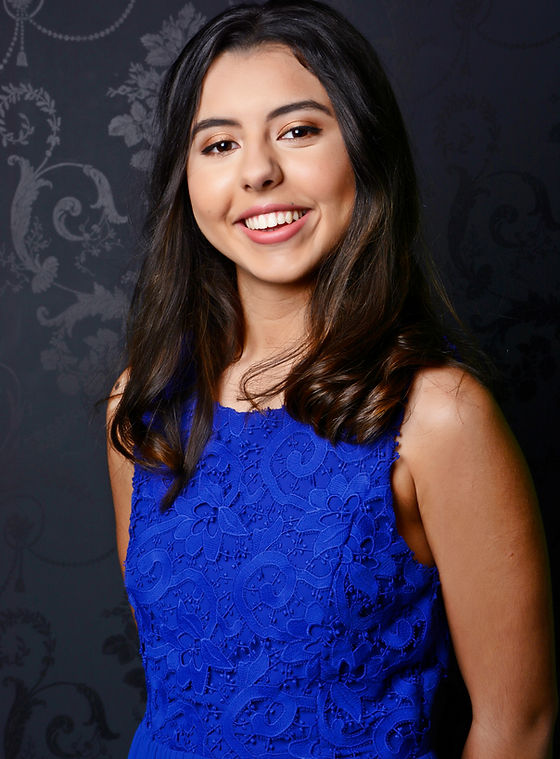
Aïda Lahlou is an up-and-coming Moroccan pianist and one of the most exciting talents of her generation.
Following a BA in Music at St John’s College, Cambridge, throughout which she studied with Caroline Palmer, Aïda is currently enrolled for a Masters in Piano Performance at the Guildhall School of Music and Drama, studying with Peter Bithell and Ronan O’Hora.
The Cross-Eyed Pianist is free to access and ad-free, and takes many hours every month to research, write, and maintain.
If you find joy and value in what I do, please consider making a donation to support the continuance of the site


 Aïda Lahlou is an up-and-coming Moroccan pianist and one of the most exciting talents of her generation.



 The Cross-Eyed Pianist