
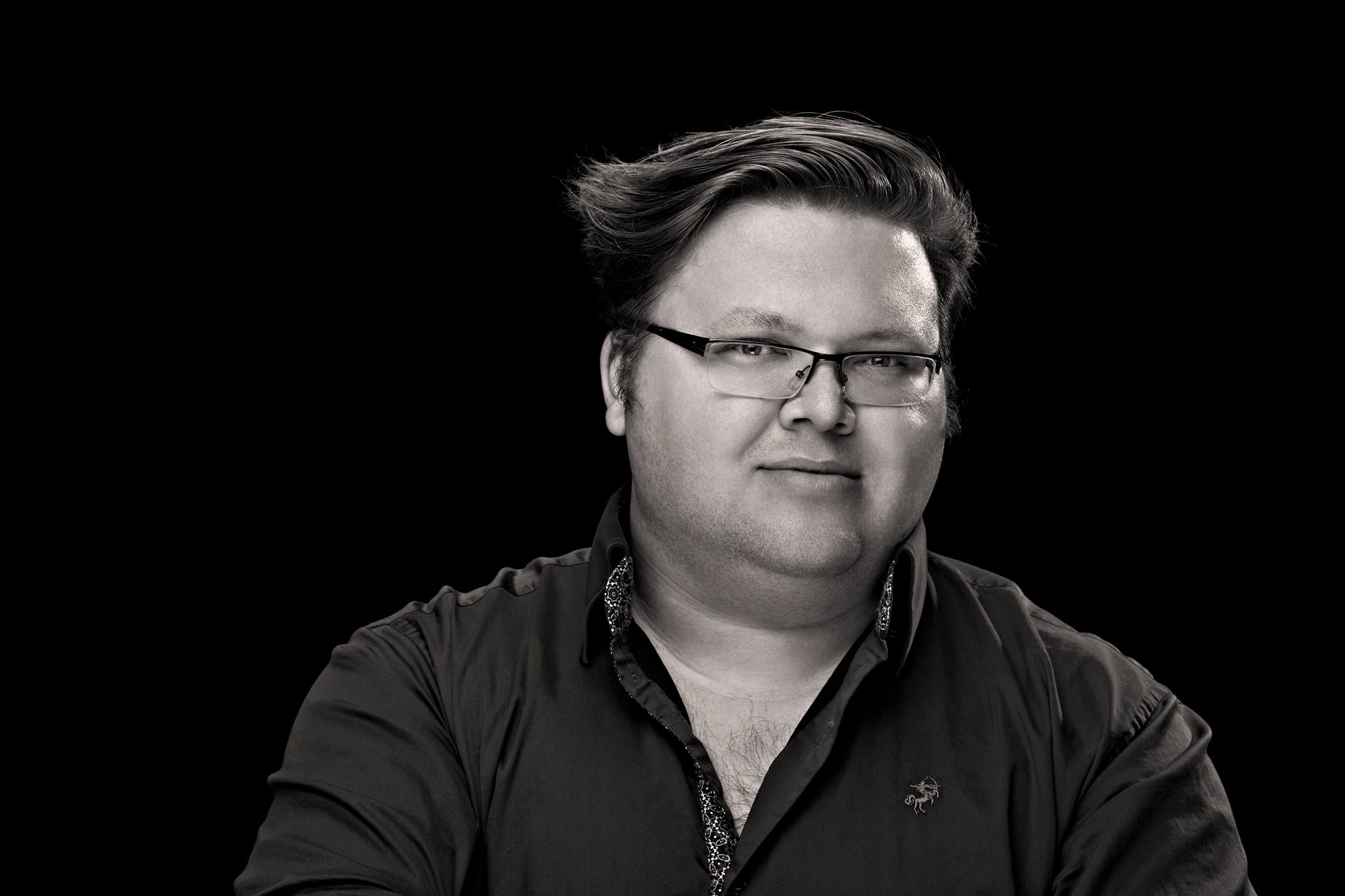
Who or what inspired you to take up the piano and pursue a career in music?
During a family holiday in Jersey in 1988, I heard a cocktail pianist at the Hotel de France. I became transfixed with the piano sound, and each evening at the hotel restaurant would stand next to the artist and gaze (realising now how irritating it would have been for an eight year old in chinos and a gaudy shirt, to be peering and examining the artist’s fingers). I also remember eating each course terribly slowly to maximise on the listening potential!
After much nagging (persistence usually pays off!), and against my late father’s intentions (S.A.S. fighting machine), Ma bought me my first piano for £50.00. It was an Erard, and I adored it until I wore it out. My world gradually became totally music and arts orientated, and I felt it was the only thing I excelled in; there was no option other than to forge a musical path. Looking back, I had no idea what colourful and wonderful opportunities it would hand to me.
Who or what were the most important influences on your musical life and career?
This is the easiest of the questions to answer. Margaret Fingerhut, who believed in me at a time when I was having quite a major confidence wobble in my life, taught me at the RNCM, and on occasion privately afterwards. I learned more in the short time I had with Margaret, than I did from any other principal study tutor I studied with during my degree course.
Before this, Arthur Williams taught me organ (I ended up covering five different church organist posts at the same time!), and piano encompassing everything I needed to know to set me up in moving forward with my career. He took me on many trips to concerts and hands on playing events across the country, and in his will left me his entire sheet music and recordings collection. It was one of the most harrowing days of my life having to play for his funeral, and listening to Elgar’s ‘Dream of Gerontius’ in its entirety looking at the 7 foot gentle giant lay in his coffin! On a lighter note, I amusingly curse the huge collection Arthur left me, each time I have to move house, as do the friends that help me pack it up each time.
After Arthur had sadly passed away, Doctor Stephen Collisson took on the challenge of preparing me for conservatoire entry auditions, and had playing Bach English Suites, Brahms Ballades, Mozart Sonatas and Rachmaninoff Preludes in the short space between A levels and conservatoire entry. He had time and patience and gave me extra time whenever I needed, or was having a mini-meltdown, and probably understood me more than I did at the time!
What have been the greatest challenges of your career so far?
This has to be when I went across to the dark side, and organ was my principal study. I was fortunate enough to land a position as Organ Scholar at Her Majesty’s Chapel Royal Hampton Court Palace when I was 17. This involved learning up to an hour’s worth of new choral accompaniments per week, plus some taxing voluntaries. My first service there, the setting for Evensong was Stanford in A (orchestral reduction); alone in the organ loft in such an auspicious setting, my heart was in my mouth, all trussed up in the royal livery. That place was magical, most notably at Midnight Mass.
Which performances/recordings are you most proud of?
I have one recording available which was awarded a five star review, and demanded a second album. Also a telling off from the reviewer who had never heard of me, and that my modesty and lack of online presence is holding me back. The recording was done in whole takes only, and I insisted that the ‘inaccuracies’ were kept in as part of the performance. Hidden on the album cover is my insignia “there are no mistakes, just happy accidents”, I also have this on a plaque next to my piano at home, as I feel it is vital for students to be aware of this, as well as me. The recording is very special in another way I have never revealed until now, in that I was head-over-heels for the page-turner. Shortly after he moved to the other side of the world.
In terms of performances, it has to be 2012 Manchester Pride Concert Series, promoting LGBT composers. I was due to accompany the Poulenc Trio for piano, oboe and bassoon amongst other chamber works. Sadly the oboist got stuck in another country the day before, and I had twelve hours to pull together a solo recital to be recorded live and aired on BBC Radio 3, BBC Manchester and Gaydio! After dealing with a stroppy audience lady who screamed “WHAT, no oboe….I’m off” … Chaminade, Debussy, Hahn, d’Indy, Dukas, Ravel, Saint-Saens and Widor were played, and this recording kick-started my YouTube channel in an attempt to embrace technology and my reviewer’s advice!
Which particular works do you think you perform best?
The pinnacle two works in my repertoire are unusual French sonatas. Chaminade and Dukas! The Chaminade I learned back in 1996, and the Dukas in 2003. The Chaminade I use as a cornerstone in recitals a lot as it covers many forms; Fantasia, Fughetta, Nocturne, Toccata.
The Dukas has been allowed by programmers twice due to its need to be served with a good dose of happy pills and a course of counselling afterwards. I also find it is quite an aerobic challenge, and gave it the nickname “French Hammerklavier”.
How do you make your repertoire choices from season to season?
I am constantly on the discovery path, delving far too deep into the byways of the gargantuan repertoire available to us, sadly a vast amount now out of print I uncover from what seems another world. Often, after playing through the unknown, one can see why it never caught on. Other times, it makes no sense why it never made it past a first edition.
I leave the core repertoire to the high-masters. I have far too much fun in the unknown, and tracing ancient scores whose printing plates were destroyed in the wars. My most recent example of this is the Scharwenka Piano Sonata No. 1 in C sharp minor (first version), and works by Granville Bantock. The piano works of the great French organists such as Dubois, Tournemire, Vierne and Widor are also an interesting route to follow.
Do you have a favourite concert venue to perform in and why?
I found myself puzzling over this question, then my answer came to me in my own living room. The recital work I have enjoyed the most is in the salon setting, where people can discuss music, enjoy food, cake and wine, and follow a less formal protocol such as the concert halls. I always enjoy socialising with people who have come to share the music. To perform, hide in a dressing room, then retire to a hotel room would not make me happy at all. Excitement is to be shared.
Favourite pieces to perform? Listen to?
Although I have what I call phases of favourite pieces, I always end up hurtling back to Chaminade for her simple yet effective turn of melody and exotic harmonies, and of course her largest form of writing, her Piano Sonata, which even then, is totally accessible to anyone. Many links, (albeit tenuous), can be made to other wonderful works as Chaminade’s brother-in-law and eminent pianist Moszkowski. Even Stokowski wrote his first opus for Chaminade’s sister, Henriette Moszkowski née Chaminade!
In terms of listening, I adore the freshness of Rameau and the Couperins. I have also recently discovered Lebegue thanks to a recent trip to Vienna with friends, and some harpsichordal geekyness.
Who are your favourite musicians?
I have found over recent years, my personal preferences lie in the hands of lady pianists and accompanists, too many to mention by name here; but, I am pleased to see this fairly recent surge after a male-saturated scene.
What is your most memorable concert experience?
This was actually a ballet performance at a very young age, when Ma sneaked me to see Tchaikowsky’s Nutcracker and parked her car outside her place of work in case my father was checking up. From there Ma’s boss at work drove us to the ballet. I found the whole evening spell-binding and magical, although still confused as to the travel arrangements!
What do you consider to be the most important ideas and concepts to impart to aspiring musicians?
The most important thing I learned at conservatoire was how not to treat people and students. The favouritism and bullying I witnessed and experienced shocked me to the core. My impossible situation was such that had I made any more fuss, I’m pretty sure it would have ended my study and career. I stood my ground, and tunnelled, surfacing into the light at the end with some scratches and bruises, but to the annoyance of some hierarchy, unscathed.
I tell students I work with about my experience, and that there are many wonderful people in the field, and as a minority career group, we should all support each other. Sadly this is not the case, and I feel duty bound to give warning about the blockades and barriers (aka unpleasant people in powerful positions), students may face.
Where would you like to be in 10 years’ time?
This is a taxing question at present, as I am currently caring full time for Ma. I would like to say, “exactly what I am doing now”, but when the new start comes, my secret intention is to start again somewhere exiting and new, surrounded by my close network of wonderful friends, and lots of exposure to the arts.
What is your idea of perfect happiness?
Perfect happiness for me, is spending time with friends, being creative, whether it be baking or what we call “danger concerts” …. all this without having to clock-watch.
What is your most treasured possession?
This has to be the autographed manuscript I am lucky enough to possess of Chaminade’s Piano Sonata. When my number gets called in, my vast Chaminade collection will be available for borrowing, and viewing via the Cornulier family in France (Chaminade descendants).
What do you enjoy doing most?
When I’m not working on a musical project, hunting library archives, or catching up with social networking gossip, I enjoy exploring all things Art Nouveau and French cinema. Period dramas are a big favourite and practising concert harp.
Peter performs Paul Dukas’s Piano Sonata in E-flat minor in a special concert at the 1901 Arts Club, Waterloo, London on 4 December 2015. Further details and tickets here
Born in 1980, Peter embarked upon piano tuition aged 8 after hearing a cocktail pianist perform in the Hotel de France, Jersey and after much persistence was bought an Erard as his first instrument. Three years later he took up the church organ too, studying with Arthur Williams, Paul Hale and David Briggs. After numerous parish church organ scholarships in Birmingham, Olton, Solihull and Bickenhill, (including work on the famous Handel organ for Lord and Lady Guernsey and The Earl of Aylesford in their private estate chapel), he undertook organ scholarships at Solihull School for Boys and at Her Majesty’s Chapel Royal, Hampton Court Palace.
Having received a bursary from his L.E.A. Special Awards Committee, Peter entered the Birmingham Conservatoire Junior School where he performed Grieg’s Piano Concerto. He has also performed the piano concerti of Chaminade, Pierné, Boieldieu, Lalo, Massenet, Saint-Saens, Widor, Vierne, and Rubinstein. In 2004 he graduated with a BMus(Hons) from the Royal Northern College of Music after studying with Margaret Fingerhut. Since then he has established a busy career having taught for Manchester High School for Girls and Ashton-under-Lyne Sixth Form College, has a busy private practice, is an instrumental accompanist, and has a full time post specialising in French music at Forsyth Brothers Limited, Manchester.
Now specialising in only piano, Peter continues to seek professional coaching from Margaret Fingerhut (recording artist), and has had duo performance coaching with Peter Dixon (BBC Philharmonic). He is especially keen to champion unjustly neglected solo and chamber repertoire, particularly that of the French Romantic School, Dukas’ piano oeuvre and Cécile Chaminade for whom he gave a BBC Radio 3 interview in 2013. Peter has broadcast on BBC Radio 3, BBC Radio Manchester and Gaydio taking part in the Manchester Pride Chamber Concert Series performing Saint-Saens, Chaminade, Dukas, Ravel and Hahn. In March 2005 Peter recorded ‘A Gallery of Miniatures for Piano’, a full length disc of piano byways that received an acclaimed 4.5 star review.
 The well-established music publisher Editions Peters has launched a new recording label,
  The label launches with a new disc of Fauré’s ‘Nocturnes’ by British pianist




 The Cross-Eyed Pianist