Lola Perrin
Lola Perrin

Who or what inspired you to take up the piano, and pursue a career in music?

It picked me, I couldn’t keep away from the piano and when I hit my early twenties I realised I had to compose, and knew it would take a good few years to write anything I could say was original.  It actually took 9 years to eventually compose eleven minutes of music that I rate; my first piano suite which is a set of seven miniatures.  After that, the door was open.


Who or what were the most important influences on your musical life and career?

Edward Hopper, Ansel Adams, observing children set free at the piano, Rachel Whiteread, Carsten Hoeller, Dr Martin Coath’s emails to me about the speed of thought in the brain, Hussein Chalayan’s ideology that drives his designs, the passing of a close friend and musician and remembering him in a piano suite – these were all triggers, one by one, for my eight piano suites.


What have been the greatest challenges of your career so far?

It’s unimaginably difficult to get other people to play your work which is fairly usual (so many of my predecessors only started getting played after their deaths), although my work is played now more than it was – it ebbs and flows.  It’s hard to get it to take off. I’m more interested in composing than promoting so I run out of time to promote my books. I spend less time than I would like on promoting my books because my composing and teaching take priority.  So I would say the greatest challenge is ongoing; getting my work further into the repertoire and into the hands of many more concert pianists.


Which performance/recordings are you most proud of? 

Always the next one.


Favourite pieces to listen to?

Bill Evans playing ‘Symbiosis’


Who are your favourite musicians?

Martha Argerich is high up in my list and I loved seeing her daughter’s amazing and intimate film about Martha: ‘Bloody Daughter’.


What is your most memorable concert experience?

Maybe the one where around 5 and a half people came. I was in a tiny chapel in Hamburg, My show included films and as there was no screen, they were projected onto the amazing and antiquated wallpaper, creating the sense of a one-time-only atmosphere never to be repeated but perhaps everyone would remember on a particularly deep level.


What do you consider to be the most important ideas and concepts to impart to aspiring musicians?

Once you find your path, never step away from it; no matter how hard it is, do not compromise. Be brave and keep reaching out!


What are you working on at the moment?

I’ve spent the last year creating “Now You See It” – a composer’s response to living in the age of climate change. It’s scored for piano and an orchestra of words featuring the voices of activists and innovators at the frontline of climate justice.  I worked with co-producer Christian Dymond, researching and interviewing a number of activists around the world; then I created a word based composition using extracts from the interviews and set that within piano composition. It has its premiere in London in March and is going to Hebden Bridge Piano Festival in April, will be on at Markson Pianos Concert Series in October, with more dates coming in. 


Where would you like to be in 10 years’ time?

On a planet that has switched to renewable energy or NO energy.


What is your idea of perfect happiness?

Walking to my next gig; that’s when I most feel in my element.


Lola Perrin performs at Hebden Bridge Piano Festival on 18th April in a programme which culminates in her “Now You See It” – a multimedia project featuring solo piano with a sumptuous cloud film by visual artist Roberto Battista, and pre-recorded words captured from international activists, climatologists, inventors, writers, and oil rig workers; voices from the frontline of our global climate conversation.  “Such a brilliant idea!” George Monbiot

 Further information and tickets here 

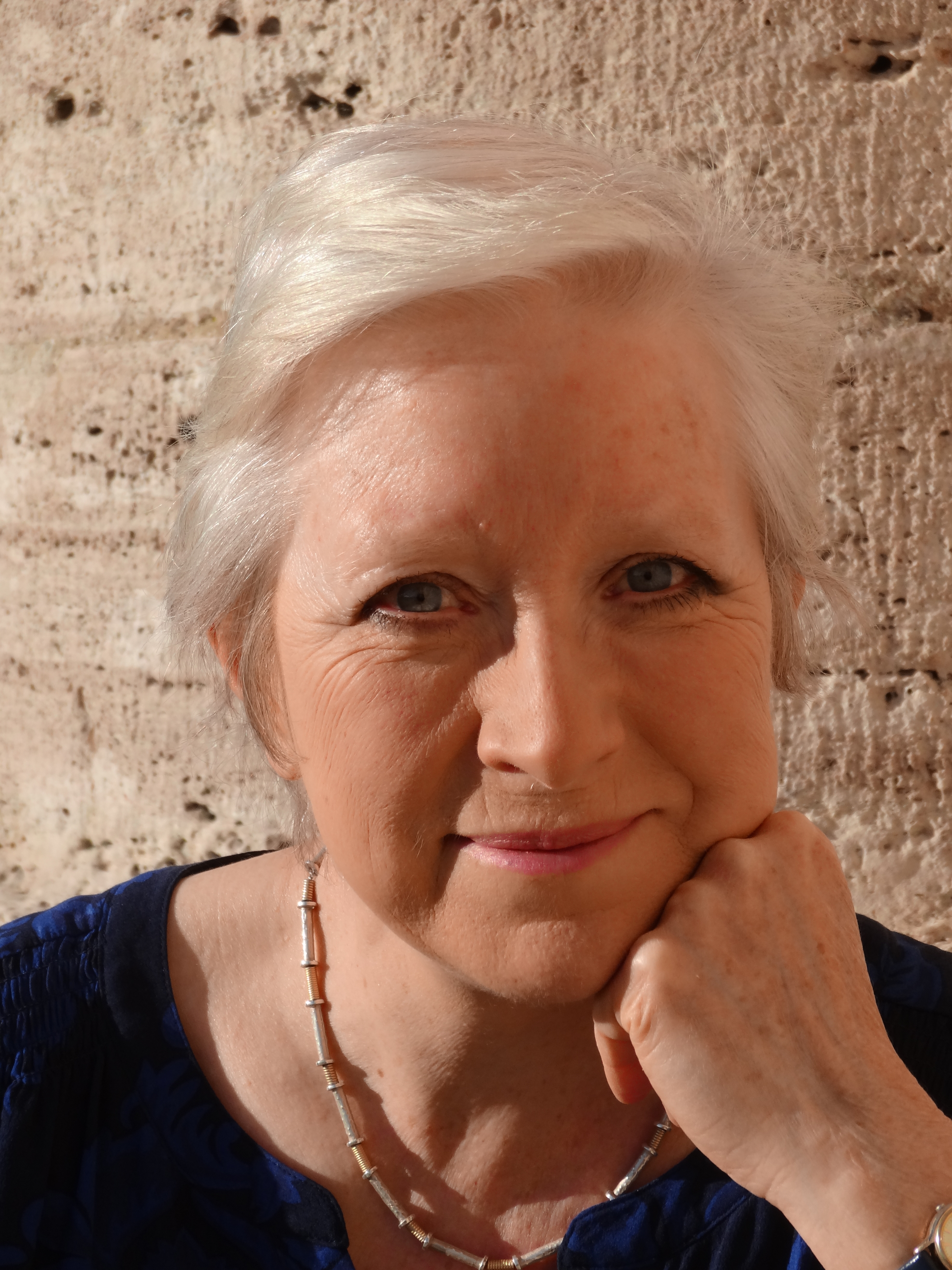
Lola Perrin is a London-based, USA-born composer, pianist, publisher, and Composer-in-Residence at Markson Pianos.

She has been composing since 1992 and performs her compositions on mainland Europe, in the UK (including works for 2, 4 & 6 pianos at Lang Lang Inspires, Southbank Centre) & USA, and has published over 70 piano compositions in 8 books, distributed via Spartan Press. Commissions include silent film scores performed at Barbican, BFI Southbank and Peninsula Arts in Plymouth. She collaborates in performance with writers (including Mihir Bose  & Sue Hubbard), scientists, artists and film makers. 

Lola Perrin has been taken into the repertoire by concert pianists including; Elena Riu, Kevin Robert Orr, Paul Cassidy, Ivory Duo Piano Ensemble, LP Duo, Duo Gastesi Bezerra, Carles and Sofia.  Her technical exercises, commissioned by Trinity College of Music, can be found in their 2015 – 2016 Piano Syllabus Grades 3 & 4.

As an increasing number of pianists and piano duos take up her piano works she is turning her attention to instrumental works.  Elysian Quartet and Carlos Lopez-Real have performed her string quartet and saxophone work. Sarah Watts  commissioned ‘Her Sisters’ Notebook’ (ten bass clarinets) for Peninsula Arts Contemporary Music Festival 2011 and played it at Irish Royal Academy 2014. Simon Desbrulais and Ivory Duo Piano Ensemble have taken up her forthcoming Suite for Two Pianos, Trumpet and Narrator. During 2014 two instrumental works (String Quartet & Saxophone, Wind Quintet & Choir) are due to be rehearsed / performed in London.

She has been interviewed and reviewed by various media including Berliner Morgenpost, BBC Radio 3 and local stations, The Guardian, Lyric FM.  Her recordings appear on radio playlists and occasionally on broadcast TV, are on general release and can be found through digital sites including iTunes (CDs: Fragile Light’, ‘By Peculiar Grace and other loves’).  She also works as a private piano teacher.  Pianist magazine ran an interview, June 2014, with her piano student Shadow Chancellor Ed Balls, in which Lola made a sneak appearance.

As well as various composition projects, she is also currently transcribing ‘Concerto in C Minor’ by Helen Hagan, a forgotten 1912 virtuosic masterpiece still in the composer’s hand, and creating a concert programme around it.

www.lolaperrin.com

(photo credit: Julia Wesely)

For the Wigmore neophyte, I doubt I could have selected a better concert to introduce my companion for the evening to the delights of London’s “sacred shoebox”: Georgian pianist Khatia Buniatishvili dazzled in a highly accomplished performance of music by Mussorgsky’s ‘Pictures at an Exhibition’ and a selection of short virtuosic works by Liszt.

Read my full review here

Teacher and pupil took the stage at London’s Wigmore Hall on Friday 20th February in a joint concert by Maria João Pires and Pavel Kolesnikov featuring late works by Schubert and Beethoven, and Schumann’s love letter in music to Clara Wieck, the Fantasy in C, Opus 17.

Pavel Kolesnikov © Colin Way

Pavel Kolesnikov, the young Siberian pianist who has already garnered many prizes and much praise for his playing, is a soloist of the Music Chapel in Brussels, studying with Maria João Pires as part of her ‘Partitura Project’ which offers a benevolent relationship between artists of different generations and seeks to thwart the “star system” by offering an alternative approach in a world of classical music too often dominated by competitions and professional rivalry. In keeping with the spirit of the Partitura Project, the pianists shared the piano in two works for piano four-hands by Schubert and each remained on the stage while the other performed their solo. From the outset, this created a rather special ambience of support and encouragement.

Read my full review here

(photo: Robert Philip)

Who or what inspired you to take up the piano and make it your career? 

We didn’t have a piano in the house when I was little, but gradually my friends’ parents started reporting that I had been trying to play their piano when I came to their house. My parents were surprised (neither of them had had the opportunity to learn an instrument) but intrigued, and eventually they decided to take the plunge and acquire an upright piano. It was a make of piano I’ve never come across since: Eungblut & Eungblut. I remember that when it arrived in our living-room I already felt it was an old friend and I ‘knew how to play it’, though I can’t really account for that feeling as I hadn’t yet had a piano lesson.

Who or what were the most important influences on your musical life and career?

I think I’d have to name various professors I met at masterclasses when I was in my twenties and had officially ‘finished my musical education’. In some ways, it was yet to begin! I met the Hungarian violinist Sandor Vegh at the International Musicians’ Seminar in Prussia Cove, Cornwall. Later on I met the Hungarian pianist Gyorgy Sebok when I was spending a semester at the Banff Centre in Canada. Those two musicians with their very different personalities and pedagogical approaches were hugely influential, opening my eyes and ears to a larger, more profound and multi-layered way of thinking about music.

What have been the greatest challenges of your career so far? 

I suppose being an introvert in a ‘public performance’ profession has been my greatest challenge. It isn’t straightforward, of course – I seem to have a deep need to communicate music to an audience and get their reaction, and I love to be appreciated, but there are many other aspects of being ‘on show’ that don’t come naturally. I’m very interested in people, but I’m quite a private person and need lots of time to myself. I suppose the friction between those things has been the reason that I took to writing about music and being a musician [I’ve written four books]. I find that writing about performance helps me to come to terms with the self-imposed challenge of being an introvert in an extrovert profession.

Which performance/recordings are you most proud of?  

I feel very fortunate in having lots and lots of concerts I’m proud of having been part of. I’ve worked with so many amazing musicians. Recording-wise, it’s a little different because I’ve never much enjoyed the process of making records. Nevertheless I am proud that many of my recordings have been well-received and have meant something to people. I guess my favourite one is still the first: the Domus recording of Fauré piano quartets. We were all novices then, of course, but we also had a very special bond. I can still hear our freshness and idealism when I listen to that recording.

Which particular works do you think you perform best? 

I really hope I can say Mozart’s works, because he has always been my favourite composer, and I’ve spent a great deal of time trying to live up to his beautifully lucid yet deep and subtle music. Other favourites are Schumann, Schubert and the French composers of the end of the nineteenth century; I adore the piano music of Debussy, Ravel and Fauré. Then there are two ‘greats’, Beethoven and Haydn, whom I used not to feel so close to, but with time I’ve come to appreciate them more and more, and when I perform their music I feel more confident that I have something to say about it.

How do you make your repertoire choices from season to season?  

That’s always a blend of things that people ask me to play, and suggestions I put forward if I have the opportunity. Unfortunately, programmes usually have to be planned far in advance, which means that you find yourself committed to play something you suggested two years ago, and may not feel like playing quite so much when it comes to it! But somehow, just because you’re committed to playing a certain work on a certain date,  the appetite to prepare and perform it does develop when the time approaches.

Do you have a favourite concert venue to perform in and why? 

For years and years I have loved the Wigmore Hall, where I first played as a child and have been fortunate to play in regularly ever since. Other favourites? Well, there was Domus’s white portable geodesic dome, in which we played memorable concerts and tried to forge a new way of presenting chamber music to new audiences. I also remember a wonderful old hall in Bilbao, very similar in character to the Wigmore in a way. I loved the feeling of Carnegie Hall, where the auditorium seems to open up before you in a very pleasing way as you look from the stage. The Konzerthaus in Vienna is pretty special; I was impressed by a beautiful new hall in Zaragoza, and I have a happy memory of playing in Grieg’s house in Bergen, where the audience sang me ‘Happy Birthday’! I always enjoy playing ‘house concerts’, especially in beautiful drawing-rooms; I often feel that these are the kind of rooms, and the kind of audiences, for which a lot of the classical repertoire was conceived. I love the intimate atmosphere and the closeness of the audience.

Favourite pieces to perform? Listen to? 

I don’t really have favourite pieces to perform; I find that whatever I’m working on occupies my imagination and becomes my ‘favourite’, or at least my obsession. Funnily enough, at the moment I don’t listen to all that much music when I’m away from the piano. When you spend a lot of time practising or rehearsing, you don’t particularly feel the desire to listen to even more music just for fun. I often listen to jazz radio when I’m working in the kitchen, but in fact I just as often enjoy silence.

Who are your favourite musicians? 

I couldn’t single out particular people from the amazing list of musicians I’ve been lucky to work with. There are so many different ways of being a good musician, and so many ways of collaborating with other musicians. Over the years I have been inspired by the attitude and standard of playing of many of the musicians I’ve met and worked with in Prussia Cove, both during the ‘masterclass seminars’ in April, and during ‘Open Chamber Music’ in September. Many of those people have become my long-standing musical colleagues. People travel from all over the world to be in Prussia Cove, and I’ve lost count of the illuminating and stimulating musical experiences I’ve had there. In general, I’ve always got most out of people who are interested in being good chamber musicians rather than single-minded soloists.

What is your most memorable concert experience?

As many writers say when asked which of their books is their favourite, I’d probably say that my most recent concert is the one that’s most vivid in my mind. I don’t have a ‘most memorable’ experience – there have been so many. Just for fun I might mention my first-ever piano trio concert when I was a teenager, still at school. Fellow students and I performed the Arensky piano trio, which we had learned in after-school sessions. Unbelievable fun, and we had such a sense of achievement!

What do you consider to be the most important ideas and concepts to impart to aspiring musicians?

For me, the most important thing to impart to students is that great music is not ‘entertainment’, nor just a social accomplishment, but a reflection of life. Most of the music I care about is a metaphor for life, of its complexity (and sometimes its simplicity). Great composers have found a way of channelling their thoughts and life experiences into music, in such a way that the rest of us can receive a kind of ‘distilled understanding’ through the music. Once a young musician has grasped this point, working on music becomes much more than a surface task, and they can begin a huge journey of exploration.

Where would you like to be in 10 years’ time?

In ten years’ time I’d love to be reading in the press that older women have outstripped every other kind of artist in popularity. They will be top of every concert hall’s agenda; they’ll be the toast of the town because of their wit and wisdom, and governments will plead with them to head important initiatives. Images of glamorous young musicians will disappear from adverts and brochures, to be replaced by iconic portraits of wise women. (We can dream – that’s one thing you learn as a musician!)


Susan Tomes is a leading UK pianist, a rare example of a woman who has achieved several decades as an acclaimed chamber music pianist. In 2013 she was awarded the Cobbett Medal for distinguished services to chamber music.

Born in Edinburgh, she was the first woman to study music at King’s College, Cambridge. She has been at the heart of three internationally admired ensembles: Domus, the Gaudier Ensemble, and the Florestan Trio, winners of the Royal Philharmonic Society Award in 2000. With these groups she has performed and broadcast all over the world. She is a long-standing participant at the International Musicians’ Seminars in Prussia Cove, Cornwall, where she met many of her chamber music partners. She has made over fifty CDs, many of which have become benchmark recordings, winning Gramophone Awards, Classic CD awards, Diapasons d’Or in France, and Deutsche Schallplattenpreise. At Hyperion Records’ 20th anniversary, Gramophone wrote that ‘Susan Tomes’s playing is always magnetic and concentrated whatever the repertory, a rare gift which she consistently employs not for her own glorification but in the cause of corporate music-making.’ Her recital repertoire focuses particularly on French music, Mozart, Schubert and Schumann; as a soloist, she has recorded Mozart piano concertos and 1920s piano music by the Savoy Hotel’s Billy Mayerl.

As well as performing, Susan is a champion of the art of the chamber music pianist, illuminating the role and promoting the status of the collaborative pianist over many years in radio talks, newspaper and magazine articles, keynote speeches, seminars, and masterclasses. She is the author of four books on performance issues: Beyond the Notes (2004), A Musician’s Alphabet (2006), Out of Silence (2010) and Sleeping in Temples (October 2014), which has already been a Books of the Year choice, a Christmas Books selection and Editor’s Choice in various journals. Her books are now studied in ‘performance practice’ courses in various parts of the English-speaking world. She has been a guest on the BBC flagship radio programmes, ‘Today’ and ‘Woman’s Hour’. She has served on many international competition juries and is often invited to give masterclasses at music conservatoires. She is a guest tutor at the European Chamber Music Academy, and holds her own masterclasses every year in London, attracting international chamber groups.

Susan is currently engaged on a long-running duo series with the Austrian violinist Erich Höbarth. They focused on Mozart for two years, and are now exploring the sonatas of Schubert. Susan is the solo pianist on a  record made by the Royal Scottish National Orchestra to celebrate Creative Scotland 2012 with the gift of a special CD for every child born in Scotland during the year.

www.susantomes.com