Guest post by Emma Williams

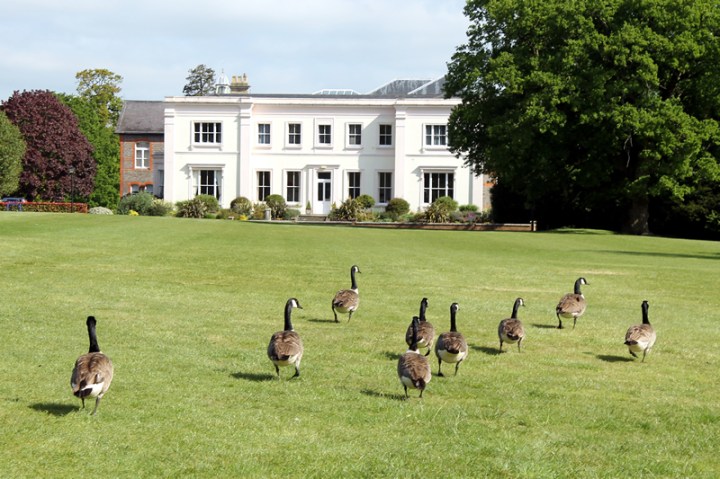
Finchcocks is a handsome manor house in the Kent countryside, which has been filled with music since its inception in the 18th century.

Until recently, it was home to a living museum of music – which I had visited as part of a private visit. We’d had a marvellous time being let loose on the collection, which included some fine harpsichords and clavichords, square pianos (including one which belonged to Queen Victoria, made by John Broadwood & Sons), fortepianos, and grand pianos by Clementi, Pleyel, Erard and Broadwood. It’s no surprise therefore that I was sad to hear the news that Finchcocks was on the market and its exceptional keyboard museum was to be closed.

But there’s great news: the wonderful musical tradition, established by Richard and Katrina Burnett back in 1971, will be continued at Finchcocks! The new owners have announced they will be hosting regular residential piano courses at Finchcocks, and guests will be accommodated in the stunning, recently renovated 18th Century Coach House.

The first weekend piano course was held in November, run by Finchocks’ Musical Director Dave Hall, who did an excellent job engaging and inspiring a group of advanced intermediate pianists. Finchcocks’ courses will also cater for complete beginners (a welcome addition to the piano course world, as most courses are aimed at advanced players), and there’s a fabulous range of pianos to play on by Steinway, Bosendorfer, Yamaha and Broadwood. In the cellar, there are eight high-tech digital grand pianos.

My lovely piano teacher, Graham Fitch, will also be leading a few piano courses at Finchcocks next year. For more information about courses, tutors and accommodation, please visit www.finchcocks.com

Emma Williams is a keen piano player and recently attended a Finchcocks Weekend Piano Course.


Further reading

Why go on a piano course?

Courses for pianists in the UK and Europe


A three-day weekend course for adult advanced pianists (Grade 7 to post Diploma)

This exciting new course is led by tutors Dominic John and Maureen Galea, and is based in Leighton Park School, just outside Reading.

The emphasis will be on encouragement in a supportive  and friendly environment.

The course consists of individual lessons, workshops, Alexander Technique sessions and Harpsichord sessions.

Accommodation and meals are all part of this exciting course which aims to be a fun but intensive weekend.

The course will give the opportunity to meet other pianists as well as receiving expert tuition.

Course Dates

Thursday 5 April, 2018 arriving between 6 and 7 p.m. for dinner at 7 p.m., to Sunday 8 April 2018 at approx. 5 p.m.  (Times to be confirmed).

Fees

Fees for participants are £475.  Payable on booking

This is a not for profit venture but any profits that may arise will be donated to Help Musicians UK

Further information and booking https://penny560.wixsite.com/aurora

leightonparkschool1
Leighton Park School

Tucked away in a tranquil leafy corner of Great Elm, a small village near Frome in Somerset, is Jackdaws Music Education Trust. Now in its 25th year, Jackdaws was established by the singer Maureen Lehane in memory of her husband, the composer Peter Wishart, and took its name from his most-performed song, ‘The Jackdaw’. Their modest former home is host to a wide variety of very popular short music courses and workshops for adults and children, as well as concerts and opera performances.

Courses take place throughout the year, usually run from Friday evening until teatime on Sunday. The courses are led by inspiring musicians and teachers, and bring together passionate musicians, from the humblest amateur to the aspiring professional, to learn and develop together in a homely, nurturing and friendly environment. Tutors on the popular piano courses include Graham Fitch, Margaret Fingerhut, Julian Jacobson, Philip Fowke, Mark Polishook, Mark Tanner, Penelope Roskell and Stephen Savage. The ethos of Jackdaws is ‘Access-Inspiration-Inclusion’ and the atmosphere and teaching is relaxed, convivial and supportive. Course participants and tutors eat together at a large round table downstairs, meals are freshly made, generous and wholesome, and there are frequent breaks in the teaching schedule, plus free time to practise, socialise or explore the surrounding area. Participants stay with local bed and breakfast hosts in Great Elm  or nearby villages.

I have been meaning to visit Jackdaws for several years: I’d heard so many positive reports of the courses and the place from pianist friends, and a short course with a small number of participants appealed to me. (I have not been tempted by larger piano courses such as the summer schools for pianists at Walsall or Chethams, nor the very expensive summer piano courses in France). It was serendipitous when my regular piano teacher Graham Fitch suggested I go on course called Finding You Voice At the Piano with Stephen Savage. Graham studied with Stephen at the Royal College of Music, and from the outset I found Stephen’s sympathetic and encouraging approach familiar from Graham’s teaching style.

Teaching is organised in a masterclass format which allows all participants to learn by observing one another being taught. We were fortunate in that there were only 4 people on this course which gave each of us the luxury of longer sessions with Stephen and the chance to further explore ideas which emerged from the teaching sessions. And from a piano teacher’s point of view, observing an expert tutor in action is also very instructive.

Our enjoyable mealtime conversations included repertoire, concerts, favourite recordings and artists and piano teaching anecdotes. These convivial interludes in each teaching day helped to forge a sense of shared purpose and musical friendship, which I think really aids learning because one quickly feels more at ease playing in front of others if you’ve shared the same dinner table with these people.


The teaching was of the highest quality: Stephen is expert at very quickly seeing what each person needs to bring their repertoire to life (in my case, a greater richness of sound and drama in the final movement of Schumann’s Fantasy in C, and more continuous energy in the opening movement of Schubert D959), and gave each of us useful advice and suggestions for practising, including strategies to bring security to leaps, chord progressions or rapid passagework. It is always wonderful to see how individuals develop, how their music changes, under the tutelage of a teacher like Stephen Savage, and it gives one inspiration and encouragement to keep going on one’s personal musical journey. In addition, courses such as these are a fantastic opportunity to hear, share and discover repertoire, and a chance to make new piano friends.

In terms of facilities, Jackdaws has a good Steinway grand in the main studios upstairs, a further Bechstein grand downstairs plus several upright pianos, a digital piano, a harpsichord and a spinet. Practice time is booked In half-hour slots using a simple rota and everyone was very good-natured about organising this. There is also free WiFi.

In sum, this was an inspiring, stimulating, enjoyable and highly instructive weekend piano “retreat” which I recommend to any adult pianist but particularly those who have not attended a piano course before or might be unsure about signing up for a longer course.

For further information about Jackdaws piano courses please visit

https://www.jackdaws.org.uk/piano/


A magical place for music making, made more special by playing in such an intimate space, surrounded by beautiful nature……it encourages us to open up

– Wendy

Sharing music with empathetic people who understand what we’re trying to do and what the difficulties are. It takes courage to play at these events but as adult learners we bring our own life experiences to bear on our music  

– Susan

Small, domestic ‘at home’ atmosphere and lovely people

– Mark

It’s about interaction with new people – I really do value that – and it’s humbling to work with people from a multiciplity of professions who come on these courses with their hang ups. But there’s always a way to face these and to really get some focus into their playing. I think the key factors are the ‘craft’ of playing and rhythmic organisation in the music. As a teacher it’s important to be non-judgemental and respectful

– Stephen Savage

Guest post by Claire Vane

If music be the food of love….play on….(but please let it be in Italy)

I know Italy well, and in particular central Italy – Le Marche – which is not, as imagined, anything whatsoever to do with marshes. It is a wonderful and prosperous area of Italy which brings together the mountains and the sea, greenery and sunshine, as well as many concerts and wonderful performances and, in addition, a Sferisterio in Macerata where operas are staged every summer in the most magnificent surroundings.

I decided that I would indulge myself by having a week of playing the piano in total peace and quiet in central Italy at Music Holiday Italy. Gil Jetley, who won the second edition of the prestigious triennial International Chopin Competition for amateurs in Warsaw in 2012, has set up a piano school in Italy. Although Gil has in the past run a number of group courses, he has now decided to focus on one-to-one tuition. If you think you’re going on a total relaxation holiday, forget it. But, I must admit, the food was delicious and the surroundings couldn’t be better. I adore the piano and take it very seriously… My children, who are now grown up, joke that it is at the top of my priority list… I perform as much as I can, and always for charity. I have been back at the keyboard for about ten years after a thirty-year gap and have been learning for the last three years with Warren Mailley-Smith, who is a marvel.

It’s late Saturday afternoon and I’m sitting in the Italian sun on a hill in southern Le Marche, contemplating the view and recovering from the physical exertion of playing the piano for 6 days, 6 hours a day. I agree that this is not a particularly huge amount if one is preparing for a recital and, in actual fact, I find 6 hours of practice, perhaps broken into two lots of three hours, not so physically demanding, but where this time is made up of six days, consisting of four hours of onte-to-one tuition, followed by 2 hours of practice, then the mental energy seems much greater.

The proof of the pudding….

I arrived in Ancona airport at Falconara to be whisked away in Gil’s Jaguar, into the mountains near Amandola and not far from Ascoli Piceno. Apart from speaking to Gil and the local grape farmers and restaurateurs whom we met in the evening, I did not speak to another adult, except on the telephone, for an entire week. It is a great place to avoid distractions and it is in sharp contrast to living in the middle of Cambridge where we ride bicycles because there are no hills.

What could be better doing the thing you love for a whole week? The only problem comes with everybody thinking that you’ve been on holiday. Do not be deceived by the name of the website!

Gil’s expertise in the kitchen is as excellent as his technique on the piano.

Every evening we ventured out to dinner, again in the beautiful Jaguar, and experienced the rewards of the region, including delicious salamis, wonderful mushroom risotto and the local restaurants around Montefalcone.

I was a little shocked to find that another piano nut such as myself did not have a name for his piano. My own piano, Charlotte, a Schimmel C189, would have been shocked to find that Gil’s mellow 7ft Italian Kawai did not have a name until I arrived.

I took with me a number of pieces including the Mozart Rondo K511, six Schubert Impromptus, the slow movement of Schubert D960 and the Mendelssohn Rondo Capriccioso… Gil is a man of detail and does not let anything pass. Though we did not always agree on interpretation or even sometimes on technique, Gil had me analyzing works in a way that I had not done for years and reminding me of harmonies long forgotten since my days at Junior College at the Royal Northern under Marjorie Clementi.

I stayed in the room called ‘Mozart’, which was a good choice for me, situated next to ‘Bach’, which was not occupied that week, and Mozart provided a lot of peace for me in a week when I was taking a break from the heat – both physical and mental. All in all an excellent learning experience, which I can recommend.

Gil is a man of many parts, and is pretty handy with screwdrivers, saws and other tools required to turn an old property into a very comfortable home. Be warned that if you wish to go for walks in the afternoon; if you descend to the local village 5km away you have to come back up the hill again…and the hill is steep. This is also, of course, an opportunity to get very fit. If you want to do some touring and take your family then this is also possible, though I would imagine that that this takes some of the focus away from the purpose of going in the first place – mainly to play the piano intensively and to enjoy being solitary and focused.

If you would like a week of intensive piano learning and practice in a peaceful environment with glorious walks in the hills of Italy, then this is the place to be.

One-to-one tuition 

Further information about MusicHolidayItaly

 

14657451_10154312353421773_4844777016158226596_nClaire Vane read Classics with Languages at Cambridge. She was a Saturday exhibitioner at what was the Royal Manchester College of Music and was taught by Marjorie Clementi, and over the last three and a half years by Warren Mailley Smith. Claire holds an Associate Diploma in Piano Performance and performs for a variety of charities. She is a Human Resources Consultant by day and is the founder and MD of a bespoke HR and Recruitment Consultancy, Integrated Resources Ltd. She describes herself as a “piano nut”, and enjoys courses which help her develop musically on the piano.