Guest post by Ann Martin-Davis, pianist and teacher


‘Dum diddle diddle dum dum dum.’

How can it be that this simple tune that we all know isn’t counted in three? Yes, you heard me, not in three, but in fact in four plus two.

Try it out right now in your head – go on – and then go through all those other Baroque minuets that you have been humming for years and you’ll see that the shape of the melodies and the articulation that follows fall into the same pattern.

Now fast forward 200 years to Ravel; Menuet sur le nom d’Haydn, the Sonatine, Menuet Antique, and you’ll find the same patterns, and why? Because this is how it’s danced.

Learning the dances of the Baroque period doesn’t just sort out your understanding and playing of these composers, but it can inform pretty much everything else dance related that you might be involved with.

I’m with the dancer and historical coach Chris Tudor, and I’m joined by harpsichordist Sophie Yates, and Bach specialist, Helen Leek. We’re here to learn some of the basics and after intros in our ‘comfortable clothing’, we’re warming up with a simple hand held chain called a linear carole.

Caroles, or carols as we now call them, always used to be danced and sung, but at some point we lost the dance element. The origins go way back to the ancient Greeks and to the choros, or circular sung dance. Remember the dancers on Achilles’ shield in Homer’s Iliad? The magic of the shield creates a moment of escape from the pressures of reality and of the battle; I too quickly forget my parking battle off the Euston Road and settle into the conviviality of it all.

Next up is a renaissance dance, the Branle, which Chris tells us is a surreptitious way of introducing some of the steps to a minuet. We take one step to the right, close, then one step to the left and over with the right. Always rotating clockwise as we don’t want any negative energy.

We make swift progress and then I drop the bomb.

‘How about a Courante?’

Chris grimaces a bit and at this point I suddenly have a flashback to a grade exam, where I galloped through a Bach Courante and landed with a grateful ‘ta dah-like’ placement of the final ‘G.’

Sophie steps in and tells me that the Courante was fast in the Renaissance, but by the time J S Bach got busy with it, the metre had moved to 3/2 making it one of the slowest of all of the Baroque dances. She continues, ‘it could be apocryphal, but gossip colomnist in Chief in Versailles, Titon du Tillet said it slowed down because of Louis XIV’s long-toed shoes, meaning an extreme turn-out was necessary.’

So the Courante gets us talking about the ‘cadence’ of a dance which can relate to two ideas. We have cadence, as in the cadence of your voice, the qualities of the dance (a Courante has a noble and stately quality), but there is also the exploration of the cadences in the music and how these are going to relate to the cadences in the dance.

This is blowing my fuses now, so we all agree it’s time for coffee…

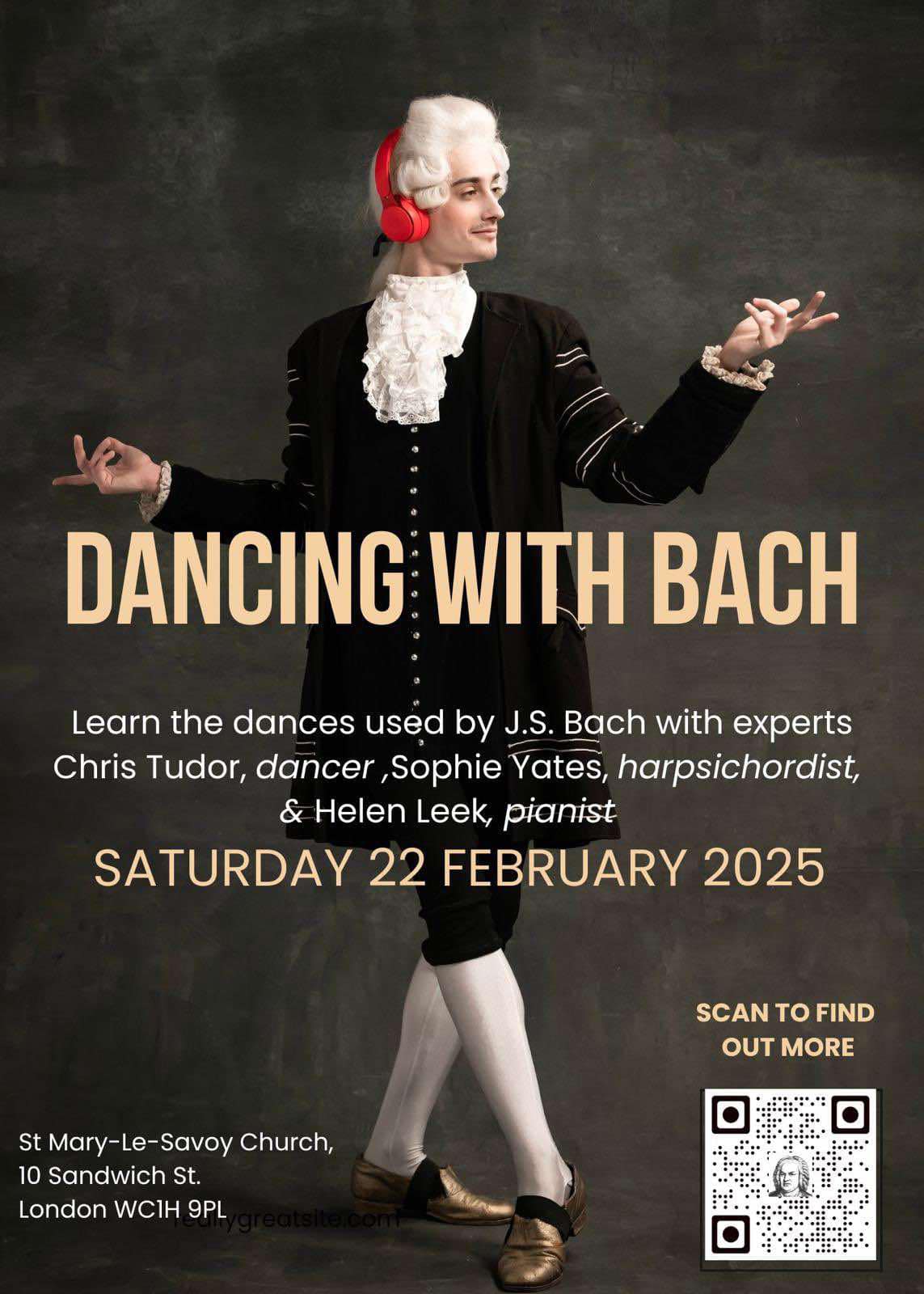
‘Dancing with Bach’, hosted by Ann Martin-Davis, with Chris Tudor, Sophie Yates and Helen Leek is a one-day workshop for pianists exploring the dance forms familiar to Bach that he used in his Partitas, Suites, and throughout his other collections of keyboard music.

Saturday 22nd February at St Mary-Le-Savoy Lutheran Church, London WC1H 9LP

Find out more here

Bring your dancing shoes!

Guest post by Charlotte Tomlinson

January 2025 will mark the 3rd anniversary of the Oxford Piano Weekends, and the thirteenth weekend. I can hardly believe that what started on the back of an envelope in late 2021, has developed into such a fixture in the piano course market that pianists return again and again.

We started in 2021 with the legacy of Covid and all the social and musical anxiety that came with that. It was essential to find a way of getting people to know each other quickly so I devised a mini workshop to be held before supper on the first evening, in which people get into pairs to chat about a particular musical and performing issue. Within a short space of time, the conversations are animated, social anxiety disappears and people feel relaxed and comfortable. By the time we start the evening session, a united and supportive group has already established itself.

It can’t be underestimated how important this group bonding is. A good number of pianists who come on the Oxford Piano Weekends struggle with performance anxiety and physical tension, and feeling emotionally safe within the group is essential to move through these issues.

I used to have crippling performance anxiety and now I really enjoy performing, something that would have been previously unimaginable. The weekends have helped me immeasurably.

Right from the start, Oxford Piano Weekends have had a wonderfully diverse pool of advanced and committed pianists taking part: bankers, medics, piano teachers, lawyers, choir directors, pianists returning after many years, battered and bruised pianists from a legacy of harsh teaching, students preparing for final recitals and many, many more. Pianists come from all over the UK, as far afield as Dublin, Finland, Malta and most recently, Canada.

The weekend is a chance to reflect deeply on your playing with expert guidance to take away and improve your practice.

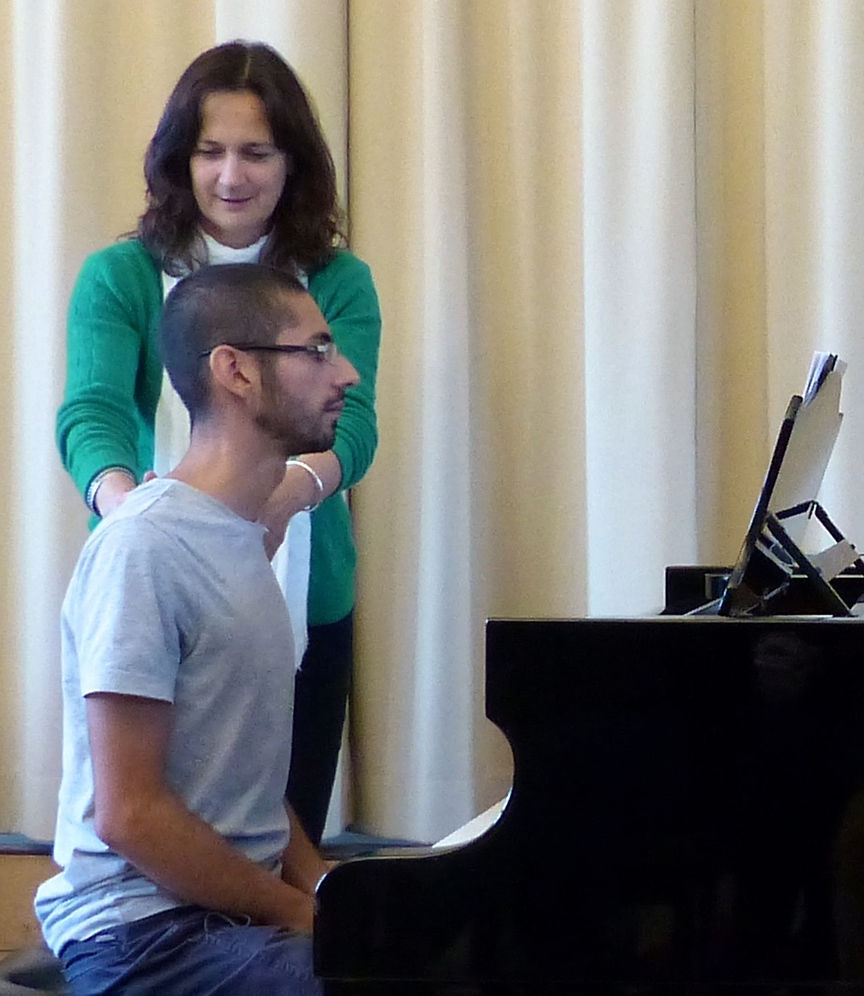
On any one Oxford Piano Weekend, the numbers are kept deliberately low with six or seven as the ideal. Each pianist has twenty minutes teaching within the group, in rotation over the weekend, and it’s extraordinary how much can be packed into that short time. I listen to each pianist to see what they need, and then make sure that my response is valuable not just for the pianist themselves, but also for the group. Participants learn so much from watching and listening to each other, seeing their own challenges reflected in other pianists and then observing that pianist transform in front of their eyes.

A truly wonderful weekend. Charlotte is so caring, and teaches with such empathy, understanding & musical knowledge and expertise.

And what’s more important than the meal times? Homemade, tasty, nutritious food with free flowing wine in the evenings, the now-famous homemade flapjacks for coffee breaks, all provide a wonderful back drop for lively, stimulating conversations among like-minded people. They truly are full and rich weekends, and I, for one, come away at the end of each one feeling exhilarated and all ready to go for the next one.

Next weekend: January 17th -19th 2025

For more details go to: https://www.charlottetomlinson.com/oxford-piano-weekends

Watch a podcast with Charlotte Tomlinson and The Cross-Eyed Pianist

Pianist friends Alison Bestow and Claire Vane set up Pianissimi, an adult piano course, five years ago. I caught up with them to find out how their venture is progressing….

Pianissimi has been running for five years now; what is the secret of its success?

Claire: We have both been to many other piano courses, both in the UK and abroad. We are therefore very clear about what we want from a piano course; maximum face-to-face tuition, both in masterclasses and in individual lessons, and opportunities to perform every day. We also want to create a supportive, friendly environment and excellent organisation to keep the whole thing running smoothly. Many people have been with us for several iterations of the course, so we think we’re on the right track.

What do people most enjoy about Pianissimi?

Alison: Our tutors are first-rate. Warren Mailley-Smith and Penelope Roskell have been with us from the start, and this year we have achieved our ‘dream team’ which includes Graham Fitch and Nicholas Moloney. The tuition is intensive and so we make sure to keep participants fuelled with home-made cakes during the day and wine and snacks in the evenings, which people always appreciate, especially after performing following dinner.

Claire: Participants always say how friendly everyone is. The location is really beautiful, on the side of the river Orwell with spectacular views, so the environment is inspiring.

Alison: For me one of the highlights is playing the Fazioli grand in the recital hall with its tiered seating. Although I know you prefer the Bechstein, Claire….

What are the challenges of both running and attending the course?

Alison: We split up the organisation between us, and we have very different skills, so it works very well.

Claire: I do publicity, networking and the loot. Alison does the tedious timetabling which would drive me mad.

What have been the best moments of the course?

Alison: I love all the evening concerts; there is always such a variety of performances and I always come away with something new that I am inspired to learn. I have made many new piano friends.

Claire: We did a scratch eight hands two piano duet last year which was hilarious. I loved the visit from Chris Norman of 1066 pianos who told us more about how pianos work, Steinways in particular, and how he goes about voicing them.

Alison: And the talk from Colin Hazel about women composers was fascinating.

Any sticky moments?

Claire: The accommodation is in school boarding houses, and one year we were given high bunks beds with a desk underneath – not ideal for one participant who was pregnant and another with a dodgy knee. The school sorted it out for us; never again!

Alison: The staff at RHS are brilliant.

Who is this course aimed at?

Alison: We want the course to be very inclusive for anyone who loves the piano as much as we do, so we suggest that attendees are grade 7 onwards and including diploma level and post-diploma. The levels of experience and performance are varied, but we try to ensure that everybody feels comfortable and confident playing in a group. The course is also ideal for those with a specific aim, such as preparing for a graded or diploma exam, or getting ready for a particular performance. There will be lots of performance opportunities for those who want them. But there won’t be any pressure on people to perform if they don’t want to.

How can I book?

Claire: There are a few places left for the June course. All the information about the course is on our website: http://pianissimi.wordpress.com/


Pianissimi is held at the Royal Hospital School, 8 miles from Ipswich, Suffolk.

Course dates: Thursday, 2nd June 2022 (5 pm) to Sunday, 5th June 2022 (5 pm)

View the location and facilities here

Are you an advanced pianist wanting to move through performance nerves in a safe, supportive group? Do you want play with greater physical freedom and practise more efficiently with an empathetic and experienced teacher? If so, you may enjoy an Oxford Piano Weekend. There are some places left for Friday June 23rd – Sunday June 25th 2023 and Friday October 6th – Sunday October 8th 2023. For more details and to book, go to: https://www.charlottetomlinson.com/oxford-piano-weekends


Pianist and teacher Charlotte Tomlinson introduces her Oxford Piano Weekends:

In these last rather strange couple of years of isolation and restrictions, it feels as if music and performing has become more important than ever. The desire to learn in person along with other musicians has also taken on an extra special meaning.

Pre-2020, I had spent many years in my roles as piano teacher and performance coach, giving presentations and masterclasses for conservatoires, universities, festivals and orchestras around the world, but when the cancellations started as they did for so many musicians, I found myself thinking about what I could offer from home. After all, we were all so used to working from home. At the same time, I had a number of requests from piano students for me to run my own course.

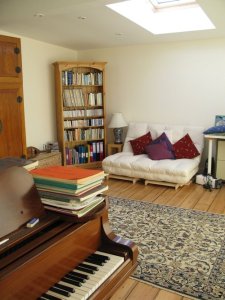
I have been teaching and coaching one-to-one in my own studio at the bottom of the garden with its lovely Steinway for around thirteen years and had already run some one-day workshops there. And from 2000-2008, I ran my own chamber music course at the Purcell School. But it was these requests from pianists that got me thinking: could I run a piano weekend from my own house and studio? I realised that I did have the space for a small group both in my kitchen and studio, and that perhaps there might be a gap in the piano course market for a weekend of teaching in a small, supportive group within a home environment.



“Many thanks for all your warmth and total acceptance of where we’re all at. Your ‘can do’ approach is so positive and encouraging. You have the ability to ‘see’ the individual.”

So, in January 2022, Oxford Piano Weekends was officially born. The first weekend was intense, fun and stimulating. There were seven pianists and the eclectic mix of scientists, medics, writers and sport coaches along with professional pianists, made for dynamic masterclasses and some wonderful discussions at mealtimes.

“The weekend works on so many levels, musically and socially, and I thoroughly recommend it. It is so encouraging to spend time with other people who are both talented and supportive.”

Providing fresh homemade, nutritious and tasty food (with free-flowing wine in the evenings!) is important to me. I want everyone to feel nourished and refreshed for the learning part of the weekend.

“The food was excellent – all thought through and prepared with care and love!”

It was such a delight to have my house and studio full of people, that after it had all finished, I wondered why I had never thought about running this type of course before. I am now planning a number of weekends and booking has already started for the next two.

Next weekends:

April 22nd-24th 2022

July 1st-3rd 2022

For further details and to book: www.oxfordpianoweekends.com


Charlotte Tomlinson is an internationally renowned pianist, piano teacher and Performance Coach. She taught piano at the Purcell School for eleven years, the University of Hong Kong and HK Academy for Performing Arts and has worked with pianists in masterclasses at the Royal Conservatoire of Scotland, Royal Birmingham Conservatoire and International Piano Academy, Konz, Germany among others. She has a thriving piano teaching practice in Oxford where she teaches students from the University of Oxford, post-graduates from the London music colleges along with international piano students who come to Oxford to study with her. She gave a presentation on the Psychology of Performance and Competition at the Leeds International Piano Competition 2018 and has been invited to work with laureates of the Sydney International Piano Competition.

Read more