‘The World of Yesterday’ – written & performed by Sir Stephen Hough with the Bournemouth Syphony Orchestra, conducted by Mark Wigglesworth. Wednesday 26th February, Lighthouse, Poole

British pianist Sir Stephen Hough hadn’t intended to write a piano concerto. But during the dark days of the COVID pandemic, he was approached to write a score for a film about a concert pianist writing a piano concerto… With little to do but take Zoom calls, “it seemed like a wonderful way to keep me busy”, and, intrigued by the film’s plot, he began jotting down ideas.

As the world emerged from the pandemic, the film project stalled and Stephen’s concert diary began to fill up again, but he still had the sketches for the film score and, with the support of four orchestras (the Utah, Singapore and Adelaide symphonies, and the Hallé) he wrote his piano concerto ‘The World of Yesterday’. It received its world premiere with the Utah Symphony Orchestra in January 2024 and a recording made with the Hallé and Sir Mark Elder is available on the Hyperion label.

I had the pleasure of hearing Hough perform his concerto with the Bournemouth Symphony Orchestra in a well-conceived programme called Notes of Nostalgia. Given its theme, the concerto sat perfectly between Brahms’ Third Symphony and Elgar’s Enigma Variations – all three works infused with a certain wistfulness interposed with personal reflection, warmth and wit.

Hough’s concerto takes its inspiration, in part, from Austrian author Stefan Zweig’s atmospheric memoir of the same name, which depicts Vienna and Viennese culture in the last golden days of the Habsburg Empire before Europe was torn apart by war. You can almost smell the aroma of Viennese coffee and taste the Sacher-Torte in the quieter passages of the piece.

The music is rich in nostalgia, but without the heart-tugging poignancy of Chopin, for instance: it’s a more reflective yet positive reminiscence of another time. Scored in a single movement but with distinct sections, ‘The World of Yesterday’ has a filmic quality (“something from the 1940s”, my husband commented as we left the concert hall) – you certainly hear nods to Korngold’s film scores, and it shares Korngold’s romantic sweep, but there are also references to Rachmaninov (particularly in the very glittery virtuosic solo sections), Copland, the Warsaw Concerto…but at no point do these references feel like pastiche. And if you’re familiar with Hough’s wonderful transcriptions of Rodgers and Hammerstein, you’ll find similar idioms here (I half-expected Hough to segue into the Carousel Waltz at one point). And yes, there is a waltz too – not so much a Viennese waltz but something more sultry, redolent of Bill Evans and a smoky, late-night jazz club.

Hearing the composer play his own work was like a bridge across time to another world of yesterday, a time when composers wrote piano concertos which they performed themselves: Mozart, Beethoven, Mendelssohn, Chopin, Liszt, Rachmaninov and Prokofiev all performed their own concertos. Showcasing their prowess and personality as both performer and composer, these works becoming their “calling cards” as they toured to give concerts.

The music has an almost “vintage” quality: surprisingly traditional in its direct communication with orchestra and audience, and its idioms, motifs and references to other composers (there’s not a hint of that “squeaky gate” atonality one often associates with contemporary classical music). The piano enjoys Brahmsian interactions with the orchestra and Rachmaninov-esque cadenzas, but Hough’s does break with tradition in a few significant ways. First, the concerto has a narrative title, rather than just an opus number or key, which undoubtedly guides the audience, even without a programme note. Additionally, the cadenza, traditionally heard at the end of a movement, comes very early, after an orchestral ‘prelude’. Here the piano is solo, notes and motifs sparkling in the upper register (later mirrored by the piccolo).

Above all, The World of Yesterday is a richly textured, virtuosic and joyful celebration of past influences, rather than a poignant glance back to a better time. It’s full of warmth and wit, affection and humour: it made me smile, it thoroughly uplifted.

After all, isn’t that what music should do?

The World of Yesterday’ is released on 28 February on the Hyperion label

ABSOLUTE

J.S. Bach: Lute Suites BWV 996-998Transcribed for piano and performed by Eleonor Bindman

All my transcriptions are motivated by the desire to play my favourite music on the piano. – Eleonor Bindman

A lifelong love of J S Bach has led pianist Eleonor Bindman to produce a number of important transcriptions for solo piano and piano duo of his music for other instruments, including the evergreen Cello Suites and the Brandenberg Concertos.

In addition to recordings demonstrating ‘Bach playing of the highest order’ (Pianodao), Eleonor has also produced sheet music and anthologies of her transcriptions, primarily aimed at amateur pianists and piano teachers. Her two-volume ‘Stepping Stones to Bach’ features intermediate piano arrangements of the Baroque master’s most famous tunes, including the Gavotte from the Violin Partita, No.3, and the Badinerie from the Orchestral Suite, No. 2. In making these transcriptions, she is following in the footsteps of the master himself: Bach regularly transcribed his own and other composers’ music and created different instrumental versions of the same piece.

The resulting musical statement may be a faithful reproduction …, a transformation beyond recognition or something in between. Regardless of the outcome, the original source is of such exceptional depth and appeal that for the past three centuries it attracted a steady stream of pilgrims, ready to sacrifice their time and energy for the joy of communion.

Eleonor Bindman

In her latest project, she has turned her attention to works originally composed for the lautenwerk or lautenwerck (lute-harpsichord), one of Bach’s favourite instruments, similar to the harpsichord, but with gut (or nylon today) rather than metal strings, which results in a more mellow tone. Generally performed on harpsichord, lute, and guitar, Eleonor’s new recording of the Lute Suites brings a fresh perspective on these rarely-explored masterpieces, showcasing their intricate structures, rich textures, and emotive character on the modern piano.

Eleonor Bindman’s Bach pianism is all about clarity and order. Her strong and assertive fingerwork complements her firmly centred rhythm

Gramophone magazine

Highlights include BWV 997 and 998, featuring stunning fugues with ornate middle sections unlike typical keyboard fugues, and a heartfelt arrangement of “Betrachte, meine Seele” from St. John’s Passion, which serves as a moving conclusion to the album.

Fans of Eleonor Bindman’s previous transcriptions – such as The Brandenburg Duets and The Cello Suites – will appreciate this latest addition to the pianist’s catalogue, recorded on a Bösendorfer piano which truly captures the remarkable richness of Bach’s writing.

Eleonor Bindman writes, ‘Transcriptions can revive interest in original compositions, and I am hoping that a piano version of Bach’s Suites BWV 996, 997, and 998 will increase their popularity. Just like Bach’s other solo collections, these suites present a technical and musical tour de force for their performers and deserve their rightful place alongside Bach’s suites for keyboard, violin, and cello.’

Eleonor Bindman celebrates J S Bach’s 340th birthday and launches her new CD with a special concert at the 1901 Arts Club, London’s most stylish small venue, on Sunday 23 March at 3pm. Tickets/info here

ABSOLUTE is released on Friday 7th March on the Orchid Classics label. Available on CD and via streaming. Pre-order here

eleonorbindman.com

Guest post by Dakota Gale, part of his Notes from the Keyboard series for adult amateur pianists


Back in 1970, when my mom was 18, she composed the first section of the only piece of piano music she’s ever written.

Perhaps inspired by copious amounts of listening to Debussy and Satie, the music just poured from her fingers one day when she sat down at her piano.

At the time, she was in college in Madison, WI and in love with Robert, her first serious boyfriend. The piece starts off sweetly, brightly, a happy time in her life. The happiness shines from the first notes.

She’d taken piano lessons when she was younger, but never studied composition. She never wrote down the music, but it lodged in her hands and head.

Like mother, like son. (A drawing of mine.)

My mom graduated from college a couple of years after she wrote the first section. She and Robert planned to head to Santa Fe together and get married, but first he needed to work in construction for a bit to earn money for the move.

My mom headed south ahead of him to get situated in Santa Fe and start job hunting. A month, two months passed, but Robert didn’t show up. She wrote him letters, no response. Had he changed his mind, broken up with her?

Finally, a letter arrived. But not from Robert—from his mother. 

He’d died in a construction accident. 

Devastated, her world spun around and plans shattered, soon afterwards my mom wrote the second part of her composition. It’s a faster, darker section, an outpouring of grief after a sudden key change.

Years passed. My mom got a teacher’s certification, moved to Idaho, lived in a tipi and taught art. 

Then she went to a national ceramics convention and met a bearded artist from California. A romance followed and they got married and moved to a defunct commune outside Chico. 

Little Dakota popped out into the world not long after.

42 years later during a snowy walk in Bend.

Around this time, she composed the third section of music for her piece. It’s sweet, my mom in love again. The innocence and freshness of it is apparent. Cheery, fast and impetuous, full of expectations. 

Who knows, maybe it flowed from her fingers while she was pregnant with me? She can’t remember the exact timeline.

Regardless, I recall her playing it occasionally when I was younger. After years away from the piano, she could perform it beautifully at any moment.

When I started learning piano, I wanted to learn the piece, but there wasn’t sheet music… Until this past week, that is! 

On a rainy afternoon during her recent visit, we worked through the chords together and I explained the harmonies and sudden key changes that she’d chosen. She’d never learned music theory and didn’t know which chords she’d picked or why—all the music came straight from The Muse.

Sorting out the piece. Check out the stained glass in the background that my mom made for us—lady of many talents!

The only things missing were a final chord or two, so we played around with options before landing on something she liked. After some work, I fully transcribed the piece to sheet music—a first for me.

And so I’d like to present In Search of Lost Time by my mom. If you’re a pianist, you can download a PDF of the sheet music via Dropbox and play it! (Please forgive any newbie sheet music notation mistakes.)

Here’s a recording of my mom playing her piece, 54 years after the initial idea bubbled up from her consciousness:

The end of a special project together.


Dakota Gale

When he isn’t playing piano, Dakota Gale enjoys learning languages (especially Italian) and drawing. He also writes about reclaiming creativity as an adult and ditching tired personal paradigms in his newsletter, Traipsing About.

He can often be spotted camping and exploring mountain bike trails around the Pacific Northwest.

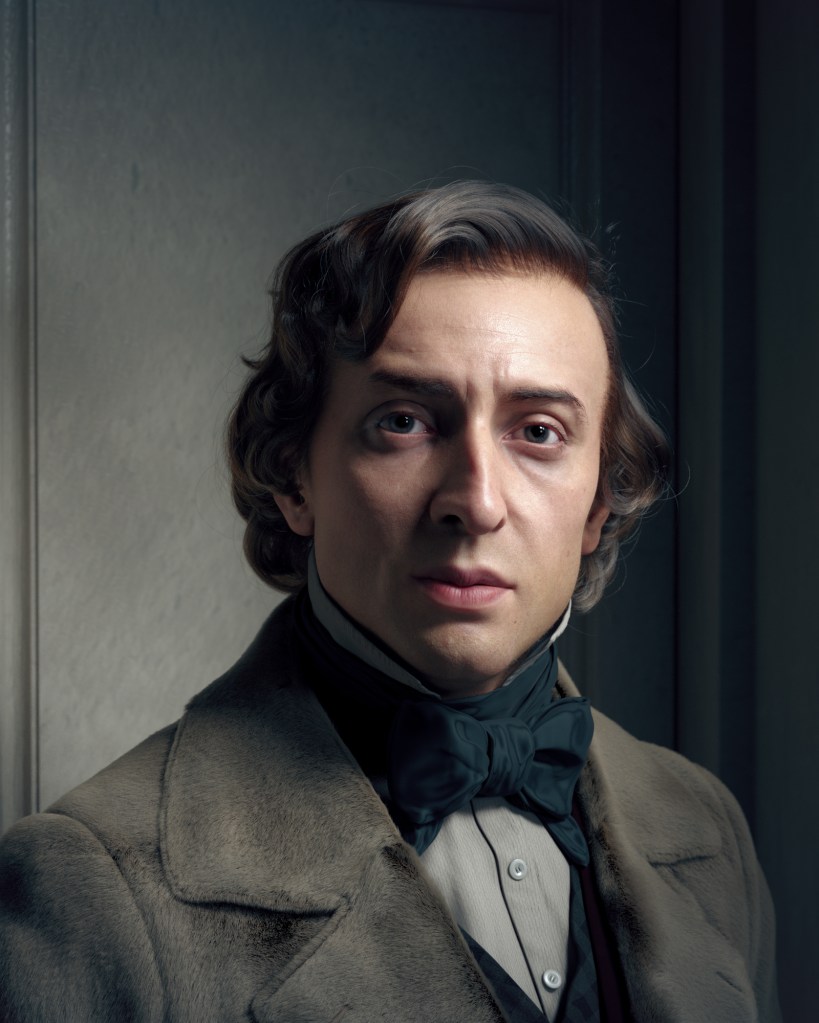
A Senior Lecturer in Piano at the Royal Birmingham Conservatoire says she’s “delighted” that a new work of music by Frédéric Chopin has been unearthed nearly 200 years after it was written.

The unknown waltz has been dated between 1830-1835 and was found in New York.

Pianist Katharine Lam says it’s an exciting opportunity for generations of Chopin’s fans to hear new music from the Polish composer centuries after his death.

“It’s a noteworthy and precious find, as several waltzes that Chopin original wrote are believed to have been entirely lost or destroyed,” said Ms Lam. “Finding lost works of any great composer reminds us of their unique, musical fingerprint and gives us, no matter how small of fleeting, a fresh and treasured glimpse of their voice and genius.

Like any artist, or even a popstar putting out a new single, it’s really exciting to experience hearing a piece of music for the first time, especially one that you never expected.

In a mere 80 seconds, the waltz captures the listener with Chopin’s beloved and haunting gift for melody, his distinctive harmonies and the opening turbulent outburst which points to the drama and passion infused through so much of his work.”

Listen to Lang Lang playing the waltz here


