‘Wings of Freedom’ is a large-scale work for symphonic wind band, written by Thomas Hewitt Jones and commissioned by the Central Band of the Royal Air Force. Inspired by the RAF’s four core values – Respect, Integrity, Service and Excellence (RISE) – the piece received its London premiere at Holy Trinity church, Sloane Square, last September, under the direction of Squadron Leader Chris I’Anson.
The band subsequently performed the work in Cambridge and also at Regent Hall in London, where the entire piece was filmed. You can now enjoy it via the RAF Music Service’s YouTube feed:
This interesting new release from British pianist Duncan Honeybourne, with British-American violinist Leora Cohen, introduces the hitherto little-known music of Jessy Reason, known somewhat cryptically during her lifetime as “J. L. Reason”.
A long-forgotten, enigmatic figure, Jessy Lilian Reason, née Wolton, was born in London in 1878, the daughter of a wealthy hop merchant. In 1902, in Cornwall, she married a gentleman of private means twenty years her senior, with whom she settled firstly in Devon and later in Tonbridge, Kent. In the late 1920s the couple made a final move, to Reading, where Jessy died in 1938.
In May 1992 a writer called Alan Poulton discovered a large stack of handwritten music manuscripts in a second-hand bookshop. He purchased the collection and during the 2020 Covid lockdown, now retired and with time on his hands, he set about exploring and cataloguing the manuscripts, and researching the life of the woman who had composed 70 handwritten works in the early decades of the twentieth century. The paperwork accompanying the collection reveals that Mrs Reason studied composition with the renowned composer and conductor Eugene Goossens; she was then in her mid-40s, her tutor some 15 years younger. How much of Reason’s music was performed during her lifetime remains unclear: all that has come to light so far is a performance of a single song at London’s Wigmore Hall and a song cycle given at a minor concert in West London, all in the early 1920s. (The current catalogue of Reason’s music, compiled by Alan Poulton, can be found on the British Music Society website.
Pianist Duncan Honeybourne is a passionate advocate for lesser-known and rarely-performed music, and this new release by Prima Facie Records reflects his unerring ability to unearth really fine music and bring it to a wider audience by recording and performing it (see also his release, also on the Prima Facie label, of piano music by William Baines). On this recording he is joined by young British-American violinist Leora Cohen. She brings a wonderful range of colours and nuance to the Three Poems for Violin and Piano, matching Honeybourne’s playing with a remarkable sure-footedness, sensitivity and musical maturity.
This disc presents Jessy Reason’s entire output for solo piano, together with the Three Poems, and as such is a wonderful introduction to Reason’s writing. She was clearly a highly-skilled yet largely self-taught composer and musician (her writing for piano reveals an intimate knowledge of the geography of the keyboard): in his biography of his mother, Richard Reason describes her as “an ardent musician, with a fiery style of violin-playing . . .teaching herself the whole technique of writing for full orchestra”. Her scores, some of which I have seen, thanks to Duncan Honeybourne, are elegantly crafted and neatly laid out.
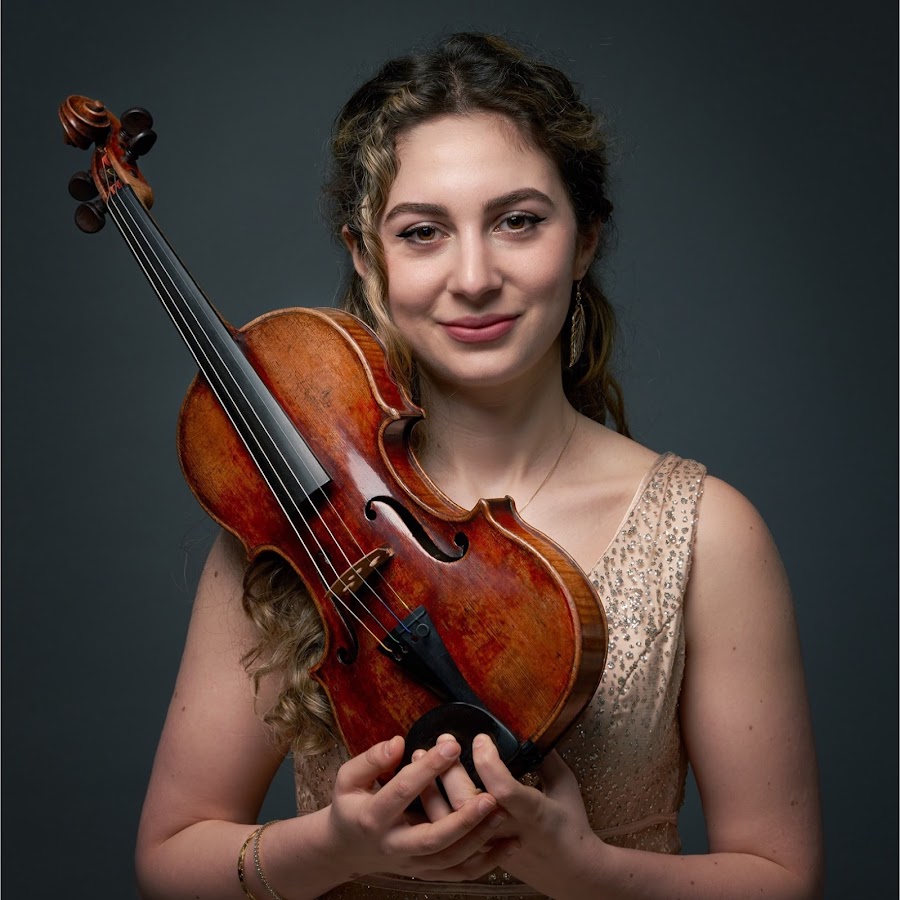
Leora CohenDuncan Honeybourne
By turns richly romantic, impressionistic, darkly lyrical, sensuous and harmonically complex, there are hints of late Brahms, Debussy, Ravel, even early Messiaen in Reason’s sophisticated, inventive music. This inspiring legacy of work is brought vividly to life by Duncan Honeybourne on a piano contemporaneous with the music, a 1922 Bösendorfer.
Piano and Chamber Music by Jessy Reason
Duncan Honeybourne (piano) with Leora Cohen (violin)
Award-winning British composer Thomas Hewitt Jones releases a new version of the much-loved hymn Abide With Me on the 80th anniversary of D-Day, the invasion of Normandy by Allied forces which marked a crucial turning point in the Second World War.
American troops arriving in Normandy on D-Day (National Geographic)
Originally written in 1847 by Scottish Anglican cleric Henry Francis Lyte, with words based on Luke 24: 13–35, ‘Abide with Me’ is a prayer for God to stay (“abide”) with the speaker through the trials and tribulations of life and death. Traditionally sung at remembrance events and services, and at funerals, it offers comfort to the bereaved and hope for the coming weeks. The hymn speaks to the universal human condition, and it is that feeling of hope and assurance which makes this hymn so special. It is most often sung to the tune “Eventide” by the English organist William Henry Monk.
Abide with me; fast falls the eventide; The darkness deepens; Lord with me abide. When other helpers fail and comforts flee, Help of the helpless, O abide with me.
This new version by Thomas Hewitt Jones is performed by the Scottish Session Orchestra, conducted by Adam Robinson, recorded remotely in Glasgow – with Thomas on solo cello and pipe organ from his home studio.
Composer Thomas Hewitt Jones says, “‘Abide with Me’ is such a well-loved tune which typically has resonances with wartime and remembrance. However, as my friend Gordon Giles, Canon at Rochester Cathedral, reminded me, the words also allude to the resurrection. As such, I think it can be seen as a song of great comfort in trying times. I have given it the unashamedly rich string treatment here, with nods to Vaughan Williams but also a couple of subtle harmonic twists. I have also showcased the Lammermuir pipe organ, which is in my studio, and it is wonderful to have the excuse to get the cello out again! I hope you enjoy this new take on the beloved melody.”
‘Abide with Me’ – arranged by Thomas Hewitt Jones (solo cello & organ), with the Scottish Session Orchestra conducted by Adam Robinson.
Award-winning British composer Thomas Hewitt Jones has written a brand new hymn especially for the Royal School of Church Music’s Big Hymn Sing for Music Sunday. With words by Dr Gordon Giles, Canon Chancellor of Rochester Cathedral, Sing to the Lord, a new song of creation is a wonderfully rousing hymn in five verses, with a soaring descant in the final verse.
Thomas Hewitt Jones says, “Gordon Giles and I have had enormous fun writing this new hymn for the RSCM’s Music Sunday. It celebrates in words and music the joy of singing together in a spiritual context – one of the most uplifting things that any of us can do. I’ve written tune in E-flat major, which is a very warm key, and there are one or two harmonic surprises which I hope reward both singer and listener alongside Gordon’s beautiful text. Here’s to us all lifting our voices together for the fantastic cause of encouraging and protecting the value of singing together – and thinking beyond ourselves – both now and in the future.”
Gordon Giles says, “With this hymn specially written for music Sunday, inspired by Thomas’ magnificent tune, I wanted to write a set of words which ebbed and flowed, rose and fell with the arc of the tune, and which not only drew on scripture but enabled us to sing about singing and its purpose in worship – to praise God. Drawing on the theology of Dietrich Bonhoeffer (who was an accomplished pianist) and Paul Tillich, I wanted to reference the idea of God not just as ground of our being, but ground bass – the metaphorically musical foundation of all the spiritual counterpoint that our lives weave above and around the fundamental concept of God as creator, saviour and inspirer of everything, including faith, hope and love.
There is also something essentially trinitarian about the harmony of earth and heaven, expressed in the triad – the three-in-one chord, which is both the basic structure and harmonic variation of music with endless and eternal possibilities. The harmonies we make and sing with our God-given voices are expressions of both divine and musical trinities of melody, harmony and counterpoint all working together yet sounding as one.”
Music Sunday, which this year takes place on Sunday 9th June, is an annual event presented by the Royal School of Church Music (RSCM) to celebrate and give thanks for the music and musicians that enhance worship in such a meaningful and powerful way. Participating churches in 2023 included Winchester Cathedral, Llandaff Cathedral, Peterborough Cathedral, Dulwich College Chapel Choir, and St Michael and All Angels in Colombo, Sri Lanka.
This year the RSCM is encouraging churches to put on a Big Hymn Sing For Music Sunday and it has created resource pack which can be downloaded from the RSCM’s website. Churches are encouraged to do something special – it might be their own Big Hymn Sing for Music Sunday, holding a special service, using special prayers, putting on a concert or having a social event. Above all, Music Sunday is about celebrating church music and the work of all church musicians.
The other hymns in the RSCM’s Music Sunday Big Hymn Sing resource pack were selected following a public vote and include well-known, much-loved hymns such as Dear Lord and Father of Mankind, Guide Me, O Thou Great Redeemer and Love Divine, All Loves Excelling.
Full details of the Big Hymn Sing for Music Sunday, including the downloadable hymn pack and a toolkit to help plan and advertise events, can be found here: https://www.rscm.org.uk/whats-on/music-sunday/
In a transformed landscape in the aftermath of Covid, the RSCM is reaching out with a vision to involve churches and communities nationwide, as well as overseas, to celebrate the role of church music in worship and the dedication of all church musicians. The RSCM, as an educational charity, supports the church and church musicians to make the best of music in worship, and RSCM Music Sunday is a powerful way to provide a positive solution for everyone to come together to celebrate. From extended services to afternoon teas; from recitals to cake sales; from sponsored hymns to small churches joining together, there are so many ways to join in.
The Royal School of Church Music
The Royal School of Church Music (RSCM) is the Salisbury-based, national, independent charity enabling the flourishing of church music. As the central ‘home’ of church music, RSCM provides relevant education, training and resources to its membership, the wider church, and beyond. It is committed to encouraging the best of music in worship, and to advocating music as a tool for growth of the church.
The RSCM supports thousands of member churches across the UK and worldwide through its international partners. In addition, it also supports many schools and Individual members, and its work is sustained by thousands of Friends, Regular Givers and other donors.
The RSCM is an open, life-long learning organisation, offering face-to-face and distance education and training through its programmes, published resources, courses and activities.
Founded by Sir Sydney Nicholson in 1927, the RSCM’s original emphases were English and choral. Now, in a diverse international context, the RSCM’s work is far broader and more diverse, and aims to make all its work ecumenical in purpose, nature and content.
Her Majesty Queen Elizabeth was RSCM’S Royal Patron from 1952 until her death in 2022, and its president is The Most Revd and Rt Hon The Lord Archbishop of Canterbury. The organisation celebrates its centenary in 2027.
The Cross-Eyed Pianist is free to access and ad-free, and takes many hours every month to research, write, and maintain.
If you find joy and value in what I do, please consider making a donation to support the continuance of the site








 The Cross-Eyed Pianist