Who or what inspired you to take up composing, and pursue a career in music?

I had my first piano lesson at just four years old, my dad would love to have played but came from a family who just couldn’t afford lessons. He played me Beethoven’s Pastoral Symphony when I was about seven years old and I vividly remember being bowled over by the storm section. My first pop single was the Adagio from Spartacus and Phrygia which was in the charts because ‘The Onedin Line’ was a very popular TV series. I began writing songs when I was 15, mainly due to my father’s encouragement.

Who or what were the most significant influences on your musical life and career as a composer?

Coming from Wales and being surrounded by music in school the whole time meant it was a huge part of my life, right from the very beginning. I really enjoyed piano lessons, took my first exam when I was just six and music was always my great love. Sounds daft but significant influences are every single piece of music I’ve ever heard, all the classical greats plus Barry Manilow and Abba. I love good pop music and Abba wrote the best, most beautifully constructed songs. I don’t have a favourite composer, too many to choose from!

What have been the greatest challenges of your career so far? 

Small hands! I have always had to choose my music carefully. Rachmaninov was never going to be possible but I played Mozart, Mendelssohn well. Becoming a mum meant being permanently busy and not having the time (or inspiration) to write. I didn’t compose a note between 1998 and 2011 but when my elder son was working towards his Winchester College entrance exams and spending lots of time at his dad’s to study, I began playing again.  Within a few months, I had composed the whole ‘A Country Suite’ album, eight pieces for piano.

What are the special challenges/pleasures of working on a commissioned piece? 

I wrote to order early in my career. Jingles, incidental music for TV drama but I’m afraid I prefer working independently and putting together music for my own enjoyment (which, thankfully appeals to a wider audience too). I am a huge fan of Debbie Wiseman (she and I studied with James Gibb at the Guildhall School of Music and Drama in the 1980s) and she is expert at composing to pictures and being able to change things quickly. I am still very much a full time mum and would find that aspect very challenging. I still write at the piano with manuscript paper and a pencil!

What are the special challenges/pleasures of working with particular musicians, singers, ensembles and orchestras?

Again, this isn’t something I do much. I composed a piece for SATB choir back in 2014 and it was a huge thrill to sing in a choir actually performing a piece I had composed in the beautiful setting of Douai Abbey in Berkshire.

Which works are you most proud of?  

I was a prolific songwriter in my teens/20s/30s and the first song I wrote ‘Ti a Mi’ (Welsh for ‘You and Me’) was a big hit for me. It has generated a lot of royalties over the years and is still played on the radio now.  I am very proud of ‘A Country Suite’: it has some lovely melodies and the piano pieces are rather more complex than they sound!

Who are your favourite musicians/composers? 

I love good music, melody, harmony and so, as well as classical music, I loved 1970s pop music, ABBA, Barry Manilow, Wizzard, Sweet, Slade, The Osmonds. In terms of classical music, I adore Puccini, Rachmaninov, Mozart, Bach.  I love a big romantic melody!

What is your most memorable concert experience?

Singing ‘One Voice’ in Barry Manilow’s choir at the Royal Albert Hall in January 1982 was very exciting.  My own ‘Concert for Autism’ was very special too. I put on a free concert at St Nicolas’s Church in Newbury in September 2009. I invited along some of Newbury’s most talented musicians and we raised almost £5000 for the West Berkshire branch of the National Autistic Society. I sang, played Mozart duets and a massive ragtime medley. It was great!

What do you consider to be the most important ideas and concepts to impart to aspiring musicians and composers? 

I am not one to sweat over a piece. If it works, it tends to come quite quickly and I rarely (if ever) change things. If it works and sounds good, just do it.  I have broken many of the ‘rules’ of harmony and counterpoint, parallel fifths and octaves, parallel fourths. I’m not a fan of tritones and haven’t used those as yet but never say never! If the piece I’ve written sounds nice to the ear, is well structured, has a good intro, beginning, middle and end, then I’m happy.  If you have to keep changing it all the time, chances are it wasn’t that great to begin with.

Where would you like to be in 10 years’ time? 

Happily married and sharing my life with my new fiancé, John. He is also a trumpet player and we both practise together! Aw!

What is your idea of perfect happiness?

Loving someone special and knowing they love and cherish you too.

What is your most treasured possession?

I am not a big one for ‘things’ but my new engagement ring is very special to me.

What do you enjoy doing most?

Several things: attending concerts with John, playing the piano and realising a new piece is starting to form, going for pizza with my two amazing sons, walking my greyhounds in the woods.

What is your present state of mind?

As happy as I have ever been in my whole life!

Fiona Bennett’s ‘New Lady Radnor Suite’ is available now. With a nod towards Hubert Parry who composed ‘Lady Radnor’s Suite’ in 1894, Fiona has composed and dedicated her new album to her friend, Melissa (The Countess of Radnor). 
fionabennettmusic.co.uk

Who or what inspired you to take up composing, and pursue a career in music? 

In my late teenage years I’d dropped out of school and was working in a dull office job in London, but also playing keyboards in a rock band and having piano lessons. My piano teacher was also a composer, and one day I sat down and wrote a piano piece and immediately I knew that this was what I wanted to do with my life – write music. It was very much a ‘Road to Damascus’ moment. After that things changed completely and I went to university and music college for the next seven years to catch up on the training I’d missed.

Who or what were the most significant influences on your musical life and career as a composer? 

All my composition teachers taught me useful things, but my lessons with Oliver Knussen were especially helpful. I studied with him privately for a couple of years. He’d put the music up on the piano and play it whilst scribbling alterations and improvements. It was very practical, and great to be around a musical mind with so much to offer.

What have been the greatest challenges of your career so far?

Developing a musical language that is coherent and expressive. It’s been a slow journey for me, from atonal composing through to a style that is tonal/modal. I see music as about communication (what else can the arts be?) and for that one needs clarity of images and ideas; through this one reaches towards the strangeness that lies beyond our quotidian existence. As Paul Valéry once wrote “what is there more mysterious than clarity?”. I think that’ll go on my gravestone.

What are the special challenges/pleasures of working on a commissioned piece? 

The pleasures are being paid to write it and having a performance at the end. The challenge is the deadline. I compose very slowly, almost every day for hours but only producing a few bars of music each week. I sometimes prefer to write pieces without a commission because they can develop at their own speed.

What are the special challenges/pleasures of working with particular musicians, singers, ensembles and orchestras? 

Working with orchestras and ensembles is incredibly exciting but there’s always limited rehearsal time, which can be frustrating. Because of this I particularly like working with soloists, especially keyboard players and guitarists as their instruments are capable of doing so much. I’ve written quite a lot of music for piano (and harpsichord) and had some fantastic performances where the players have really taken the time to get inside the music. Giving a pianist some music is like handing over a novel, they can immerse themselves in it in their own time and space.

Which works are you most proud of?  

Probably the pieces that reflect a temporary cohesion of my musical language at a given moment, in whatever guise that language presents itself. These would include the early orchestral piece Invisible Cites, the tango Milonga Azure, the White Books for piano, and recently Beyond the River God for harpsichord, and others.

Who are your favourite musicians/composers?

Bach, Couperin, Stravinsky, Debussy, Mozart, Ravel, to name just a few.

What is your most memorable concert experience? 

It’s impossible to pick one as there have been many memorable concerts, in a generally terrifying way; first performances in particular are always nervy experiences. One of the most unusual performances, although it wasn’t a concert, was when an orchestral piece of mine was used as the modern test piece in the last Leeds Conductors’ Competition. I was able to hear it conducted and rehearsed in the semi finals by six different competitors.

What do you consider to be the most important ideas and concepts to impart to aspiring musicians? 

Hard work and perseverance. I know that sounds very boring, but much the same advice was given out by the likes of Rilke, Mozart, Rodin, Ravel, and Cezanne. Plus, a relationship with all the arts. I’m a complete art gallery and book addict, and all these other arts feed into the music I’m writing.

What is your idea of perfect happiness? 

West Ham winning the Premier League, but as that’s never going to happen I’d settle for the FA Cup.

What is your present state of mind? 

Positive!

Graham Lynch was born in London. He has a PhD in composition from King’s College London, and he also spent a year at the Royal College of Music, as well as studying privately with Oliver Knussen.

Graham’s music has been commissioned and performed in over thirty countries, as well as being frequently recorded to CD and featured on radio and television. Performers of his music include the BBC Symphony Orchestra, BBC National Orchestra of Wales, BBC Singers, Orchestra of Opera North, BBC Concert Orchestra, and El Ultimo Tango from the City of Birmingham Symphony Orchestra. He has also worked as an arranger for the Belcea Quartet. His works have been played in venues as diverse as the South Bank, Wigmore Hall, Merkin Hall New York, Paris Conservatoire, Palace of Monaco, and from the Freiberg Jazz Club to a cake shop in Japan, and everything in between.

In 2009 his orchestral work, Invisible Cities, was used as the modern test piece in the Leeds Conductors Competition, and the same year saw the release of the first CD devoted entirely to his music, Undiscovered Islands, which received high critical acclaim. Since that time many of his works have been recorded across a wide variety of CDs.

Graham’s interest in many musical styles has resulted in pieces that reach from complex classical works through to compositions that tread the line between classical music and other genres such as tango nuevo, flamenco, jazz, and café music. These diverse works are in the repertoire of ensembles such as Las Sombras, Ardey Saxophone Quartet, Terra Voce, Dieter Kraus and Tango Volcano. He has also written educational music as part of the Sound Sketches piano series.

Recent commissions include Present-Past-Future-Present for harpsichord (Finland), Arche for violin (UK), Sing-Memory for guitar and harpsichord (Finland), and Lyric Duo for two saxophones (Chile). Premieres for 2014 will include Apollo Toccate for guitar (Finland), Beyond the River God for harpsichord (Finland), Trio Cocteau for piano trio (UK), and French Concerto for baroque violin, harp, and harpsichord (France).

Graham has been the recipient of funding and awards from many organisations, including the Arts Council, Britten-Pears Foundation, PRS, RVW Trust, and the Lyn Foundation.

http://grahamlynch.eu/

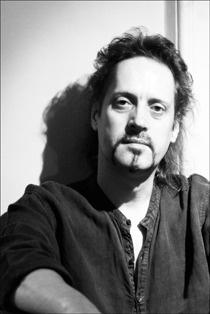
photo: Malcolm Crowthers

Who or what inspired you to take up composing, and pursue a career in music? 

Early years are formative so the environmental factors would include access to pianos (my dad repaired them at one stage) and listening to my mum’s record collection.

Hastings, where I grew up is also a very inspiring place. The American travel writer Paul Theroux singled it out in his tour of the UK coastline as “an artists’ colony full of optimistic romance and spirited intimacy”.

I played one of my piano pieces to Henze and (without knowing where I was from) he said it reminded him of the vague coastline of the south coast of England!

Who or what were the most significant influences on your musical life and career as a composer?  

Channel 4’s series ‘Sinfonietta’, presented by the pianist Paul Crossley who introduced Berg’s Chamber Concerto. Spurred on by this, I bought a recording and tried to get to grips with this tough piece.

Broadcasts from the BBC Proms which stand out: I particularly remember Xenakis’s Keqrops, Barry’s Chevaux de Frise and Michael Finnissy’s Red Earth.

What have been the greatest challenges of your career so far?

Surviving. Beyond that, every new piece presents an artistic challenge, even a more modestly piece such as this latest one for Jonathan Powell. Titles can be tricky. In this instance, I got the idea from a furniture shop of the same name, near the Columbia Road flower market in London.

What are the special challenges/pleasures of working on a commissioned piece? 

Of course, It’s ideal to be commissioned (ie.funded,however small the fee!), but  the challenges are identical to that of a non- commissioned piece.

What are the special challenges/pleasures of working with particular musicians, singers, ensembles and orchestras? 

Jonathan Powell has a good understanding of my piano music, so it is always a pleasure working with him.

In 1999, I played ‘Flaking Yellow Stucco’ (for piano) to the composer and conductor Richard Baker and he noted a similarity with Jonathan Powell’s piano music. At that time, I didn’t know Jonathan or his work.

Which works are you most proud of? 

My Violin Concerto, written for Keisuke Okazaki. A few years after the premiere, it was recorded for NMC with the Esbjerg Ensemble conducted by Christopher Austin.

On a smaller scale, and more recently, I’m very proud of my ensemble piece for Ensemble Reconsil called “The Unrest Cure”.

Who are your favourite musicians/composers?  

Oh, so many!

Of the more recent composers I’d include Aperghis, Babbitt, Dillon, Finnissy, Holt, Toovey and Xenakis.

As well as composing, I also play for dance classes and within this sphere the New Zealand born John Sweeney is without doubt the most amazing improviser I have encountered. He also accompanies silent movies.

What is your most memorable concert experience? 

The London Sinfonietta celebrated its 25th Anniversary in 1989 at the Royal Festival Hall and a frail Michael Vyner (at that time artistic director of the ensemble) walked onto the stage to give a speech. It was a landmark occasion which was also televised, and with hindsight marked the end of an era. I particularly remember the new pieces by Birtwistle and Simon Holt, and the Suite from Henze’s opera ‘The English Cat’. I went backstage where Simon Rattle and Paul Crossley kindly signed a Birtwistle record I’d recently bought.

What do you consider to be the most important ideas and concepts to impart to aspiring musicians?

Don’t get sidetracked by commercial considerations.

Where would you like to be in 10 years’ time?  

London is a fantastic city so I’d happily still be here, albeit hoping for a halt on the unfortunate homogenisation and destruction which seems to have taken grip recently. In a nutshell, private interests prioritised above every other value humans might hold.

What is your most treasured possession?  

Besides an upright piano, a huge print I’ve got on the wall of somewhat dilapidated buildings in Cuba.

What do you enjoy doing most? 

Besides more art-orientated things, swimming – ideally in the sea, but i like the Olympic Pool in Stratford.

What is your present state of mind? 

Cheerful

Jonathan Powell gives the London premiere of Morgan Hayes’s ‘Elemental’ on Friday 8th May at Rosslyn Hill Chapel, Hamsptead, London NW3. Concert starts at 7.30pm, tickets on the door.

Morgan Hayes won the Guildhall School of Music & Drama’s coveted Lutoslawski Prize in 1995; he subsequently studied with Michael Finnissy, Simon Bainbridge and Robert Saxton. His early works include Mirage (1995) and Viscid (1996), the latter recorded by the Composers Ensemble for NMC.

Since then, a series of ambitious pieces composed for many of Britain’s leading new-music ensembles, has included Shellac (1997) for piano and orchestra, and Slippage (1999). An accomplished pianist, Hayes has also composed numerous works for solo piano, which have been performed by soloists including Andrew Ball, Stephen Gutman, Rolf Hind, Sarah Nicolls, Ian Pace and Jonathan Powell.

As 2001-2002 Leverhulme Composer-in-Residence at the Purcell School, Hayes’s major achievement was the ‘Tatewalks’ project, based on Mussorgsky’s Pictures at an Exhibition, and involving young composers in collaboration with photographer Malcolm Crowthers and with the London Sinfonietta, who featured the work in the 2002 ‘State of the Nation’ festival; the Sinfonietta also commissioned Hayes’ transcription of Squarepusher’s Port Rhombus for the South Bank Centre’s 2003 ‘Ether Festival’.

Hayes’ works include Opera for violin and piano, inspired by Italian director Dario Argento’s giallo classic Macbeth and written for Darragh Morgan and Mary Dullea; Lute Stop (2003) for solo piano, premiered by Sarah Nicolls; Hayes’  2005 BBC Proms debut with Strip; and the Violin Concerto, a Birmingham Contemporary Music Group ‘Sound Investment’ commission, premiered by Japanese soloist Keisuke Okazaki.

More recent commissions include Original Version, for the 2007 Spitalfields Festival; Futurist Manifesto for string orchestra, commissioned by the Munich Chamber Orchestra. A period as composer-in-association with Music Theatre Wales, resulting in Shirley and Jane, an operatic scena based on the career of Dame Shirley Porter; a Smith Quartet commission, Dances on a Ground (2009); and Dictionary of London, for the NMC Songbook.

Who or what inspired you to take up composing, and pursue a career in music?

I’ve liked making up music since I was young. It became the thing I most liked doing, so I just carried on doing it. Parents were always supportive.

Who or what were the most significant influences on your musical life and career as a composer?

I worked for my uncle John Hardy in Cardiff between degrees, and still do from London. He has a refreshing, inspiring attitude to other people and to music.

Many teachers, in various different ways. The performers, writers, directors and other artists I work with. My colleagues and students at The Conservatoire.

What have been the greatest challenges of your career so far?

Picking up work after finishing education. Dealing with uncertainty. Carving out time to compose in. Writing music can be challenging but it’s a relatively familiar, safe space to be in.

What are the special challenges/pleasures of working on a commissioned piece?

It still feels like a huge privilege knowing that someone wants your music – that the notes you’re writing are already wanted by someone. And they’re going to take those notes seriously and invest time and energy and feeling, to bring those notes to life.

Deadlines are useful too, for helping to justify keeping other people waiting for other work!

What are the special challenges/pleasures of working with particular musicians, singers, ensembles and orchestras?

I love collaborating with musicians and artists in other fields. Discovering some of their artistic voice, their sound, their craft, their ideas – taking these and digging into them and finding something new for both parties, hopefully.

Which works are you most proud of? 

It’s always the most recent few works, so brass & percussion piece Torque, chamber piece Black Sea, short opera Adrift, unpitched percussion solo Drawing, vocal ensemble piece The Sickness of Angels.

Who are your favourite musicians/composers?

At the moment – Screaming Maldini, Richard Causton, The Organelles, Laura Mvula, Ligeti.

What is your most memorable concert experience?

Thomas Ades’ violin concerto Concentric Paths performed by Pekka Kuusisto with the Britten Sinfonia in February 2012. And many Organelles gigs back to sixth form days!

What do you consider to be the most important ideas and concepts to impart to aspiring musicians?

Be genuine. Be resilient. Work with the best people you can. Don’t be satisfied too easily.  Say yes to everything until you can afford to say no to things. Make your own opportunities. Don’t believe the world owes you a living.

Where would you like to be in 10 years’ time?

Here, but with a bit more room.

What is your most treasured possession? 

Dog.

Ed Scolding is a versatile composer with a strong interest in collaboration and drama. His concert music has been described as as ‘subtle and polished’ (Bachtrack) and ‘succinct, witty and apt’ (Norwich Evening News), and film music as ‘intense but under-stated… extraordinarily effective’ (Richard Paine, Faber Media Music).

Recent projects include Thrown for Sinfonia Newydd, percussion solo Drawing which won the Nonclassical Composition Competition, Black Sea for The Hermes Experiment supported by Bliss Trust / PRS Foundation and a score featuring Dermot Crehan’s Hardanger fiddle for short film The Blood of The Bear which has been screened in festivals across the UK and Europe including at the BFI and the Barbican Centre.

Collaborative projects include short opera Adrift produced by Gestalt Arts, work with rock band Screaming Maldini and electronic producer Hem (aka Geoim), a Mozart flashmob for Welsh National Opera, music for Third Stage Dance and for Anna Jordan’s play Freak.

Ed’s music has been recorded by the BBC National Orchestra of Wales, broadcast on BBC Radio 3 and BBC Radio Wales and performed by Exaudi, Music Theatre Wales, London Sinfonietta, Ayre Flutes, Aisha Orazbayeva, Ksenija Sidorova and Anne Denholm at Nonclassical, Southbank Centre, St. John’s Smith Square, Norfolk & Norwich Festival, Monmouth Festival, Cardiff Music Festival, Bath Fringe Festival and Wales Millennium Centre.

A keen teacher, Ed is Assistant Director of Music at The Conservatoire, Blackheath, with responsibilty for the Saturday Music School and strategic direction, and teaching GCSE and A-Level music and music technology, theory, composition, technology courses and workshops.

Living in London, Ed keeps close links to Wales through his work as Publishing, Projects and Web Manager for quintuple BAFTA Cymru award-winning composition company John Hardy Music and sister label Ffin Records. Ed is a Council Member of the ISM and a member of the ISM Special Interest Group for composition. He examines Rock & Pop grade exams for Trinity College London, with exam tours completed in Thailand, Malaysia, UAE and Spain and throughout the UK.

Born in 1985, Ed graduated in 2008 from Royal Welsh College of Music & Drama with First Class Honours then completed MMus Composition with Distinction and the LRAM teaching diploma at the Royal Academy of Music in 2011 with support from sources including Arts Council Wales, Seary Charitable Trust, Ismena Holland Award and Harvey Lohr Award.

www.edscolding.co.uk