Who or what inspired you to take up composing, and pursue a career in music? 

In my late teenage years I’d dropped out of school and was working in a dull office job in London, but also playing keyboards in a rock band and having piano lessons. My piano teacher was also a composer, and one day I sat down and wrote a piano piece and immediately I knew that this was what I wanted to do with my life – write music. It was very much a ‘Road to Damascus’ moment. After that things changed completely and I went to university and music college for the next seven years to catch up on the training I’d missed.

Who or what were the most significant influences on your musical life and career as a composer? 

All my composition teachers taught me useful things, but my lessons with Oliver Knussen were especially helpful. I studied with him privately for a couple of years. He’d put the music up on the piano and play it whilst scribbling alterations and improvements. It was very practical, and great to be around a musical mind with so much to offer.

What have been the greatest challenges of your career so far?

Developing a musical language that is coherent and expressive. It’s been a slow journey for me, from atonal composing through to a style that is tonal/modal. I see music as about communication (what else can the arts be?) and for that one needs clarity of images and ideas; through this one reaches towards the strangeness that lies beyond our quotidian existence. As Paul Valéry once wrote “what is there more mysterious than clarity?”. I think that’ll go on my gravestone.

What are the special challenges/pleasures of working on a commissioned piece? 

The pleasures are being paid to write it and having a performance at the end. The challenge is the deadline. I compose very slowly, almost every day for hours but only producing a few bars of music each week. I sometimes prefer to write pieces without a commission because they can develop at their own speed.

What are the special challenges/pleasures of working with particular musicians, singers, ensembles and orchestras? 

Working with orchestras and ensembles is incredibly exciting but there’s always limited rehearsal time, which can be frustrating. Because of this I particularly like working with soloists, especially keyboard players and guitarists as their instruments are capable of doing so much. I’ve written quite a lot of music for piano (and harpsichord) and had some fantastic performances where the players have really taken the time to get inside the music. Giving a pianist some music is like handing over a novel, they can immerse themselves in it in their own time and space.

Which works are you most proud of?  

Probably the pieces that reflect a temporary cohesion of my musical language at a given moment, in whatever guise that language presents itself. These would include the early orchestral piece Invisible Cites, the tango Milonga Azure, the White Books for piano, and recently Beyond the River God for harpsichord, and others.

Who are your favourite musicians/composers?

Bach, Couperin, Stravinsky, Debussy, Mozart, Ravel, to name just a few.

What is your most memorable concert experience? 

It’s impossible to pick one as there have been many memorable concerts, in a generally terrifying way; first performances in particular are always nervy experiences. One of the most unusual performances, although it wasn’t a concert, was when an orchestral piece of mine was used as the modern test piece in the last Leeds Conductors’ Competition. I was able to hear it conducted and rehearsed in the semi finals by six different competitors.

What do you consider to be the most important ideas and concepts to impart to aspiring musicians? 

Hard work and perseverance. I know that sounds very boring, but much the same advice was given out by the likes of Rilke, Mozart, Rodin, Ravel, and Cezanne. Plus, a relationship with all the arts. I’m a complete art gallery and book addict, and all these other arts feed into the music I’m writing.

What is your idea of perfect happiness? 

West Ham winning the Premier League, but as that’s never going to happen I’d settle for the FA Cup.

What is your present state of mind? 

Positive!

Graham Lynch was born in London. He has a PhD in composition from King’s College London, and he also spent a year at the Royal College of Music, as well as studying privately with Oliver Knussen.

Graham’s music has been commissioned and performed in over thirty countries, as well as being frequently recorded to CD and featured on radio and television. Performers of his music include the BBC Symphony Orchestra, BBC National Orchestra of Wales, BBC Singers, Orchestra of Opera North, BBC Concert Orchestra, and El Ultimo Tango from the City of Birmingham Symphony Orchestra. He has also worked as an arranger for the Belcea Quartet. His works have been played in venues as diverse as the South Bank, Wigmore Hall, Merkin Hall New York, Paris Conservatoire, Palace of Monaco, and from the Freiberg Jazz Club to a cake shop in Japan, and everything in between.

In 2009 his orchestral work, Invisible Cities, was used as the modern test piece in the Leeds Conductors Competition, and the same year saw the release of the first CD devoted entirely to his music, Undiscovered Islands, which received high critical acclaim. Since that time many of his works have been recorded across a wide variety of CDs.

Graham’s interest in many musical styles has resulted in pieces that reach from complex classical works through to compositions that tread the line between classical music and other genres such as tango nuevo, flamenco, jazz, and café music. These diverse works are in the repertoire of ensembles such as Las Sombras, Ardey Saxophone Quartet, Terra Voce, Dieter Kraus and Tango Volcano. He has also written educational music as part of the Sound Sketches piano series.

Recent commissions include Present-Past-Future-Present for harpsichord (Finland), Arche for violin (UK), Sing-Memory for guitar and harpsichord (Finland), and Lyric Duo for two saxophones (Chile). Premieres for 2014 will include Apollo Toccate for guitar (Finland), Beyond the River God for harpsichord (Finland), Trio Cocteau for piano trio (UK), and French Concerto for baroque violin, harp, and harpsichord (France).

Graham has been the recipient of funding and awards from many organisations, including the Arts Council, Britten-Pears Foundation, PRS, RVW Trust, and the Lyn Foundation.

http://grahamlynch.eu/

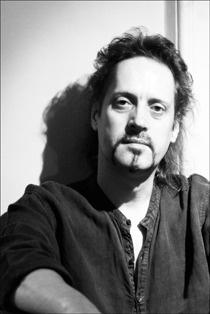
photo: Malcolm Crowthers

Who or what inspired you to take up composing, and pursue a career in music? 

Early years are formative so the environmental factors would include access to pianos (my dad repaired them at one stage) and listening to my mum’s record collection.

Hastings, where I grew up is also a very inspiring place. The American travel writer Paul Theroux singled it out in his tour of the UK coastline as “an artists’ colony full of optimistic romance and spirited intimacy”.

I played one of my piano pieces to Henze and (without knowing where I was from) he said it reminded him of the vague coastline of the south coast of England!

Who or what were the most significant influences on your musical life and career as a composer?  

Channel 4’s series ‘Sinfonietta’, presented by the pianist Paul Crossley who introduced Berg’s Chamber Concerto. Spurred on by this, I bought a recording and tried to get to grips with this tough piece.

Broadcasts from the BBC Proms which stand out: I particularly remember Xenakis’s Keqrops, Barry’s Chevaux de Frise and Michael Finnissy’s Red Earth.

What have been the greatest challenges of your career so far?

Surviving. Beyond that, every new piece presents an artistic challenge, even a more modestly piece such as this latest one for Jonathan Powell. Titles can be tricky. In this instance, I got the idea from a furniture shop of the same name, near the Columbia Road flower market in London.

What are the special challenges/pleasures of working on a commissioned piece? 

Of course, It’s ideal to be commissioned (ie.funded,however small the fee!), but  the challenges are identical to that of a non- commissioned piece.

What are the special challenges/pleasures of working with particular musicians, singers, ensembles and orchestras? 

Jonathan Powell has a good understanding of my piano music, so it is always a pleasure working with him.

In 1999, I played ‘Flaking Yellow Stucco’ (for piano) to the composer and conductor Richard Baker and he noted a similarity with Jonathan Powell’s piano music. At that time, I didn’t know Jonathan or his work.

Which works are you most proud of? 

My Violin Concerto, written for Keisuke Okazaki. A few years after the premiere, it was recorded for NMC with the Esbjerg Ensemble conducted by Christopher Austin.

On a smaller scale, and more recently, I’m very proud of my ensemble piece for Ensemble Reconsil called “The Unrest Cure”.

Who are your favourite musicians/composers?  

Oh, so many!

Of the more recent composers I’d include Aperghis, Babbitt, Dillon, Finnissy, Holt, Toovey and Xenakis.

As well as composing, I also play for dance classes and within this sphere the New Zealand born John Sweeney is without doubt the most amazing improviser I have encountered. He also accompanies silent movies.

What is your most memorable concert experience? 

The London Sinfonietta celebrated its 25th Anniversary in 1989 at the Royal Festival Hall and a frail Michael Vyner (at that time artistic director of the ensemble) walked onto the stage to give a speech. It was a landmark occasion which was also televised, and with hindsight marked the end of an era. I particularly remember the new pieces by Birtwistle and Simon Holt, and the Suite from Henze’s opera ‘The English Cat’. I went backstage where Simon Rattle and Paul Crossley kindly signed a Birtwistle record I’d recently bought.

What do you consider to be the most important ideas and concepts to impart to aspiring musicians?

Don’t get sidetracked by commercial considerations.

Where would you like to be in 10 years’ time?  

London is a fantastic city so I’d happily still be here, albeit hoping for a halt on the unfortunate homogenisation and destruction which seems to have taken grip recently. In a nutshell, private interests prioritised above every other value humans might hold.

What is your most treasured possession?  

Besides an upright piano, a huge print I’ve got on the wall of somewhat dilapidated buildings in Cuba.

What do you enjoy doing most? 

Besides more art-orientated things, swimming – ideally in the sea, but i like the Olympic Pool in Stratford.

What is your present state of mind? 

Cheerful

Jonathan Powell gives the London premiere of Morgan Hayes’s ‘Elemental’ on Friday 8th May at Rosslyn Hill Chapel, Hamsptead, London NW3. Concert starts at 7.30pm, tickets on the door.

Morgan Hayes won the Guildhall School of Music & Drama’s coveted Lutoslawski Prize in 1995; he subsequently studied with Michael Finnissy, Simon Bainbridge and Robert Saxton. His early works include Mirage (1995) and Viscid (1996), the latter recorded by the Composers Ensemble for NMC.

Since then, a series of ambitious pieces composed for many of Britain’s leading new-music ensembles, has included Shellac (1997) for piano and orchestra, and Slippage (1999). An accomplished pianist, Hayes has also composed numerous works for solo piano, which have been performed by soloists including Andrew Ball, Stephen Gutman, Rolf Hind, Sarah Nicolls, Ian Pace and Jonathan Powell.

As 2001-2002 Leverhulme Composer-in-Residence at the Purcell School, Hayes’s major achievement was the ‘Tatewalks’ project, based on Mussorgsky’s Pictures at an Exhibition, and involving young composers in collaboration with photographer Malcolm Crowthers and with the London Sinfonietta, who featured the work in the 2002 ‘State of the Nation’ festival; the Sinfonietta also commissioned Hayes’ transcription of Squarepusher’s Port Rhombus for the South Bank Centre’s 2003 ‘Ether Festival’.

Hayes’ works include Opera for violin and piano, inspired by Italian director Dario Argento’s giallo classic Macbeth and written for Darragh Morgan and Mary Dullea; Lute Stop (2003) for solo piano, premiered by Sarah Nicolls; Hayes’  2005 BBC Proms debut with Strip; and the Violin Concerto, a Birmingham Contemporary Music Group ‘Sound Investment’ commission, premiered by Japanese soloist Keisuke Okazaki.

More recent commissions include Original Version, for the 2007 Spitalfields Festival; Futurist Manifesto for string orchestra, commissioned by the Munich Chamber Orchestra. A period as composer-in-association with Music Theatre Wales, resulting in Shirley and Jane, an operatic scena based on the career of Dame Shirley Porter; a Smith Quartet commission, Dances on a Ground (2009); and Dictionary of London, for the NMC Songbook.

Who or what inspired you to take up composing, and pursue a career in music?

I’ve liked making up music since I was young. It became the thing I most liked doing, so I just carried on doing it. Parents were always supportive.

Who or what were the most significant influences on your musical life and career as a composer?

I worked for my uncle John Hardy in Cardiff between degrees, and still do from London. He has a refreshing, inspiring attitude to other people and to music.

Many teachers, in various different ways. The performers, writers, directors and other artists I work with. My colleagues and students at The Conservatoire.

What have been the greatest challenges of your career so far?

Picking up work after finishing education. Dealing with uncertainty. Carving out time to compose in. Writing music can be challenging but it’s a relatively familiar, safe space to be in.

What are the special challenges/pleasures of working on a commissioned piece?

It still feels like a huge privilege knowing that someone wants your music – that the notes you’re writing are already wanted by someone. And they’re going to take those notes seriously and invest time and energy and feeling, to bring those notes to life.

Deadlines are useful too, for helping to justify keeping other people waiting for other work!

What are the special challenges/pleasures of working with particular musicians, singers, ensembles and orchestras?

I love collaborating with musicians and artists in other fields. Discovering some of their artistic voice, their sound, their craft, their ideas – taking these and digging into them and finding something new for both parties, hopefully.

Which works are you most proud of? 

It’s always the most recent few works, so brass & percussion piece Torque, chamber piece Black Sea, short opera Adrift, unpitched percussion solo Drawing, vocal ensemble piece The Sickness of Angels.

Who are your favourite musicians/composers?

At the moment – Screaming Maldini, Richard Causton, The Organelles, Laura Mvula, Ligeti.

What is your most memorable concert experience?

Thomas Ades’ violin concerto Concentric Paths performed by Pekka Kuusisto with the Britten Sinfonia in February 2012. And many Organelles gigs back to sixth form days!

What do you consider to be the most important ideas and concepts to impart to aspiring musicians?

Be genuine. Be resilient. Work with the best people you can. Don’t be satisfied too easily.  Say yes to everything until you can afford to say no to things. Make your own opportunities. Don’t believe the world owes you a living.

Where would you like to be in 10 years’ time?

Here, but with a bit more room.

What is your most treasured possession? 

Dog.

Ed Scolding is a versatile composer with a strong interest in collaboration and drama. His concert music has been described as as ‘subtle and polished’ (Bachtrack) and ‘succinct, witty and apt’ (Norwich Evening News), and film music as ‘intense but under-stated… extraordinarily effective’ (Richard Paine, Faber Media Music).

Recent projects include Thrown for Sinfonia Newydd, percussion solo Drawing which won the Nonclassical Composition Competition, Black Sea for The Hermes Experiment supported by Bliss Trust / PRS Foundation and a score featuring Dermot Crehan’s Hardanger fiddle for short film The Blood of The Bear which has been screened in festivals across the UK and Europe including at the BFI and the Barbican Centre.

Collaborative projects include short opera Adrift produced by Gestalt Arts, work with rock band Screaming Maldini and electronic producer Hem (aka Geoim), a Mozart flashmob for Welsh National Opera, music for Third Stage Dance and for Anna Jordan’s play Freak.

Ed’s music has been recorded by the BBC National Orchestra of Wales, broadcast on BBC Radio 3 and BBC Radio Wales and performed by Exaudi, Music Theatre Wales, London Sinfonietta, Ayre Flutes, Aisha Orazbayeva, Ksenija Sidorova and Anne Denholm at Nonclassical, Southbank Centre, St. John’s Smith Square, Norfolk & Norwich Festival, Monmouth Festival, Cardiff Music Festival, Bath Fringe Festival and Wales Millennium Centre.

A keen teacher, Ed is Assistant Director of Music at The Conservatoire, Blackheath, with responsibilty for the Saturday Music School and strategic direction, and teaching GCSE and A-Level music and music technology, theory, composition, technology courses and workshops.

Living in London, Ed keeps close links to Wales through his work as Publishing, Projects and Web Manager for quintuple BAFTA Cymru award-winning composition company John Hardy Music and sister label Ffin Records. Ed is a Council Member of the ISM and a member of the ISM Special Interest Group for composition. He examines Rock & Pop grade exams for Trinity College London, with exam tours completed in Thailand, Malaysia, UAE and Spain and throughout the UK.

Born in 1985, Ed graduated in 2008 from Royal Welsh College of Music & Drama with First Class Honours then completed MMus Composition with Distinction and the LRAM teaching diploma at the Royal Academy of Music in 2011 with support from sources including Arts Council Wales, Seary Charitable Trust, Ismena Holland Award and Harvey Lohr Award.

www.edscolding.co.uk

DSC_00032Who or what inspired you to take up composing, and pursue a career in music?

In some ways, I feel I’ve always been a composer. When I started piano lessons age six and had my first keyboard, I was far more interested in making up my own tunes than I was practising the ones the teacher gave me. My piano teacher was very willing though, and more than happy to try and notate my early efforts as a composer! One of the things I’ve always been very comfortable doing is improvising and inevitably, that’s where a composition begins. I think there are really two reasons for this: one is that I started accompanying pretty early on; as far back as the top of the junior school I was able to accompany singers and instrumentalists, and as any accompanist knows, the ability to cover a gap, invent an introduction or rescue the soloist is hugely valuable. Secondly, and really following on from this, at the age of 14, I took on the role of church organist, a role which I filled for 12 years. It was at this point where composing became a bit more important as I felt increasingly confident in writing pieces for the groups and ensembles I was working with.

I continued to develop my composing while I was at school, and I was lucky to have music teachers who encouraged and valued this skill (a skill which it seems to me is so-often seen as second rate to performing). I think the pinnacle of this came when in the Upper 6th I was asked to compose the anthem for the school’s Founders’ Day service. I set a text by Ronnie Wilson titled ‘The Time We Have is Precious’ and it was sung by the school choir in Gloucester Cathedral in July 2002. As for composing becoming a career, I guess this was when I first thought about submitting my compositions to publishers. I knew these pieces worked with the individuals and groups I’d composed them for, and I guess I was curious to see whether publishers would feel the same. I think I had my first pieces, Five Fanfares (Fagus Music) accepted in 2004, and as they say, the rest is history!

Who or what were the most significant influences on your musical life and career as a composer?

It’s hard to get away from being influenced by the music we enjoy listening to and playing. Several people have commented over the years that my writing is very ‘English’; not particularly surprising to me as I listen and enjoy an awful lot of English music: it’s part of who I am and it seems natural that it should influence my writing as a composer. Secondly, I think we’re heavily influenced by the musical activities we’ve been and are involved in. My experience has generally been working with amateur ensembles and choirs, often with very limited resources; my teaching also influences what I compose as it gives me an insight into the educational value and appeal of the music I write.

What have been the greatest challenges of your career so far?

I guess the greatest challenge is persuading people that your music is worth trying. Many of the schemes for composers and indeed the emphases in university courses has been to write ‘new music’. This ‘new music’ is, I guess, the music which the BBC commissions for the Proms and leaves out of it is television broadcasts in favour of the ‘classics’. I have, on more than one occasion joked that if I wrote a concerto for empty wheelie bin and silent cymbals, it would be performed and lauded everywhere! I’m not really sure what this ‘new music’ is we’re supposed to write, but I know that the music I write is ‘me’. That’s not to say my compositional style doesn’t change and develop, but it’s still essentially ‘me’: possibly one of the greatest challenges is therefore staying true to oneself? The music I write is, shall we say, pretty conventional? Over the last 10 years, I found in particular that the UK is very conservative in trying things by lesser-known composers; we seem to be very concerned by the composer’s ‘name’ in the UK. Publishers have their ‘house’ composers, something which is not so much the case in the USA where they’re very much more concerned with what you write rather than who you are. This is possibly why the majority of my music is published overseas.

I think that there is huge potential in the internet and social media to get music out there and known, but I also think it has its disadvantages. It’s easy for people to ‘Like’ or ‘Retweet’ your music, but it’s another thing to actually put your money where your mouth is and buy it.

What are the special challenges/pleasures of working with particular musicians, singers, ensembles and orchestras?

There is always a balance to be struck between accessibility and challenge. As I say, I have worked almost exclusively with ‘amateurs’ and I think the music I write reflects that. That, of course, doesn’t mean the music has been dull or boring, but it does have to take into account the skills and abilities of particular groups and individuals. I want performers to enjoy the challenge of learning something new, but I would never want them to lose sight of the act of enjoying making music. Too many challenges in a piece then you’re in danger of being on the wrong side of that line.

Which works are you most proud of? 

Gosh, that’s very difficult to answer! In some ways, I’m proud of them all because they all start from nothing. There are plenty of ideas and melodies which never go anywhere, so finishing a piece is hugely satisfying. I guess we can be proud of pieces for different reason: I’m proud of A Celtic Blessing (GIA Publications, Inc.) not only because it has sold well over 3,000 copies, but because several recordings have also appeared on YouTube (all from the US). It’s lovely to see that something you’ve written is being enjoyed and, more importantly, used. I’m proud of my solo for flute and piano Imagination (David Barton Music) because it was the first piece which generated a PRS royalty! Maybe I’m even more proud of the performers who are willing to give my music a fair hearing?

Who are your favourite composers?

I’ve always enjoyed a hugely diverse range of composers; Walton, Britten, Vaughan Williams, Bax, Moeran, Holst, Howells and Stanford all spring immediately to mind. I’ve always enjoyed early music: Byrd, Tallis, Victoria, Josquin and Penalosa. There’s the tunefully enjoyable Gilbert & Sullivan, and I’ve also a huge respect for light music composers and arrangers: Farnon, Tomlinson, Binge and Morley.

What do you consider to be the most important ideas and concepts to impart to aspiring musicians?

I know it sounds so simple, but people should listen to more music. I recently catalogued my CD collection: there are over 6,500 individual tracks…that’s a lot of listening. I am always discovering new music. So often, I’ll hear something on BBC Radio 3 or Classic FM and I’ll be off to buy it straight away. I think, alongside that, always being open to unfamiliar music. I think I’ve always been far more interested in individual pieces than a composer’s entire output, so there aren’t really any composers I ‘don’t like’; amongst their output, there are nearly always a few pieces which I do enjoy.

Secondly, and I’ve mentioned it already, staying true to yourself is important. When you compose, like any creative act, you have to give a bit of your inner-self; your compositions take on some of your identity. By all means push the boundaries and challenge conventions, but don’t try to be something you’re not.

Advice for aspiring composers? I think, above all, compose. Sounds ridiculous, but get composing. I think you need to be composing on a regular basis, and where possible, getting feedback on your writing. Don’t just write because you need to produce an A-Level composition; write because you enjoy writing. I have come across students in the past who want to study composition at university, but have only written four compositions: two for GCSE, one for AS Level and one for A-Level. Also, don’t spend so long planning for and dreaming about the next piece that you never get round to writing it. Getting started is the hardest part (the second hardest part is thinking up a title for your piece, but that’s another story…) Start by writing things for people you know or groups you have a link with.

Where would you like to be in 10 years’ time?

Interesting question! I don’t know many composers who are in it for the money, so in 10 years’ time, making more money from composing would probably be a bonus! I think that above all, I hope I’m still doing and enjoying doing what I do now. I get an enormous amount of pleasure and satisfaction from composing, and I hope those to do buy and perform my music enjoy it too.


David was born in Winchester in 1983, and has been at the helm of award-winning David Barton Music since 2001. He combines a busy portfolio of teaching, accompanying and composing both from his base in Lichfield, and across the UK.

He was educated at The Crypt Grammar School, Gloucester, where he won prizes for both music and drama. He took a leading role in all the school’s musical activities including choirs, orchestras and chamber ensembles. He also played a significant part in the school’s productions including as musical director for Cinderella and Bugsy Malone. Whilst at the school, he continued his instrumental studies as a pianist, flautist and singer; he also gained the skills and confidence to be an effective accompanist. Whilst at the school he also learnt the organ, and in the latter years, led the music at the school’s assemblies. In November 1998 he played 2nd flute in Malcolm Arnold’s Little Suite No. 2 under Sir Simon Rattle as part of the World’s Largest Orchestra at the National Indoor Arena in Birmingham.

David Barton Music was established during David’s last couple of years at school, and since leaving, he has developed a successful career as a teacher, composer and accompanist. He graduated with a BA(Hons) Open Degree in 2008, and a MEd in 2010, both with The Open University. He also holds the DipABRSM in Piano Teaching and the CertGSMD(T) in Flute Teaching. He was one of the first students to graduate on the Royal School of Church Music’s DipRSCM in Sacred Music Studies course. As a composer, he holds the LLCM and ALCM diplomas from the London College of Music. He is currently reading for a PhD in Music Education at the Institute of Education, University of London.

David has over 100 compositions and arrangements published in the UK, USA and Canada, and thousands of copies of his music have been sold worldwide. These include works for solo voice, choir, organ, woodwind, orchestra and chamber ensembles. Regular performances, particularly of choral works, take place especially in the USA. Publishers include several major companies including GIA Publications, Inc., Spartan Press (Phylloscopus Publications) and Augsburg Fortress. David also typesets and publishes a number of pieces under the David Barton Music umbrella, and these are sold direct via his website.

David writes in a variety of styles, but mainly classical. His music is designed to be tuneful, generally easy-on-the-ear and accessible to a wide range of ensembles, particularly those with limited resources. A number of works have received favourable reviews in Church Music Quarterly, Clarinet & Saxophone Magazine, and Pan Magazine. In 2011, his setting of A Celtic Blessing was selected as one of the prestigious JW Pepper ‘Editor’s Choice’ for that year.

More about David and his music and teaching on his website