This week I hosted an event called Music into Words which explored the wide variety of writing about classical music today – from concert and opera reviews to academic writing, programme notes, blogging and even fiction writing which has a focus on music.

The original impetus for the event came from a BBC Radio Three Music Matters programme, aired in 2014, which debated the future of music criticism in the age of the internet. I and several other music bloggers felt the programme was unfairly skewed towards mainstream print journalism with very little positive focus on the valuable contribution of bloggers and online reviewers. As a consequence, I and a couple of other music bloggers decided to present an alternative view. When I first proposed a live event, at which people would speak and the audience could participate in a Q&A/discussion session, I had really no idea how it would work. In a way, I felt I had tossed a handful of balls into the air, not knowing where they might land. What I did know, however, was that the other people who expressed an interest in organising such an event (all of whom I met via Twitter) were all passionate about what they do – all bloggers who write about music, and all come at the subject from a different angle. We shared a desire to “explain” why blogging has a purpose while throwing the debate open for as wide a discussion as possible. In fact, the popularity of the live event (it sold out several weeks in advance of the date) and online discussions via Twitter and our respective blogs, demonstrated that there is a great interest in this subject and a keen willingness by people to engage in conversation about it.

Writing about classical music is, like the music itself, often considered elitist, exclusive, the preserve of the expert or academic, couched in obscure terminology, and generally unwilling to engage with “ordinary people” (whoever they may be). I hope that the live event, which took place on 2 February 2016 at Senate House, UCL, London went some way to demystifying writing about classical music, while also explaining for the uninitiated what blogging is all about and why bloggers have an important role in writing today (and not just in the field of classical music, by the way).

Three speakers talked about their role as bloggers/writers on music and the wider role of writing as a means of engaging with readers, audiences, potential audiences, musicians and more. It was also very interesting to have the views of Imogen Tilden, classical music editor at The Guardian. She explained that budgetary restraints meant that not everything could be covered and that as editor she had to be very selective about what concerts and operas are reviewed. Because of this, she felt bloggers and online reviewers have a role in “filling the gaps”.

The lively discussion raised a number of interesting points, including:

  • How to find “good” blogs online when there is so much material out there on the internet
  • Musical terminology and why it is important that it should not be dumbed down
  • Writing negative reviews
  • How to encourage more musicians and others in the classical music industry to use social media
  • Self-editing one’s writing
  • How social media can shape and drive more voices on/interest in classical music

Based on the success of this first event, others are planned and we are very much open to suggestions as to how we might shape future events.

Follow Music into Words on Twitter @musintowords

Music into Words on Facebook

Meanwhile, you can view the talks by Simon Brackenborough, Mary Nguyen and Jessica Duchen here:

A compilation of tweets about the event

Summaries of the event by the speakers:

Corymbus (Simon Brackenborough)

TrendFem (Mary Nguyen)

Jessica Duchen

We were very sorry that due to illness Dr Mark Berry (Royal Holloway, University of London, author and blogger as Boulezian) was unable to join us. Mark will be a speaker at a future event.

Inspired by this first Music into Words event, I am hosting and speaking at a related event in the autumn. Writing the Piano will feature contributions by acclaimed pianist, teacher and writer Graham Fitch, pianist, teacher and blogger Andrew Eales and myself, and will explore different ways of writing about the piano, the instrument, playing and its literature. The event is on 18th October 2016 at the 1901 Arts Club, London SE1. Further details to be released shortly.

(Photo by Christian Hoskins. L to R: Jessica Duchen, Frances Wilson (The Cross-Eyed Pianist), Mary Nguyen, Imogen Tilden of The Guardian)

 

blog

I was delighted to have an opportunity to talk about my experiences as a classical music blogger and the importance of creating a distinctive online presence at an event organised by BASCA (British Association of Songwriters, Composers and Authors). The other speaker was Angharad Cooper of SoundAndMusic.org, who introduced the British Music Collection (about which more in a later post).

My talk covered a number of key areas of being a blogger, including choosing the right platform on which to host one’s blog, creating an eye-catching and engaging design, how to increase the readership and how my role as a classical music blogger has impacted on my career.

The presentations were followed by drinks and socialising, and I enjoyed the opportunity to connect with new people in the music community, including a number of exciting young composers.

You can view my presentation here (PowerPoint file)

Please feel free to contact me if you would like me give this presentation at an event.

A Musician in the Blogosphere – guest article for HelloStage

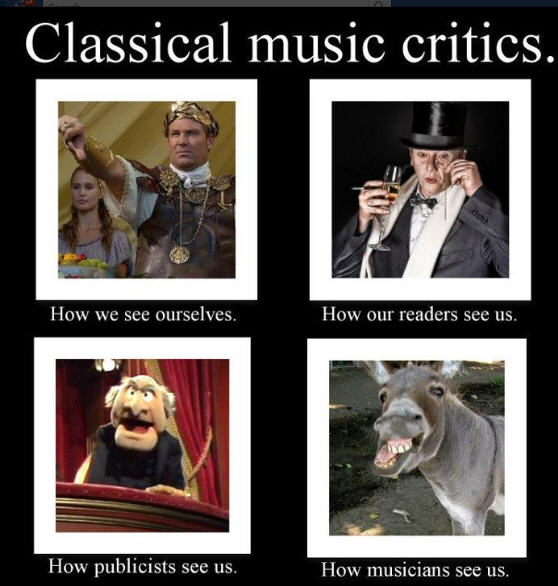
Yesterday on BBC Radio 3’s Music Matters programme host Tom Service and a panel of invited guests, including the acclaimed concert pianist Peter Donohoe, discussed the future of music criticism. I listened with particular interest, since I have, through my blogging, joined the ranks of “music critic” (though I would never describe myself as a “music journalist”). The discussion was interesting and wide-ranging and some pertinent observations were made regarding the relationship between critics/reviewers and artists (as Peter Donohoe said “we should all be on the same side, that of the music”), the importance of music journalism in supporting and promoting (in a non-commercial sense) classical music, and the effect of the blogosphere and online review sites on music journalism. This last point was of particular interest to me, especially in the light of a rather unfair article by the Telegraph’s Arts Editor in Chief, Sarah Crompton, in which she describes people like me as “citizen critics” and suggests that we have no place in the ranks of “qualified” journalists. I was also rather put out by comments from members of the Music Matters panel who suggested that because bloggers are (generally) not paid, they must be on some kind of agenda or in the pay of someone else. This has moved me, along with several other blogging colleagues and fellow online reviewers, to offer an explanation as to why we blog.

I started this blog in 2010, initially as a means of writing down my personal thoughts on playing the piano, repertoire, concerts I have enjoyed, and various other music- or piano-related topics. In 2011 I was invited to join the team of reviewers for Bachtrack.com, an international concert and opera listings site. The people who write for Bachtrack are, in general, not professional journalists, merely people who care passionately about live classical music and who are able to convey that passion in engaging and intelligent reviews. At the beginning of this year, I was also invited to write for CultureVulture.net, a US-based arts and culture website which offers intelligent, quality arts journalism and covers a wide remit, from exhibitions and music to tv and DVD reviews. I have also recently set up a sister blog to this one, MusArtLondon, as a home for all my reviews, and those of my CultureVulture London colleagues, Nick Marlowe and ‘Erato’. (Find more here….).

I am not a “professional” writer any more than I am a “professional” pianist, for I receive no payment for my writing nor my piano playing. However, I do not believe that my lack of “professional” credentials makes my ability to express my views in writing any less valid than those of a trained journalist writing for one of the broadsheet newspapers or music magazines such as Gramophone. Indeed, a number of broadsheet music journalists are not musicians nor have any kind of musical background other than a declared “interest” in the subject; and yet some of these people can be seen as the ultimate arbiters of taste and quality. It must be said at this point that there are also a number of music journalists who have had a full musical training and are active as composers and musicians themselves.

In her article, Sarah Crompton states that “a critic is someone who devotes their time to the pursuit of cultural judgement”, and suggests that a journalistic training better equips her and her colleagues on other newspapers and journals for this task than my passion and enthusiasm for the subject (and maybe the fact that I am both a classically-trained pianist and someone who has enjoyed a lifetime of attending concerts). She also suggests that people like me don’t do our homework, that we simply rock up to a concert and toss off a few unconsidered paragraphs after the event. Not true: ahead of a concert I spend time researching the music and performer I am going to hear. One of the best classical music blogs which I read regularly is Boulezian, which is both well-informed and erudite. Its author is a professor at Royal Holloway, and an avid concert and opera goer. My particular grouch with Sarah Crompton’s point of view is the inference that because she writes for a broadsheet newspaper and is a “professional journalist”, her opinions and judgement are somehow “better” or more valid than mine.

I suspect that much of her anxiety is founded on the uncomfortable knowledge that the blogosphere is partly responsible for the slow death of traditional print journalism. I don’t applaud this: in fact, it saddens me. I used to work in old-fashioned book publishing and the thought of a world without books, journals and other printed matter appalls me. But the rise of the blogger and online reviewer/critic has, in my humble opinion, opened up the world of opinion-making and debate, and has created a vast and wonderful forum for the exchange of ideas. Criticism and reviewing has become more democratic and some fantastic blogs have emerged as a result, offering extremely intelligent and high-quality writing (see my personal picks below).

As a keen concert-goer and regular reviewer, I have never set myself up as the arbiter of taste and quality. I write about classical music because I care passionately about it, and I love live music. I am always happy to enter into a debate with people about the merits, or otherwise, of a particular concert or performer. I want this blog to be a place for discussion, and I am always happy to respond to comments. It cheers me enormously when people write to tell me how much they have enjoyed one of my reviews: indeed, the best compliments are comments such as “you brought the music to life in your writing” or “you made me feel I was right there with you at the concert”.

The debate about music critics and music criticism is nothing new, and is one that is likely to run and run, never more so now in our social media obsessed world, where everyone can, in effect, be a critic by simply “liking” a post on Facebook, Google+ or Instagram, or retweeting a link on Twitter. Traditional print journalists need to accept that the blogosphere is part of 21st century life and makes an important and valid contribution to our rich and varied cultural landscape.

Fellow blogger and Bachtrack reviewer Jane Shuttleworth offers her views on this issue

A riposte to Sarah Crompton’s article by a music blogger

A handful of music blogs I admire and follow:

Boulezian

Orpheus Complex

On An Overgrown Path

LietoFineLondon

Musical Toronto