Pianists remember pianos.

Not necessarily because they were exceptional instruments. Sometimes quite the opposite! We remember the piano in a childhood home, the battered upright in a school music room, a particularly lovely grand encountered at a teacher’s house, an instrument played in a concert hall, or a piano discovered unexpectedly somewhere far from home. We remember their touch and sound, the peculiarities of their actions, even the smell of the room in which they stood. And sometimes we remember them because of the people who played them before us.

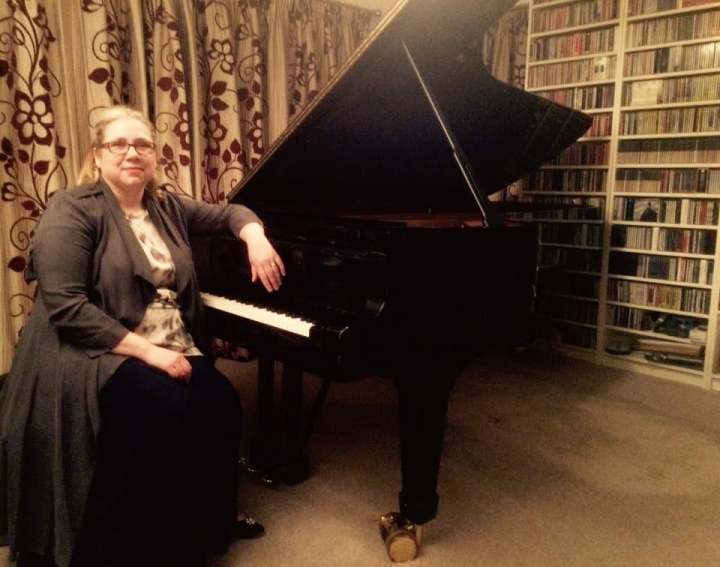
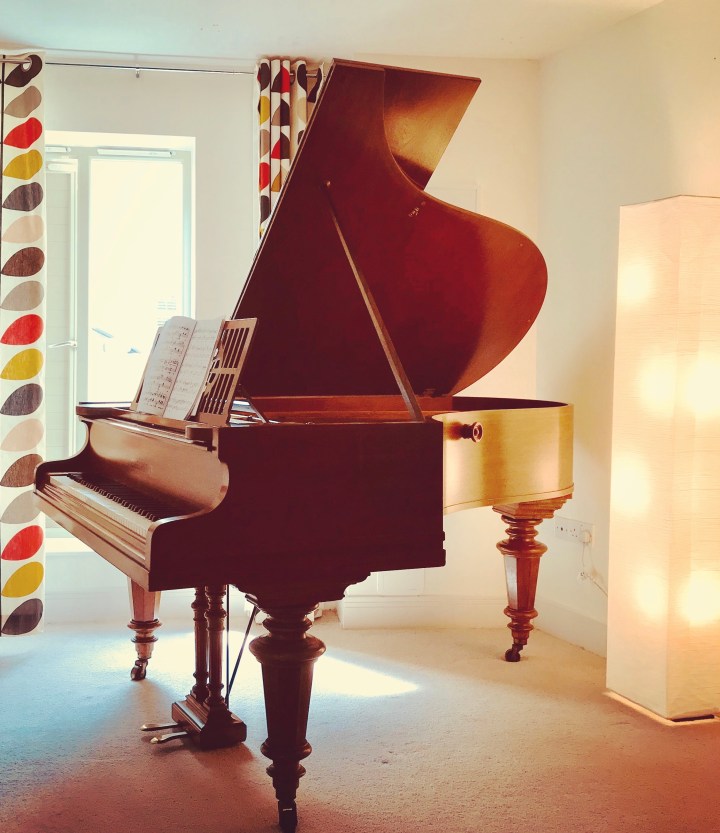
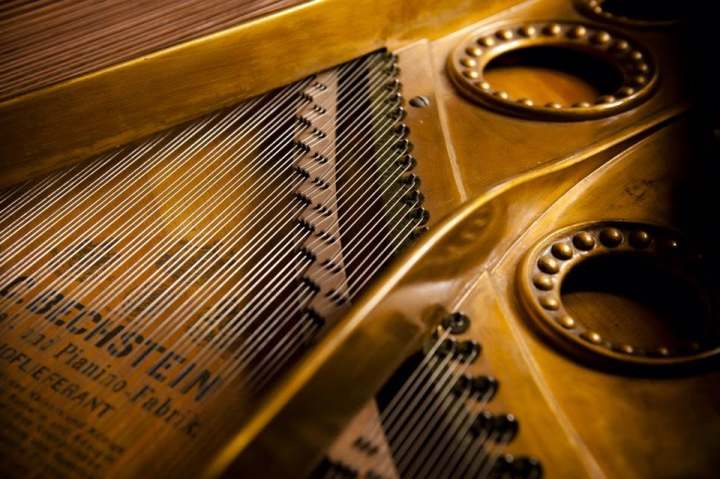
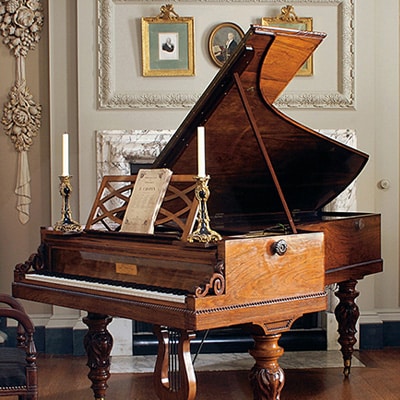
The piano is a machine, but it usually has a soul, and a history too. My 1913 C. Bechstein Model A is redolent of Edwardian drawing rooms. It may well have been sold from the Bechstein piano showroom on Wigmore Street, next door to Bechstein – now Wigmore – Hall, in that golden year when a carefree generation was teetering on the abyss of the First World War. I acquired it in 2013, exactly a century after it was made, a coincidence which seemed especially serendipitous and significant, given the subject matter of the novel I had begun writing some ten years earlier.

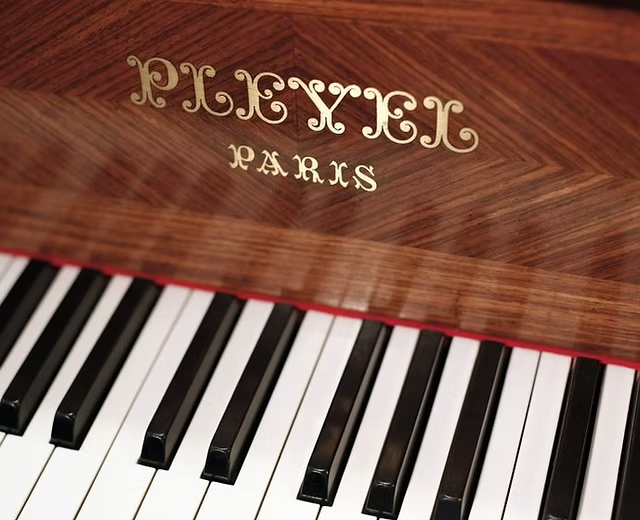
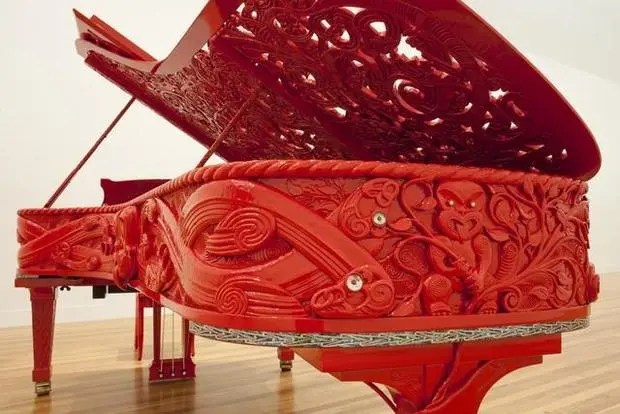
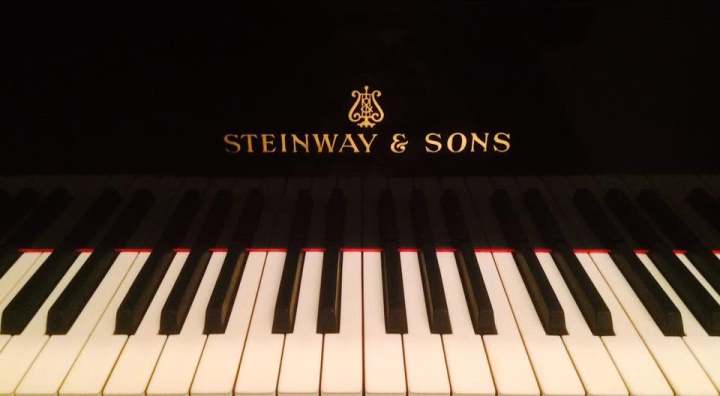
Some years ago, I played a Steinway D with a special heritage. Formerly owned by the Hallé Orchestra in Manchester, it had been played by Sviatoslav Richter and Daniel Barenboim, amongst others. “And now you are playing it!” said its owner, for whose music society I was performing. I’ve also played a square piano owned and autographed by Edward Elgar, a Pleyel said to have been played by Chopin, and an extraordinary ‘Maori’ Steinway, which had belonged to the pianist Lili Kraus. There is a danger, of course, that one can invest too much in these associations, imagining that something of former owners and players remains in the keys and strings and might somehow influence the next person who sits down to play. In reality, it is the pianist at the keyboard now who ignites the soul of the instrument and brings it to life in sound.

Given that Theo Browne, the principal character in my novel Facing the Music, is an ambitious young concert pianist, it was inevitable that pianos would feature prominently in the narrative. Theo encounters a succession of pianos as his life unfolds, each one marking a particular stage in his musical and emotional development. Later in the book, those same instruments become repositories of memory, bound to the people, places and experiences that have shaped him, so that a piano is never simply a piano, but a connection to an earlier period or version of his life.

There is his mother’s Pleyel, the piano of childhood and his earliest encounters with the instrument which will come to define him. Before there is ambition, career or even any real conception of himself as a musician, there is simply the fascination of the keyboard and the discovery of music.

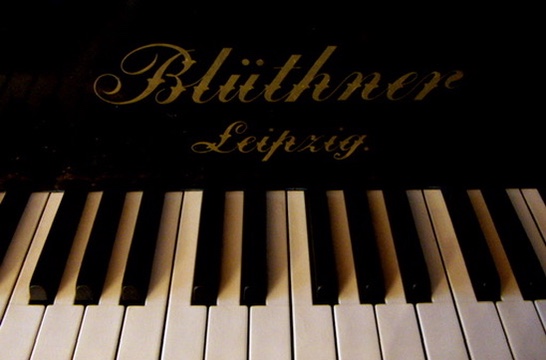
At school there is a Blüthner, an instrument which becomes associated with two of the defining relationships of Theo’s musical life. Here he studies with Mr Hines, whose influence will extend far beyond piano lessons, and here too his deep friendship and musical partnership with violinist Jonathan Lane-Fox begins to take shape – a partnership which lies at the heart of the novel. Teacher and friend offer Theo different kinds of musical companionship: Mr Hines guides and challenges him, while with Jonathan he discovers the particular intimacy of making music with another person.

At Mr Hines’s home in Battersea stands his Broadwood, the piano on which Theo practises Rachmaninoff’s Third Piano Concerto, with Mr Hines beside him at the second piano, taking the orchestral reduction. The scene is charged with ambition: this is the repertoire Theo hopes will belong to his future, music of the international concert platform and the career he is beginning to imagine for himself. But the Broadwood also becomes deeply bound up with Theo’s memories of his beloved teacher, and of the musical life they shared. As the novel unfolds, it acquires a significance that reaches beyond the instrument itself.

Sir Ralph Kaufman’s Steinway has a history which long predates Theo’s first encounter with it. It belonged to Ralph’s father, Jakob, a concert pianist from Vienna, and carries with it the traces of a musical life from an earlier generation. When Theo first sits down at it, he is intimidated by its pedigree and by everything it seems to represent: “This was no ordinary instrument. It was a witness. It had travelled, and it had lived.” But as Theo’s relationship with the Kaufman family deepens, so too does his relationship with the Steinway. Gradually it acquires another layer of associations, becoming a repository not only for the Kaufman family’s musical past, but for Theo’s own memories and experiences.

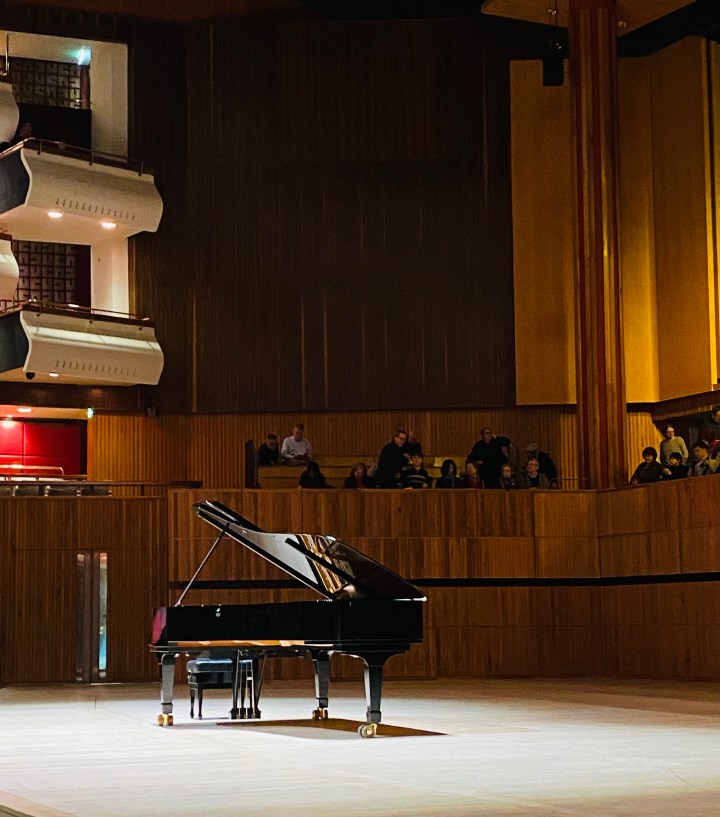
And then comes the C. Bechstein concert grand at Bechstein (now Wigmore) Hall. For Theo, sitting at that piano represents arrival: the concert platform at a prestigious London venue, an audience, and the beginning of the career towards which he has been working for years.

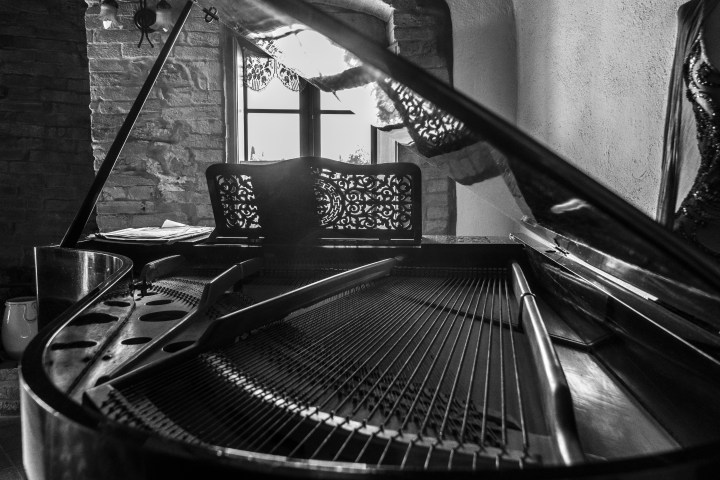
Later, in France, Theo, now an Army officer, encounters a very different instrument: a dilapidated Érard in a château where his battalion is billeted. By then, a piano means something quite different. It is no longer primarily an instrument of ambition or professional advancement. In surroundings unimaginably distant from concert halls and daily practice, the mere presence of a keyboard offers a connection with another life.

I love the physical presence of the piano – from a domestic upright to the grandest Steinway D – as much a piece of furniture as an instrument from which to conjure sound. I love the piano’s complexity, and the way it always seems to invite us to touch it. Put a piano in a public place and people are drawn to it: they will sit down and play, while even those who cannot play are tempted to press the keys, curious to hear the sound they can make. And a piano invites repeated physical contact. Hands have pressed its keys thousands, perhaps millions, of times. Someone practised scales on it, someone struggled with a Beethoven sonata, someone played for a teacher, accompanied a friend, prepared for a concert, played badly, played wonderfully, or simply sat down one evening and played for pleasure.

Perhaps pianos do not remember us at all. My Bechstein keeps its first hundred years of history to itself. We are the ones who supply the memories. We attach people, places, pieces of music and particular periods of our lives to these complicated machines of wood and felt, wire and iron. Yet the moment someone sits at the keyboard, the machine becomes something else. It sounds, responds, resists, sings – and another memory begins.

Which pianos do you remember?

Not necessarily the finest one you have ever played, but the instrument that has stayed with you: your childhood piano, your teacher’s grand, the terrible upright in the school practice room, a concert instrument you were reluctant to leave, or a piano with a history that made you think differently as you placed your hands on its keys.

Leave a comment below or contact me with your piano memories.


Facing the Music is out now in paperback and eBook. Find out more
J.S. Bach (1685-1750) Toccata in E minor BWV 914

F.J Haydn (1732-1809) Piano Sonata 47 h.o.b. 32 in B minor

F. Liszt (1811-1886) Deux Legends S. 175 – 1. St. François d’Assise: La prédication aux oiseaux S. 175; 2. St. François de Paule marchant sur les flots

Stephen Gott, piano


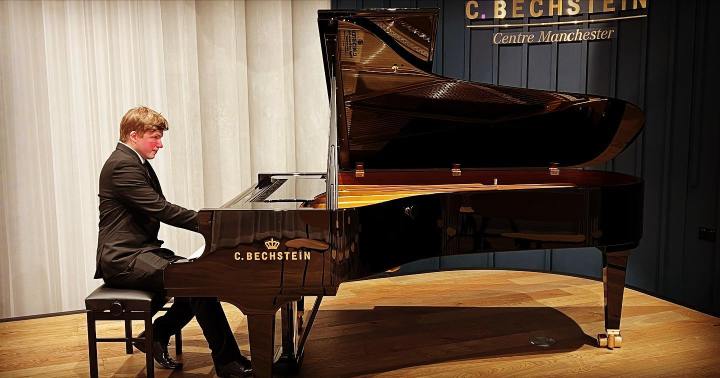
The splendid new Bechstein piano showroom in Manchester, the piano maker’s first purpose-built showroom in the United Kingdom since the Bechstein (now Wigmore) Hall was opened in London in 1901, boasts an attractive recital room with a C. Bechstein Model C 234 concert grand. The showroom hosts regular recitals and on Thursday 13 British-American pianist Stephen Gott performed music by Bach, Haydn and Liszt.

I have known Stephen for nearly 15 years now: we first met on a piano course hosted by our teacher, Penelope Roskell, where he gave a mature, thoughtful performance of Chopin’s Fourth Ballade, the memory of which has stayed with me ever since. Stephen is a very dedicated, hardworking young pianist, who started to learn the piano relatively late, in his teens. He studied at London’s Trinity-Laban and the University of Huddersfield, and is currently studying privately with Pascal Nemirovski.

His programme for his Bechstein recital displayed a nicely balanced range of repertoire from Bach to Liszt. The Bach Toccata in E minor was suitably serious in mood (E minor being perhaps Bach’s darkest, most serious key) and Stephen neatly portrayed the fantasia elements in the opening section, while the section second had energy and focus, with a good sense of forward motion.

The Haydn sonata was spirited, its elegant middle movement a pleasing contrast to the drama of the outer movements. But it was in the Liszt Legendes that Stephen really impressed and in which I felt he seemed most comfortable (and I know from conversations with him that he adores the music of Liszt, especially the more serious works such as these). From the fluttering, twittering birds of the first Legende (‘St Francis of Assisi preaching to the birds’) to the rolling, swelling waves of the second, Stephen played with sensitivity, expression and a clear understanding of not only the structure of these pieces but also the Biblical narratives which inspired Liszt. The second Legende was particularly rich in drama, the rise and fall of its narrative tension masterfully managed by Stephen, and providing an exciting, virtuosic close to this recital.

Meet the Artist interview with Stephen Gott

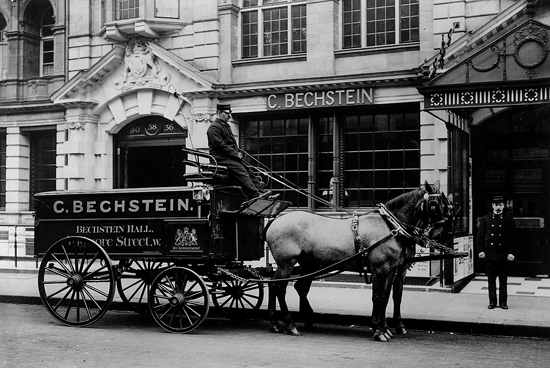
For one night only, audiences at the Wigmore Hall were treated to a glimpse of the hall’s origins, in those pre-First World War days when it was Bechstein Hall and home to the German piano maker C. Bechstein’s London showroom.

bechstein-hall

When Bechstein Hall opened in 1901, Bechstein was Europe’s leading piano maker (it produced 5000 pianos in 1901),  its instruments preferred by most pianists outside America, where Steinway predominated. The Bechstein piano company built similar concert halls in Paris and St Petersburg to showcase its instruments and the leading performers and singers of the day. With its special barrel roof “shoebox” design, beloved of many musicians, the hall still boasts a fine acoustic, while its small size (its capacity is c600 seats) makes it the perfect place to enjoy intimate chamber and piano recitals.

At the beginning of the twentieth century Bechstein Hall on London’s Wigmore Street was promoted as the best of places for intimate music making, and boasted unrivaled comfort and facilities for patrons and artists with its elegant green room up a short flight of stairs behind the stage (so that singers did not arrive on stage breathless). At the time of its opening, concert life and leisure in general in London were enjoying something of a revolution. Theatres and music halls were opening across the west end, a wide public was being introduced to the experience of shopping for pleasure in the new “department stores” (Selfridges is a mere 10 minute walk, at the most, from Wigmore Street), and with cheap and efficient public transport, it was easy for people to enjoy these delights in the centre of the metropolis. A new breed of international concert promoters, agents and impresarios, such as Robert Newman, who with conductor Henry Wood founded the world-famous Proms, were dedicated to organising high-quality recitals, and Bechstein Hall alone scheduled two hundred concerts a year.

During the First World War, it became increasingly difficult for Bechstein Hall to trade viably. Strong anti-German sentiments and the passing of the Trading with the Enemy Amendment Act 1916 led to the hall’s closure in June 1916, and all property including the concert hall and the showrooms was seized and summarily closed. The hall was sold at auction to Debenhams, was rechristened Wigmore Hall and opened under its new name in 1917. Today Wigmore Hall enjoys an international reputation for high-quality music in an elegant and intimate setting.

To give the modern audience a flavour of those halcyon pre-war days of concertising in London, the French pianist Pierre-Laurent Aimard gave a concert on an 1899 Bechstein grand piano, a piano which may well have been sold out of the Bechstein piano showroom next door to the hall on Wigmore Street.  The concert, which included music by composers active at the time when the Bechstein piano company was at the height of its powers, was preceded by a talk with Pierre-Laurent Aimard, Peter Salisbury, a leading piano technician who restored the piano, and composer Julian Anderson, whose work ‘Sensation’, written for Pierre-Laurent, had its London premiere at the concert.

As Pierre-Laurent Aimard explained, the event was the culmination of a long-held dream: to present a concert of the kind of repertoire and composers – and instrument – contemporary with the hall when it first opened. Peter Salisbury talked about the difficulties of preparing a piano for a specific hall, for each space has its own distinct acoustic and the piano must be adjusted and voiced to suit venue, performer and repertoire. When the 1899 Bechstein was brought into Wigmore Hall, Peter noted how closely instrument and venue suited each other, evidence that Bechstein built concert halls to showcase their instruments at their best – and vice versa!

Prior to the First War, piano design and manufacture was still evolving, and each make had its own distinct sound and character. Bechsteins of this period are notable for their special resonance and projection, which result from their manufacturing process. Pierre-Laurent commented on the piano’s uniquely rich palette of colour and tones, combined with great clarity. Every note seems to have “many overtones”, resulting in an orchestral sound which is rich but not cloying.

For composer Julian Anderson, the Bechstein piano has a special place in his life: his own piano is a 1913 Bechstein, passed on to him from his father, and is the instrument on which he composes. He admitted a “great affection for the Bechstein tone”, and that it has a range of colour which “encourages metaphor” and makes it easier to imagine other sounds or instruments when composing.

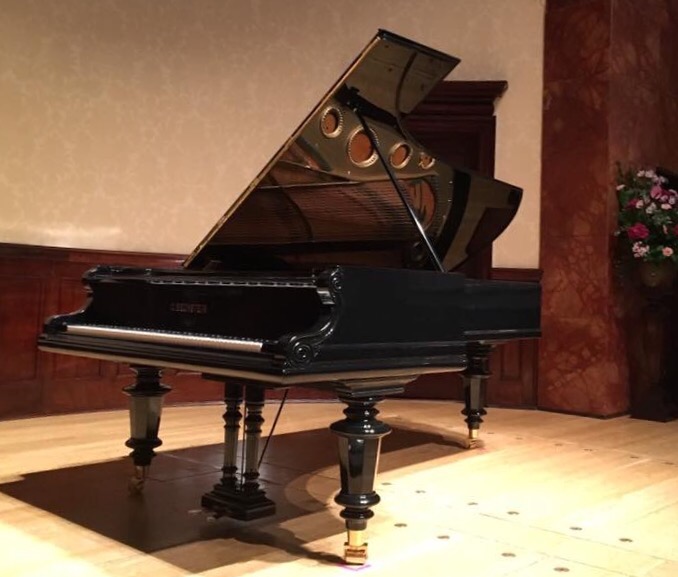
The 1899 Bechstein has been restored by Peter Salisbury and retains the original soundboard and bridge. A new mechanical action was fitted to provide technical accuracy, with new hammers voiced according to Bechstein’s original sound concert. An attractive instrument with a polished black case with scrolled details, the piano has turned legs and a fan-shaped music desk. The instrument is 275 cms (9 foot)long, with 88 notes (not all pianos were at that time – my Bechstein has 85 keys), and it took 3 months to rebuild it fully. For Peter the piano represents “a portal to the past, a lost era of tonal distinction”.

Peter Salisbury’s 1899 Bechstein concert grand on the stage at a Wigmore Hall

After 1910, piano design and manufacture became standardised across makes, and today most concert pianos (most commonly Steinway) have a consistency of sound and touch which enables performers to move fairly effortlessly between a piano in a Tokyo concert hall and one in London or New York. Concert pianos have also grown bigger to project into larger halls, and in the 10 years that I’ve been going t concerts regularly, I’ve noticed the sound of these pianos is, generally, much brighter and often quite strident.

As the owner of a 1913 Bechstein model A, I was very curious to hear this slightly older piano in a concert setting in an acoustic for which it was built. The programme included music by Liszt (the first version of Harmonies poétiques et religieuses), Scriabin and Debussy (both of whom owned Bechstein pianos), Julian Anderson (b.1967)!and Nikoly Obukhov, a colouristic Russian composer whose music bridges the Russian and French compositional traditions of the first decade of the twentieth century. The first half of the concert proceeded without interruption for applause (something with several audience members near me seemed to find quite “difficult”, though I enjoyed the flow of music from one composer to another). From the first notes of the Liszt, I felt I was hearing my own piano in concert – those distinct resonances and layers of colour which drew me to my instrument when I first played it in my tuner’s workshop were made more explicit in Pierre-Laurent’s hands. A surprisingly deep bass resonance, but clear and bell-like, without the chocolatey Sachertorte richness of a Bosendorfer, and a remarkable sustain with unexpected harmonics evident in the sound decay. In the Scriabin pieces, the piano’s multi-faceted sound came to the fore, responding perfectly to Scriabin’s sensual textures with harmonies superimposed on different registers and layered overtones.

The selection of Debussy’s Études was particularly fascinating. Here Pierre-Laurent balanced clarity with tonal sensitivity and the studies burst into to life with delightful shifting colours. The sweet lucid treble was wonderful, so different to the rather strident treble sound one finds in modern instruments, and there were further opportunities to enjoy this sound in the works by Julian Anderson and Nikolay Obukhov. Despite the piano’s resonance and sustain, there was no sense of the sound being too big or overly domineering (again an issue, for me at least, with modern concert grands in medium-sized or small venues). For me, the highlights of the evening, aside from the opportunity to hear this period piano in concert, were the works Debussy and Obukhov – had I not seen the programme, I would have thought the latter was post-Vingt Regards Messiaen, yet this was music written prior to the Russian Revolution, avant-garde and way ahead of its time.

67741286_mandatory_3340468b
Wigmore Hall today (photo: The Telegraph)