The Piano, a surprise hit for Channel 4 earlier this year in which talented amateur pianists performed in public on pianos placed in railway stations, is back for a second series – and the production company, Love Productions, is looking for participants.
Finalists from series 1
Lang Lang, Claudia Winkelman & Mika
The first series showcased amateur piano players across the UK, from major cities to rural towns. It introduced some remarkable talents, including Lucy, a blind, neuro-divergent girl who astonished and moved viewers with her expressive playing. Other participants shared personal stories where the piano and music had helped them overcome trauma or difficulties in their lives, as well as people who simply found joy in music. The series was a wonderful celebration of the nation’s favourite instrument, and the second series will continue this theme, seeking out more great amateur pianists from the around the UK. Once again, performances will be critiqued by superstar pianist Lang Lang and singer-songwriter Mika.
Applications are open to anyone who enjoys playing the piano, no matter what genre of music, be it classical, jazz, boogie woogie, pop. Essentially, as long as you are at amateur level and have a real passion and love for the piano then you are eligible to take part. Auditions/casting take place next month so you have just under a month to apply. The production company is particularly keen to receive applications from female/non-binary/people who identify as female pianists.
The London Piano Meetup Group celebrates its 10th birthday on 20 May, with an event at Steinway Hall in London.
When I co-founded the London Piano Meetup Group back in 2013, I knew very few amateur pianists. I’d been playing seriously for about 5 years, having returned to the piano after an absence of nearly a quarter of a century. I’d been on a number of piano courses and appreciated the value in connecting with other pianists but these were not regular interactions. I, and my co-founder (a piano teacher based in SE London) were both keen to connect with other adult amateur pianists on a regular basis – not just for the opportunity to play regularly in front of others but also to socialise with like-minded people. Thus the London Piano Meetup Group came to be.
Our launch event at Peregrine’s Pianos on 18 May 2013 was very well-attended and the young pianist Emmanuel Vass, who has been a good friend to the group over the years, was our guest performer. We were a mixed bunch, of various ages and abilities. Some people had played all their life; others, like me, were returners; some were beginners who had taken up the piano in retirement; others had been to music college but had chosen a different career path. All shared a deep passion for the piano.
The ethos of the group has always been to provide a friendly, positive and ‘safe’ environment in which people can perform and socialise. Many people want the experience of performing without the stress (as far as possible) – music is, after all, for sharing. Some find the performance platforms useful in preparing for exams or diploma recitals. Others simply come along to listen and enjoy the varied repertoire. One of the big attractions of the group is the chance to play a really nice instrument; venues are selected for the quality of their pianos, giving participants the opportunity to experience the pleasure and challenge of playing a really fine grand piano.
The group was popular from the get go – a mark perhaps of people’s enthusiasm for the piano and also an opportunity to connect with others, to share stories, discuss practising, repertoire, concerts we’ve enjoyed, our favourite professional pianists or recordings…..and much more. I’ve made some very good friends through the group (and playing the piano can be a rather lonely occupation, although something that most of us actually quite like!), and many of us bump into each other at other piano events, such as concerts, courses and masterclasses.
The group generated some offshoots too, such as an amateur piano competition, adjudicated by none other than Leslie Howard, and the very popular Diploma Days with acclaimed teacher Graham Fitch, which offer people an opportunity to play some of their Diploma repertoire and receive useful critique from Graham as well as advice on planning a diploma programme and managing performance nerves.
Members also regularly attend courses such as the hugely popular summer school, known affectionately as Chets, in Manchester, the Summer School for Pianists at Stowe, Finchcocks in Kent, Jackdaws in Somerset, and even some summer schools held in France and Italy.
The group has also inspired others to form their own meet-ups and piano clubs in the UK and beyond, and in 2015 the LPMG met up with the Vienna Piano Meetup Group at a piano showroom in Vienna (the trip also included a tour of the Bösendorfer factory).
The popularity, and longevity of the group – and its offshoots – is an indication of how many pianists there are in and around London who enjoy the opportunity to meet and explore repertoire, and to share their passion for the piano. It is also a credit to Rob Foster, who now runs the group, and who continues to give amateur pianists regular performance opportunities in a friendly, supportive atmosphere.
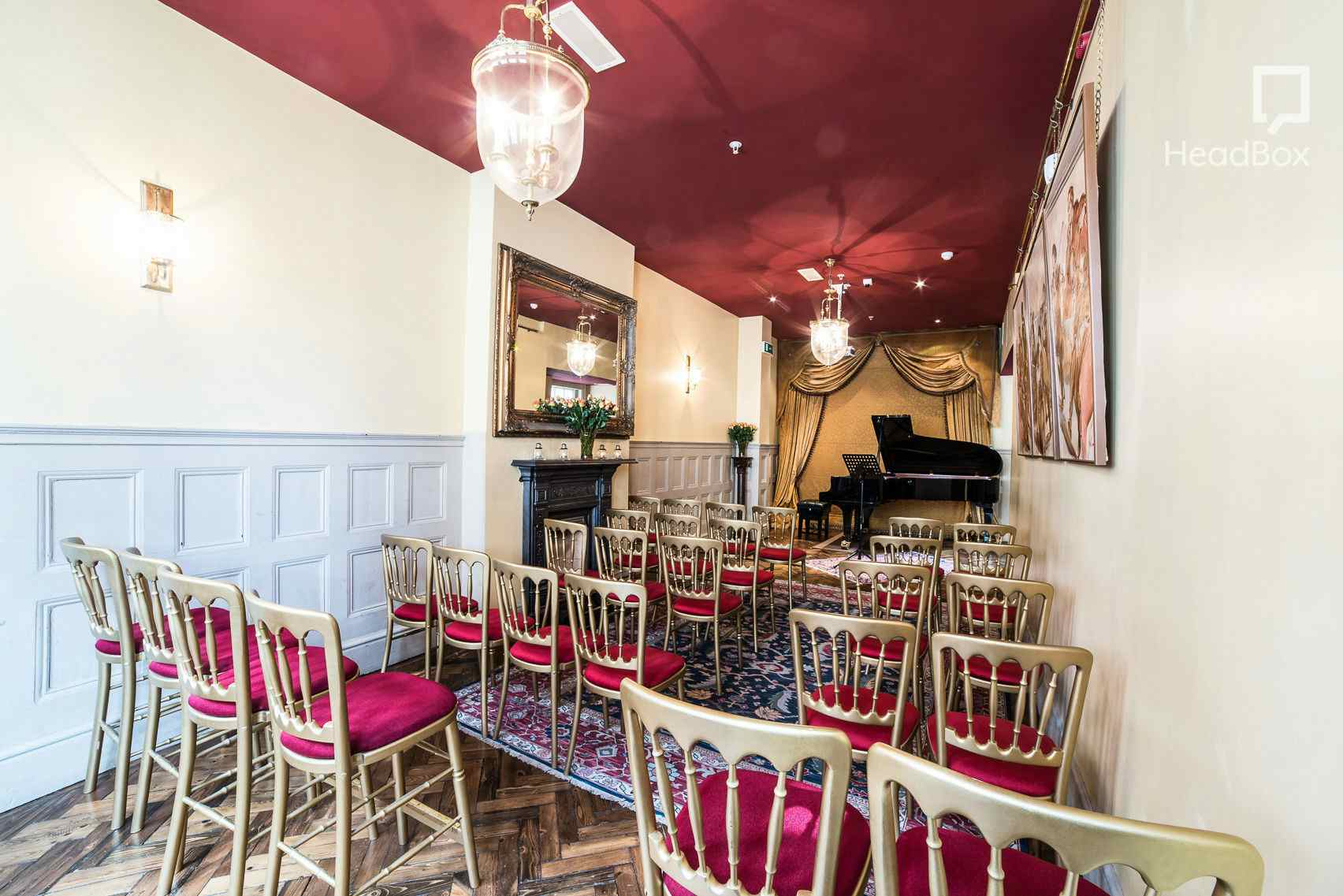
The London Piano Meetup Group (LPMG) meets monthly at venues such as the 1901 Arts Club (Waterloo), Peregrines Pianos (Clerkenwell), Café Yukari (Kew) and Gaspard Music Academy (Richmond). The group is run via a Facebook group and mailing list. If you would like to join LPMG, please contact the organiser at londonpianomeetup@gmail.com
This site is free to access and ad-free, and takes many hours to research, write, and maintain. If you find joy and value in what I do, please consider making a donation to support the continuance of this site
Are there pieces that are simply too challenging for non-professionals to even attempt?
Guest post by Caroline Wright
There are those who believe that, yes, there are indeed pieces that amateurs should leave well alone. Hugely technically challenging pieces – of which there are many in the piano repertoire – should be respected by those who cannot hope to do them justice. We should all be aware of our limits, and leave the tough stuff to those who can handle it!
I think most musicians probably disagree with this position. Personally I don’t think any repertoire should be off-limits,to anyone. We all need to be aware of our level and personal limitations, but that’s true of professionals and amateurs alike. Many individuals have physical limitations that mean they will never be able to play certain pieces, but that has no effect on their ability to play other repertoire – for example, having small hands is a curse for pianists who wish to play Brahms, Rachmaninoff and Ravel, but may actually bean asset in Bach, Scarlatti and Mozart. Finding and expressing the beauty of a piece of music can be both a challenge and a joy for anyone, irrespective of it’s technical demands.
I cannot think of a better way of respecting the music of great composers than by dedicating many hours to playing and memorising it. Listening to recordings and live concerts given by great performers is wonderful too, of course, but undoubtedly a more passive way to experience music than playing it and internalising it yourself. Learning the music, to such a level that you can see the score in the mind’s eye and listen along without the need for external sound, is surely a greater mark of respect than playing it note-perfect in every performance?
In reality, the boundary between amateurs and professional musicians is blurred. Many amateurs are highly skilled, qualified musicians, and many professionals rarely perform in public. At the end of the day, any musician (particularly soloists!) must decide what repertoire they are happy to play in concert in front of strangers, versus that which they prefer to play for their own enjoyment, in the safety of their own home. And here, I believe, is where the most stark difference occurs between amateurs – literally ‘lovers’ of music – and professional performers who must make a living from music. Those of us who have the (dubious!) ‘luxury’ of earning a living outside of performing can afford never to play to a fee-paying public, if we so desire. We may play to friends and family, students and colleagues, or simply to ourselves, without having to conquer performance anxiety and the very real possibility of making fools of ourselves on stage. This choice should certainly not act as a barrier to playing particular repertoire. Professional performers, on the other hand, must make a living from performing and accept that anything less than a polished performance is unlikely to help their career progression or recording sales.
As an amateur pianist, there is no doubt that there are many pieces that I will never be able to play well enough even for my own satisfaction (and wouldn’t dare inflict on anyone else!), and others that I believe I play well enough both for myself and others to enjoy. There’s a balance that I find hard to strike between painstakingly learning more challenging repertoire and playing technically easier repertoire to a higher musical level. The guidance of a teacher to steer any unwary students towards repertoire that they will find challenging yet satisfying is crucial. But no music should be off-limits and, regardless of one’s ability, it is a privilege to be able to study some of the greatest works that have ever been created by the human mind.
Caroline Wright is a musician (MMus, LTCL) and scientist (MSci, PhD). Her compositions have a diverse range of influences, from classical and contemporary to blues and jazz, film and folk, dance and electronica.
I admit I was prepared to hate this series on Channel 4 (and, full disclosure, I was interviewed for the programme by someone from the production company last summer). It was made by the same production company which brought us The Great British Bake Off, another series which I have come to loathe, and was billed as “Bake Off for amateur pianists”. Oh dear.
The basic premise of the series was to showcase the pianistic talents of ordinary people through their performances on street pianos at railway stations in London, Leeds, Glasgow and Birmingham. Unbeknownst to these amateur pianists, their performances were being watched by “the world’s greatest pianist” Lang Lang and one-hit wonder singer-songwriter Mika. The series is presented by Claudia Winkelman.
The programme makers wanted us to believe that these performances were completely spontaneous, but in fact the participants had to go through an audition process and were then selected for the programmes. Also, the instrument on which they played was not the usual rather beat up, out of tune street piano of the type which this article rather rudely describes, but a rather nice Boston upright from Steinway’s ‘diffusion range’.
However, none of this matters in the least because it quickly became evident that the real joy and power of this programme lay in the people, their back stories, and of course their music. Just as in Bake Off, the participants were a mixed bunch, from the young to the very old. There were some really heart-warming moments, such as a 92 year old man who played the piano to communicate with his wife who had dementia, or the young man who had found comfort in music, following the suicide of his father.
During each episode, a young professional pianist friend of mine would message me to rail at the lack of “proper classical music”, and while I too had hoped for more Chopin or a drop of Mozart, it was evident that this series was about people and their connection with the music they played, and why the piano was so meaningful or special for them.
A number of the participants had taken up the piano during the covid lockdowns as a way to fill the excruciating sameness of those long, dull days. Others had been playing all their life. Some were self-taught. But all found joy, fulfilment and personal achievement in playing, regardless of the genre of music or their ability.
In episode two we met Lucy, a blind girl with severe learning disabilities but with a remarkable natural aptitude for the piano. Her performance of Chopin’s B-flat minor Nocturne was beautifully fluent, subtly phrased and elegantly shaped. Actually, it was simply astonishing. It held the audience at Leeds station utterly spellbound, and it was quite evident that Lang Lang was genuinely moved by her performance, along with the many others who watched her playing. She was supported by her teacher Daniel, who works with a charity called The Amber Trust, which provides musical opportunities for blind and partially-sighted children, and children with more complex needs.
The final episode of the series was a special concert in which the “winners” (although this wasn’t really a competition – and certainly nothing like any talent show presented by the likes of Simon Cowell) performed at London’s Royal Festival Hall. Once again, Lucy’s extraordinary talent shone through, this time in a mesmerising performance of one of Debussy’s Arabesques. But all the performers played with commitment and emotion, which really transmitted to the audience. At the end of the concert, Lucy was awarded star player (in a lovely, low-key way) and then Lang Lang and Mika made a special announcement: each player was to be gifted an acoustic piano.
The four finalists at the Royal Festival Hall with Lang Lang, Mika and Claudia Winkelman.
Reactions on social media are a testament to the appeal and power of music, as people were genuinely moved, amazed and intrigued by all the performers in this series. The more relaxed, spontaneous way of presenting music, on a street piano, will, I’m sure, remind people that music is for everyone and one need not enter a formal concert venue to experience the wonder. And if this series inspires people to take up or return to the piano, or for young (and old) piano students to find renewed enthusiasm in their practising, then it has served an important purpose. Finally, this show must surely raise the profile of the piano, and music in general, at a time when classical music in particular is under attack – and that has to be A Good Thing.
As the various performers demonstrated, through an incredibly eclectic range of music and ability, it’s not about winning; it’s about doing something that you love and finding fulfilment, comfort, self-improvement, and above all pleasure in what you do.
The Piano on Channel 4 is inspiring, joyous, uplifting, poignant, moving and life-affirming. Do seek it out on All4.
The Cross-Eyed Pianist is free to access and ad-free, and takes many hours every month to research, write, and maintain.
If you find joy and value in what I do, please consider making a donation to support the continuance of the site



 There are those who believe that, yes, there are indeed pieces that amateurs should leave well alone. Hugely technically challenging pieces – of which there are many in the piano repertoire – should be respected by those who cannot hope to do them justice. We should all be aware of our limits, and leave the tough stuff to those who can handle it!





 The Cross-Eyed Pianist