Find all previous episodes here

This site is free to access and ad-free, and takes many hours to research, write, and maintain. If you find joy and value in what I do, why not

Following one of those wonderfully serendipitous encounters on the internet, I am delighted to present “Notes from the Keyboard”, a series of articles for adult amateur pianists, by Dakota Gale, chronicling his own experiences of learning the piano as an adult.


Four years ago, my wife surprised me with a digital piano for my birthday. I’d mentioned my desire to learn a few times and, ever the muse, she called my bluff.

I couldn’t read music. Finding middle C was a quest. I was a B-E-G-I-N-N-E-R.

And yet…she was right. At 38 years old, I tumbled rapturously into the world of piano. 

Four years later, the honeymoon phase is over, and yet I remain motivated to play every day and am still loving the journey. (<–understatement: I’m head-over-heels for it.)

I even do stuff like learning to do portraits by drawing musicians! (My wife tells me that’s eccentric…) 

I’m playing pieces by Chopin, Debussy, Beethoven, Liszt, and other famous composers that I thought were a decade off. Even facing the inevitable frustrations of piano study, I’m finding joy in piano every.single.day.

Learning piano transcends fun – I feel like I’ve unearthed a gift, a path to access some of the most beautiful music ever written. Accessing the pieces revealed a fountain of satisfaction that isn’t tied to money or achievement, a much-needed oasis of play as an adult.

In fact, I’ll often drop into a flow state for 30 minutes and be surprised when my timer goes off. Where else do we get that feeling once we’re done playing with Legos or mud pies?

You, mega-savvy adult reader, can do it too!

Adults CAN learn to play piano

I share my achievements not to brag (many pianists young and old far outshine my abilities), but to offer hope to adult learners. If you’re telling yourself, “Oh, I could never learn to play” or “I’m not musical” or “only kids can learn piano,” let me persuade you otherwise.

I’m shocked how many people tell me only children can learn. Well, kids are “naturals” at learning because:

  1. They don’t over-complicate things, focusing on foundational blocks that are small and approachable. (Be it music, language, or other skills.)
  2. Kids are able to practice more undistracted hours because an adult provides housing, food, and does their laundry. Their job is to be curious sponges; our Adult Role is often yawn-tastic Tuesdays, repeated.

Adults lack those luxuries. We put pressure on ourselves, try to play songs that are too hard for us, question if the time investment is worth it, and simply don’t have as much time to practice.

I’m an adult. (It snuck up on me.) On top of all the typical adult stuff, I have far too many hobbies. Sometimes friends do annoying things like interrupt my piano reverie to invite me to dinner or on bike rides. *sigh* The inconsiderate louts, I must practice!

And yet by carving out time each day to study piano, in a few months I reached a deeply satisfying level of proficiency that kept me coming back. After four years, I’m frankly astonished sometimes at what my fingers can do.

As a bonus, it’s beautiful for people to listen to (or so they pretend). A skill I’ll enjoy and develop for a lifetime, long after I’m done taking irresponsible risks on my mountain bike.

Beyond that, I’m fired up! I look forward to enjoying creating music the rest of my life and only wish I’d started earlier.


Dear reader, welcome to “Notes from the Keyboard: Adult Piano Chronicles” on The Cross-Eyed Pianist. This will be an ongoing series about my journey learning piano as an adult. I’ll share my journey (ups and downs!) and headaches with pieces and how I resolve them. I promise to absolutely not take myself too seriously—after all this is a hobby, not a vocation.

If you have ideas for topics you’d like to hear about from a dedicated amateur student of classical piano such as myself, please don’t hesitate to reach out. I’m looking forward to sharing this journey with you!


Dakota Gale

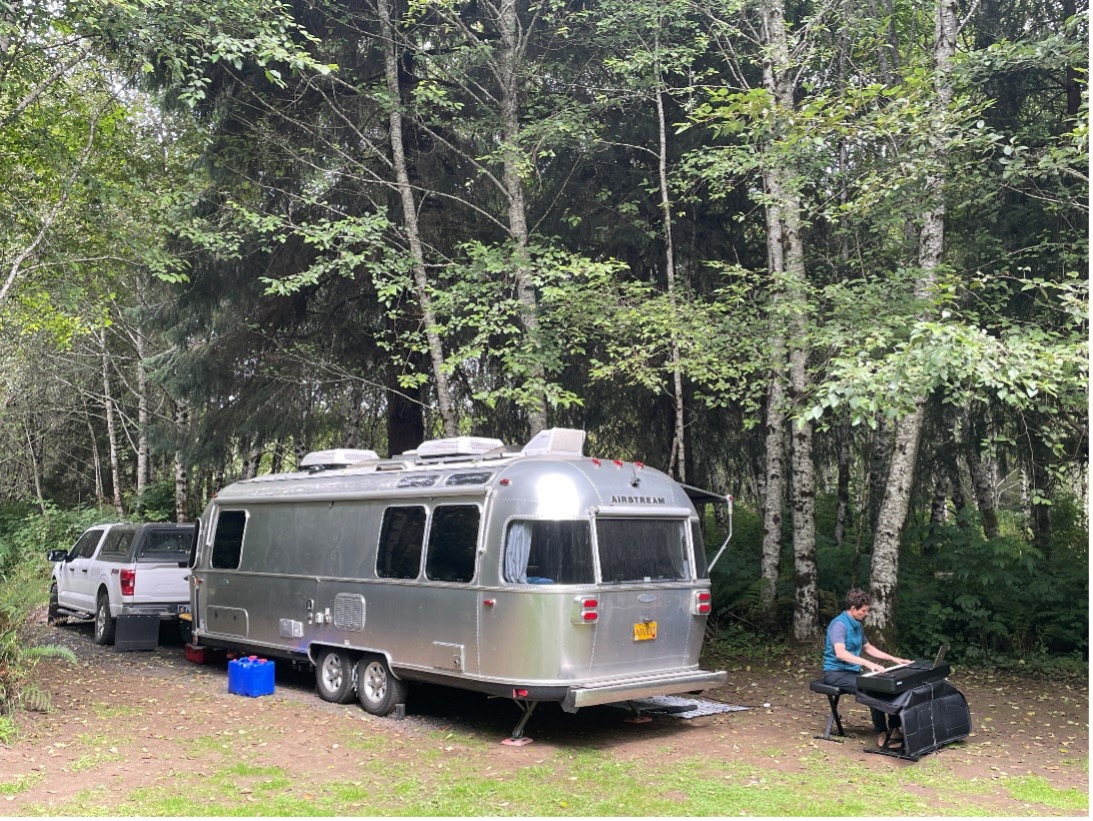
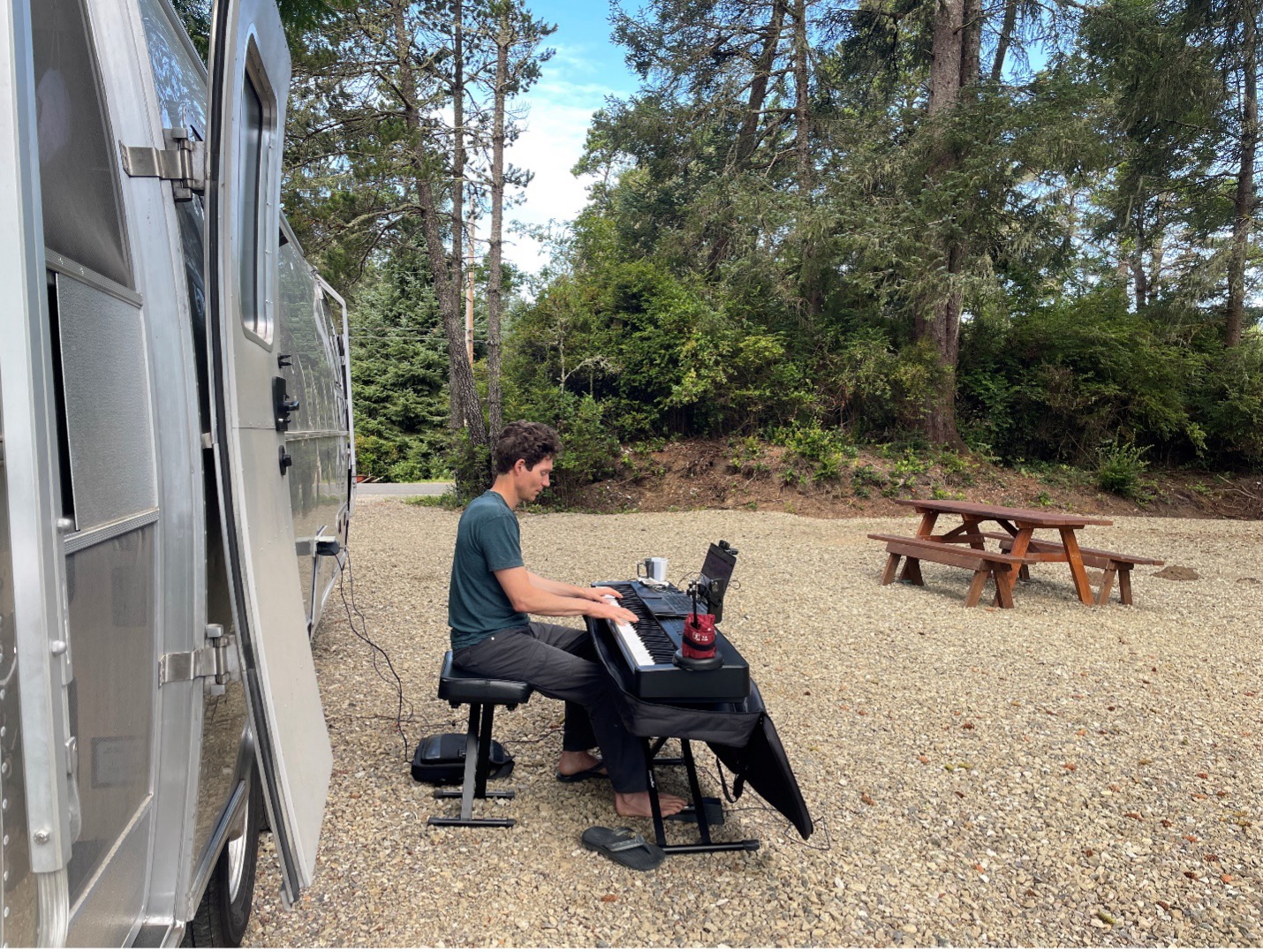
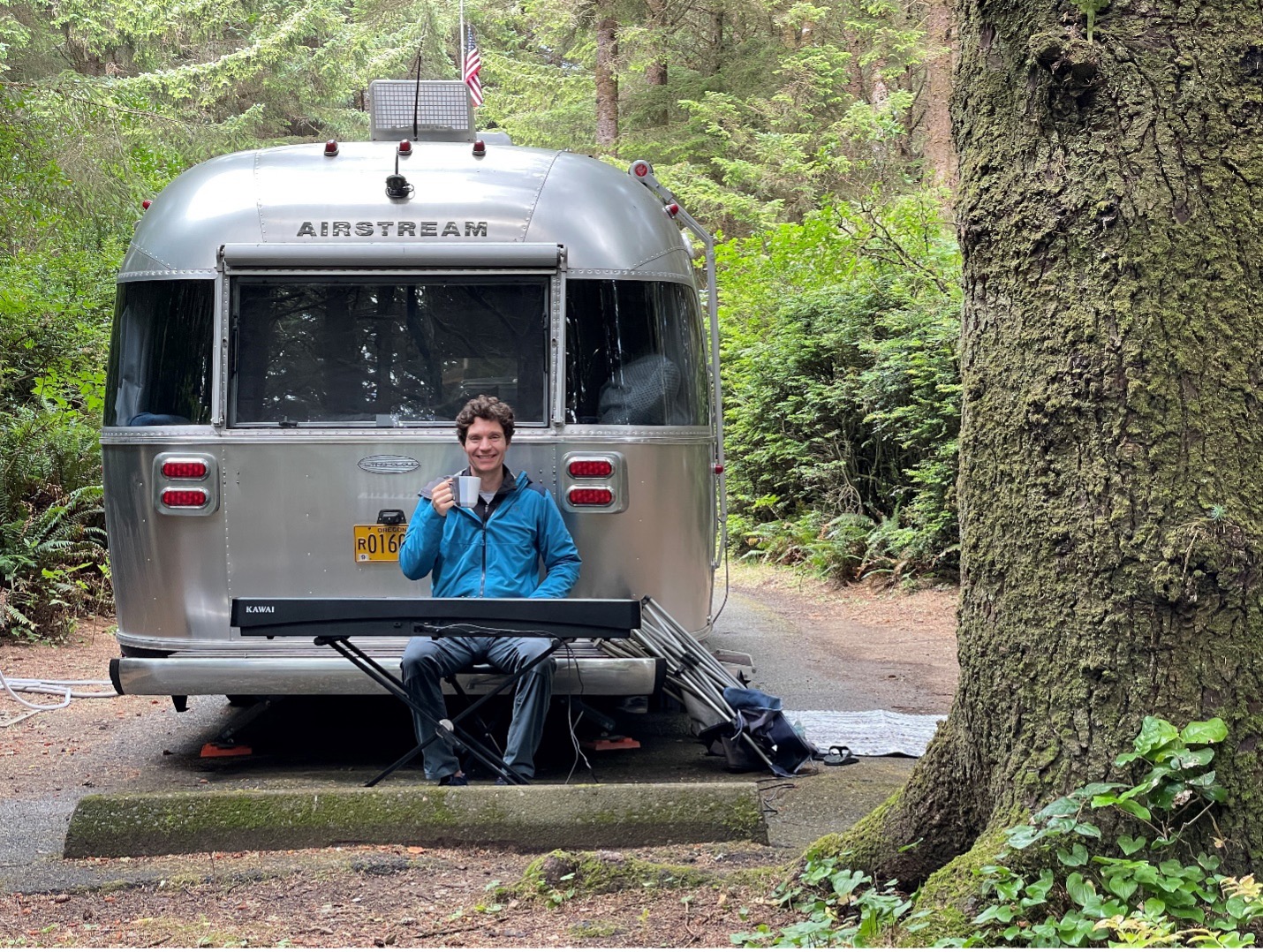
When he isn’t playing piano, Dakota Gale enjoys learning languages (especially Italian) and drawing. He also writes about reclaiming creativity as an adult and ditching tired personal paradigms in his newsletter, Traipsing About. He can often be spotted camping and exploring mountain bike trails around the Pacific Northwest.


This site is free to access and ad-free, and takes many hours to research, write, and maintain. If you find joy and value in what I do, why not

I have written before about how some repertoire is considered “off limits” to amateur pianists, and should remain the preserve of the professional. I think what such an attitude demonstrates is how the “core canon” of piano repertoire is held in high regard, almost to the point of zealotry, and that certain pieces should remain on their exalted pedestals, accessible only of a chosen few. My view has always been that the music is there for the many not the few, that it was written to be played, whether you are a world-famous professional musician or a “Sunday pianist” who enjoys playing in the privacy of your own home. We forget that many of the pieces which now regularly grace concert programmes around the world were intended for a more intimate salon or domestic setting – music to be played for friends and amongst friends, or at home. One piece which seems to reside on the Mount Olympus of piano repertoire is Bach’s Goldberg Variations. Revered by musicians, students, critics, teachers, academics and audiences, the Goldbergs represent music of highest order of complexity, invention, technical challenge, expression and – if one is playing the entire set – stamina One of the foremost reasons for the Goldberg Variations’ esteemed reputation is the sheer technical and artistic mastery the work demands of the pianist. Comprising an intricate series of 30 variations upon a simple bass line, this music presents a seemingly formidable challenge to even the most accomplished pianist. Each variation presents its own unique set of technical hurdles, from rapid hand crossings to intricate ornamentation and virtuosic passages. In addition, the Goldberg Variations are celebrated for their intellectual depth, requiring an understanding of counterpoint, harmony, and structure. Then there is the emotional and expressive depth of this music: each variation is infused with a distinct character and mood. From playful, witty and cheerful to melancholic and introspective, the variations traverse a wide emotional spectrum. Of course these aspects are true of many other pieces, not just those by Bach, but the piano sonatas of Haydn, Mozart, Beethoven and Schubert, for example; Chopin’s Nocturnes; Brahms’ Intermezzi, and much, much more. These are universal aspects which make music interesting and engaging, challenging and satisfying. While the amateur pianist may not be able to tackle the entire Goldberg Variations, individual variations are within reach of the intermediate to early advanced player: the Aria, and Variations 1, 2, 4, 7, 13, 18, 19, 21 and 25 – and all can be played and enjoyed as stand-alone pieces. (The Aria appears in the 2024 Trinity College London Grade 8 piano syllabus, thus bringing this wonderful music to students of all ages, and, perhaps, encouraging further exploration of Bach’s mighty achievement.)
As a starting point for tackling some of the Goldberg Variations, it is worth exploring some of Bach’s other keyboard music, both as a player and a listener. For example, the two- and three-part inventions are a useful lesson in his use of counterpoint; while the 48 Preludes and Fugues demonstrate a wide range of moods and colours. Within the suites, there are movements which recall the Aria of the Goldbergs (for example, the Sarabande from the fifth French Suite). In addition, all of Bach’s keyboard music offers insight into his invention and imagination, his harmonic language and his use of ornamentation to enhance the melodic line.
Learning the Goldberg Variations, whether in its entirety or single variations, is an absorbing, long-term endeavour for any pianist. Be patient and embrace the journey, but never ever believe that as an amateur pianist, you shouldn’t be playing this glorious music! There will be moments of frustration, but perseverance will lead to growth as a pianist, a sense of personal achievement, and a deeper understanding of Bach’s wonderful music.

This site is free to access and ad-free, and takes many hours to research, write, and maintain. If you find joy and value in what I do, why not

The Piano, a surprise hit for Channel 4 earlier this year in which talented amateur pianists performed in public on pianos placed in railway stations, is back for a second series – and the production company, Love Productions, is looking for participants.

The first series showcased amateur piano players across the UK, from major cities to rural towns. It introduced some remarkable talents, including Lucy, a blind, neuro-divergent girl who astonished and moved viewers with her expressive playing. Other participants shared personal stories where the piano and music had helped them overcome trauma or difficulties in their lives, as well as people who simply found joy in music. The series was a wonderful celebration of the nation’s favourite instrument, and the second series will continue this theme, seeking out more great amateur pianists from the around the UK. Once again, performances will be critiqued by superstar pianist Lang Lang and singer-songwriter Mika.

Applications are open to anyone who enjoys playing the piano, no matter what genre of music, be it classical, jazz, boogie woogie, pop. Essentially, as long as you are at amateur level and have a real passion and love for the piano then you are eligible to take part. Auditions/casting take place next month so you have just under a month to apply. The production company is particularly keen to receive applications from female/non-binary/people who identify as female pianists.

How to apply:

You can be any age to take part

If you are OVER 18, please head to takepartinthepiano.co.uk

If you are UNDER 18, please head to takepartinthepiano.co.uk/under18


Read about the first series of The Piano here

Watch series 1 of The Piano here