British composer and singer Joanna Forbes L’Estrange has been commissioned by the Royal School of Church Music to write a special anthem to celebrate the Coronation of King Charles III on 6 May 2023. Read on to find out more about Joanna’s musical background, her influences and inspirations, and why there are “no rules” to composing…..
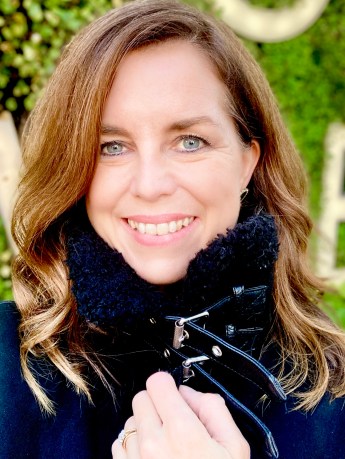 Who or what are the most significant influences on your musical life and career as a composer?
When I was 8 years old, my foster father suggested to my younger sister and me that we join our parish church choir of Bisley and West End in Surrey. The choir was small – I remember we only had one tenor, a rather elderly man called Harry – and Em and I were the youngest members by several decades, but it was there that I fell in love with singing in choirs and with church music. For the next ten years until I was 18, it was a routine of Thursday evening choir practices and Sunday services, crunching up the long gravel path to the church, our freshly-washed, dusky blue robes draped over our arms. Most Sundays it was Eucharist but, once a month, we sang Evensong and these were my favourite services. We would often sing the hymn ‘The day thou gavest, Lord, is ended’ which I thought had the most beautiful melody.
By the time I arrived at Oxford University to begin my music degree, I was longing to sing in a really good choir. There hadn’t been a choir at my comprehensive school so my sole experience of choral music had been my little church choir. I remember being at freshers’ fair, walking among the many stalls of clubs and societies and feeling distinctly overwhelmed, when I suddenly spotted a sign saying “Schola Cantorum of Oxford”. I thought: how cool would it be to sing in a choir with a Latin name?! and added my name to the audition sign-up list. A week later, as I walked into the audition room, it occurred to me that I’d never done an audition before and I suddenly became nervous. Imposter syndrome properly set in when I was asked if I’d done Eton Choral Courses – um, no – or been a member of NYC – er, no. I hadn’t actually heard of either thing and was starting to wonder what on earth I’d been thinking putting my name on this list. However, I knew I could sing and I knew that I was a strong sight-reader, having studied the piano and cello to Grade 8 and been blessed with perfect pitch, so I gave it my best shot and….got in! A whole new world of choral music opened up to me over those next three years: we gave concerts in stunning chapels, recorded several CDs and went on tour to France and Japan. I was in choir heaven.
Three years after graduating from Oxford, I joined the five-time Grammy® award-winning vocal group The Swingle Singers as soprano and Musical Director. Over the next seven years I became obsessed with jazz vocal groups and jazz close harmonies, listening to recordings by groups such as Les Double Six, Manhattan Transfer and The Real Group. I wrote some arrangements, my first one being for the four female voices of the group, my arrangement of Amazing Grace. I also enjoyed twenty extraordinary years with Tenebrae, one of the world’s most respected professional chamber choirs, performing and recording many of the greatest choral pieces.
When I was in my early 30s, my foster father became ordained and, a few months before his ordination, he asked me to write a piece of music for our parish choir to sing. I replied “but I don’t compose music” to which he said, in his typical no-nonsense fashion, “well, it’s time you did”. My father Sebastian Forbes is a composer and my grandfather Watson Forbes had arranged hundreds of pieces for the viola but it had never occurred to me that I too could be a composer. I’d written a couple of pieces for GCSE Music but, to be a “proper” composer, I was under the impression that you had to have a calling at birth and be composing from the age of six to qualify. I also thought you had to be a man. I’d been born into a family of professional musicians, sung in choirs for over 20 years, achieved Grade 8 on two instruments and done a music degree and yet I’d never once been exposed to any music written by a woman. It’s unthinkable, really, but that’s how it was. I still have my chorister’s handbook from when I joined Bisley choir; the whole book is about boy choristers and there’s not one mention of girls. We’ve come a long way since then, I’m happy to say.
I am forever indebted to Reverend Richard Abbott for asking me to compose that piece because it set me on my path as a composer. When he died last November, following a long battle with cancer, my sister and I returned to Bisley church for the funeral and the choir sang my setting of Go forth in Peace, the piece I’d composed for his ordination.
All of my experiences singing in choirs have informed my composing but the most significant is my time singing in my local church choir. There are plenty of composers, my father for one, who write highly complex and challenging music; I love to sing that kind of music myself but, as a composer, that’s not what I feel moved to write. It’s strange to recall that after I met my husband, who’d been a star chorister in the choir of New College, Oxford, I went through a phase of feeling quite bitter that I hadn’t been a chorister in a big cathedral choir. Throughout my singing career I’ve become aware that most of my colleagues did indeed attend Eton Choral Courses and National Youth Choir when they were younger and, again, I have felt annoyed that I wasn’t given such opportunities. But now I realise my calling as a composer is to write the kind of music which choirs like the one I sang in as a child and choirs like it all over the world can sing and enjoy singing. I care deeply that my music is as accessible as possible to choirs of all sizes and abilities which is why I record demos of all of my pieces so that singers who aren’t necessarily confident in reading music can listen to their vocal line and learn the notes by ear instead.
What have been the greatest challenges of your career so far?
At the start of my career as a freelance singer I was full of self-doubt and rather shy. I’d come from a family of high-profile professional musicians, which felt like a lot to live up to. I was forever comparing myself with my viola-playing grandfather, my composer father, my opera singing uncle and aunt, wondering if I’d ever make the grade. I now know that comparison is the thief of joy – thank you Brené Brown – and try to avoid comparing my career with anyone else’s. I also didn’t know where to begin as a freelancer because, in those days, there weren’t all of the wonderful apprentice schemes that there are now. I had to learn to believe in myself, trust my instincts, forge my own path and seek out mentors. This is the advice I now pass on to young people entering the profession. Everyone’s route into the music business is different and there’s no single path to follow. We have to find our own way and hope to meet people who can give us good advice.
When I became Musical Director of The Swingle Singers, I had to deal with a few sexist comments such as “women are too emotional to be in charge” and “arrangements for just upper voices wouldn’t work because there’s no bass line”. It also took me a while to get used to the particular style of male banter peculiar to those men who’ve been choristers in all-male choirs most of their lives. Leadership of The Swingles had been rather male-dominated since the 1960s and so it was a challenge at the beginning to be a female MD but I’m happy to say that that tide had turned by the time I left the group and Ward Swingle, the group’s founder, wrote me a beautiful card thanking me for having established a sense of togetherness in the group, which meant everything. At Ward’s funeral eight years ago, my arrangement of Amazing Grace was sung as his coffin was lowered into the grave; that was a moment I’ll never forget.
Covid was a huge challenge to all artists, of course. I kept myself sane by being creative, writing and recording a lot of music at home, but I missed the camaraderie of being with other musicians. There’s nothing like it.
What are the special challenges/pleasures of working on a commissioned piece?
I love writing to a commission brief because having certain parameters in place before I put pencil to manuscript paper actually gets the creative juices flowing more readily than when I’m composing without a brief. For example, with the commission for the coronation piece, the scoring, duration, subject matter and accessibility were all established before I began writing. Once I’d found my text, the music came relatively quickly. I’m currently working on a number of other commissions: I’m writing a grace setting for Churchill College in Cambridge for their non-auditioning choir Inter Alios to sing at formal dinners; the brief here was to keep it short and simple and for the style to be something along the lines of my Give us Grace which is a gospel-inflected setting of a Jane Austen prayer. I’m also writing a part-song for a wonderful upper voices choir in north London called Jubilate; for this one, I’ll write my own words which is something I enjoy doing; it’ll be about the joys of singing in choirs.
Of which works are you most proud?
It’s hard to say because each piece/song I’ve written has made me proud for different reasons. I’ve written a number of songs for upper voices, often incorporating ideas surrounding gender equality, including Twenty-first-century Woman which we recorded at Abbey Road Studios in 2018 with an all-female choir, band, engineering team and production team. I conducted the session and it was one of the most rewarding experiences of my life. We also made history by being the first ever all-female recording session to take place at Abbey Road Studios. That was a proud moment. I made a music video which features, among others, Prue Leith, Joanna Lumley, Ruby Wax, the Bishop of London, the Harlequins Rugby Team… I also wrote a song called A place for us maids to mark 40 years of women students at Cambridge and one called A woman (wearing bloomers) on a wheel which is a witty Victorian-style song about the impact which the invention of the bicycle had on women’s clothing. It’s been made into a wonderful film by the National Youth Girls’ Choir of Great Britain, filmed on location at the Beamish Museum in Durham. For the Military Wives Choirs of Great Britain I co-wrote a song, with my husband Alexander, called We will remember them which tells a war story from the perspective of wives married to fighting soldiers.
Of my church pieces, I think I’m most proud of my King’s College Service and my Preces and Responsesbecause they’ve been sung so many times by choirs in the UK and the USA. I’m also thrilled that Tenebrae chose to record my Advent ‘O’ Carol on their latest Christmas album. It’s a stunning recording.
How would you characterise your compositional language?
A good tune, something memorable such as a refrain or chorus, jazz-inflected harmonies, rhythms which spring from the natural rhythms of the words I’m setting. I’m not a ground-breaking composer, I’m not stretching the boundaries of choral music or finding a brand new compositional language. I don’t have any desire to win competitions (although I do have a secret desire to write an Oscar-winning end credits song for a film!) or to have accolades bestowed upon me. I just want to write lovely music which choirs want to sing.
How do you work?
I write at my lovely old Steinway piano which I inherited from my father when he inherited his mother’s piano. I have to have a tidy room in order to feel creative so I often start the day with a general clear-up – I have two teenage sons so there’s always plenty of stuff lying around! Then I settle down, recite the text aloud a number of times until (with any luck) a melody begins to suggest itself to me. At this point, I start to sing as I accompany myself on the piano. Harmonies come as does an overall shape and, once I start to commit the music to manuscript paper, I’m immersed and tend not to come up for air until I’m hungry for lunch. If I feel blocked, I go for a blowy stroll across the fields into the village and usually get some great ideas as I walk which I sing into the voice-memo app on my phone, much to the amusement of passing dog walkers!
As a musician, what is your definition of success?
If you can make a living doing something you love, to me that is success. Contentment is everything. I may have made more money being a barrister (which is the profession suggested to me by a school career’s advisor!) but I don’t think that would have made me happy because I always knew, from the age of 2, that I wanted to be a musician. When I’d just graduated from Oxford I wasn’t ready yet so I did a PGCE and taught music in a secondary school for three years, having singing lessons every week until I felt ready to start auditioning for singing work.
I never take my career for granted and am grateful every day that I get to earn a living from composing, singing and coaching choirs.
What advice would you give to young/aspiring composers?
I would say this: there are no rules. Stay true to yourself and write the music you feel compelled to write, whatever form that takes. Authenticity is everything. By all means be inspired by other people but don’t feel you have to write like they do. We are all different and we were put on this earth to be uniquely ourselves. Don’t compare yourself with other composers; stay in your own lane.
On a more practical level, having additional strands of income which can sustain you during lean composing patches can be a lifeline. For me, it’s being a session singer for film and TV soundtracks and coaching choirs and a cappella groups. It’s good to have lots of strings to your bow if you want to be a freelance musician. I learned that from my grandfather Watson Forbes whose autobiography is actually called “Strings to my bow”. He was the viola player in the Aeolian String Quartet but he also wrote arrangements for the viola, conducted orchestras and was an examiner for the ABRSM.
What do you feel needs to be done to grow classical music’s audiences?
We need to foster a love for classical music when children are in primary school and keep that going all the way through to the end of secondary school. Singing in choirs, learning to play an instrument, going to orchestral concerts, hearing wonderful choirs in beautiful acoustics….all of these experiences at a young age create adults who love classical music just as listening to pop music, playing in a band and going to see bands live create adults who love pop music. The trouble is that unless the government makes music a priority in schools again by investing in schemes such as free instrumental lessons for a year, trips to concerts etc classical music will be seen as elitist, exclusive to the independent school sector or to families who can afford to pay for instruments and music lessons. I went to very unremarkable schools but, in the 1970s, even there we had a recorder group in my primary school and sang every day in assembly and in the classroom. The problem we’ve got nowadays is that very few primary schools have someone who can even play the piano. It’s been proven time and time again that schools thrive where there is a good arts programme; failing schools have been revived by installing a good arts programme. Music should be an essential part of the curriculum as learning an instrument improves learning across the curriculum.
What’s the one thing in the music industry we’re not talking about but you think we should be?
Gender bias. I have been singing on film soundtracks for over 20 years and have never been conducted by a woman and have only once (last year) recorded a soundtrack composed by a woman. It used to be the case that all of the sound engineers and producers were men too but that has changed in recent years and you’re just as likely to see a woman setting up the microphones etc as a man. We now have (at last) girl choristers and women lay clerks and choral scholars so things are gradually moving in the right direction. Let’s see more women on the conductor’s podium in London’s studios next, please!
What do you enjoy doing most?
Spending time with friends who enjoy making music for fun, even if it’s also their profession. On New Year’s Eve, our house was full of friends and music. We had everything from a teenage bagpiper to a jazz jam around the piano with our sons Harry (piano) and Toby (double bass) to an impromptu performance by my friend Grace Davidson (soprano) of Handel’s Let the Bright Seraphim, accompanied by Nigel Short (Artistic Director of Tenebrae) on the piano and trumpet obbligato courtesy of Mark Armstrong (NYJO Director), to a raucous sing-song of a brilliant arrangement by my husband Alexander L’Estrange (who writes for The King’s Singers) of ABBA’s Happy New Year at midnight. We also love to have a cappella singer friends over for dinner and to sing Take Six arrangements for fun. Once a month, we meet up with friends in a pub in London who love to sing 16th-century music by Tallis, Tye, Byrd and Gibbons from part-books with original, early notation. Eclectic is the word! No matter what the style of music, there’s nothing better than making music with friends.
Joanna Forbes L’Estrange is an internationally renowned British soprano and jazz vocalist, specialising in contemporary music of all styles. A Master of Arts music graduate of Oxford University, she began her career as soprano and Musical Director of the five-time Grammy® award-winning a cappella group the Swingle Singers and, since then, has enjoyed a busy freelance career as a concert artist, studio session singer, song writer, choral composer and choral leader. She has also appeared on television as a judge for the Sky 1 series Sing: Ultimate A Cappella.Joanna has performed on many of the world’s most famous stages, from New York’s Carnegie Hall to Tokyo’s Orchard Hall to La Scala Milan and the Châtelet in Paris. In the UK, she has sung to a packed O2 Arena with Pete Tong and the Heritage Orchestra and at the Proms, Edinburgh International Festival and Glastonbury as well as for the Royal Ballet at the Royal Opera House, Covent Garden. She is much in demand as the soloist for Will Todd’s Mass in Blue and her solo concert repertoire also includes Howard Shore’s Lord of the Rings trilogy, Duke Ellington’s Sacred Concerts and numerous works by Steve Reich, Stockhausen, John Adams and Luciano Berio, whose iconic masterpiece Sinfonia she has performed fifty times with the world’s leading orchestras and conductors. Recordings include a cappella and solo jazz albums, contemporary orchestral works, CDs with the award-winning chamber choir Tenebrae and hundreds of soundtracks to video games and Hollywood films.Joanna’s choral compositions and songs are published by RSCM, Faber Music and andagio. In 2018, she made history by organising and conducting the first ever entirely female recording session at London’s Abbey Road Studios, recording her song Twenty-first-century Woman as a charity single for International Women’s Day with an all-female band, choir and production team. All proceeds from downloads of the song go to charities supporting girls’ education worldwide.
www.joannaforbeslestrange.com

 PRESS RELEASE


 RSCM Director Hugh Morris says: “We were delighted that in 2022 many hundreds of choirs were united in singing a piece specially written for the late Queen’s Platinum Jubilee. Now, in 2023, we hope that even more will want to learn Joanna’s The Mountains shall bring peace and join with choirs from around the world to celebrate the first Coronation in 70 years.”
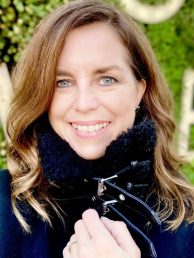 Composer Joanna Forbes L’Estrange says: “I was keen to find words which reflected not only King Charles’s faith but also something of his passion for the natural world and his love of the outdoors. When I think of our former Prince of Wales, I picture him walking in the Welsh mountains or in the Scottish Highlands. I’m also all too aware that this Coronation is taking place during a very turbulent time for our country and our planet and so I was searching for words which would in some way give us all hope for the future. Central to the commission brief was a big, singable tune, the kind of memorable melody which anyone and everyone can enjoy singing at the tops of their voices.”




 The Cross-Eyed Pianist