Guest post by Natalie Tsaldarakis, Premier Prix in Piano, BA, MM, MMus, MISM (Doctoral Researcher, City, University of London)
I have been performing, recording commercially, and teaching in a variety of contexts since 1994. As both a professional and a parent of a young aspiring musician (in her case a violinist) it was always apparent that there is not much help available in understanding what skills are needed to be developed at each stage and what are the expectations specifically in the training of elite performers especially before the age of 18.
For someone starting out as a beginner, there is a real problem finding a good teacher, not for lack of good teachers, but rather for lack of discernment on the parents’ side.
On the other hand, for someone already playing to a good standard and entertaining thoughts of entering a prestigious conservatoire to pursue music as a profession, there is equally little guidance. How good does one have to be? What kind of repertoire, how extensive does it need to be, and what range of experiences are tacitly taken for granted on entry?
There are quite a few posts actually in sites where both students and parents frequent, which show just how difficult it can be to assess one’s own standard and needs objectively. Traditionally such understanding and guidance comes from the teacher and certainly from consultation lessons with conservatoire professors. An interesting article on the matter, comes from Rodney Friend, MBE (former leader of the NY Phil and professor at the Royal Academy of Music in London) published in the Strad Magazine, which succinctly delineates the three kinds of young musicians who should be entering conservatoire training of the highest order in order to be assured, in these very uncertain times, of a good future as a professional (Are conservatoires preparing young string players for the music world? First published 26 August 2019). The professor defines the Exceptional, the Highly Gifted and the Gifted pupils as follows: the Exceptional would be the top of the profession, the exceptional few soloists of international repute; the Highly Gifted as ‘the backbone of our profession and, because of their performing skills and characters, these players will achieve fulfilment and success in a mixture of activities – solo playing, positions within great orchestras, chamber music and important teaching posts’; and finally the Gifted as those who ‘depending on a realistic level of expectation, will find employment and fulfilment with orchestras and music schools of varying levels other than world-class. It is in these areas that the greatest opportunities exist, and to achieve success here will always be applauded and respected by the profession as a triumph of dedication, effort and skill.’
The professor argues that conservatoire admissions need to be brutally honest at the point of entry, but those of us engaged in preparing young talents at earlier ages cannot disregard the fluidity in the development of young children as their interests and motivation can change rapidly. Thus, in my role as a teacher, I always try to help my students come to grips with what is required to build a good technical and musical background, while they decide what is for them or not from a career perspective.
So, here are a few things that can help further while navigating training in the lead up to post-18 senior conservatoire admissions:
PART 1- The teacher-parent-student relationships and general observations on training:
- Choice of teacher should match the level of development and be proactive when problems arise. For example, if technique and tension are a struggle, finding someone who will be aware and able to guide is also very important. It may be worth discussing with the current teacher about working with a certified Alexander or NLP technique practitioner, for example, or even a physiotherapist trained to deal with young musicians.
- An international soloist may or may not be a gifted teacher. Conversely, a gifted teacher may not have a consistently active, full performing schedule, otherwise pupils may be taught rarely and/or by assistants. This situation usually affects conservatoire-level students or young professionals, and may be nevertheless a very positive overall stage of training. A glance at the teachers of the finalists for recent BBC Young Musician of Year competitions, is enough to discover the wealth, teaching calibre and diversity in modern UK up and down to country. The range is from teachers who are unknown to the wider public, yet experienced and knowledgeable, to illustrious ones such the Heads of piano at Chetham’s, RCM, or Royal Birmingham Conservatoire to name but a few. In London, the pool of teachers is really significant but also varies extremely in its quality. To be helped in making decisions choosing the right teacher, reputation, online information, other musicians, the teacher’s own background, and most importantly consultation lessons are the only way to get a better understanding.
- In training elite pianists at post-Grade 8 level of performance (for example aspiring students learning Beethoven Sonatas or other repertoire which is heard at professional concerts), the teacher must have experience of performing and teaching at this level. Even in the case of such a consummate teacher as Gordon Green (1905-1981), who was the British piano teacher to international stars such as Stephen Hough, Martin Roscoe, John Ogdon, Martino Tirimo, Philip Fowke, to name a few, there is evidence that he performed extensively at the start of his career, until he decided to dedicate himself entirely to teaching. For example, we do know that he was repeatedly featured as guest soloist for BBC radio and the BBC Symphony Orchestras (unfortunately now all such audio examples are lost from the archives). In short, a teacher need not have a full-on or even current performing schedule, but it is important to have the experience of performing at top level at some point in their trajectory. This is not necessarily the case in the separate matter of teaching and learning in the realm of amateur performance. However, experience of performing professional level repertoire is of paramount importance in the training of future elite performers.
- Because individual lesson consultations can be costly, the best alternative is to attend masterclasses either as an active participant or even as an audience member where one can observe multiple teachers at a short amount of time. The same goes for local festivals where pupils of a particular teacher may impress and where the interested pupils or their parents have the ability to informally get some information and perhaps an introduction.
- For younger pupils, the triad of pupil-teacher-parents is of utmost significance: if any party is less than pleased, regardless of reasons, progress can be really hampered. A really well-known teacher, who nevertheless doesn’t think that highly of a particular pupil’s abilities or their potential can be damaging, but this is usually an issue for those beyond Grade 8 (UK exam boards). An extreme example of this is the well-known case of young Lang Lang: his first encounter with a famous Chinese piano teacher led the teacher to proclaim Lang Lang not good enough, and consequently his father to ask him to jump off the balcony, presumably because he had disgraced the family. Of course, this was an extremely tough and even cruel reaction on the father’s side, and the pianist himself remarked that had he not amounted to much, his mental health would have suffered.
In a different scenario, a happy pairing of teacher and parents, while the pupil is unhappy, will only help to diminish motivation. Conversely, a good working relationship between pupil and teacher, without family approval will also result in unwanted tension and less than optimal results.
- From this web of relationships, attitudes and ensuing delicate balance, I believe that a good parent-pupil relationship comes first. In order to achieve this, the parents should avoid leading from the front: parental ambitions should always take the back seat, while well-being, consistency, and good practising habits should be supported. It is only one of the rarest cases when a teacher underestimates the abilities of a pupil, such was the case of Lang Lang, because, in such a competitive field, a good teacher can only showcase what their teaching approach can achieve through hard-working, talented students. Such pupils do tend to have parents able to support them emotionally in their learning journey without the extremes of laissez-faire, pushing too hard, or giving up before a reasonable amount of time has been invested.
- Unless parents are themselves musicians trained in the exact same instrument as that which their child is learning, they should not presume to be ‘teaching the child’, just because they are intently listening during the actual teacher’s lesson. Instead, guiding, encouraging, discreetly supervising practice, and reinforcing what was taught in the lesson is a wonderful state of affairs, time-consuming to be sure, yet allowing for bonding of the family over creativity and Art. Parents also forget that one of the most important things they can do for their children is to take them regularly to concerts and recitals, even if acculturation rather than elite performance training is the ultimate goal of the music lessons. In this manner, the teacher, the student, and their family are partners invested in making and sharing music.
Encouraging engagement with the arts more generally, such as visiting exhibitions and museums, going to the theatre, and reading widely, are all indispensable in raising children with strong inner lives that, in the long run, will help them deal with a world which may seem confusing or even cruel at times. Solace and inner strength seem to have been overlooked in the current state of affairs, at least in state-sanctioned education, where the focus seems to be on linking students’ education to the labour market (for those interested, see https://publications.parliament.uk/pa/cm5803/cmselect/cmeduc/55/report.html).
- Having two teachers for the same subject is counter-productive, even if the opportunity arises to get a second one at school, usually for free through a scholarship programme or funding, or at very cheap (part-subsidised) rates. This consumer mentality, that more is better, does not apply to Art and can really hinder progress. Teaching does take on the form of apprenticeship, certainly at higher levels, and the focus and content does differ greatly from one colleague to the next. If teaching itself were to be so uniform, then two teachers would still be superfluous to begin with, and/or we would even turn to AI. If we ever do so for music, and there are already apps and ‘remote methods’ on the market claiming to be able to teach people how to play piano, we will lose sight of the fundamental principle that the physical aspect of instrumental performance is only the starting point. Technique is a springboard for the eventual development of a unique artistic expression, but it is by no means tautological to interpreting In other words, making music is more than just playing all the right notes at the right time, although this is a requirement. Furthermore, the underlying physical training (not to mention embedding theoretical/analytical elements towards understanding the score) differs from teacher to teacher, depending on their own approach to the instrument. The approach is also influenced by the teacher’s prior training and philosophy, which is also linked to schools of pianism and views on performance and its practices, none of which is a given or singular.
- Regardless of purpose, the lessons themselves need to be consistent, once weekly being the norm in the UK. Once monthly is only possible for young adult musicians performing at a Master’s level and beyond, as their approach and understanding of both repertoire and technique is mature enough to avert disasters in-between lessons. Meanwhile, three hours of instruction per week is not unusual in other countries and is certainly justified by the sheer length of the repertoire post-Grade 8 (UK).
- Studio hopping, where frequent switching of teachers is not driven by a genuine need for a fresh or better approach to training, is really a bad habit. This can actually be damaging for the student in the long run.
However, switching teachers may be recommended at various pivotal points: the guiding principle is not to switch unless progress and learning remain stagnant over a period of several months, through no lack of practice or diligence on the student’s part. I remember asking one of my early, local teachers for advice and guidance as a young teenager, when physical tension produced less than stellar results musically, simply to be told to tighten further my hands to achieve the desired speed (a contradiction in terms, or a one-way ticket to physical trouble). Needless to say, even though I didn’t have the skills to assess the source of trouble or find a solution by myself at the time, nevertheless this was a clear indication that I needed to switch to a reasonable teacher who would prioritise my physical well-being.
In less extreme cases, a good way to monitor progress is of course passing the graded exams and paying attention to the resulting feedback itself. Ideally the pupil will be guided by an experienced teacher who can give advice and suggest opportunities to perform and compete judiciously, so that repertoire, technique, and confidence in performing in public can all develop harmoniously. At any rate, discussion with the teacher should precede switching studios and certainly, where possible and when in doubt, the opinion of other experienced musicians may be sought.
- There are instances in which students may ultimately decide to leave a studio because in their opinion the repertoire is not demanding enough. In this case, the driving force behind this request seems to stem from a need to keep up with peers from other studios and/or from their own preconceptions about what progress should look like. If the purpose of the lessons is to become a better musician, there are certainly no shortcuts. Certainly, harder challenges cannot be set if the current ones are not completed at the required standard. Furthermore, unwillingness to engage with repertoire one does not approve of, without having prior experience or knowledge, is a sign that discipline is lacking too. On the other hand, the piano repertoire nowadays is vast and the skills need to keep developing at a good pace through a varied musical diet.
- A good piece of advice is ‘to keep working on the edge of one’s comfort zone’, which forms part of the deliberate practice mindset (see recent research on the matter by psychologists Ericsson and Pool, Peak: Secrets from the New Science of Expertise, 2016; also cited in Malcolm Gladwell’s Outliers, 2008). This short article by Ericsson and Pool on TES is also useful: https://www.tes.com/magazine/archive/exclusive-growth-mindset-only-half-solution-you-need-deliberate-practice-mindset-too (Ericsson is the psychologist responsible for the concept of the 10,000 hour rule). As these psychologists are proposing, deliberate practice is indeed planning for performance and should prioritise addressing specific sections which are problematic. Trying to practice a piece by playing at top speed all or most of the time, means that there is too much reliance on muscle memory. The end result is that the piece can be performed well enough in the comfort of one’s own practice room, at least a few times, but will not hold up in front of others. When adrenaline rushes in, our senses get sharpened in ways we do not experience at home. Thus, practising mindlessly is practising for a state of mind which is not present in a pressurised situation and resembles a relaxed semi-trance. The ability to focus when practising is a skill itself and is often underestimated.
It takes 10,000 hours to build a skill to an international/elite level, but there aren’t enough hours in a lifetime to become anywhere near as good, if one does not pay attention. Thus, lack of conscious practice, usually present in less well-developed students, is also not able to withstand the interference of what Barry Green called the Critical Self in his seminal book, dealing with the related matter of performance anxiety, entitled The Inner Game of Music (for an entertaining video introduction to unwanted chatter and tools to cope, presented by the author himself, see: https://youtu.be/aeE60psLrI8). In agreement with the author, I too am of the opinion that either you engage critically in the practice room or you risk facing the agony of an intense, often inquisitive, awareness of nerves in public performance, experienced as dispiriting negative chatter in one’s mind.
- Having a passion for the instrument and its music is a given, but it is by no means the only thing necessary: motivation, discipline, and a deliberate practice mindset are key for developing the necessary skills. Although there may be divergence among students’ attainment at earlier ages, if elite performance is in one’s mind, by the age of 18 there should be a diploma standard level or repertoire, drawn from Bach (Preludes and Fugues, Partitas, Toccatas etc.) onwards, and a rather developed technique and musicianship, including passable sight-reading ability and an understanding of such basics as form and harmony. Ability to memorise and experience of playing in front of an audience, no matter how small, are also important contributors towards future success at senior conservatoire.
- It is unfortunate how students and parents may be misled by positive feedback into thinking about the possibility of a stellar career as a soloist. There are indeed examples of highly skilled performers who never achieved the kind of stardom that is so easily dreamt of. Published accounts, such as Stephen Hough’s Rough Ideas (A Financial Times Book of the Year 2019) gives a very thorough view of life as a concert pianist and the breadth of knowledge and level of motivation and engagement required.
- The inability to accept negative feedback as an opportunity for growth is also problematic. Stephen Hough writes of an encounter with a student at a masterclass, in which the participant played really badly, but declined the kind suggestions offered by Hough, because they were misunderstood as mere differences of opinion. Willingness to adapt oneself through teaching, rather than the other way around (trying to adapt teaching advice to one’s unwillingness to change) is really at the heart of the process.
PART 2: Towards the senior conservatoire with a view to a future in music
There are many trajectories when considering senior conservatoire entry: except for those entering a conservatoire as undergraduates, there are musicians who complete a first degree, either in music (musicology or performance) or in a completely unrelated field, who then join the senior conservatoire at a Master’s/postgraduate level. The UK institutions are quite unique in requiring a first degree for entry into a Master’s degree, regardless of subject. All depends on a successful audition, so preparation is key.
In the US and elsewhere in Europe, artist diplomas and postgraduate awards/certificates (non-Master’s degrees) are all available for those without a Bachelor’s degree in the same field (in this case, piano performance). Given the plurality of avenues in Europe, a useful resource is the Association of European Conservatoires (AEC) website, which offers detailed overviews per country: https://aec-music.eu/members/national-overviews/.
Finally, there are a few (?) pianists who train privately with a particular, important pedagogue, and are not attached to an institutional programme.
Regardless of the form training takes, it is desirable to show active participation in masterclasses, workshops, short courses (such as summer schools), and competitions. Awards are further strong indicators of potential because they are available through highly competitive auditions, and usually offer a mixture of financial support and performing opportunities. Examples include the annual awards available from the Royal Philharmonic Society, Awards for Young Musicians, Talent Unlimited etc.
On Competitions, not placing, or winning too early:
Competitions can really be very useful, especially if chosen wisely, but expectations need to be managed from the start, so they can contribute to growth and mental toughness. As judgement can be subjective and outcome depends on a combination of factors, some of which may have nothing to do with the performance itself, the primary focus should be on meeting one’s own targets, rather than ‘winning’. Such targets can include getting used to playing under pressure, playing from memory, projecting the music in the way the competitor and their teacher intended, especially at younger ages.
Public performance is a skill which can only be developed in the presence of an audience. With the focus on the interaction between the performer, the repertoire, and the audience, instead of the narrow outcome of a competitive event, it is be possible to be gracious whatever the jury’s eventual verdict may be and to accept constructive feedback. For competitions of high visibility, such as BBC Young Musician of the Year, exposure for the participants in the televised rounds is so high, that it really should not matter who wins. A few years back, one disgruntled teacher of an otherwise impressive, but unsuccessful competitor, retorted: ‘what should I tell my student now?!?’ My personal reaction is that we must never lose sight of the formidable opportunity afforded the competitors who access such a platform and introduce their art to the general public. My advice to entrants is to let everyone else fret over who should have won or who actually did, and just try to do their best in the service of music. In the very few cases of perceived ‘unfair’ outcomes, I have used them as lessons in mental toughness.
Gordon Green, who is the subject of my doctoral thesis, was greatly concerned about students winning too early, when more time was needed to expand their repertoire and bring the existing one to maturity. There are also the very real dangers of burn-out and physical strain when the opportunities ‘won’ are not commensurate with the existing level of preparedness. A few years back, I was on the jury panel when a young pianist was offered a major monetary award including a lunchtime concert. Not having the appropriate repertoire to honour the concert put him and the concert managers in a rather difficult position and closed several doors. A very different example was offered by Stephen Hough talking of his own win at the competition which opened the door to his budding career: it found him essentially unprepared and forced him to learn several concertos in the year following the win. Despite the happy ending, such a strain can be withstood by few and is best avoided.[1]
On regional UK competitive festivals vs international competitions and preparing for competitive events:
UK competitive festivals are meant to encourage a lifelong engagement with the arts, whatever the level. It is not appropriate to think that after a couple of wins at the local festival one can be equally successful at international competitions, such as the Cleveland (ages 11-18; https://www.pianocleveland.org/competitions/cipc-institute-for-young-artists-2023/cipc-for-young-artists/), the Cliburn International Junior Piano Competition (ages 13-18; https://cliburn.org/2023-junior-competition/), The Gina Bachauer International Junior & Young Artist Competition (ages 11-18 in two groups; https://bachauer.com/competitions/ ) etc. Moreover, the more sensitive players need to be exposed rather gradually, as compared to others who may be naturally drawn to the pure thrill of the competition itself.
Repertoire is a very important aspect from a variety of viewpoints: a young pianist must spend time listening critically. Both YouTube and Medici TV, for example, have a wealth of historical and modern-day concert pianists performing the majority of the repertoire. Awareness of pianists past and present, of repertoire itself, and of performance practices, is absolutely vital and takes a committed and consistent approach. The young pianist must dedicate time regularly to listen with the score in hand. Case in point: one of my young pianists said that he was doing a ritenuto where it was not marked (Debussy, Pour Le Piano: Prelude) because he had heard an unknown to him Russian pianist do it on YouTube. It turned out that this was Pletnev and he only slightly slowed down by a fraction, rather than a full-blown ritenuto. Critical listening thus needs continuous development. We then turned to Gieseking, as a historical figure of great import for the performance of Debussy: when we actually listened to his version, the pianist’s adherence to the score was astounding. The lesson was threefold: listen while score-reading, listen to more than one performance and compare pianists, and find out who these pianists actually are. Copying performances is not the way to develop a unique voice, but sampling what others have to offer, as a means to developing one’s own tastes and approach, is. Thankfully all this information is now one click away online.
Some closing general comments on the score and memorisation:
- Understanding the musical score is in itself very important. Nowadays, the weakening or even phasing out of music studies at primary and secondary school levels may pose a real threat in this aspect: when I interviewed British pianists for my thesis, most spoke of having acquired such skills through school, usually at GCSE and A levels (for example, Martin Roscoe, Karl Lutchmayer, Jonathan Powell and others). To this end, my recommendation to both students and teachers is to begin with the basics as soon as possible, regardless of age and level, starting with the key and the identification of the tonic note and chord. In younger children, repetition of the information leads to retention, even if true understanding may come later (not unlike practising the times tables in primary school). The understanding of the score compositionally is a skill that is often further weakened by a view of pianists as mere recreative artists.
- Memorisation needs to be developed as a separate skill. Some have phenomenal (photographic type) facility for it, for example Ogdon, Gieseking, Rubinstein, Richter, Lisitsa, while others have to work much harder. Much research has been done in recent years on acquiring expert memory, that forms part of a greater interest in peak (optimum/elite) performance more generally. Elite conservatoire training often takes for granted the memorisation of all pieces for performance not only for its exams, but also for the weekly lesson, which might involve preparation, from memory, of whole movements within a week. This is an important point, given that so many feel uneasy or uncertain about performing from memory and I believe it is further compounded by the lack of its requirement at earlier stages, such as for graded exams (ABRSM, Trinity College, MTB etc.) and at festivals. Although I appreciate not having to deal with the added stress, only too real for so many students, it also potentially creates a barrier for those who do set their sights on training at senior conservatoire level. It rests on the teacher to encourage memorisation as part of the training.
A word of caution for the ambitious parents: Back in 1921, the famous violin teacher Auer, whose illustrious pupils included Heifetz and Milstein and many others besides, remarked in his book Violin Playing as I teach It:
The parents of young children, or those who are in charge of their early training, so often fail to realize the seriousness of their act when they light-heartedly decide that a child shall have a musical career and forthwith select the instrument which is to bring him fame and wealth. […] The fame of great artists of the present and of the past gives stimulus to their ambitions for the youngster, and refusing to be at all dissuaded by those who know by experience the hazards of such an undertaking, they cling determinedly to the cherished idea which has taken entire possession of them. So it is that parents strive persistently toward the goal they have arbitrarily set their child, without pausing to consider that they may possibly be sacrificing his whole future to their misguided ambition for him. They send the child to study with some celebrated teacher in Europe or America- before the war Europe was preferred- to some teacher who has turned out famous artists- and wait expectantly for the realization of their hopes. They see no reason why their son or daughter should not one day soon gain as much fame and admiration as those others who have taken the world by storm. During the many years I have devoted to teaching the violin, I have had some characteristic examples of this attitude of mind. […] I have only a few times in my whole experience been able to deter parents who cherished such an ambition for their child, or to save the young ‘virtuoso’ from certain failure by inducing him to take up some other profession, in which he will stand a better chance of being useful to his fellow beings, and at the same time gain a more assured means of support for himself’ (pp.6-8).
In closing, good progress can be ensured under a good teacher’s knowledgeable guidance. When it comes to ambitions of joining an elite senior conservatoire (which usually come with published acceptance rates of between 0-10%), pragmatism should go hand-in-hand with the pianist’s own hopes and aspirations, rather than those of the parents. Unfortunately, when an ambitious and promising young pianist lacks in the psychological support of the parents, the outcomes may become more restricted in scope.
Every passing of a ‘test’ or competitive event, such as joining a national ensemble, getting a scholarship, and prizes at national rather than local levels are good indicators of future chances. Winning anything at all is to be celebrated like any win, but in the absence of worthwhile competitors, such as may often be the case in local competitive festivals, should not be used as the basis for building expectations of an international performing career. At all times, music should be the sole focus, not imposed but felt as an absolute necessity by the young musician. Music cannot be a career choice unless there is a real passion for it, tinged by a sense of the inevitable. When ambitions of achieving celebrity status greatly exceed the need for expression through music, these can be more easily achieved through social media and should preferably be indulged in this way.
If practising is a chore during the teenage years, this is a red flag, especially if an uninspiring teacher or practice instrument are not to blame. If the pupil is not curious to discover new repertoire and motivated to try out new pieces, especially now that it is so easy to do online for free, that is also a red flag. A less than keen ear and a weak sense of rhythm without the drive to develop them, the lack of intellectual curiosity and of emotional engagement in the presence of music, should all be strong indicators for some soul-searching, before spending energy in the pursuit of a performing career. Many students have talent for music, but only very few develop the necessary discipline and can withstand the gruelling regime that comes with elite performance.
Postscript…
Music is an incredibly versatile and rewarding subject. It is also important to keep in mind that an undergraduate degree in music can readily translate into a variety of exciting careers for those who seek beyond narrowly defined paths and expectations.
NATALIE TSALDARAKIS is a Greek concert pianist based in London, UK, member of the Ivory Duo Piano Ensemble and a Convivium Records Artist with four CD releases on this label. She was elected to membership of the American National Music Honor Society Pi Kappa Lambda in recognition of excellence at the conclusion of her M.M. studies in piano performance studies and was also selected competitor at international piano competitions such as the International Beethoven Piano Competition 1997 and the Gina Bachauer 1998. Natalie is also a graduate of Royal Holloway (MMus in Advanced Performance Studies, 2007) where her teachers included professors J. P. E. Harper-Scott, Nicholas Cook, and John Rink. Natalie is a doctoral researcher at City, University of London (Ian Pace, supervisor). Her thesis focuses on British and European pianistic traditions in the early 20th c., which involved interviewing several well-known pianists, including Martino Tirimo, Philip Fowke, Martin Roscoe, Deniz Gelenbe, Karl Lutchmayer. In 2021, she authored a chapter of the edited volume Classical Music in a Changing World (L. Kramer & A. Nones, eds., Vernon Press). Natalie was for a number of years trustee of the Cornelius Cardew Concerts Trust. Broadcasts include BBC Radio 3, WQXR (NY, US), ERA-1, ERA-2, ERA-3. She has been included in the American Concerto Compendium (2nd ed.) for the recording of Helen Hagan’s piano concerto which can be heard in the composer’s commemorative documentary by Yale University (2018). Previously Artist Teacher of the American College of Greece and piano professor at the National Conservatory of Greece for a decade, she has performed solo and as a chamber pianist in venues such as Athens Concert Hall, Sibelius Academy, Southbank, Steinway Hall, Fairfield Halls, St John’s Smith Square, St-Martin-in-the-Fields, St-James-Piccadilly.
[1] 1. Stephen Hough reports on his early win of the Naumburg Competition:
“Scooping first prize at a major competition is certainly one way to kick-start your career, though not necessarily one Stephen Hough would recommend. “At 21 I suddenly had to be grown up: I had a manager and concerts, and frankly I wasn’t prepared. For a start I had to learn an enormous amount of new repertoire – I had seven concertos to memorise and perform that first year!”
See https://www.classicfm.com/artists/stephen-hough/guides/classic-fm-meets-stephen-hough/




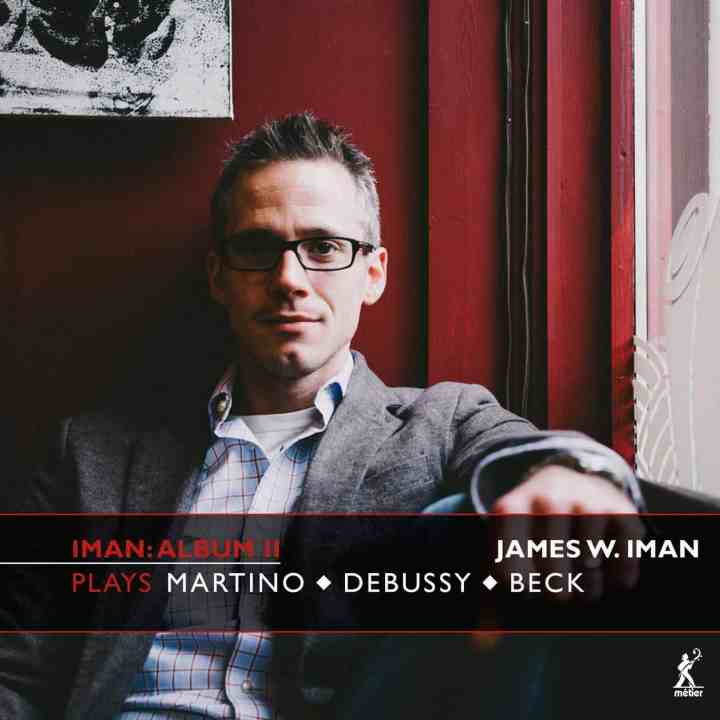 In his latest album, American pianist James Iman places Debussy’s everygreen Images alongside works by Jenny Beck and Donald Martino



 The Cross-Eyed Pianist