This week I hosted and spoke at ‘Writing the Piano’, an event I conceived out of the Music into Words project which I launched with some blogging colleagues in February 2016. The purpose of the event was to explore writing about the piano, piano playing, pianism…..with presentations by Graham Fitch, Andrew Eales and myself and a Q&A session with the audience. Because the focus of the event was the piano, I invited pianist Elspeth Wyllie to give a short recital to open and close the event, which turned the evening into something really special.

The presentations were varied and interesting, with each of us giving an overview of how and why we decided to start writing a blog. As Andrew said, “if you are posting or commenting on Facebook or Twitter, you are writing”, and he highlighted the fact that the internet and social media has made writing possible for everyone. Deciding to create a blog is just an extension of this activity.

Videos/transcriptions of Andrew’s and Graham’s presentations will follow shortly.

A lively Q&A/discussion session followed our presentations, with questions ranging from “how long do you spend at the computer as a blogger and does this affect your piano playing?”, to how to get new music heard and programmed in concerts, learning from listening at concerts (something I will cover in a future blog post), reviews and how to write about a negative concert experience in a sympathetic way, and how reviews should be seen as a way of encouraging people to come to concerts.

I would like to thank Elspeth Wyllie for performing a beautiful selection of music by Nicholas Sackman, Gabriel Fauré and Peter Maxwell Davies, and my colleagues/friends Graham Fitch and Andrew Eales for their insightful contributions, to the audience who helped make the event so enjoyable and stimulating, and to Glenn and Daniel at the 1901 Arts Club for making everyone feel welcome and, as always, creating a convivial, relaxed atmosphere. The club, whose ethos and ambiance is very much in keeping with that of the 19th-century European cultural salon, seems just about the perfect place to host such an event: if you have suggestions for a future event along the same lines, do get in touch.

Graham Fitch’s blog Practising the Piano (from here you can access Graham’s eBook and new Online Academy)

Andrew Eales’ blog Piano Dao

Elspeth Wyllie, pianist

1901 Arts Club

Transcription of my presentation at Writing the Piano:

People have been writing about the piano for almost as long as the instrument has existed, from early treatises on technique to manuals of exercises, student guides, pianist autobiographies, pianists writing about other pianists or the great works in the piano literature, and novels about pianists and piano playing. It’s a mark of our ongoing fascination with the complexity, beauty and appeal of the instrument that so much has been written – and continues to be written – about the piano. Today the piano seems to be more popular than ever, as evidenced by the wealth of study books, technique manuals, glossy magazines for pianists and piano lovers, books by and about pianists, and of course blogs on the piano, piano playing, piano teaching – and myriad other subjects more or less related to pianists, the piano and its literature. We will be exploring some of this tonight.

I met the three people here with me tonight – Elspeth, Graham and Andrew – via the Internet. Elspeth and I met through Twitter, I met Andrew via Facebook, and Graham via his Practising the Piano blog which I discovered in 2010 shortly after I starting my own blog. Without the internet there would be no blogs and no community of bloggers and readers. The internet is a wonderful resource for pianists and musicians in general and can be a force for good in forging relationships and creating communities and forums where like-minded people can exchange ideas.

What is a blog?

I am sure most of you understand what is meant by the word blog. The word itself is a shortened form of “weblog”, and a blog is a website containing a writer’s or group of writers’ own experiences, observations, opinions, etc., and often having images and links to other websites. It differs from a website in that the content is regularly updated, whereas a website is often static, and it is usually interactive so that readers can leave comments and engage in discussion with the author and other readers. In effect, a blog is more like a magazine or journal with regularly changing content.

Why a blog?

When I first started The Cross-Eyed Pianist, I did so without any expectation of gaining readers or followers. My main motivation for writing CEP a means of recording my own thoughts about the music I was playing, studying and hearing at concerts. In effect, it initially began as a kind of informal practise diary: rather than hunt around my piano room for a notebook each time, I could record ideas and thoughts about the music in one place – a blog. I had returned to the piano after a break of nearly 15 years, and I was rediscovering repertoire I had learned and enjoyed as a teenager, as well as exploring new repertoire.
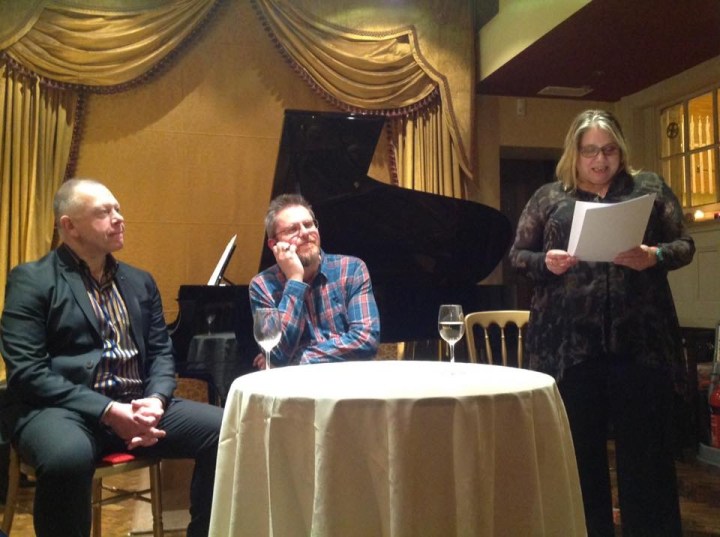
img_5371

L to R: Graham Fitch, Andrew Eales & Frances Wilson (The Cross-Eyed Pianist)

Since my teens, I’ve been interested in writing about music, about the process of learning and playing certain repertoire, what the music of Bach, Schubert, Chopin, Debussy or Debussy feels like under the hand and the emotional responses it provokes in us, and I have long been fascinated by the pianist’s special connection to the instrument and the feel of certain chords, passages or entire pieces under the fingers and hand. Some years before I started the blog, I interviewed a concert pianist and asked him what it “felt like” to play Chopin’s B-flat minor Piano Sonata. He replied that it was “horrible”, that one felt “utterly exposed”, “like having one’s entrails picked over in public”. This is partly because in the final movement there is literally nowhere to hide: it’s a whirlwind of unison notes of unvarying and unremitting tempo and dynamics, an elusive, enigmatic stream of musical consciousness. The words he used to describe this music are those more usually applied to the human body, particularly the body in pain: visceral, gut-wrenching (painful, stomach-turning, extremely unpleasant or upsetting) – but they perfectly describe the music: the final movement is painful – its briefness, the swirling motif that turns back on itself and never seems to fully free itself of its tethers, the unsettling notation

It is things like this which fascinate me as a pianist and a writer, and the blog became a way of exploring them more deeply.

So I wrote about these things, and gradually people began to take notice of my blog, read and comment on my posts, and even sign up to follow the site. It took a few years to become established: it now enjoys an average readership of 20,000 visitors per month.

Through the blog I have made connections, made new friends in the piano and music worlds, become a concert reviewer, and I now feel part of an important and vibrant community whereas previously I felt rather alone with just the piano and dead composers for company……

And this brings me to what is, for me – and I suspect many other pianists – one of the primary reasons why I think blogs such as Graham’s, Andrew’s, and mine, and many many others, together with the spin-offs they create (Facebook groups, piano meetups, courses etc), are so important for us as pianists:

Playing the piano can be a very solitary activity. In fact, I enjoy the loneliness but it is also important to meet other pianists, share ideas, go to concerts and so on. A blog can provide a bridge from the lonely piano room to a community of other pianists and piano teachers – online and in real life.

Writing about the piano is not easy – how to explain the activity, both physical and emotional, of being a pianist, the complexities of piano technique or particular genres or styles of piano music in a way that is engaging, comprehensive and intelligent takes a certain skill. In my articles about piano playing and piano music, I write entirely from my own perspective and experience. These are my own observations and I make no claims to be right, nor an authority.

It seems that the piano can exert an almost mystical attraction over us, an inexplicable magic which draws us back to the instrument time and time again. I have tried to explore and explain this in some of my writing – what are the psychological and emotional factors which motivate us to spend hours and hours conjuring sounds out of that big black box of wood and wires. What motivates some of us to perform, why people go to hear live concerts and the special fascination with the pianist alone on the stage…..

I’m an avid concert goer, and as a reviewer, I get to combine two activities which I love – going to concerts and writing about music! In my reviews of piano concerts, I try to approach the subject from a non-specialist angle, to recreate in words the sense of being there at the concert with me. In order to do this, I write less about the performer’s technique or artistry per se, and choose instead to use descriptive words or metaphors which are not necessarily directly related to the piano or music. It’s not easy to capture in words something so elusive, and personal, as music, and the piano offers so many sonic possibilities that a single word such as “staccato” or “legato” is simply not sufficient to describe that sound

The piano is an instrument which can whisper, stutter, jangle, chime, pulse, throb, hum, spiral, clatter…… phrases and melodies sing, spool, meander, scurry, tumble, question, breathe…… chords declaim, shout, growl and float.

And here, just a few examples from actual reviews which describe both the sounds the performer makes and the manner in which he or she makes them:

“scurrying and spidery, metallic, stamping, tinkling, growling, manic.” (from my own review of Maurizio Pollini in the Boulez 2nd Sonata)

“Each and every note placed with thought and imagination”

“Tense, heavy-handedness”

“Trudging through the music”

“Aristocratic subtlety”

“Mumbled into the piano with blurry pedaling”

Many of the words used to describe the piano are drawn from other walks of life – art or nature, for example – to create metaphors for the experience of hearing and playing the piano.

And sometimes it’s almost impossible to describe what one has heard: words like “Intense, profound, breathtaking, spellbinding” seem inadequate in the face of truly exceptional piano playing.

The blog is now a huge part of my musical life. I love being part of an online community of like-minded people, and I relish the exchange of ideas that comes from people commenting on my posts. My writing, concert-going, teaching, and playing all feed into my own musical landscape, creating a wonderful continuous circle of stimulation and inspiration.

And the name? Well, surely that is obvious? I am a pianist who also happens to be cross-eyed!

For more on reviewing piano concerts, do listen to this podcast which I made for Bachtrack.com a couple of years ago


cra-dykweaasda4

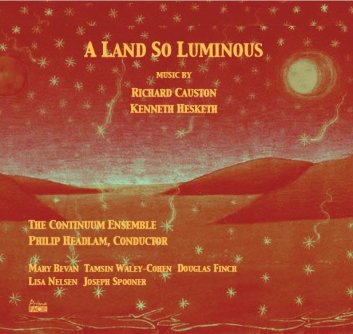
A Land So Luminous – music by Richard Causton and Kenneth Hesketh, performed by The Continuum Ensemble under the direction of conductor Philip Headlam with outstanding soloists including soprano Mary Bevan, violinist Tamsin Waley-Cohen, pianist Douglas Finch, flautist Lisa Nelsen and cellist Joseph Spooner.

The disc features work for large ensemble, duos, trios and music for solo flute, cello and piano. Kenneth Hesketh and Richard Causton are amongst the foremost British composers of their generations, and ‘A Land So Luminous’ showcases their distinct compositional voices and musical craftsmanship, from Hesketh’s piquant, light-filled textures to Causton’s inventiveness and imagination. The music on the disc is diverse and atmospheric, and draws inspiration from an eclectic catalogue of sources, including Heinrich Hoffman’s 19th cautionary tales for children, Der Struwwelpeter (‘Shock-Headed Peter’), the poetry of Marina Tsvetayeva, Fats Waller, shamanic ritual and Mozart’s Clarinet Concerto, K. 622. The title track ‘A Land So Luminous’ takes its name from a piece by writing by 17th century French philosopher-poet Cyrano de Bergerac.

All the works on the disc reveal strong musical gestures and means of expression. Hesketh’s works are expansive, visual and colourful: in Die Geschichte vom Daumenlutscher (‘Don’t Suck Your Thumb’) clarinet and piano dart and weave in a playful yet faintly grotesque dance; while in the second ‘Netsuke’ long sustained sounds emerge overlaid by a wistful clarinet melody gradually build to an unsettling climax. Causton’s ‘Threnody’ is a haunting setting of the English translation of a poem by Marina Tsvetayeva. The piece relies on the musicians being sensitive about their roles, resulting in a work of concentrated poignancy. Mary Bevan’s crystalline yet highly expressive voice is complemented by elegaic clarinets and a delicate piano part. In ‘Sleep’, a work for unaccompanied solo flute inspired by a poem called ‘Mythistorema’ by George Seferis, Causton creates an unsettling aural image of sleep, beset by frequent changes in time signature and tempo. Lisa Nelsen, on flute, displays control and sensitivity in her performance. The night-time theme continues in ‘Night Piece’ for solo piano, based on the clarinet line from the slow movement of Mozart’s Clarinet Concerto and performed by Douglas Finch, who brings a delicate clarity and tenderness to this dreamlike work.

Recommended

Release by Prima Facie Records

Meet the Artist…… interview with Kenneth Hesketh

Pianist friends Alison Bestow and Claire Vane have set up a brand new adult piano course. I caught up with them to find out more about their new venture….

Why did you decide to establish a new piano course?

Claire: We wanted to have the opportunity to attend more piano courses, and we were looking for a course in the Easter holidays, but there were very few available. We decided to run our own course, with all our favourite ideas from the other courses that we have enjoyed. We love big, exciting projects, and this is our latest joint enterprise.

How did you go about finding the venue?

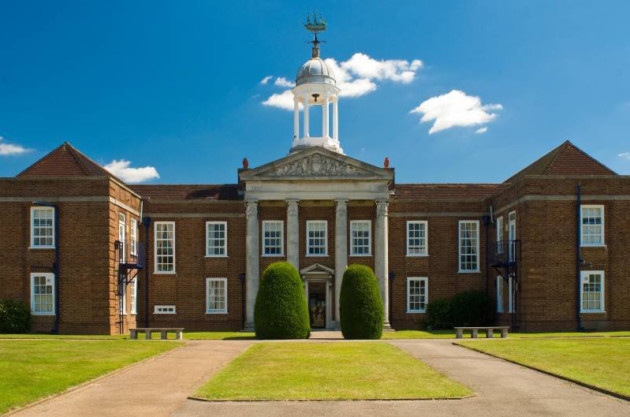
Alison: We approached many venues in Suffolk and Cambridgeshire that we thought would have the facilities that we were looking for, including the right number of pianos, a concert hall and comfortable residential accommodation on site. Initially, we had huge difficulties finding a venue because most schools and Cambridge colleges are booked several years in advance, often to bigger courses. We were really lucky to find the Royal Hospital School, Holbrook, which ticks all the boxes. We have been given full run of their state of the art music block, and the staff there have been very helpful.

Claire: The location is really beautiful, on the side of the river Orwell with spectacular views, so the environment should be inspiring as well.

Who are the tutors and how did you go about finding them?

Claire: Warren Mailley-Smith has been my teacher for the last 3 years and he is very keen on master classes and teaching adults.  Penelope Roskell has been a friend of mine since I was a young teenager and we were both Saturday morning exhibitioners at the Royal Northern College of Music. Penelope has subsequently pursued a professional career in music as a concert pianist and later Professor of Piano at Trinity Laban Conservatoire of Music and Dance.  Penelope is particularly interested in posture and tension-free playing and is a great exponent of yoga too.

Are there any other tutors at the course? 

Alison: I currently have yoga lessons with Izzy Ixer and I was talking to her about the course and she thought it was a great idea and had lots of ideas for using yoga to help with relaxation and performance nerves.  Another friend of mine, Claire Weston, was a principal soprano at ENO and she offered to come along to teach about being an accompanist as this is a skill that lots of pianists don’t get chance to practise. They are both highly experienced teachers and I know that their lessons will be great fun.

What are you going to be doing on the course?

Claire: Well, apart from masterclasses and individual lessons in piano, accompanying and yoga, there will be a lot of socialising, eating, drinking, practising and some relaxation.  The facilities at The Royal Hospital School in Ipswich are amazing so we’ll have the opportunity to walk in the grounds and even the chance to swim if there is any space between master classes and having fun.

Alison: I am hoping to meet lots of other piano-mad people, make some new friends and play some piano duets. I’m looking forward to playing one of the grand pianos in the beautiful recital hall at the school.

I am very intrigued by the name Pianissimi’ – how did you arrive at that name?

Claire: We wanted a name that conveyed the piano, and as music notation is largely in Italian, we wanted something with an Italian element.  We thought that as this was a group event, we’d go for Pianissimi, signifying the plural rather than Pianissimo, and thought it was a bit different and the Italianates amongst the pianists would smile.  It also conveys a sense of gentleness and softness, which is the atmosphere we’d like to convey – one of informality and security rather than loud and brash.

Is this a profit making venture?

Alison: We are doing this just for fun, and we have decided that any surplus made will go to Cancer Research so no, this is not a profit-making enterprise.

Who is this course aimed at?

Alison: We want the course to be very inclusive for anyone who loves the piano as much as we do, so we are suggesting that attendees are grade 7 onwards and including diploma level and post-diploma.  The levels of experience and performance will be varied, but we want to ensure that everybody feels comfortable and confident playing in a group. The course is also ideal for those with a specific aim, such as preparing for a graded or diploma exam, or getting ready for a particular performance. There will be lots of performance opportunities for those who want them. But there won’t be any pressure on people to perform if they don’t want to.

Where can we find out more?

Claire: All the information about the course is on our website:

http://pianissimi.wordpress.com/

Our contact details are also on the site, so I hope people will get in touch if they want to participate and if they have any other questions. If you, like us, are a piano nut, do come and join us at Pianissimi during the Easter holidays in 2017. 

Pianissimi

Course dates: 5.30 pm on Thursday, 20th April 2017 to 4 pm on Sunday, 23rd April 2017.

Location: Royal Hospital School, Holbrook, Suffolk IP9 2RX. There are good rail connections from London

Cost: £450 per person to include all tuition, full board and accommodation in the Royal Hospital School, Holbrook, Suffolk.

image
The Royal Hospital School, Holbrook, Suffolk

Benjamin Ellin, the award-winning and critically acclaimed British conductor and composer, has been commissioned to create a classical composition focusing on the concept of peace and this year’s centenary of the Battle of the Somme.  The resulting Oratorio One Before Zero is one movement for orchestra, solo baritone, solo mezzo soprano and boys’ choir.

somme-hero-image
(picture source: 1914.org)

This large-scale musical narrative work is inspired by the moment before battle, before zero, zero hour, the time at which hostilities commence.  Benjamin Ellin explains: “It’s the time when all that is known can be turned upside down and where a world of emotions dominates the mind and soul of any soldier”.

The work is in English, French and German and aims to illustrate musically and linguistically how the race to war, the loss of life and the destruction of humanity affected all sides in this devastating war.

Benjamin explains the inspiration behind the new work: “The Imperial War Museum provided a great deal of the research materials that helped inform my understanding of the period and I used the archives of Royds Hall School in Huddersfield which was a military hospital during WW1.  I enlisted the talented writer Ben Maier to help me ensure the work flows as a  continuous and complete line. The work has a personal connection too. My great relative, Private Samuel Vincent Boot (No. 19463) was killed in WW1.  I used his army number to develop a lot of musical material and develop the narrative.”

The performance will take place on 11th November 2016 at the renowned Maison de la Culture in Amiens in Northern France which is located just behind where the front line was established in WW1.  A second performance is scheduled on 12th November 2016 in Beauvais, Maladrerie Saint-Lazare.

benjamin_ellin

In this Meet the Artist interview, Benjamin discusses his musical influences, the challenges of his career as a composer, and the creation of ‘One Before Zero’.

Who or what inspired you to take up composing, and pursue a career in music? 

I heard a performance of the Nutcracker at the Royal Ballet as a young boy – my mother took each of us (myself and my two older sisters) to see a ballet when we were young by way of a musical intro – and I was hooked. I persuaded her to buy me the tape recording in the shop and listened to it constantly. Whenever I hear a great piece of music, in whatever genre, I just want to write music or do something creative.

Who or what were the most significant influences on your musical life and career as a composer? 

There isn’t one single thing. My initial musical impulse often comes from the environment I am in or the world events of our time. I also love the sounds that are around us generally and how they often turn in to little musical ideas all by themselves. For instance, one of the tracks from the TAFAHUM album ‘Osmosis’ is inspired by the sound of the Victoria Line tube at Highbury and Islington; the piece is called Three Fishes Laughing.

What have been the greatest challenges/frustrations of your career so far?  

Being pigeonholed really – or people trying to. For me, music is genuinely indivisible and once you try to put people in to boxes you are missing the point. Sadly it seems, at times, this obsession is a by-product of lazy elements of the ‘business’, but I have always believed that the most inspiring characters around do more than one thing and I genuinely just happen to love and feed off different musical arenas.

What are the special challenges/pleasures of working on a commissioned piece? 

The shape of a piece is very important. Once the overall structure is set in your mind, even if it changes slightly in the process of being realised, you can really start to write it out. For ‘One Before Zero’ that really was the main issue; deciding on the form and arch because after that a lot of decisions have been made for you. The challenge is knowing what to not use or not do and structure helps that process of illumination a lot. Pleasures? I love harmony and the juxtaposition of chords and the resonances they have; that and treating the audience to the theatrical elements of music so they are – hopefully – truly gripped and engaged.

What are the special challenges/pleasures of working with particular musicians, singers, ensembles and orchestras? 

If you have a relationship with a performer or a group then you can try and build the musical material around them in subtle ways; this is a joy. A challenge is to always respect the skill and talent of the musicians. They have to play your music and you hope that they actually want to. I don’t believe music is all about the composer in an egotistical way but always about the collective.

Of which works are you most proud? 

I am proud of my Violin Concerto which was premiered last year with the Philharmonia Orchestra, my Trombone Concerto for Joseph Alessi, my tracks on the TAFAHUM album ‘Osmosis’ and the works I have written in conjunction with Violist Rivka Golani and the people of the Siksika nation in Canada – amongst others…

How would you characterise your compositional language?

That is a difficult question – in fact, all these questions are! In short a mix of Stravinsky, Shostakovich, Britten, Vaughan Williams and the jazz world of Miles Davis and Count Basie amongst others. Jazz and blues were major influences growing up in that they were the main style of music that I heard and I still love them. In general, as a composer, I don’t seek to reinvent the wheel but I’ll always express myself as honestly and boldly as I can.

How do you work? 

It largely depends on the piece or the commission. Sometimes a solid idea for a gesture within a piece starts the process and other times I have to work relatively slowly. Waiting for inspiration is all well and good, but sometimes it doesn’t always flow and you have to then rely on your technique – however good it is – when a deadline is there! I also like to sow ideas in my mind and let my subconscious chew them over for a bit; they nearly always find a way of becoming a key part of the process.

Please tell us more about your new work ‘One Before Zero’, to be premiered on Remembrance Day. 

In short it is a large oratorio for orchestra, solo baritone, solo mezzo and SATB male choir to commemorate the Battle of the Somme.

Not so short, well, subconscious played a major part here too. I first worked in Amiens several seasons ago when I wrote two smaller pieces for a new festival there. As soon as I went on a research trip I was hooked on the area, the cathedral and the history of World War 1. I knew I wanted to write something about it and that was a good start for mental gestation! Then I had the chance to work with the orchestra in Picardie as both a composer (I wrote a new work for them) and also as a conductor in several performances. Therefore I got to know the players a little and I also got to work with their Music Director Arie. By the time the commission came I had soaked a lot up about the people, the area and so I could start from a decent place. The desired use of an all male SATB choir provided another set of options for the work as it was clear to me that the choir should be the soldiers and the baritone soloist is one of them whilst the mezzo represents the home front, picking up the pieces and trying to make sense of everything that was going on through the mirage of propaganda and misinformation through media…how things change!

Then, after lots of reading and textual research I decided on the structure of the piece. The soldier (baritone solo), drained, exhausted and battle-hardened from war stands at the front of the stage. Gazing out at the audience he begins to question who are the people across the stretch of no man’s land in front of him who he will shortly be ordered to attack, to kill, or indeed be killed by. Who are they? Are they anything like him? How did he get to this point where a mere order from a higher rank can result in him, a hitherto ordinary man, attacking with such aggression and ferociousness.

This awakening marks the start of the work. The title itself (ONE BEFORE ZERO)  underlines the importance of this moment before battle, before zero, zero hour  – the time at which hostilities commence – when all that is known can be turned upside down and where a world of emotions can surely fly through the mind and soul of any soldier.

The text is also a mixture of source letters, propaganda and diary entries from the time and also a number of commissioned texts by Ben Maier – a writer who I work with regularly. The new texts help knit everything together and I wanted to move away from using war poetry as it had already been done several times. The piece is in three languages, English, French and German as the aim of the piece is to underline the human cost on all sides of this conflict.

What is your most memorable concert experience? 

Again, there have been many for all sorts of reasons. I think my first concert as a conductor at the Philharmonic in St Petersburg was very special. I studied in St Petersburg and saw a concert there during my studies with the St Petersburg Philharmonic. Amazing. Then, years later when I used to do stage managing I stage managed a concert with the EUYO and Ashkenazy there. A few years after that I made my debut as  conductor and with one of my own pieces, WHITE CRUCIFIXION, so it was a powerful feeling of full cycle!

What do you consider to be the most important ideas and concepts to impart to aspiring musicians?

Be really honest with yourself about what you are trying to do, what you love and what you are doing. Lots of people will try and knock you down, directly or just through ignorance. If you genuinely love what you do, no matter what, then just keep going – however hard it gets. Take what you do seriously, but never take yourself seriously so that it becomes destructive – ego is the ugliest trait in people and especially in music.

Where would you like to be in 10 years’ time?  

Music Director of a Professional Orchestra, writing a small handful of film scores a year, touring and collaborating with Tafahum, guest conducting with a handful of organisations and carving out commissions that I am interested in.

What is your idea of perfect happiness?  

Now, as a father, a good afternoon picnic with my wife and children followed by prating around with them, and possibly some creative work in the garden with my daughter helping.

What is your most treasured possession?  

I would say my family, but they are not a possession, so, therefore, I don’t have one.

What do you enjoy doing most?  

Lots of things and as much as I can. I learn about other things from doing something seemingly different so I love variety in work and in life.

What is your present state of mind? 

A mixture of love, contentment, frustration at the world and hope in the many beautiful things that still manage to exist.

‘One Before Zero’, a new oratorio in one movement commissioned by l’Orchestre de Picardie for the Network ONE® – an Orchestra Network for Europe – to commemorate the centenary of the Battle of the Somme will be premiered in France on Remembrance Day, 11th November 2016. Further information and tickets

Award-winning and critically acclaimed British conductor and composer Benjamin Ellin is currently Music Director of Thursford Productions, Founder of the Contemporary Fusion ensemble Tafahum, Principal Conductor of the Slaithwaite Philharmonic Orchestra, Music Director of Focus Opera and President of Pembroke Academy of Music, London.

His belief in the positive power of music within society is reflected in the wide-ranging projects of which he is currently a major figurehead. From his own ensemble Tafahum, major projects and collaborations at London’s Southbank Centre, his own commissioned works with the First Nation communities of Alberta, Canada to his commitment to outreach and development work as well as appearing on stage with leading ensembles across the globe, Ellin’s belief in a musical world without boundaries is equalled by a tireless commitment as a guest artist and as a Music Director.

www.benjaminellin.com