030036d5

Who or what inspired you to take up the piano and pursue a career in music?

Leonard Bernstein. I grew up with music; my mother was always singing or playing the piano, so it wasn’t until I was maybe 9 or 10 that I had my first revelatory experience with music. At the time Bernstein’s “Young Peoples’ Concerts” were being aired in syndication and it was through those concerts that I started to feel a passion for music.

Taking up the piano was more or less serendipity. We had a piano in the house and I would occasionally improvise little tone poems. Eventually, around age 11, my mother asked if I would want to take piano lessons. I said I did, and that was the start of it.

From the beginning I always saw it as a path to being a conductor. Then about half way through my undergraduate work I considered music history and even received a bachelor’s degree in it. Graduate school set my focus on piano, though not after much deliberation on other career paths.

Who or what have been the most important influences on your musical life and career?

This really comes down to the things that led to my decision to specialize, I think.

I visited a friend who was attending graduate school at Bowling Green University and had the opportunity to spend the weekend with composers and new music performers my own age (mid-twenties).

Around that time I also became friends with Paavali Jumppanen. In many ways he’s been a mentor throughout the years. He had a lot to do with my gravitating towards by niche, and he was the whole reason I first took up Boulez’s third piano sonata.

Reading John Cage’s “Silence” and engaging with the philosophy of aesthetics changed my understanding and the way I approach music generally.

This is, of course, at the exclusion of several professors, colleagues, and friends that have had no small part in me being who I am and doing what I’m doing. I owe a great deal to a great many people.

What have been the greatest challenges of your career so far?

As a pianist who’s never played in a competition, I would say just getting noticed (I’m not interested in music-as-sport). The wonders of the internet are making this easier, of course, and I owe my fledgling career to it.

Having started studying piano relatively late I might also say that I went through a period of intense technical insecurity—not that my technique was poor, but I felt that it was to the extent that I spent the better part of two years working mostly on technique.

It’s also no easy thing to be a specialist in 20th and 21st century music. As a performer the music itself is taxing. It’s also difficult to overcome the intensely visceral reactions people can have (the invective that can be deployed is occasionally overwhelming!).

When people aren’t reacting negatively there’s a bit of a challenge to being taken seriously—I can’t tell you how many time I hear some version of “no one call tell if you make mistakes.” I usually confess to whomever is saying it that I played some wrong notes and assure them that people who study this sort of music can tell the difference.

Which performance/recordings are you most proud of?

An audience member once told me that my performance of Brahms (op.117) made them cry—that’s pretty hard to top.

I’m proud of my debut album as it marks the culmination of some 6 years of work and research. I’m humbled that I had the privilege of being the first pianist to record Gilbert Amy’s rather obscure piano sonata and that I got to work (via correspondence) with the composer in preparation for the recording.

Which particular works do you think you play best?

I would say Webern’s Variations op.27 and Boulez’s Third Piano Sonata. These are both works I play frequently and have recorded, more importantly I feel they’re works I connect with—I understand them—and I think that comes out in my performances of them.

How do you make your repertoire choices from season to season?

It depends on what works I happen to be obsessed with at the time and whether I can build them around either continuity or contrast. That’s if I’m not playing a work that’s program-length like Feldman’s “For Bunita Marcus.”

Do you have a favourite concert venue to perform in and why?

At this point it would have to be the Calderwood Hall in the Isabella Stewart Gardner Museum. It makes you hear the piano in a completely different way.

Favourite pieces to perform? Listen to?

I’m crazy about Josquin. The motets are my Sunday listening. Also Hildegard von Bingen absolutely blows my mind.

One of my favourite pieces to perform is Stockhausen’s Klavierstück XI—famous for its variable form. Playing it is like discovering it. I’m always fascinated by the differences between the readings I give of it.

Who are your favourite musicians?

Geza Anda, I don’t think I ever truly heard Chopin until I heard his recordings. Anatol Ugorsk’s Scriabin is an absolute revelation and the care he gives to the balance and counterpoint is unmatched. Samson Francois—especially his Ravel—I don’t always agree with his interpretive choices, but I’m always convinced.

Barbara Hannigan, she’s such a compelling performer. I admire her daring (and find myself somewhat frustrated that classical music is so conservative that what she does can be seen as daring). Yuja Wang, not only for being an incredible pianist, but also giving-no-fucks about the onslaught of sexism she faces.

What is your most memorable concert experience?

Hearing Paavali Jumppanen play William Duckworth’s Time Curve Preludes at the composer’s retirement party is a concert I won’t soon forget.

What do you consider to be the most important ideas and concepts to impart to aspiring musicians?

Don’t take shortcuts. Playing the piano is hard, and shortcuts don’t make it any easier.

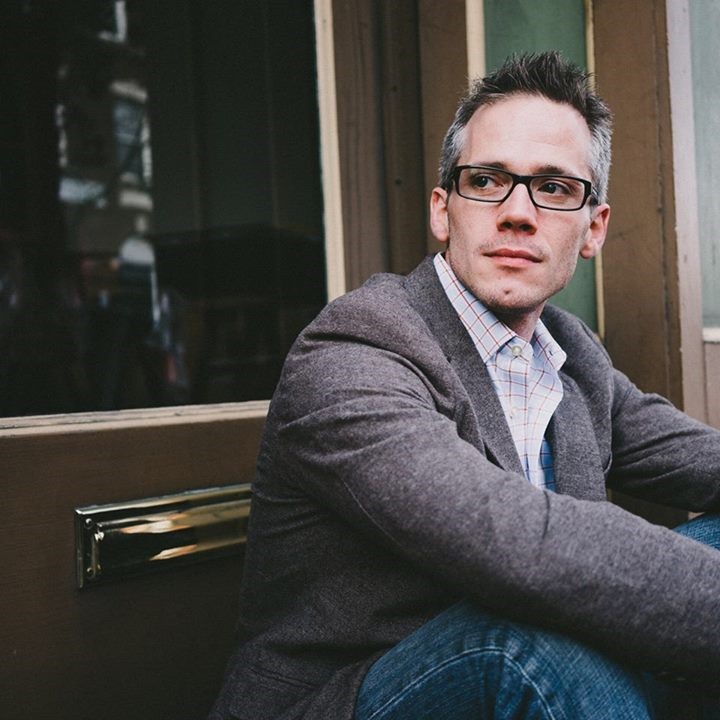
James Iman’s debut recording of music by works by Pierre Boulez, Gilbert Amy, Arnold Schoenberg and Anton Webern is released on 1 April 2017 on the ZeD Classics label.

American pianist James W. Iman has distinguished himself as a specialist in 20th and 21st century repertoire and frequently performs music of the Second Viennese, Darmstadt, and New York schools. His playing has been called “direct,” “incisive,” “thoughtful,” and “compelling.”

In 2015 he joined the artist roster of ZeD Classics and 2017 saw the release of his debut album which includes the World Premier Recording of Gilbert Amy’s Sonate pour Piano alongside Pierre Boulez’s Troisième Sonate, and works by Arnold Schoenberg and Anton Webern.

Mr. Iman has given World and United States Premieres, including the recent United States Premiere of Gilbert Amy’s labyrinthine Sonate pour Piano, collaborating with the composer in preparation for recording the work. In 2015 he commissioned a large-scale solo work from American composer Lowell Fuchs, to be premiered in 2017.

In June of 2015 he participated in the Summer Institute for Contemporary Performance Practice at Boston’s New England Conservatory where he studied with Steve Drury and performed in the Isabella Stewart Gardener Museum.

A graduate of Indiana University of Pennsylvania’s Department of Music, Mr. Iman holds an MA in Piano Performance and a BA in Music History and Piano Performance from the university. While at IUP he studied piano with Judith Radell and James Staples.

www.jameswiman.net

(Photo: Christopher Ruth)

Guest review by Patrick, a musicologist residing in the Midwest

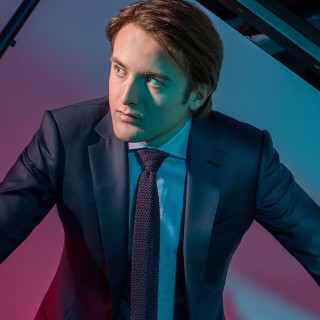
img_0058Daniil Trifonov was annoyed. He walked out on stage with a pained expression, the cheery look of his youth victim of the trials, presumably, of a professional career. After two cursorily rude bows to the audience (which wrapped around the stage entirely), he jumped straight onto the bench, staring – grimacing – at the keys. Kinderszenen contained all of his trademark complexity of line and texture brought about by Trifonov’s utterly unique use of microdislocations – employed continuously throughout the whole set. This technique is the heart of his genius, allowing him to achieve extreme contrasts in texture, voicing, and phrasing of line. Can you think of any other pianist that developed the dislocation to such a degree? While it may seem like a product of his Russian education, is there another Russian pianist today that pursues the same innovation in performance technique? I doubt Trifonov learned in America either – I was certainly never allowed by my teacher to engage in such excesses. Neither can it be said that he is reviving some past performance practice – older Soviet pianists certainly employed dislocation to add emphasis to moments of arrival, but not in the pervasive manner employed here. Furthermore, the traditional type of dislocation – pressing the bass notes before the treble to create a sense of arrival – is decidedly not what one typically hears at a Trifonov concert. He must be taking a lesson from chamber music and vocal accompanying practice. After all, it is somewhat common among good accompanists to delay the bass arrivals until after the attack of the vocal notes fades into resonance. And this type of dislocation, with the bass (and also middle voices) delayed until after the treble, is what makes Trifonov’s artistry so special.

Back to the program: Kinderszenen was a feast to the ears of line and color. Dramatic passages were dispatched with great energy and aplomb. It must be said, however, that Trifonov’s typical lyricism seemed to be dulled this evening – perhaps a result of whatever annoyance was bothering him. The slower passages did not quite have that feeling of magical cessation of time, often miraculously whipped up by the pianist through an ingenious combination of tempo manipulation and textural contrasts. While these techniques were still very much present, there was the deadly feeling of impatience imposed over them. Notwithstanding, I cannot register a complaint, as what may have been lacking in the slower passages were more than made up for by the fire and drama brought to the climactic passages, especially as the recital progressed. The next piece, Schumann’s Toccata, testifies to Trifonov’s brilliance in program construction – after the lapidary miniatures of Kinderszenen, the audience was ready to be whipped into a frenzy, and the ploy worked – numerous people gave a standing ovation to the second piece on the program. The sound world of the Toccata (and of the Schumann in general) is very interesting. It seems to me that Trifonov has entered into a new phase of his career where he is exploring the mid-range of the piano. The Toccata was a great illustration of this, as the soprano and bass voices were hardly ever brought out in favor of a gritty voicing of the middle voice chords filling out the texture (another thing I would never have been allowed to do). This technique robs the Toccata of its flair as a dramatic showpiece with a thundering bass, but gives it a new lease on life by revealing its wacky side (I cannot help but now see a connection to Stravinsky’s Petrushka, occupying the place of finale in the other half of the program). As for the Kreisleriana, the masterwork of the first half, I can firmly declare that Trifonov is peerless in this work. No one other recording or performance that I have ever heard contains even half of his kaleidoscopic conception and range of texture, timbre, and tempo: my companion at the concert (a violinist herself) said that at several points she forgot that she was listening to the piano (an instrument she never took to that much) and instead thought there was a chamber ensemble on stage! Can you think of higher praise for a pianist than that?

img_0059
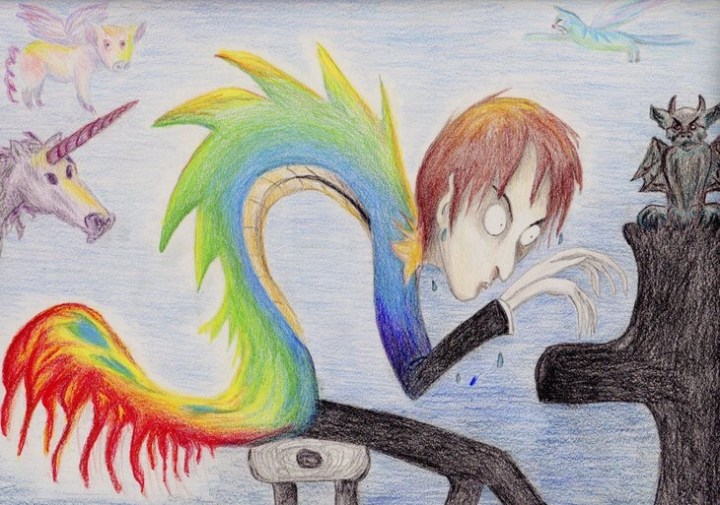
Cartoon of Trifonov by @pianistswkitten

After a massive standing ovation for the first half and the pause, Trifonov sprints back out the bench and dives into his selections from Shostakovich’s Preludes and Fugues. These selections were not chosen in their original order, but arranged for maximum effect – the creepily gorgeous opening prelude leads us through a luscious set of figural fragrances and fabrics before ending with a fugue containing a stormy finish. After this piece, the audience not only stood up to clap, but starting to yell bravos as well – something I have never heard before in the middle of a program – obscuring even the start of the Stravinsky! Even more so than the Schumann works, Shostakovich provided a canvas for Trifonov’s deeply original creativity – the range of sounds coming from the piano was tremendous, but equally matched by a phenomenal sense of dramatic pacing and climactic energy. The metaphor of Trifonov as a chamber ensemble with independent-minded players never seemed more apt. The final work on the program – Stravinsky’s Petrushka and the highlight of the concert – must be heard to be believed. No longer can Petrushka be considered an empty virtuoso vehicle, indeed so much life was added to it that many parts simply did not resemble what we are used to hearing. On top of all the qualities emphasized above (including some marvelously voiced chords and textures), it was Trifonov’s undeniable genius at rhythmic shaping that brought the piece to life. In short, the rhythms were so powerful, the syncopations so strong, the polyrhythms so present, that one could hardly avoid falling out of your seat – indeed Trifonov seemed perilously close falling off the bench has he was what could only be called dancing on the bench. And the music was dancing too, in every nook and cranny of the piece Stravinsky’s vision of the Russian countryside came to life. For the first time, that old wild smile began to appear on Trifonov’s face.

After tremendous applause that began before the piece even finished, the audience was treated to two encores (desperate attempts to garner a third through yelling at the pianist proved unsuccessful). The first was Nikolay Medtner’s Op. 38/8 “Alla Reminiscenza” played at a breakneck speed, building up to a tremendous flourish. Let it be known that I would graciously donate an arm and a leg to hear Trifonov perform the whole set. The second encore was a delightful piece by Prokofiev bringing the nearly 3-hour concert to a close. The concert showed once again that Trifonov is the premier recitalist of the age – it was only marred by a phone endlessly ringing during the Kreisleriana, which, after being supposedly shut off, went on to ring again exactly 30 seconds later.

Concert date: 26 March 2017, CSO Chicago

PROGRAM

Schumann – Kinderszenen

Schumann – Toccata, Op. 7

Schumann – Kreisleriana

Shostakovich – Selections from 24 Preludes and Fugues

Stravinsky – Three Movements from Petrushka

Medtner – Alla Reminiscenza from Forgotten Melodies [ENCORE]

Prokofiev – Gavotte from Cinderella [ENCORE]

DSC_2926

“Practise makes perfect” – that oft-quoted phrase beloved of instrumental teachers the world over…. It’s a neat little mantra, but one that can have serious and potentially long-lasting negative effects if taken too literally.

Musicians have to practise. Repetitive, committed and quality practise trains the procedural memory (what musicians and sportspeople call “muscle memory”) and leads to a deeper knowledge and understanding of the motor and aural components of the music. Practising in this way leads to mastery and enables us to go deeper into our music so that we become intimate with its myriad details, large and small. Meanwhile, setting ourselves high standards is fundamental to our improvement and continued growth as musicians.

But perfectionism is a human construct, an ideal as opposed to a quantifiable reality, and as such it is an impossibility. No matter how hard you practise the fine motor skills involved in playing a musical instrument there is still no guarantee that you will never make a mistake. Go to a concert by the greatest virtuosos in the world and you will hear errors, if you listen carefully. As human beings we are all fallible, and despite our best efforts, we are subject to things outside our control, no matter how long we spend in the practise room.

Unfortunately, the desire for perfection surrounds us in modern society, and the need to achieve perfectionism is inculcated in us from a very young age. “Getting it right” is drilled into children from the moment they enter the formal education system, where they are continually assessed and tested, where correct answers are rewarded with stickers and other symbols of approval and mistakes are regarded as “wrong”.

As musicians, if we carry the unrealistic ideal of perfectionism into our practise rooms we can easily grow frustrated with our playing if it is not note-perfect. This can lead to perpetual feelings of dissatisfaction, resentment and anxiety about practising and performing. It can put undue pressure on the musician, leading to issues with self-esteem, performance anxiety, and even chronic injury, such as RSI and tendonitis. And the striving for this unrealistic goal can destroy our love of the music we play and rob us of joy, spontaneity, expression, communication and freedom in our music making. In short, it can lead us to forget why we make music.
Perfection is not very communicative

Yo-Yo Ma, cellist 
The “practise makes perfect“, and alongside it the “practise until you never make a mistake” mantras encourage unhealthy working habits which lead to mindless, mechanical practising, which in turn can cause us to overlook crucial details in the music. Perfectionism filters into the subconscious and creates a pervasive, hard-to-break personality style, with an unhealthily negative outlook. It prevents us from engaging in challenging experiences and reduces playfulness, creativity, innovation and the assimilation of knowledge – all crucial activities for a musician. If you’re always focused on your own “perfect” performance, you can’t focus on learning a task. Because by making mistakes we learn.

A mistake can and should lead us to evaluate what we are doing: a misplaced chord or run of notes may indicate an awkward or incorrect fingering scheme – something which can be easily rectified. All errors and slips should be seen as opportunities for self-analysis and critique, resulting in self-correction, adjustment, improvement and progress. Repetitive practising should be more sensibly reassigned the mantra “practise makes permanent” – and it is the permanence, an intimate in-depth knowledge of the music, that comes from intelligent practising which ensures that in performance we won’t be derailed by slips or errors, and that we can continue to perform “in the moment” with creativity, freedom and vibrant expression.

People frequently – and wrongly – equate perfection with excellence. While perfectionism is negative and damaging, excellence, on the other hand, is realistic, achievable and positive. Excellence involves enjoying what you are doing, feeling good about what you’ve learned and achieved, it develops confidence and responsiveness and offers continued inspiration. And by striving for excellence we can stay connected with our artistic muse, our desire to make music, and the overall meaning of that music.

Launched in August 2015, IDAGIO is a music streaming platform where musicians can share their recordings and connect with a growing global classical community.

I’ve recently joined the IDAGIO team as a creator/curator of playlists, compiled from their archive of both new and vintage recordings. My first playlist for IDAGIO explores the ‘Nocturne’ – music evocative of the evening and night-time, generally calm, mellifluous, expressive and rather languid in character, perfect for evening or late-night listening.

Listen to the playlist

Read more about IDAGIO here