
Guest post by Karine Hetherington
With, ‘Variations’, pianist Joanna Kacperek has chosen to focus on the humble variation. Like many other composers before them and since, Beethoven, Robert and Clara Schumann, Brahms and Chopin, composed many variations. On this album, Kacperek artfully displays the creative possibilities of these variations, which were a way of exploring a theme for these composers, often not their own, and taking it to the next sublime level.

Variations have also been the means by which one composer honoured another. Thus, we hear Robert Schumann’s little-known variations, based on a theme by Beethoven, in this case, Beethoven’s Symphony no.7 and more precisely the Allegretto movement. To hear Beethoven’s solemn theme being repeatedly played and tweaked and then transformed by Schumann, is a thrill and gives the much-loved Beethoven melody a new mesmeric quality.
Clara Schumann’s variations meanwhile, celebrate the rich relationship (musical and emotional) she enjoyed with her husband, Robert. These intimate variations reveal every facet of their emotional life; joy, pain, yearning, eventually unfolding into a marvellous resolution where gratitude seems the overriding emotion.
Impressed by Kacperek’s debut album, Karine Hetherington from ArtMuseLondon went to interview this breakthrough artist.
Had you always planned to have a musical career and become a professional pianist?
Actually, yes! I started my private piano lessons at the age of 6. From the age of 7 onwards, I was educated in state music schools in Poland that are quite strict and take your musical development very seriously.
Of course all this wouldn’t’have happened without the support of my parents.
What led you to the idea of doing an album of musical variations? What does it bring to the listener?
I really love the idea of taking something really simple, like a 16-bar theme, and developing it in any way possible; I find it really exciting from both a pianistic and musical point of view. In a way, it feels like pushing the boundaries – how far can we go? How creative and expressive can we be, starting with such simple musical material?
The album started with my obsession with Clara Schumann’s Variations Op. 20 which she composed on her husband’s theme – I just knew this piece was special. The other thing that influenced this programming was my discovery of Robert Schumann’s Studies on a Theme by Beethoven – a composition that survived (thanks to Clara) and was not published during Robert’s life. It is such a tremendous set that deserves more spotlight! Then, I started adding other sets of variations that complemented the ones by the Schumanns – hence Beethoven Op. 34 (which links to Schumann-Beethoven Studies), and Brahms Op. 18b (the birthday present from Brahms to Clara Schumann).
Because all of the works I have mentioned had a personal story behind them, I decided to add Dutilleux’s Choral and Variations from his Sonata Op. 1 – the piece dedicated to, and premiered by his wife, concert pianist Genevieve Joy. Then – Cecile Chaminade’s Thème varié Op. 89 – a little gem, so rarely performed and recorded (my recording is only the 4th in the world!) showcasing yet another brilliant pianist-composer; finally Chopin – which is not only a nod towards my Polish roots, but at the same time it links to Dutilleux and Chaminade through their Paris residency.
Where are you performing next? What musical projects do you have in the pipeline?
2025 looks exciting. I have performances planned in France, Germany, the Netherlands, Poland, Ireland and of course in the UK. January will start with two performances in West London of Beethoven’s 3rd Piano Concerto with an incredible arrangement for a string quintet.
How do you relax?
Playing the piano can be a lonely profession, so to relax, I love being around people.I enjoy the gym and group fitness classes that involve cardio, boxing or dance. Apart from that – quiet evenings with my cat on my lap is also one of my favorite things.
Joanna Kacperek’s album Variations is available on the Rubicon label and via streaming
This article first appeared on The Cross-Eyed Pianist’s sister site ArtMuseLondon.com
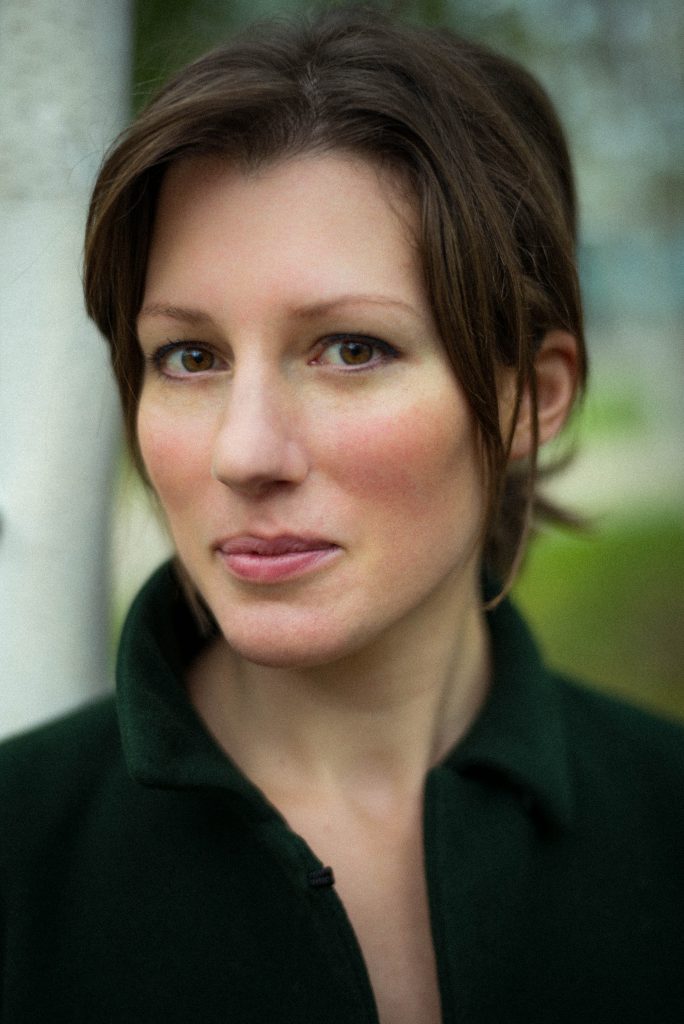
(Artist photo by Paul Marc Mitchell)









 The Cross-Eyed Pianist