Sylvia is a music-lover and The Cross-Eyed Pianist’s most longstanding reader
Dear Fran,
Your blog’s 10th anniversary reminded me that I’ve been meaning to send you a musical message. Lockdown has meant a lot more listening time which, though solitary, has been a great pleasure.
As you know, I have a tendency to have mini love affairs with selected composers, meaning that temporarily I listen to little else. You’ll remember my ‘Chopin period,’ I’m sure. Before that there was Ravel. And Mendelssohn’s chamber music. Bach puts in an appearance regularly, as does Haydn, who always lifts my spirits. And so on.
Anyway, lately it’s been all about Schubert’s piano sonatas for me. Not necessarily the final three, but early and middle ones. Years ago, I bought a 7-CD set of them, played by Ingrid Haebler. The earliest sonata on there is no. 3, and already he’s modulating in a way that reminds me of a tightrope walker without a safety net! It makes me smile to hear him tie himself up in knots, only to untie them a moment later, as if by magic.
Beethoven famously remarked that the piano “couldn’t sing,” but I think Schubert put paid to that idea. (And Mendelssohn.) If you’re able, listen to the slow movement of Schubert’s sonata in B major (D.575). It’s a song. It IS a song. A beautiful, sad one.
On the subject of whether the piano sings or not, I have never forgotten the study day that Robert Levin presented at the British Museum about the evolution of the piano. Focusing on the period that is his forte (sorry, pun), late 18th/early 19th century, he made the very interesting point that composers like Mozart and Haydn didn’t expect the piano to sing, they wanted it to SPEAK, in the manner of well-argued discourse or civilised conversation.
I was reminded of this in Paris in February, where I picked up a free copy of the New York Times in our hotel, and read an article about John Eliot Gardiner entitled “Treating Beethoven as a Revolutionary.” It was about rehearsing Beethoven’s symphonies with his Orchestre Révolutionnaire et Romantique in connection with Beethoven 250 (I expect those performances didn’t happen, sadly), and he said something that really struck me:
“Another thing I think is important [as well as the clarity and exhilaration you can achieve with original instruments] is to encourage the players to “speak” their lines, so that each phrase emerges as a kind of sentence made up of words that they articulate with consonants as well as vowels. Beethoven, it seems to me, is asking for declaimed narration. He conceives of his symphonies as developing and dramatic narratives, and that, in turn, demands an acutely conscious declamatory approach from the players.”
So interesting! I do often think of music as a language, and individual composers’ styles as their ‘handwriting.’ This wordless language has its own structure, vocabulary, grammar—none more so than the music composed around the time of the Enlightenment. Mozart and Haydn spoke it fluently and effortlessly, and we as listeners need to be familiar with the rules of the language before we can experience the thrill that comes when we hear them broken.
Beethoven and Schubert – both voracious readers – inherited this formal language. But I think they became less and less interested in the discourse/conversation aspect, focusing rather more on what Gardiner calls “dramatic narratives.”
Lockdown has afforded me time to think more about the music I’m listening to, which is one of the many good things that have come out of it. A good friend and I keep marvelling at how unconstrained we’ve felt (I know, a contradiction!), and how the extra time we’ve had has not been a burden. Rather, it’s been a gift.
I’ll leave you on that happy note.
With love and warmest congratulations on The Cross-Eyed Pianist’s tenth birthday,
Sylvia
A note from The Cross-Eyed Pianist:
Sylvia is a good friend of mine and, when she lived in London, a very keen concert-goer, especially at the Wigmore Hall. It was Sylvia who encouraged me to start going to classical concerts again, when my son was at an age when he could be left more happily with a babysitter, and we have enjoyed many memorable concerts together. Sylvia was this blog’s first reader and remains a loyal supporter (and eagle-eyed proof-reader!).
The Cross-Eyed Pianist is free to access and ad-free, and takes many hours every month to research, write, and maintain. If you find joy and value in what I do, please consider making a donation to support the continuance of the site
I hear this sentence from friends and colleagues all the time. Why add another obligation to our busy lives when we are in our thirties or forties? Many people seem to believe that taking lessons and practising the piano, violin or flute takes too much time and energy. They may be afraid that it could turn out to be a lonely and frustrating activity. And yet, I chose a different path… When I started taking piano lessons again several years ago at the age of 35, I didn’t know any other adult amateur musicians. An extrovert by nature, I soon started looking for like-minded people. And I discovered a wealth of possibilities: online music forums, piano summer courses – a whole new world opened up. For years, I spent lovely summer weeks together with other piano enthusiasts at workshops in Tuscany, France and Scotland. To meet fellow musicians in my home town Vienna, I founded the “Vienna Piano Meetup”. Since 2014, we have been meeting regularly to play for each other, informally and in a friendly atmosphere. And we’re not just pianists: some of us found their flute or violin partners via our group. I was thrilled to discover that there are similar activities all over the world. Over the years, our group has had visitors from Hong Kong, Canada and the UK – and I joined piano meetups when I visited cities like New York. In times of social distancing, many of these amateur music groups continue to socialise online. Occasionally, professional musicians discover our little get-togethers. Whenever they come along, they seem impressed by our spirit. What we do is not about competition – we welcome musicians at any level and encourage everybody to play. It is purely about sharing our love for music. “I envy you guys. You make music just for fun, without any purpose“, a stressed orchestral violist once said to me. In return, I can say that my admiration for any professional musician has grown tremendously since I started learning an instrument myself. Over the years, I have expanded my musical activities: Together with a software engineer and amateur flutist, I founded the non-profit association MUSEDU. We organise workshops and events for hobby musicians, like a cello workshop for beginners or a visit to a violin maker‘s studio. We offer a bilingual platform where local music teachers can promote their music lessons. And I enjoy sharing my thoughts on life as an amateur musician and other topics in our music blog. Learning an instrument takes time – that is certainly true. But it brings endless joy, energy and inspiration in return. And many new and interesting social contacts, if we‘re up for it. I‘m truly glad to have started this adventure! In fact, just earlier this year, I took up a second instrument – the lovely cello. Why wait until we’re retired?
Christine Kämmer is an intermediate pianist and beginning cellist with a degree in Asian Studies and Philosophy. In 2017, she founded the non-profit association MUSEDU in Vienna, Austria, together with amateur flutist Matthias König.musedu.at/en
The Cross-Eyed Pianist is free to access and ad-free, and takes many hours every month to research, write, and maintain. If you find joy and value in what I do, please consider making a donation to support the continuance of the site
The discussion that will not die: elitism in classical music. I’ve lost count of the number of times I’ve taken part in it, both in conversation and, here and there, in writing. What keeps it grinding on, blocking the through-routes to open-hearted enjoyment and appreciation?
Don’t worry – I can hear your response: people like you keep writing pieces like this! Well, touché. But this time, there are two particular prompts. First of all, pianist/composer Ludovico Einaudi – a genuine phenomenon – has made the news through one of the major music examination boards adding his work to their new piano syllabus. Einaudi appears to be an almost satanic figure to certain folk in the classical music sphere, inviting levels of dismissiveness and vitriol in line with his sales.
In parallel, we are living through a very specific, unusual period where artists and musicians are suddenly without income and, in many cases, are forced to consider the future viability of their planned projects, even careers. The ‘normal’ to come may not be the ‘normal’ we had before. With that in mind, isn’t it better to consider and examine – rather than dismiss – what could make more classical music more popular?
Of course, programmers and marketing departments have grappled with this conundrum since the year dot, and concerns about bringing in audiences persist, even in a pre- or post-covid scenario. There is no magic solution. We’ve seen venues try wildly different approaches: adding new or untried pieces to a bill featuring a dead-cert, bums-on-seats, absolute banger; staging concerts or musicals ‘off-season’ to help fund opera; performing short, sharp rush-hour sets to whet commuters’ appetites for more… and so on. The outbreak is driving even more innovation along these lines – English National Opera’s upcoming ‘drive-in opera’ performances at London’s Alexandra Palace, for example.
But it’s up to us – the audiences, the listeners, the teachers, the fans – to grapple with this, too. Our minds need to be as open and welcoming as the doors to our favourite venues. Our conversation, our social media accounts, can spread the word as efficiently as fliers and mailing lists.
Because love of music will always revolve around taste, ‘arguments’ against Einaudi don’t really stick.
“Just because it’s successful doesn’t make it good.” No, but it doesn’t make it bad either (leaving aside the obvious problem of who decides whether something is ‘good’ or not). In the same way, a piece is not ‘good’ just because it’s obscure.
“It’s so simple, anyone could do it.” But ‘anyone’ didn’t do it. Perhaps they didn’t have the ideas or techniques after all. Or if they had the ideas, they didn’t have the patience, staying power and determination to get it all down and produce it.
“It’s just pandering to popular culture / taste.” Well, isn’t that what composers and musicians want to do? If you have an income away from music that allows you to be utterly fearless and experimental in your art, fine: but surely everyone else is striving for the balance between staying true to themselves creatively and putting food on the table.
It’s not really a case of “I’m right and you’re wrong”: there is no right and wrong. If I like Einaudi, why should I care what the ‘establishment’ says about him? On one level, I don’t care one iota.
But widening the picture, it matters to me more, because to dismiss something because it’s too popular, not complex enough – not ‘good’ enough – is a form of gatekeeping, however accidental or unwitting. Whatever surface ‘elitist’ practices in classical music we may eventually conquer – high ticket prices, impenetrable etiquette, imaginary dress codes – a refusal to engage with and even embrace what fires up a wider, casual listenership will always stop us reaching the maximum possible audience.
I always have to remind myself that the dividing line between classical and popular music was only drawn in recent history. To pare one specific cliché down to its essence: “Modern classical music – where are the tunes?” As unfounded as that remark is, it comes from somewhere, and can’t be ignored. Perhaps during the twentieth century, as consumers increasingly got their ‘quick fixes’ from red-hot jazz sides, 3-minute salvos of rock ‘n’ roll and instantly alluring soul numbers, classical music went somewhere else: innovative, exploratory and definitely, even defiantly, more niche. (Otherwise, why would we need the term ‘light classics’ – themselves under fire from time to time – if there wasn’t some serious ‘heaviness’ elsewhere?)
Isn’t it time to bring these worlds together again? Isn’t it already happening? I type this on a Sunday in July. Only last night, Nicky Spence brought a superb online concert (part of Mary Bevan’s Music at the Tower series) to a close with ‘Nessun Dorma’ to the audience’s utter delight, and no wonder: it’s one of opera’s bona fide entries in the hit parade, thanks to Pavarotti. And the ‘Bitesize Proms’ series posted a performance by counter-tenor Iestyn Davies and lutenist Elizabeth Kenny of… ‘There is a Light that Never Goes Out’, by The Smiths. Other examples spring to mind: Sheku Kanneh-Mason taking Elgar into the Top 10 mainstream album charts; Anna Meredith making electronica albums alongside her classical commissions; Max Richter curating a multi-disc compilation for Rough Trade introducing modern composition to indie/underground record buyers…
Information overload, shorter attention spans, more urgent need to multi-task: our culture and society is not just continually changing, but compressing. Like it or not, more people respond to the immediate, the impactful. For example, as an artist-led listener, I favour the increasingly popular approach of programming discs as though they were ‘albums’ rather than recordings. I willingly accompany certain artists on their creative journeys: the perfectly natural behaviour of a fan, essentially.
As listeners, the more that we can do to bring some of the impact found in other genres into the classical music world, the better. There’s no need to dilute the music itself – but no need to rarify it, either. We need to communicate our enthusiasm and excitement about classical music without embarrassment or inhibition…. And to do that, you have to let people in: not shut them out.
Adrian Ainsworth is, by day, a copywriter specialising in plain language communications about finance and benefits. However, he spends the rest of the time consuming as much music, live or recorded, as possible – then writing about it, often on Specs, his slightly erratic ‘cultural diary’ containing thought pieces, performance and exhibition write-ups, playlists, and even a spot of light photography. He has a particular interest in art song and opera… and a general interest in everything else. He is a regular contributor to this site and is also a reviewer for its sister site ArtMuseLondon.com.
Marquis de Custine, in a letter to Chopin, April 1831.
As a pianist and connoisseur of Chopin, I have always been fascinated by how Chopin’s contemporaries perceived him, be they friends, admirers or critics. What insights can be gained from those that heard him play? A voluminous and sometimes misleading literature on Chopin already exists, in particularly regarding Chopin and Sand and their tortured relationship, of little importance to a musician. What about Chopin’s artistry, his music? What did Chopin’s contemporaries say?
…
In order to understand Chopin’s music, one must first acknowledge his twin Polish and French roots. Both nationalities defined him. He was a mixture of the Polish “zal,” or spleen, and the French “bon usage et bonne manière.” Anguished, yet aristocratic. Patriotic, yet politely so. As Jane Stirling, Chopin’s friend and ardent admirer observed: “he was not like other men.” While devoid of any particular depth or subtlety, her description is revealing. Chopin clearly was not like other men. As Debussy himself observed, “By the very nature of his genius, the music of Chopin escapes any classification.”
The intensely private nature of Chopin – his desire to keep personal matters to himself – cannot be overlooked. Perhaps due to his status as a refugee, afraid to reveal himself to his French or Polish hosts, as well as his chronic, debilitating illness, Chopin hid his real personality and thoughts behind a veneer of “courtoisie.” As Liszt said of him, “Chopin’s character is composed of a thousand shades which in crossing one another become so disguised as to be indistinguishable.” Or as the biographer Louis Esnault remarked: “Chopin lent of himself sometimes, but gave of himself never.”
Chopin – of whom the Princess Belgiojoso said “is greater than the greatest of pianists, he is the only one” – was entirely self-taught. Consider this fact for a moment – Chopin had no elementary instruction in the piano or piano technique. Instead, he learned technique by creating it and refining it, ultimately revealing a poetic virtuosity which has never known a rival.
It must also be remembered that Chopin’s fame as a young man allowed Chopin to be welcomed as an equal in the highest levels of society. This is where Chopin acquired the habits of scrupulous politeness, considered essential to the maintenance of style in social relationships. Liszt, who understood this well, was probably not far off when he described Chopin’s bearing as “princely.” Despite Chopin’s intense social activity, however, Chopin craved solitude. From his stay in Vienna, Chopin gives us an opening into his state of mind in a letter to his childhood friend, Titus: “It is only the various dinners, evening parties, concerts, and balls that I am obliged that sustain me a little. I feel so sad, lonely, and abandoned here. I have, of course, to dress for these receptions with a reasonably contended countenance. But I hurry back to my room, where I can give rein to my suppressed emotions by sitting down at my piano, which now is only too well accustomed to the expression of all my sufferings.”
As for the level of admiration which Chopin elicited, one cannot do better than the Marquis de Custine, a neighbour of Chopin’s in the “New Athens” district in Paris: “Not only do we love him, we love ourselves in him.” Despite this perhaps overly romantized description expressed by the Marquis in a letter to Chopin following Chopin’s debut concert in 1831, Chopin confessed the following to his beloved friend, Titus: “Outwardly I am gay, especially among my own, I mean by ‘my own,’ all the Poles. But, at the root of my being I am suffering an indefinable torment – full of presentiments, uneasiness, nightmares, when it is not insomnia. Sometimes I feel indifferent to everything and sometimes a prey to the most intense homesickness; I long to live as much as to die and sometimes I feel a sort of complete numbness which incidentally is not without a certain pleasure but which makes me feel away from everything. Then suddenly vivid memories arise and torture me: hatred, bitterness, a frightful mixture of unhealthy sensations which attack me and leave me exhausted.”
This startling lucidity and self-awareness can be safely described as Chopin’s Polish “zal.” Chopin reveals, in almost clinical terms, the depth of his nature – a nature exacerbated by illness as his symptoms increased with time. Add to this Chopin’s apparent discomfort with familiarity, – “he did not understand, or would not understand anything, that was not personal to himself” as Sand put it – and we have the elements of Chopin’s character in a nutshell.
As Chopin grew older, his anger and outbursts of rage only intensified. Georges Sand, who had ample opportunity to observe Chopin’s temper, said that “Chopin in a rage was terrifying.” Sand’s thinly veiled and no doubt vengeful characterization of Chopin as “Prince Carol” in her book, Lucrezia Floriani, is revealing: “he showed a charm which was false and glittering, with which he tortured those who loved him. He had the air of one who bites gently for the pleasure of doing it and his bite went deep. Everything seemed strange and uninteresting, he held aloof from everything, every opinion, every idea.”
Liszt, Chopin’s friend, admirer and sometimes rival, described it this way: “Never was there a nature more imbued with whims, caprices, and abrupt eccentricities. His imagination was fiery, his emotions violent, and his physical being feeble and sickly. Who can possibly plomb the suffering deriving from such a contradiction?”
…
These are the descriptions of Chopin the man. What of his music and his piano? The number of concerts which Chopin gave was surprisingly few – a handful when compared to today’s typical concert pianist. And yet, Chopin’s reputation and fame was established early on and was widespread. He had no rival, notwithstanding the spectacular fame of Liszt and to a much lesser degree, Thalberg, both regulars on the platform. What was the secret of Chopin’s success as a pianist? Certainly, the opinion of contemporary aristocratic circles magnified Chopin’s reputation. Statements such as those of Princess Belgiojoso led many no doubt to accept Chopin’s greatness as a matter of faith. This cannot explain however the worship of Chopin, or Chopin’s recognition as the supreme master of the keyboard.
This idea is borne out by the contemporary descriptions we have of Chopin’s playing. Gustave Chouquet, director of the Musée du Conservatoire, had the good fortune as a boy to hear Chopin play in the Ancien Conservatoire concert hall in 1835. He compared Chopin to Liszt, who appeared in the same concert hall a few days later. “After praising Liszt’s rendering of Weber’s Koncertstük; Chouquet compared Liszt’s playing with the ‘ineffable poetry’ of Chopin’s.
Chouquet writes: “In 1835, Liszt was the perfect example of the virtuoso. He made the most of every effect as if he were a Paganini of the piano.Chopin, on the other hand, communed with voices within himself, and never appeared to notice his audience. He was not always in form, but when in the mood he played as one inspired and made the piano sing in an ineffable style.”
Chouquet repeats the word “ineffable” in his letter – ineffable in the sense of passing beyond the bounds of music. The embodiment, the very meaning itself, of musical revelation.
Writing about a concert given by Chopin in Rouen for his fellow Polish countrymen, Legouvé Orlowski gives us an eyewitness account which merits quoting in its entirety:
“This event is not without significance in the world of music. Chopin, who has retired from playing in public for some years past, Chopin who confines his fascinating genius to an audience of five or six, Chopin who resembles those enchanted islands on which so few here set foot, who recount such marvels that they are accused of falsehood, Chopin whom one can never forget once having heard him.
And indeed, his success was immense. Immense! All those ravishing melodies, that ineffable delicacy of touch, that melancholy and passionate inspiration, the poetry of execution and composition, which grips both the imagination and the heart, penetrated, stirred, enraptured all five hundred listeners, as they do the five or six chosen ones who form his audience and religiously attend to him for hours on end. The atmosphere was electric, murmurs or ecstasy and wonder filled the hall, which are the applause of the soul.”
Even discounting for hyperbole, Orlowski’s description of Chopin is most revealing. It reveals the power of Chopin as a pianist, equal if not greater – impossible to imagine – than the esteem given to Chopin as a composer.
In April 1841, during Chopin’s mature compositional period, following a long period of public silence, Chopin decided to give a concert at Monsieur Pleyel’s salons. He appeared for the first time without an orchestra, as a soloist. Chopin introduced that evening the Ballade Op 38, the Polonaise Op 40, the Second Scherzo, four Mazurkas from Op 41, as well as Etudes, Preludes, Nocturnes. The cream of Parisian society fought each other to attend. Perhaps there is no better witness to Chopin’s playing that evening than that of Liszt himself.
Liszt, in the Gazette Musicale on May 2, 1841, penned the following, taking us into the very heart of Chopin himself:
“A grand piano stood on the platform, everyone sought the nearest seats and settled down to listen, telling themselves in advance that they must not miss a chord, a note, a suggestion, a though that might fall from him who was to play.
They were right to be so eager, attentive to the point of worship, for he whom they awaited, whom they were so desirous of hearing, admiring, applauding was not merely a skilled virtuoso, a pianist who was master of the keyboard, not only an artist of renown, he was someone far beyond all this – they awaited Chopin!
Music was his language, a divine language by means of which he expressed a whole range of feelings which could be appreciated only by the few. The music of his homeland sang to him the songs and sad lays of Poland, lending to his art some strange and mysterious poetry, which for those who have taken it to their hearts, is incomparable..
Without an affected striving for originality, he has expressed his personality both in his style and in his ideas. For new ideas, he has adopted a new style. The hint of a wild and fiery nature, which is a part of his inheritance, finds expression in strange harmonies and deliberate discords, while all his delicacy and grace is shown in a thousand touches, the thousand tiny details of an incomparable fantasy….
Chopin selected those of his works most remote from classical forms. Instead of the Concerto, Sonata, Fantaisie or Variations, he played Preludes, Etudes, Nocturnes, and Mazurkas. He had no need to startle or grip his audience; he was playing in an atmosphere of quiet understanding, not one of boisterous enthusiasm. From the striking of the first chords a bond of closest sympathy was established between the artist and the audience….
Chopin’s Preludes are in a category by themselves. They are not solely, as their title would lead one to suppose, items intended to be played by way of introduction to other items. They are poetic preludes similar to those of the great poet Lamartine, which bathe the soul in golden dreams and lift it to the realms of the ideal. Admirable in their variety, the work and skill and skill that has gone into their composition is not obvious until after a careful examination. Every note seems to be utterly spontaneous and inspired. They have the great attractiveness which is to be found in all works of genius.”
No clearer understanding of Chopin’s pianistic abilities and music in my view has been written. Later, on May 2, Liszt went further, drawing the comparison between Chopin and Schubert: “I have referred to Schubert because there is no other composer with so complete an affinity with Chopin. What one has done for the voice, the other has done for the piano. Chopin composes for himself and plays for himself. Listen to him as he dreams. As he weeps. As he sings, with tenderness, gentleness, and melancholy; how perfectly he expresses every feeling, however delicate, however lofty.”
“Chopin is the pianist of pianists.”
…
Despite the reviews and his success, Chopin continued to be filled with self-doubt. Before Chopin’s final concert in Paris, February 16, 1848, he wrote this: Such excitement surprises me. And now comes the question of playing, which I only do to satisfy my conscience, for it seems to me that I play worse than ever. I shall play a Mozart trio with Allard and Franchomme (cellist and friend of Chopin who succeeded Fontana as Chopin’s secretary).
The description of this concert from the critic of the Gazette Musicale leaves me in a state of wonder as to what it must have been like to witness this moment: “The ‘sylph’(Chopin) has kept his word. And with what a success, what enthusiasm! If I possessed the pen that calls forth Queen Mab: “In shape no bigger than the agate stone, On the forefinger of an alderman,” “it would be difficult to give any idea of a talent so completely ethereal that it transcends all earthly things. To understand Chopin we need but to know Chopin himself. All those present at the concert were as convinced of this, as we were ourselves..”
Unknown to the audience was that they had just heard Chopin’s final performance in France, his swan song. After this concert, Chopin collapsed with fatigue, perhaps from the stress of his relationship with Sand at Nohant and certainly from the worsening illness which had finally caught up with Chopin’s body. Not long afterwards, Chopin left for England, in the care of Jane Stirling.
While in England, Chopin played at several private houses, including a concert on July 7 1848 together with his friend and musical confidante, the singer Pauline Viardot. “She sings my Polish songs. It went off very well. But I don’t know whether I shall get a hundred guineas out of it.” He adds: “Coughing the way I do, I often wonder on a morning if I am going to cough up my soul.”
His remaining concerts were few. In Manchester, he shared the stage with three other singers and with other repertoire than his own – The “Barber of Seville” by Rossini, “Prometheus” by Beethoven, and “Rübezahl” by Weber. Between these items, Chopin played an Andante, no doubt his Andante Spianato Op 22 (the only work which Chopin marked using the word “spianato,” or “smooth”), a Scherzo (we do not know which), some Etudes, a Nocturne, as well as the Berceuse. The newspapers in Manchester dutifully reported Chopin’s concert: “Chopin appeared to be about thirty years of age. He has a very distinguished bearing, an almost sorrowful expression, and appears to be in delicate health. His melancholy and fragile appearance disappears when he takes his place at his instrument, which from then on seems to absorb his entire interest.”
Subsequently, in Glasgow, a late afternoon performance was given at Merchants’ Hall, with his intimate Polish friends the Prince and Princess Czartoriski in attendance. “I have come back to life again, thanks to the presence of the Polish element, which gave me the strength to play.”
Finally, Chopin played at the Hopetown Rooms on Queen Street, in Glasgow, at the insistence of Jane Stirling. It is doubtful we will ever know the extent of Stirling’s relationship with Chopin, nor the extent of her actions to help Chopin behind the scenes. We do know from Chopin’s correspondence that Stirling suggested that he marry her. This no doubt crossed the line for Chopin and his distaste of familiarity.
It is not difficult to imagine that Chopin knew, as he stepped in front of the relatively small audience in Edinburgh, that this could be the last time he would perform in public. He performed the demanding F minor Ballade, arguably Chopin’s greatest work and a monument to art itself. The piece must have put a strain on his weakened physical resources. He also played smaller works, including Nocturnes, Etudes, Preludes and Waltzes. The account in the local Edinburgh Courier was not particularly flattering: “Chopin’s compositions may be counted among the best in the classical style. His execution is the most delicate that one could possibly hear. He does not, however, possess the power or the brilliant technique of a Mendelssohn (note that Mendelssohn resided in England) or a Liszt. In consequence, his playing has less effect in a hall of considerable size. But as a performer of chamber music, he has no equal.”
Perhaps to escape Scotland and the desires of Jane Stirling, Chopin arranged a concert in London as a way to return to Paris. It was his last public performance, a benefit concert for his fellow Polish countrymen. Chopin knew his days were waning. He played only a few pieces, including what we believe to be the first two Etudes of the Op 25. He left the concert afterwards scarcely able to breathe. Clearly Chopin desired his final musical act to be that of a patriot – a final effort made on behalf of the Polish people, whose soul Chopin immortalized in his music.
…
Complementary with written accounts, the artistic representations of Chopin can give us insight into Chopin, notably those of Delacroix and Ary Scheffer, as well as the Italian painter Luigi Rubio. A reproduction of these well known portraits is included here. I leave it to the reader to decide for him or herself which image reveals the most. The only verified photograph of an ailing Chopin, taken not long before Chopin died, does little in my view to give us any real insight into Chopin’s true nature.
…
As a pianist and lifelong performer of Chopin’s music, I believe that words alone are not adequate to describe Chopin. I am not talking about translating Chopin’s music into words, since every listener of Chopin has his or her own impressions. There may be no point after all to verbal descriptions of music – playing it and hearing it are the point.
I have known some pieces by Chopin for decades and play them regularly. However, each time I play a piece by Chopin, even a shorter work such as a Mazurka or an Etude, a new idea is generated. It doesn’t have to be a large idea or a radical new way of playing the piece either. It can be as small as a pause between notes in the middle of a phrase or within a chord. It can be so small that you simply feel something but can’t articulate it. There was something different. That is all you know.
For me, this applies is particular to Chopin’s Fourth Ballade. The introduction of the Fourth Ballade, the first seven measures alone, is a masterpiece. If Chopin had stopped there, it would have been enough. Each time I play the introduction, I don’t want to leave. My left hand lingers on the F, the E, then the C, holding on to each note, ever slightly. The exposition in F minor begins, gently rocking and moving me forward at the same time. It is aching yet mysterious. So I brace myself and play the phrases cleanly and directly.
Then Chopin starts me on a journey. It begins with the addition of thirds, a simple harmonic structure. And yet, the theme is transformed. Chopin picks me up and I see over the horizon, into a new world ready to explore. Then other harmonies approach – sixths, then octaves. Again, I enter new territory. The Fourth Ballade is like a never ending exploration. It is accessible, yet never completely fathomable. There is nothing like it in music, as James Huneker observes – nothing so intimate, so intoxicating, so provocative.
Chopin uses harmony in the Fourth Ballade like a palette of colors of infinite richness added to a sketch. Sometimes though, Chopin gives us only that – a sketch. Take the Prelude No. 11 for instance. It is a brief instant, the hands barely trace the outlines of a melody with soft harmonies. And yet this single page of music in my view is worth a dozen symphonies.
Or the Mazurka in A minor. A note changes in each chord, creating the leading tone. Then, liking the snuffing out a candle, Chopin extinguishes the piece. He simply stops. It is one of the most remarkable endings of any piece I know. When I play this mazurka, I think of a conversation between two people. I watch their faces as they talk. They are sharing something which happened long ago about which only they know. Their words overlap and weave together. And I know the scene before me, unique in that particular moment, will end and I will no longer be able to appreciate its beauty. It is painful to look at. So I close my eyes. The scene is no more. The piece simply stops.
Chopin was not a greater composer than Bach or Mozart, Beethoven or Schubert, an absurdity in itself. But for me, Chopin is unique. He understood as no other composer did what the piano can do. Chopin gave us the full emotional range of what a piano can express. Judging from the descriptions left to us by Liszt, or by the Marquis de Custine, Chouquet and others, I have no doubt his contemporaries felt the same way as well.
This is the English translation of an original article for the French magazine Histoire.
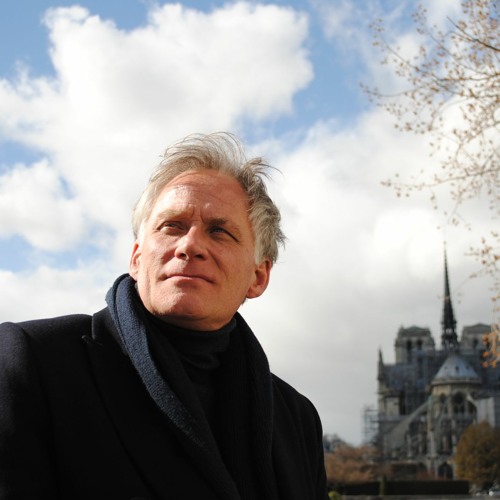
Walter Witt is a classical pianist, composer and educator based in Paris. A lifelong student of the works of Chopin, Walter captivates audiences with his innate musicianship and dynamic presence at the piano. Together with his advocacy for classical music and its educational importance, these talents make him one of the most compelling figures in classical music today.
The Cross-Eyed Pianist is free to access and ad-free, and takes many hours every month to research, write, and maintain. If you find joy and value in what I do, please consider making a donation to support the continuance of the site
The Cross-Eyed Pianist is free to access and ad-free, and takes many hours every month to research, write, and maintain.
If you find joy and value in what I do, please consider making a donation to support the continuance of the site






 The Cross-Eyed Pianist