An interview with pianist Beth Levin by Gil Reavill

I assume you’re in quarantine along with the rest of us. How have the months of isolation influenced your creativity, or, on a more commonplace level, changed your practice routines?

I’m not sure. Everything is different—that much I know. I’ve been working on music that I would have performed in the spring and summer- specifically Schumann, Chopin, Beethoven and Yehudi Wyner. But I notice that I’m approaching it in ways that match the longer road we’re on—taking time to pull things apart, to muse, to examine voices and phrasing and only then putting the pieces back together. Even in the most “presto” passages now there seems to be an inherent slowness. I was always saying things like, “I wish I had a year to learn that concerto,” or, “I wish I had two years for that set of variations.”

“The pandemic is a portal,” states novelist/activist Arundhati Roy. Do you find it so?

Perhaps it is an inward portal. One’s creativity really can be nurtured right now because we are in a blank state, with nothing pressing, nothing other than music and time. I’m amazed at how much emotion rises up as I practice—nothing is there to stop it. Also I’m looking back, perhaps too much. I’ve put many old performances on Soundcloud and listening has been cathartic. This passage from T.S. Eliot’s Four Quartets came to mind:

The river is within us, the sea is all about us

The sea is the land’s edge also, the granite

Into which it reaches, the beaches where it tosses

Its hints of earlier and other creation

You seem to be attracted to tremendously challenging works, and have recorded The Goldberg Variations and The Diabelli Variations, with your recording of the Hammerklavier sonata forthcoming.

Well, first, that’s a tradition from my teachers, particularly Shure and Serkin. And I like works that are made up of variations such as the Goldbergs, Davidsbundlertanze, The Schumann Symphonic Etudes, Diabelli, etc. I have never let not being able to play something stop me from learning a new work—ha-ha! Honestly, I have friends who won’t play this or that because of a large stretch or a fiendish page or two. If a work has a great and true expressive quality (practically anything of Schumann, say), but is technically challenging, expression wins out.

I’m interested to know the ways in which the emotional tenor of a work such as the Hammerklavier might change in the run-up to performing it in concert or preparing for a recording, shifting with the player’s increasing facility, familiarity, or understanding.

I find closer to a performance that the whole endeavor seems utterly impossible. I felt that way with the Hammerklavier even after months working on it. I mean you have good days when you feel that there is hope and everything is coming together. Just that fact of making Op. 106 feel like one piece is quite a challenge. Thinking in the longest lines possible helped and not being afraid of glacially slow or impossibly fast. The dynamic range asked for was also exciting in its scope. There is an ecstatic aspect to the sonata that may only be truly realized on stage. I think you can understand aspects of the Hammerklavier, be familiar with it and even have the facility to play it well—but the work has its secrets. I think in the end you play it to see where it will take you and take the audience.

You write poetry. What sort of cross-fertilization do you detect between language and music?

The ear and one’s sense of pulse has so much to do with both language and music. Especially if you read a poem aloud—you can hear how the pure sound of the words has a musical and rhythmic basis. I’m quite an amateur poet and never feel I know what I’m doing. I’m pretty seasoned as a pianist, and a novice at poetry writing. But my musicianship does help me as I write a poem. This strange pandemic seems perfect for using time in creative ways and in ways we might not try otherwise.

You’ve had a long association with the works of Robert Schumann, recording Kreisleriania and performing other works, and have also written about him recently. How do you engage with Schumann as a composer and creative force?

I probably have an affinity for composers who don’t want to be tied down, completely understood or caught. When I think of Schumann I think of someone reaching upward, yearning, seeking and with an ardent intensity. And I think of ultimate contrast. As soon as you meet Florestan and Eusebius in his writing, you experience Schumann’s own extreme dual nature. Schumann loved words as well—see his writings in Neue Zeitschift für Musik. I was given the music of Schumann as a child and am still discovering it. Most recently I performed the Piano Trio in D minor with Roberta Cooper and Eugene Drucker and currently I’m working on the Symphonic Etudes for piano. His music is uncannily intimate and so on that level it is very easy to engage with it. On the other hand Schumann strove to write orchestrally for the piano and wound up writing some deliciously hard music for the instrument. Schumann wrote fondly of Clara’s performance: “The way you played my Etudes—I won’t ever forget that; they were absolute masterpieces the way you presented them—the public can’t appreciate such playing—but one person was sitting there, no matter how much his heart was pounding with other feelings, my entire being at that instant bowed down before you as an artist.

There’s been some back and forth of late about whether Bach’s Well-Tempered Clavier was written for harpsichord or clavichord. With cellist Samuel Magill, you’ve performed preludes from the piece, arranged by the virtuoso Ignaz Moscheles. Any thoughts on period instruments versus their modern offspring?

The music of Bach has that ability to survive just about any treatment and still emerge as Bach. When I first saw the Moscheles transcription the word “schlock” may have crossed my mind. But Sam won me over with his gorgeous playing and love of Romanticism. I believe we began the programme with the Bach and after the concert it was one of the most remarked upon works.

You often perform and record contemporary composers. Do you seek out connections, comparisons, commonality, or inheritances in earlier works of the Baroque, Classical, Romantic or Modern canon?

Some of the contemporary music I’ve played seems to spring very naturally from earlier periods—say, the music of David del Tredici, Yehudi Wyner or Scott Wheeler. Other works break off from tradition completely; Bunita Marcus comes to mind. Lately I’ve been sending little music notebooks to composer friends and one, Frank Brickle, has begun writing me pieces for piano. I can’t wait to see the result. I think as in more traditional music you have to find the voice of the work itself and not make comparison studies.

Beth Levin, Brooklyn, NY, August, 2020


Beth Levin’s recording of Beethoven’s Hammerklavier sonata and other works mentioned in this interview will be released by Aldila Records

Blurb:

When Beth Levin released her third live album seven years ago, she summed up Ludwig van Beethoven’s last three piano sonatas under the motto ‘A Single Breath’. At the time, a critic called her a titan and wrote that she played as if she was a contemporary of Eduard Erdmann, Artur Schnabel, Wilhelm Backhaus and Walter Gieseking. This has not changed. Since then, colleagues, admirers and connoisseurs have repeatedly asked her to present her interpretation of the Hammerklavier Sonata. She has now complied with this request, also with a ‘Live in Concert’ recording. And again she plays in a highly explosive manner, spontaneously as in an improvisation and at the same time with an incorruptible inner logic, with inexhaustible power and an immense dynamic spectrum of expression.

The Hammerklavier Sonata forms the symphonic climax of Beethoven’s piano work with its final fugue that transcends all boundaries. This concert program is introduced with a suite of George Frideric Handel, including a set of wonderful variations. Handel was Beethoven’s favorite composer, and the motto “All power to the dominant” could stand above both composers. Between the works of the two old masters is the 3rd Disegno by the great Swedish composer Anders Eliasson, who died in 2013, entitled ‘Carosello’. This free-tonal cantabile study in 5/4 time creates a sphere of weightlessness in contrast to the cadential purposefulness of Handel and Beethoven.

“One may agree with it or not. No one plays Beethoven like Beth Levin.” (Christoph Schlüren, 2013)
https://www.bethlevinpiano.com/

Who or what inspired you to pursue a career in music and who or what have been the most important influences on your musical life and career?

I played at an international guitar festival when I was 10 years old, any many experts there said I could be a guitarist. This was the first time I had heard about playing guitar as a job. I enjoyed playing the guitar, so being a guitarist sounded like a good idea, but I didn’t really have any idea of what a career as a musician meant.  However this was what triggered the idea in my mind.

An early influence was John Williams – my dad made a recording of his playing from the radio in China. I heard this music at a young age and loved it. Along the way, many artists have inspired me.

What have been the greatest challenges of your career so far? 

I was the first guitar student in China to enter a music school. I had to enter as an unofficial student as there was no formal guitar department at that time, no formal qualification to aim for, and no obvious career path.  I didn’t really think about it at the time, but looking back, the biggest challenge was taking a path that no one else had taken in my country. 

Which performances/recordings are you most proud of?

I’m proud of all my recordings. I put a lot of thought into each of them in terms of choosing repertoire, making arrangements, balancing old and new.  For example for the Bach Concertos. I spent a long time researching, studying, arranging & practising Bach’s violin concertos, and also his harpsichord concertos to understand how I could best adapt his music for guitar.  The latest Decca recordings probably present more of my current artistic state as a musician (ie Heartstrings, Colours of Brazil & Sketches of China).

You have a new recording coming our soon, tell us more about that….

‘Sketches of China’ is the first album completely dedicated to music from my homeland. Over the last twenty years, I have toured the world performing music and experienced many different cultures. I have felt an increasing desire to present a little more of my own musical heritage to these audiences.  The guitar is not a Chinese instrument, so when I started there was effectively zero original repertoire from my country to play. However, the guitar is very versatile, and well suited to playing Chinese music, as China has a long heritage of plucked instruments.  I have put a lot of work into arranging Chinese pieces for guitar, commissioning new words, and creating new musical collaborations with other Chinese musicians so that we can make music together.  This album is the first harvest of this project.  I wanted to demonstrate the depth and breadth of Chinese music – from a culture that goes back almost 5,000 years. I also wanted to cover all of the important genres of the music: traditional music, folk-inspired pieces, and of course the music being written by Chinese composers of today, using musically significant repertoire where appropriate.  It was all rather too much to fit onto a single CD, so this is a double CD.    Much of the current dialogue relating to China focuses on politics and economics, both of which can tend to divide people.  I would like to broaden the discussion by introducing a cultural thread to the dialogue, to help unite people.  This album is my personal contribution to this discussion, by offering a fresh perspective on Chinese music.  For guitarists out there, it also opens a door to new repertoire for guitar.

Which particular works do you think you perform best?

I feel most attracted to works with a lyrical line, and freedom of expression.  I have a strong innate sense of voice.  I often wish that I had a bow, to extend and shape a note. On the guitar, once the note is plucked it immediately begins its inevitable journey to decay, and silence.  That has a beauty of it’s own too because it makes each note all the more precious whilst it lasts, but it makes it particularly hard to make a line really sing.  A big focus in a lot of my playing is to really make the line sing.  I also feel I have a natural sense of rubato, so having some freedom to use this appropriately is very satisfying for me.

What do you do off stage that provides inspiration on stage?

I often get inspiration as a result of travel – places and people.  Seeing historic sites, architecture, and learning about their history and how it relates to the culture of the location.  Talking with people who’ve lived a different life to my own – their life experiences all helps shape my own outlook on life. I get inspired by adding more layers to my thinking and understanding.

How do you make your repertoire choices from season to season?

It varies.  It’s a mix of satisfying my own curiosity and the pragmatism of providing programs that are attractive to promoters and their audiences. Some years there may be a composer anniversary coming up, so you know that promoters may be interested in programming their music, so I would include such a piece or build a program around that.   As a general principle, unless I am asked to play a particular program (for example Spanish, or Latin American, or Baroque, etc), I like to give a mixed program – a mix of countries, styles, composers, old favourites, new pieces.  That way everyone has something to take home.  I very often try to include a Chinese piece too.
 
Do you have a favourite concert venue to perform in and why?

My absolute favourite is London’s Wigmore Hall – it has the perfect acoustic for listening to guitar.  My favourite venues are generally those with great acoustics. The guitar is such an intimate instrument. Each note dies very soon after it is plucked, but there is great beauty in each note whilst it lasts – there is a richness and roundness to each note, packed full of different subtle overtones.  As a player, sitting right next to the instrument, that’s the sound I hear, and the sound that inspires my playing, and it’s the sound I want the audience to hear.  The audience, however, aren’t sitting right next to the guitar – they are often many rows away in a large hall.  The acoustics of a venue can have a big effect on what the audience actually hears.  In good acoustics, that richness and roundness gets transmitted to the audience too, along with the fundamental note – they hear what I’m hearing.  However we live in the real world and sometimes have to play in less than ideal venues.  For example theatres with carpet lined walls and floors may be great for theatre shows, but are difficult for unamplified guitar – they can just soak up the life of the notes before the notes can reach the audience.  However, discreet and tasteful modern amplification can help overcome such problems.

What do you feel needs to be done to grow classical music audiences/listeners?

I think people will come to classical music if they get something from it that enriches their life experience for a few moments.  People discover it, but it can’t be forced on people.  Education to help people understand what it’s all about, to make them curious and help them understand their own human state as part of wider historic and cultural evolution.  Also encouraging people to make music themselves – to give them the experience of the satisfaction that comes from playing an instrument.  Perhaps some more accessible modern works that relate to people’s lives. Perhaps trying other performance formats other than a formal concert setting – making the audience feeling more involved.  
   
What is your most memorable concert experience?
 
One was from an early stage in my career. When I was 14 I played my debut concert in Madrid.  I didn’t expect he would be in my concert, but I overheard my teacher’s conversations with an interpreter, and knew that the great Spanish composer Rodrigo was coming to my recital! I was playing his greatest solo work, Invocation Y Danza in the concert.  We met during intermission, and I learned that he was impressed with my playing. He was blind most of his life and I was told that he thought I was an adult player.  That was such an honour to meet him, he was in his early 90’s. 

More recently was last year’s unforgettable experience to play under the Eiffel Tower on the Bastille Day with the Orchestra National de Paris. It was a televised concert that was seen across Europe, and by the thousands out celebrating on the Champs de Mars.  By good fate, we also played the Rodrigo concerto in that concert!

As a musician, what is your definition of success?
 
I think about that a lot. I hope I can reach to a level that fulfils my voice and ability, and which will be recognised by peers and audiences.  Ultimately I think it will be about being remembered for my legacy.

What do you consider to be the most important ideas and concepts to impart to aspiring musicians?

Be true to yourself, and remind yourself why you want to be a musician.

What is your idea of perfect happiness?

Having good relationships with family and friends, having true love, doing something fulfilling.

What is your present state of mind?

I’m in quarantine in Shanghai ahead of a tour, after six months of concert cancellations due to coronavirus hitting the globe. So my state of mind is mixture of boredom from staying inside a room to quarantine, excitement about returning to the stage, slight nervousness about travelling around post-quarantine, and some anxiety about the near future.

Xuefei Yang’s new doulbe album, ‘Sketches of China’, is now available from Decca. It’s the result of a long-cherished desire to showcase the breadth and depth of Chinese music on her chosen instrument. More information


Xuefei Yang is acclaimed as one of the world’s finest classical guitarists. Hailed as a musical pioneer – her fascinating journey began after the Cultural Revolution, a period where Western musical instruments & music were banned. Xuefei was the first-ever guitarist in China to enter a music school, & became the first internationally recognised Chinese guitarist on the world stage. Her first public appearance was at the age of ten and received such acclaim that the Spanish Ambassador in China presented her with a concert guitar. Her debut in Madrid at the age of 14 was attended by the composer Joaquín Rodrigo and, when John Williams heard her play, he gave two of his own instruments to Beijing’s Central Conservatoire especially for her and other advanced students.

Read more

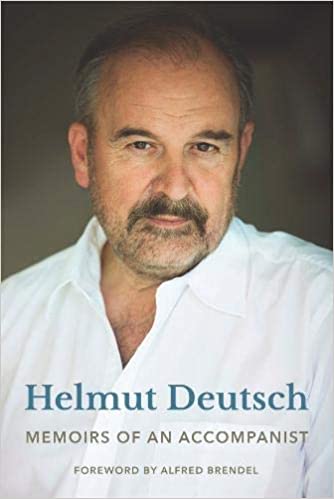
Helmut Deutsch memoirs jacket imageNew from Kahn & Averill

Helmut Deutsch

MEMOIRS OF AN ACCOMPANIST

Foreword by Alfred Brendel

Publication date: 15 September 2020

“a declaration of love – for all the many wonderful songs and cycles, and for many singers”

Robert Jungwirth, BR Klassik

During a career spanning more than 50 years, pianist Helmut Deutsch has accompanied over 100 singers, including Ian Bostridge, Grace Bumbry, Diana Damrau, Brigitte Fassbaender, Jonas Kaufmann, Angelika Kirchschlager, Christoph Prégardien, Mauro Peter, Hermann Prey, Thomas Quasthoff, Yumiko Samejima, Peter Schreier, Irmgard Seefried and Anne Sofie von Otter.

Translated from the German by Richard Stokes, professor of lieder at the Royal Academy of Music, this memoir describes, with humour, honesty and intelligence, Helmut Deutsch’s journey from unknown repetiteur to one of the most refined and sought-after accompanists of the modern era, respected by the leading singers of our time, who make music with him and revere him as a great artist and strong musical partner.

In this engaging and entertaining account, Deutsch offers fascinating insights into pianistic technique, repertoire, performance, interpersonal relationships, and the special qualities required for his profession: empathy, flexibility, sensitivity, patience and the ability to stand back in the service of others.

Deutsch is a captivating narrator, frank and entertaining. From out of tune pianos to jealous singers, his memoir teems with anecdotes and reflections on his multi-faceted life as a musician, offering readers a glimpse of unforgettable moments on and off stage without a trace of vanity.

“quite simply treasure-trove: required reading for all those devoted to Lieder, and a wonderfully tasty appetizer for those as yet unfamiliar with the genre.”

Rotary-Magazin

“Outstanding. How often does one read a book from the first page to the last without putting it down? And feel sad when one has finished?”

Ingrid Wanja, OperaLounge

“This autobiography should be on the bookshelves of every singer and pianist, and everyone for whom classical music is more than just a hobby.”

Martin Hoffmeister, MDR Kultur

Memoirs of an Accompanist is published in paperback by Kahn & Averill on 15 September 2020.

£17.95 / $26.95

Further information/order a copy


Richard Stokes, the distinguished translator of this memoir, is Professor of Lieder at the Royal Academy of Music. He has written and lectured copiously on German song, and his singing translations of Berg’s Wozzeck and Lulu, and Wagner’s Parsifal, have met with high critical acclaim. He was awarded the Order of Merit of the Federal Republic of Germany in 2012.

Image: Shirley Suarez

Ann Martin-Davis, piano (Guild Music)

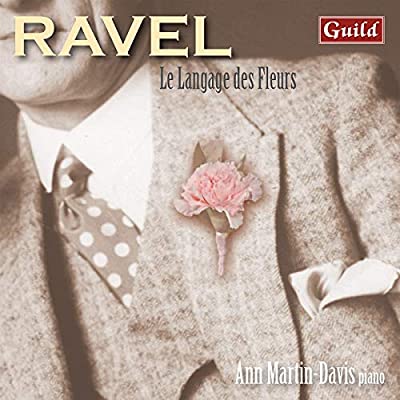
519yhdkc-cl._sy400_Maurice Ravel has been an enduring part of pianist Ann Martin-Davis’ musical life and in the liner notes to her new collection of his piano music, she relates an anecdote which gave her a special connection to the composer. Having played the middle movement of Ravel’s Sonatine to the renowned pianist and teacher Phyllis Sellick who was adjudicating a competition, Ann became Sellick’s “newest (and smallest) recruit”. Sellick revealed that she too had played the very same movement to the composer himself (introduced to him in Paris through her own teacher, Isidore Philipp), who had remarked that it was “pas mal” (“not bad”). When Ann asked her teacher what Ravel was like, Sellick replied that he was “all pointy – pointy hair, pointy nose, pointy clothes”. 

Ravel had a reputation for meticulous dress and reserved social manner. The image on the cover of the CD liner notes shows Ravel in an elegantly-cut tweed suit with a single carnation in his button hole, and this perhaps hints at the musical personality too: colourful, sensuous and flamboyant, but also intimate and tender.

Le Langage des Fleurs, Ann Martin-Davis’ new disc of Ravel piano music includes the much-loved Pavane pour une infante défunte, Sonatine, Tombeau de Couperin and a selection of the Valses Nobles et Sentimentales, as well as shorter piano works and miniatures. As part of her research for the recording, Ann read (and recommends) Professor Michael Puri’s groundbreaking book ‘Ravel the Decadent’, which places Ravel’s music in the context of the late nineteenth-century cultural and artistic phenomenon of Decadence, rather than that of the Neo-Classical or Symbolist labels more normally applied to his music.

This is certainly confirmed in Ann’s approach to the music. While there’s a fin de siècle poignancy and intimacy to the Valses Nobles et Sentimentales, elegance is tempered by an almost naughty playfulness and a hip-swinging sensuousness to the waltz rhythms, suggesting hidden pleasures of a more taboo kind. This is music redolent of the scent of Gauloises, Pastis – maybe even a hint of Absinthe –  cologne, and the heavy heat of the Med in high summer. Ann’s supple tempi and pitch-perfect rubato are balanced by crisp articulation and a lovely translucence of tone.

This is even more evident in the Tombeau de Couperin, Ravel’s hommage to thekeyboard suites of the great French clavecinistes Couperin and Rameau, and also a dedication to friends of the composer who died during the First World War. A bright, direct sound brings immediacy and drama while also highlighting the Baroque structures of this music. But it is not without emotion – far from it, in fact, especially in the Menuet, which is wistful and tender. The final movement Toccata, by contrast, sparkles with vigour, Ann’s airy, fleet-fingered touch bringing its figurations to life with vivid colour and imagination.

The music on this disc represents about half of Ravel’s output for the piano, and the smaller works, such as the insouciant À la manière de Borodine and the Meneut sur le nom de Haydn, sit well with the longer suites. The selection closes with the much-loved Sonatine, utterly beguiling in its delicacy and simplicity, impeccably and imaginatively interpreted by Ann.

If you, like me, were not able to get to the south of France on holiday this year (my holiday, like so many others, had to be cancelled due to coronavirus), this disc is a delightful evocation of the heady scents, sounds and ambiance of that part of France.

Recommended.