When I was learning the piano as a child, it wasn’t obvious to me why my teacher insisted that I learnt certain repertoire, for example, by Bach, Beethoven or Chopin (my Grade 8 programme featured works by all three). Unfortunately, I wasn’t taught technique as a specific area of piano study, and my teacher never really explained why certain composers and works were useful for both technical and artistic development. Meanwhile, my grounding in music history, styles and genres came from O- and A-level music, going to concerts and opera with my family, and listening to music at home.

Now, as I survey the vast repertoire available to the pianist (far bigger than for any other instrumentalist), I realise that there is much to be gained from studying works by specific composers, for they can each teach us something special which informs the way we approach, interpret and play music.

So, what exactly can the great composers teach us? I have tried to highlight one or two key areas for each composer (these are my own suggestions, based on my experience of their repertoire):

Bach – “counterpoint”

  • how to approach separate voices and textures within a work. Useful not just for playing Baroque repertoire, but for any music where one is required to highlight different voices and layers of sound.

Mozart – “clarity”, “elegance”

  • to play Mozart well, one needs precise articulation, finger independence, control, and lightness
  • an ability to utilise the full range of dynamics and phrasing, with minimal/sensitive use of pedal

Beethoven – “strength”, “structure”

  • an understanding of the building blocks and architecture of music, and the ability to highlight this
  • strength, projection, scrupulous attention to rhythm

Schubert – “melody”, “emotion”

  • Beautifully shaped melodies, rapid shifts in emotion, musical chiaroscuro
  • the ability to move seamlessly between many emotions, from joy to despair, sometimes within the space of a handful of bars, or even a single bar

Chopin – “sensitivity”, “songlines”

  • ultra-smooth legato, controlled shading, dynamics, voicing, pedalling
  • an understanding of the essential melodic line

Liszt – “virtuosity”

  • Play Liszt and you learn how to be a real performer, with the confidence, communication skills and strength to tackle the big warhorses of the repertoire (Russian concertos, Etudes etc) with true bravura
  • Fantastic technical grounding: double-octaves, chunky chords, projection, physical stamina, legatissimo and leggiero playing

Debussy – “colour”, “control”, “detail”

  • Debussy often asks the pianist to forget how the piano works and instead demands touch-sensitive control, subtle shadings, fine articulation, absolute rhythmic accuracy and superb attention to detail. Observe each and every marking in Debussy’s score – they are there for a reason!

Twentieth-century composers – “percussion”, “rhythm”, “articulation”, “colour”

  • Bartok offers even the most junior pianist the chance to learn about percussion and rhythmic vitality, while Prokofiev combines these elements with references back to classical antecedents
  • Messiaen for rhythm, brilliance, emotion, meditation
Maurice Sand, ‘Chopin giving a piano lesson to Pauline Viardot’, drawing (1844)

Several of my students have been learning and enjoying this well-known piece by the Penguin Café Orchestra, and so I thought it might be helpful to have some background.

The Penguin Café Orchestra (PCO) was a collective of musicians, founded by Simon Jeffes in the 1970s. It is hard to categorise their music, but it combines elements of exuberant folk music, and the minimalist music of composers such as Philip Glass and Michael Nyman. The music also contains references to South American and African music, and uses a variety of instruments including strings, pianos, harmoniums, slide guitars, cuatros, kalimbas, experimental sound loops, mathematical notations and more. A number of their works are very familiar as they have been used in film, tv and advertising.

Perpetuum Mobile is one of PCO’s most famous pieces, and comes from their fifth album, ‘Signs of Life’ (1987). The title is Latin for “perpetual motion” (or continuous motion) and in music it refers to two things:

  1. pieces or parts of pieces of music characterised by a continuous steady stream of notes, usually at a rapid speed
  2. whole pieces, or large parts of pieces, which are to be played repeatedly, often an indefinite number of times.

In both cases, there should be no interruption in the ‘motion’ of the music. Examples from classical music include the presto finale of Chopin’s Piano Sonata No. 2 in B flat minor. Marked “sotto voce e legato” (literally “under the breath and smoothly”), the entire movement is a musical stream of consciousness of unremitting parallel octaves, with unvarying tempo and dynamics, and not a single rest or chord until the final bars. The difficulty for the pianist, aside from keeping the triplets absolutely equal and even throughout, is the sotto voce (a fairly common marking in Chopin’s music) which suggests a muted sound. Careful pedalling will, in part, create the desired effect but the sound should never become woolly or muddy: we want to hear every single note. This movement has a strange and mysterious cast: Arthur Rubenstein remarked that the fourth movement is like the “wind howling around the gravestones”, and a pianist colleague of mine described performing it as “horrible – like having your entrails picked over on stage”. Interestingly, Chopin himself said of the movement: “The left hand unisono with the right hand are gossiping after the [Funeral] March” (source: James Huneker in his introduction to the Mikuli edition of the Sonatas). Played well it is inscrutable and brief; played badly and it’s just a muddle.


Here is Ivo Pogorelich, with a good view of his hands at work


Schubert’s Impromptu in E flat is another perpetuum mobile, at least in the outer sections (the middle section of the piece is a rough gypsy waltz), which, like the example by Chopin, is built from almost continuous triplets in swirling, tumbling scalic figures which never quite break free from the secure tether of the bass line. The difficulty in this piece, as in the Chopin, is keeping the triplets even, though with some give-and-take/rubato and dynamic shading to add interest: unlike the Chopin, there is prettiness and charm in this piece, and the dance rhythm of the bass line should be highlighted too. My problem when I was learning this piece (or rather relearning – I first encountered it in my teens) was lifting the fingers too high, which produced a chunky, “notey” sound and interrupted the flow of the music. It also made my arm tense. I taught myself to keep the fingers curled into the keys and to start with a slightly higher hand position: the result was a pleasing “trickling” effect in the long scalic runs, and the piece was far less tiring to play.

Pedalling is another issue in this piece, and I had a long discussion with a colleague about this, who kindly heard my Diploma programme ahead of the exam. In the end, I compromised on 1/8 pedal: like the Chopin Sonata, you don’t want a muddy sound (and I’ve heard plenty of live and recorded performances of this work with some very sloppy pedalling!). The beauty of this music, in my opinion, is the clarity of the writing, and the elegant song lines which are subtly embedded in the triplet figures. Careless or over-pedalling won’t highlight these interior elements to the listener.

A further danger of this piece is getting so caught up in the perpetual motion of it that you forget to breathe! This may sound daft, but I can confirm that in my Diploma recital, I probably played the restatement of the opening section on one breath. And in rehearsal one afternoon, my page turner was so absorbed in the music, he forgot to turn over the pages for me!


Walter Gieseking:


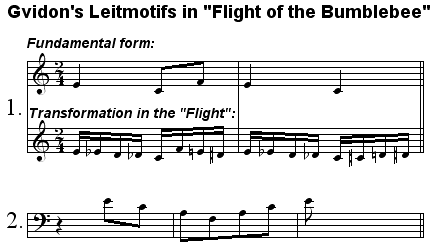
Perhaps the most famous example of a musical perpetuum mobile is Rimsky-Korsakov’s Flight of the Bumble Bee, an orchestral interlude from his opera The Tale of Tsar Saltan. This popular work, often performed as an virtuosic encore, consists of nearly uninterrupted runs of chromatic semiquavers, with leitmotifs (Givdon’s themes) from the opera. It is not so much the pitch or range of notes that present the challenge, but the sheer speed of it and the musician’s ability to move quickly around the notes.

(picture source: Wikipedia)


Other famous perpetuum mobiles from classical music include Debussy’s ‘Mouvement’ for piano (from the first book of Images), and Francis Poulenc’s Trois Mouvements perpétuels.


PCO’s Perpetuum Mobile is built on a simple repetitive melody which is put through several harmonic and textural changes, building in grandeur as it goes. The repetitions of the melody make it a hypnotic piece, but the changes prevent it from being boring. Instead, the accumulation of elements and orchestration make this an energetic and exciting piece to listen to, and to play.

A friend of mine has adapted the music for easy piano (Grade 2-3 level), and although simplified, the music retains key features from the original, including the harmonic and textural changes. After the introduction, the main melody is introduced and repeated in the right hand before the left hand joins in with a progression of stern chords in open 5ths and octaves. Further along in the score, and both hands play the melody unison, reflecting the string articulation in the original. The two-bar melody, which is scored in 7/8 and 4/4, contains an octave leap which might be tricky for smaller hands. However, this also offers a great opportunity to practice ‘rotary motion’: I get students to practice the second, 4/4, part of the melody first, as the smaller stretches make rotary movement easier to grasp.

Before playing a single note on the piano, we practice rotary motion above the keyboard, or even away from the keyboard. Many teachers and tutor books describe rotary as “turning a doorknob” (an old-fashioned round doorknob, obviously) or turning cooker knobs. But my teacher and I decided the movement was more like the windscreen wipers of a car: it’s an “out-in” movement rather than “in-out”. To practice it at the piano, start in a 5-1 position, G-C (either Middle C position or an octave higher, if more comfortable), and place the hand in a “karate chop” position on the G with the fifth finger. Allow the hand to “flop” onto C with the thumb, and repeat. Encourage the student to watch the movement of the wrist: if the wrist isn’t moving, it ain’t rotating! Speed the movement up so that the student understands that it is the rolling (“rotary”) movement of the wrist that makes the sound, rather than the fingers. Keep the wrist and hand flexible and soft throughout: this will also help achieve a good tone.

Everyone I’ve taught this piece to wants to play it fast, but to try and play it up to tempo before you have practised rotary motion and grown comfortable with it will lead to tension in the hand and possibly pain. Keep the tempo sensible and perfect the rotary motion and good legato-playing before cranking it up. Meanwhile, enjoy experimenting with different dynamic levels for dramatic effect. The unison section should be light, nimble and nicely articulated to achieve the effect of the strings from the original.

Download the easy piano version from the SE22 Piano School blog

And the original, composed by Simon Jeffes:

A shorter version of this article was published on my sister blog, Frances Wilson’s Piano Studio

Arvo Pärt

Spiegel in Spiegel has to the best-known of all the music by Estonian composer Arvo Pärt (b.1935). Composed in 1978, just before Pärt left Estonia for Berlin, it was originally written for single piano and violin, though many other versions exist, including for piano and ‘cello, or viola, clarinet, flute, and percussion. An example of minimalist music, it has a meditative and serene simplicity in both its structure and tonalities.

The piece has earned the status of “iconic”, largely due to the fact that it has been much used in film and television soundtracks, as well as in ballet and theatre productions; it is hard to credit now that Pärt’s music was relatively unknown in the west until the 1990s. The work’s recurring motifs – rising crotchet second-inversion broken chords in the right hand of the piano and sustained notes in the violin (or other instrument) which slowly ascend and descend – are instantly recognisable.

In the 1960s, although largely cut off from western contemporary classical music, Pärt experimented with serialism, collage, neo-classicism and aggressive dissonance, styles which cemented his modernist credentials, but set him at odds with the Estonian Soviet authorities. However, he was frustrated with the dry “children’s games” of the avant-garde, and, as a reaction to this and in an attempt to find his own compositional style, he went into a self-imposed creative exile, during which he explored the traditions, both musical and cultural, he was most drawn to: Gregorian chant, harmonic simplicity, and his Russian Orthodox faith. What emerged was a distinctive and unique compositional voice: the music of “little bells”, or “tintinnabuli”, heard for the first time in his piano miniature Für Alina. This piece set the seed from which his most famous music grew, including Spiegel im Spiegel, Fratres, Summa, and Tabula Rosa.

It is easy to dismiss Pärt’s music as simplistic, sentimental and clichéd “holy minimalism”, but the music’s power lies in both its absolute simplicity and the austere rigour applied to its construction. And here Pärt was harking back to his adventures in serialism, devising strict rules to control how the harmonic voices move within the music. As a result, his music sounds both ancient and avant-garde, while the new tonalities of the “little bells” and the simple harmonic progressions give the music a spare, profound and meditative expressivity.

The German title Spiegel im Spiegel means both “mirror in the mirror” as well as “mirrors in the mirror”, referring to the infinity of images produced by parallel plane mirrors. In the music, this mirroring is achieved through the fragments in the piano, which are endlessly repeated with small variations, as if reflected back and forth. These repeating fragments also invoke, in tintinnabuli style, the twilight first movement of Beethoven’s Piano Sonata Op. 27 no. 2, the ‘Moonlight’, with its peaceful recurring triplets. The piano part also reaffirms the melody notes of the violin line with parallel thirds and octaves, and further voices unfold from the core note, A.  F major, the key in which the piece is written, remains the underlying and omnipresent tonality throughout.

The opening measures of Spiegel im Spiegel

The piano part carries the tintinnabular voice with its repeating broken chords and low, sustained Fs in the bass. The texture is coloured throughout by high, bell-like (tintinnabular) recurring sounds in the upper registers. The violin line is based on a slow ascending melodic line, beginning with a G-A two-note scale, which alternately ascends then descends to A by step. With each subsequent ascent and descent, a note is added to the line, a process which could go on indefinitely (the “mirror in mirror” again). It is this continuity and constant inversion of the violin line, combined with the piano, that creates the sense of perfect tranquility. There is no drama or ambiguity here because we know the music will always return to the “home” tonality of A. Rather, the emotional content comes from introspective atmosphere created by the simplicity and pure sonorities of the music.

The composer gives no dynamic or phrase markings: the violin part in particular is curiously blank, and one could play it in a completely “flat” way,  and it would still sound effective. However, the musician has a natural tendency to increase the dynamic level as the music rises. When I was rehearsing this piece with my violinist partner, the first time we had played it together, we both found ourselves adding some dynamic colour and shading to complement the rise and fall of the melodic line. I have also found a tendency, when practising the piano line, to give the tiniest “breath” before the restatement of the opening motif (which recurs, rather like a traditional rondo theme), to indicate that we are returning “home”. The music closes almost exactly as it begins, with the repeated motif in the piano and a sustained A in the violin. A gentle ritardando in the final bar is all that is needed to close this piece.

The notes themselves are not difficult, but it is important to set an appropriate tempo for the music (too slow and it could sound ponderous). Then the main task is to set the mood of reflection, with the notes falling like water dropping into water, and to play the notes “as beautifully as possible” (Tasmin Little, violinist). The music, in effect, plays itself: there is absolutely no need for over-interpretation, and one should simply step back, “have faith” in the music, and the composer’s ability to create a mesmeric tranquility.

The piece featured in an episode of Radio 4’s series ‘Soul Music’, in which people discuss the importance and impact of a certain piece of music on their lives. Listen to the programme here

by Keith Snell

Most pianists are surprised at the abundance and variety of repertoire for the left hand alone. I know I was. In the early years of my right hand injury, I never gave serious thought to a career as a “left hand only” pianist, because I was completely unaware of the vast amount of very fine left hand literature. I recall thinking that there was barely enough to put together one “just OK” solo recital, and the only two concerti I knew were the Ravel and Prokofiev. It hardly seemed enough to build a performing career. It was many years before I really started to investigate and discover a whole world of music that was available for me to play; that there is really enough music for me to play and enjoy for my lifetime!

Well, maybe it is OK that I did not know sooner: otherwise, I may not have had the opportunity to edit, write, and produce all the teaching material that I have. I wouldn’t trade that — I have been most fortunate. But, in 2004, I realized that a very important piece of my life was missing, that the creative process of practicing was essential for me. When I started practicing again, I felt like I had been in the desert and finally found water. My soul was being fed. And as I worked, I uncovered more and more… and more! wonderful music written for the left hand alone. I started playing left hand alone concerts in 2006. I love sharing this music, and it is so wonderful when people hear it for the first time and are amazed at how beautiful sounds, and how complete the musical experience feels. The best compliment I get is when someone says, after a concert, “I enjoyed that music so much, that I forgot you were playing with just one hand!” My particular interest in piano music for the left hand alone began with the onset of focal dystonia in my right hand; but my passion for left hand alone music grew from my need for self-expression through music.

You may wonder, “Why is there piano music for the left hand alone?” There are four basic reasons composers write music for the left hand alone:

Leopold Godowsky

1. Technical development: As we are all aware, the standard repertoire for the piano generally places greater demands on the right hand than the left. The need for strength, speed, and the ability to project a melody (especially with the weak fifth finger), are most often found in the writing for the right hand. However, every pianist at some point will encounter a passage for the left hand that will expose the unequal development between the hands. Certainly there are two-hand etudes, such as those by Czerny or Chopin, which emphasize the development of the left hand; but we also have a significant body of etudes for the left hand alone, designed for the same purpose. The most prolific composer, and one of the best composers of music for the left hand alone, was Leopold Godowsky (1870-1938). Of his fifty-three Studies on Chopin Etudes, twenty-two of them are for the left hand alone. He became fascinated, even obsessed with the idea of a greatly developed left hand. His theory was that if the left hand could be trained to do the work of two hands, then, when you added the right hand back in, the pianist could manage, or at least sound as though they were doing the work of three hands! The Godowsky Studies on Chopin Etudes are at the very top in difficulty, played generally by the greatest virtuosi. Mozskowski’s Op. 92 is a set of 12 Etudes for the Left Hand Alone, which are not as formidable as the Godowsky. There are ‘Schools for the Left Hand’ by Berens, Blanchet, Bonamici, Phillip, and Wittgenstein. Czerny’s Op 718 Left Hand Studies are played with both hands, but the etudes emphasize the development of technique in the left hand.

2. Injury: The truth is, most pianist will not play music for the left hand alone until the have to, usually because of injury – whether temporary or permanent. Many of the works written for the left hand alone were written for pianists with an injured right hand or arm. Some of the most well known and best music was written for Paul Wittgenstein (1887-1961), who lost his right arm in WWI. The wealthy Wittgenstein family commissioned dozens of pieces — about forty works. Among those are some truly great concertos for the left hand alone: Ravel Concerto in D, Prokofiev Concerto No. 4, Britten Diversions, and Korngold Concerto in C-sharp. The Czeck pianist Ottakar Hollman suffered permanent injury to his right arm during WWI. Several of his fellow countrymen wrote music for him, including Janacek (Capriccio for Piano and Winds), Martinu (Divertimento for Piano and Chamber Orchestra), Tomasek (Sonata), and Schulhoff (Suite No. 3). British pianist Harriet Cohen suffered permanent injury when a glass shattered in her right hand, and the English composer Arnold Bax wrote a concerto for her. Dutch pianist Cor de Groot had a temporary injury that produced works from six different Dutch composers, as well as his own set of variations for piano and orchestra. Of course, present day pianists Leon Fleisher and Gary Graffman have had music written for them as well. I have been fortunate to have works written for me: Verbs is a set of Twenty-four Preludes for piano left hand by the Irish American composer Kalthleen Ryan, and Canadian born English composer Beverley Flanagan wrote a four movement suite called Without a Trace. American composer Andrew Norman has been commissioned to write a Piano Quintet for string quartet and piano left hand for me and the San Francisco based Ives Quartet.

3. Virtuosic display: We certainly have many two hand “concert” etudes intended for the demonstration of technical prowess; and what could be more impressive that an etude which shows mastery of the left hand? Especially since the left is generally considered the lesser of the two! Many of the virtuoso pieces for the left hand alone were written by two handed pianists, who wanted the opportunity for LH display. Bartok (“Etude” — which he included on his Berlin debut), Godowsky (Studies on Chopin Etudes), Leschetitzsky (an opera paraphrase on the sextet from ‘Lucia di Lamermoor’ by Donezetti). A century earlier Alexander Dreyschock and Adolfo Fumagali also wrote “show-stoppers” for the left hand alone which they always included as featured works in their otherwise two-handed recitals.

4. Compositional challenge; The first three categories of left hand piano music are from the viewpoint of the pianist. Now, we will think about left hand music from the view of the composer. It is a distinct compositional challenge, for which the composer must be motivated. It seems to me that most music for the left hand alone usually falls into two or more of the above categories. For example, a composer may undertake to write for the left hand alone because the challenge is of interest, but they may be writing for an injured pianist. Or, a pianist/composer may start by writing an etude for left hand technical development, and end up with an excellent concert piece of virtuoso display. There are particular challenges in writing for the left hand alone. First, is the challenge of working around being in two places at the same time, i.e. bass and treble, or melody w/accompaniment. (However, there is also left hand music which moves in single notes, or single line texture.) To utilize the rich textures possible with the piano, composers look for ways to use a great deal of pedal and frequent lateral movements of the left hand, to blend melody and bass. The most skilled left hand writers, such as Godowsky, Scriabin, or Ravel, find ingenious ways to integrate the melody and accompaniment in a seamless and natural sounding way. One of the very finest examples of all is the Etude in A-flat by Felix Blumenfeld. The least effective writing for the left hand, I think, is when a composer thinks in too much in a “two handed” way, requiring the breaking of chords and constant use of grace notes from bass to treble

Left Hand Pianists in History

Czech pianist Alexander Dreyschock (1818-1869) is the first pianist known to perform with his left hand alone. He was a fanatical practicer, keenly obsessed with developing the technique of his left hand. Dreyschock was particularly know for his skill with 3rds, 6ths, octaves. He played the left hand part of the Chopin Etude Op. 10 no. 12 entirely in octaves! From all reports, his technique was astounding, and equal to that of Thalberg and Liszt. The first known concert which included a piece for the left hand alone is in 1843, at Dreyschock’s first concert in Paris, when he included his own Variations for the Left Hand Op. 22. His very successful concert tours took him throughout Europe, and the Variations for left hand alone became a successful “gimmick” for him. At a concert in Brussels, the audience reacted so strongly to the left hand piece, that he had to play it a second time. In Copenhagen, the same piece caused such a sensation that the King of Denmark gave him a box of cigars wrapped in 100-thaler bank notes. Eduard Marxsen (teacher of Brahms) wrote Three Left Hand Impromptus with a subtitle ‘Hommage a Dreyschock’. Leschetizky’s paraphrase of the sextet from Lucia di Lammermoor is dedicated to Dreyschock.

In 1862, Dreyschock became a staff member at the newly-founded St. Petersburg Conservatory, at Anton Rubinstein’s invitation. He was appointed Court Pianist to the Tsar, as well as Director of the Imperial School of Music for the Operatic Stage. He maintained this double post for six years, but his health suffered from the Russian climate. He moved to Italy in 1868 and died of tuberculosis in 1869.

Italian pianist Adolfo Fumagali (1828-1856), was ten years younger than Dreyschock. There were four Fumagali brothers, and they were all professional pianists, and published composers. Adolfo was the most successful. Although he looked rather frail, he had a phenomenal technique and strong fingers that astonished everyone. He was respected and loved by both the critics and the public, but did not become a truly unique sensation until 1855 when he began performing his work for left hand, Fantasy on Meyerbeer’s Robert le Diable – a 27 page blockbuster for LH alone. It brought down the house! He also had great success with his left hand version of ‘Casta Diva’ from Bellini’s ‘Norma’. But it was the Fantasy which really made his name. With many wonderful reviews, a repertoire of successful “salon” pieces, and a half dozen left-hand opera paraphrases, Fumagali was on the verge of a hugely successful European career. However, he contracted cholera at the age of 28 and died. Italy lost its most celebrated pianist of the day.

Fumagalli’s output is quite extensive, though almost all of it is extremely difficult to obtain today. Theodore Edel writes about him: “Although he was perhaps not a very inspired or ingenious composer, his works for left hand alone stand nonetheless as an important testament of the progress in technique and virtuosity of the period, especially of single-handed works.”

The Hungarian pianist Géza Zichy (1849 – 1924) was the world’s first professional one-armed pianist. He lost his right arm in a hunting accident at the age of fifteen. After the hunting accident, he became determined to be independent and learn to do as much as possible with one hand — to dress, eat, even peel an apple and clip his own fingernails. His determination to be a pianist seems to have begun after losing his right arm. “I did not ponder over theories of one-hand playing; I knew nothing about how it could be done, but I did it.”

At 26, in 1875, Zichy impressed Franz Liszt with his arrangement and performance of the Schubert Erlkonig. Liszt encouraged him to publish as set of Etudes, for which Lizst wrote a preface. By 1880, Zichy had about 15 pieces of his own devising, and he began his concert career in earnest. Dreyschock and Fumagali had really made their careers by playing left hand alone works; but they were two handed pianists, and that was only part of their performances. Zichy was the first to make an entire recital of just left hand. Liszt wrote in a letter to a friend: “Geza Zichy created a sensation at a recent concert (the first time he has favored Budapest with his extraordinary virtuosity). The hall was packed and his success complete.” Later, Liszt also wrote: “Geza Zichy’s reputation is not just parochial Hungarian. He is an astounding artist of the left hand, which is so remarkably dexterous to the point that the greatest pianists would be hard put to match him.”

Since Zichy was quite a wealthy man, he gave every penny earned from concerts to charity. Despite his great wealth, he did not commission composers to write for him. This seem so unfortunate, especially considering his close friendship with Liszt, but also for the fact that he was a rather unremarkable composer. His left hand piano music, although plentiful, is among the least played of the repertory. It is interesting to note that he wrote the very first concerto for the left hand alone. Besides an active concert schedule, Zichy served forty-three years as director of Hungary’s National Conservatory.

In 1915, Zichy gave a concert to one-armed men crippled in the first year of World War One. The purpose of the concert, and the lecture which followed, was to be inspirational: Zichy wanted to lift these men from their despair, and show them that it was possible to feel whole again. He also wrote The Book of the One Armed, in which he gave advice on how to learn skills to live independently. The book included exercises, 40 photos, and explanations, so that the reader could learn to use his one hand – and two feet – in ways he would not likely have devised. During the First World War, it went through five printings.

The Austrian pianist Paul Wittgenstein (1887-1961) had a most fascinating and courageous career as a one-armed pianist. He was called for service in the Second World War, was wounded, and had his right arm amputated. With a remarkably tenacious personality, he became determined to pursue a career as a one-armed pianist. Wittgenstein became the second one armed pianist in history, after Zichy. An interesting difference between Zichy and Wittgenstein is that Zichy was an amateur when he lost his arm, but Wittgenstein was already an aspiring professional. Before the war, as a two-handed pianist, Wittgenstein had studied with Leschetizsky, and made his Vienna recital debut at the age of 26, in 1913. Then in the following year, made his debut as concerto soloist.

The Wittgenstein family was extraordinarily wealthy. At an estimated £4 billion at the start of the war, it may have been the largest private fortune in Europe. As a result of their prominence, the Wittgenstein home hosted the cultural elite. As a child, Wittgenstein sat at elegant dinner parties with Brahms and Clara Schumann. The first performance of the Brahms clarinet sonatas was in the Wittgenstein living room. Casals, Bruno Walter, and Mahler, were all guests in the Wittegenstein home. Paintings by Klimt hung on the walls, and there were Bach and Mozart manuscripts on the piano.

Despite loosing his right arm, he refused to give up. His teacher, Leschetizsky was dead, but Wittgenstein practiced seven hours a day, keeping his teacher’s principles before him — especially the loose wrist. He wrote: “It was like climbing a mountain. If you can’t get up one way, you try another.” He was clearly determined to be a pianist, but he had to find repertoire. Wittgenstein knew Zichy in passing, and was inspired by him as a performer; but found his music trivial and did not play it. He admired the Bach/Brahms Chaconne, the etudes of Saint-Saens and Reger, and the Scriabin Op 9 Prelude and Nocturne. Sifting through the hundreds of German salon pieces, he found the excellent music of Alexis Hollander for left hand. He was of course also taken with the great music of Godowsky for left hand. To this repertoire he added his own transcriptions of opera, lieder, and two-hand piano works, arranged for one hand.

Wittgenstein used his substantial financial resources to commission original works. He returned to the concert stage in 1916 performing a Kozertstuck by his composition teacher, Josef Labor. The list of commissions reads like a who’s who of 1920’s music, but most of these are not composers we are familiar with today. However, there are a few distinctions, such as Ravel, Britten, Strauss, Korngold, Hindemith, and Prokofiev. The premieres of concertos by these prominent composers were “star” events; and Wittgenstein played with great orchestras, and prominent conductors such as Bruno Walter, Pierre Monteux, Furtwangler, Koussevitzky, and Ormandy.

Wittgenstein received about 40 works in all — the most for any single musician in history. He paid enormous fees to his composers, but they had to put up with his many complaints and difficult personality. Wittgenstein had a pugnacious spirit and relished a good battle with colleagues. He was also quite possessive with works he commissioned, and insisted on exclusive lifetime performing rights for all the pieces written for him. “You don’t build a house just so that someone else can live in it. I commissioned and paid for the works, the whole idea was mine […]. But those works to which I still have the exclusive performance rights are to remain mine as long as I still perform in public; that’s only right and fair. Once I am dead or no longer give concerts, then the works will be available to everyone because I have no wish for them to gather dust in libraries to the detriment of the composer.” However, he did not play every piece he had commissioned. He told Prokofiev that that he “could not yet understand the 4th Piano Concerto, but would play it when he did.” However, he never reached that point! He rejected outright Hindemith’s Piano Music with Orchestra Op. 29. He hid the score in his study, and it was not discovered until after his widow’s death in 2002 (by which time Hindemith himself had been dead for 39 years).

Wittgenstein was not permitted to perform in public concerts under the Nazi regime. He departed for the United States in 1938, and became an American citizen in 1946. Wittgenstein spent the rest of his life in the United States, where he did a good deal of teaching as well as playing. He died in New York City in 1961.