Eight pianists play the opening measures of Schubert’s last sonata. Reblogged from Harold Gray’s Speaking of Pianists.

Eight pianists play the opening measures of Schubert’s last sonata. Reblogged from Harold Gray’s Speaking of Pianists.
 Non-specialists and lay people have this idea that serious pianists spend hours and hours, every day, practising scales, arpeggios and other technical work and exercises to keep the fingers, and the mind, nimble. When I was in my early teens, working towards my Grade 8, I practised my technical work religiously, rattling up and down the keyboard until my fingers tingled and my head hurt. This was an essential part of my daily practising: as a result I can remember nearly all the scales I had to learn for Grade 8. As I said to some students who were waiting to take their Grade 6 piano exams at the exam centre yesterday, “Once learnt, you never forget your scales! It’s like riding a bike.”
I am quite fierce with my students about learning scales, partly because, as I tell them, scales are useful: they teach good keyboard geography, and are crucial in understanding key signatures. They also encourage quick thinking and nimble fingers, and assist in playing by ear and grasping the basics of chords and harmony. Some of my students love scales: Laurie (11, working towards Grade 2) always insists on commencing his lesson with a scale warm up. As a consequence, his technical work is very secure and he has quickly mastered playing scales hands together (a requirement for Grade 2). “Do you practice your scales, Fran?” my students ask me, and I smile and look apologetic and admit that I don’t.
And nor does my teacher, a professional concert pianist and Professor of piano at one of London’s foremost conservatoires. Nor does she recommend rigorous exercises such as Cramer or Hanon (which I know some people swear by). Instead, she prefers to create exercises from the piece itself, something she has encouraged me to do, and which I find incredibly useful. The great thing about doing this is that you have an instant finger exercise which is relevant to the music you are currently learning, but which can also be adapted and applied to other music. Take the drop slur: a simple, plaintive little piece by Bartok from his suite ‘For Children’ called Former Friends (Quasi Adagio) has proved invaluable in teaching drop slur technique. The opening bar is perfect as the right-hand notes (A-E E-D) sit easily under the fingers and the thumb can be dropped down on to the first A, while the fifth finger floats up and off the E. After teaching this piece to a number of students (it forms part of the current Grade 1 repertoire), I then applied the technique to the Chopin Etude I was learning (Opus 10, No 3). There are some tricky drop slur measures (mm. 32-33 and 36-37) which have benefitted from “the Bartok Effect”. And later, in the “dread sixths” measures (mm. 45-54, marked ‘Con bravura’, just to add to one’s woes!), applying this technique had a remarkable, transformative effect on my ability to cope with this passage.
One of the pieces by Debussy I am working on at the moment, the ‘Prelude’ from the suite Pour le Piano, requires playfulness and nimbleness in the fingers throughout. The interaction between the hands is quite difficult to achieve in the opening measures and the second theme: in many ways, one is trying to create the sense of “one hand playing” while retaining a playful, swirling movement. This piece is Debussy’s nod back to his Baroque antecedents, and, with that in mind, I turned to Bach for some finger exercises. I’d downloaded the infamous ‘Toccata and Fugue in D minor’ for one of my students, and playing it, in a very tongue-in-cheek way the other day, I discovered plenty of useful material to help practice the Debussy. Meanwhile, a little prelude by Delius (from the ‘Three Preludes’) has a nice figure of thirds in semiquavers which is great for training fleet fingers.
The Etude or ‘Study’ was intended for pianists to practice specific techniques, such as rapid passage work, octave playing, playing in thirds and so forth, and, before Chopin, the Etude was very much a student exercise (the most well-known composers of piano etudes are probably Clementi, Cramer, Moscheles and Czerny). Chopin, in his Opp. 10 and 25 Etudes, elevated the genre to something far, far greater than the dry student study, and his Etudes are considered some of the greatest, and most challenging music in the piano repertoire. To the pianist, they offered an entirely new set of technical challenges, while also becoming a regular part of the concert repertoire, combining technique and musical substance to create a complete artistic form, which was taken up by later composers, most significantly Franz Liszt. Thus, the first of the Opus 10, for example, is a crystalline, filligree of a piece, lasting just under two minutes, while the Opus 25 No. 7 (which I learnt last year), is a 5-minute melancholic meditation on perfect tone and phrasing, particularly in the left-hand. Some have become very famous – the ‘Revolutionary’, the ‘Winter Wind’, the ‘Tristesse’ and the ‘Aeolian Harp’.
Applying techniques I mastered from learning two of Chopin’s Etudes last year (the Opus 10, No. 3, and the Opus 25, No. 5) proves that despite their high artistic form and musical values, they are still studies, offering the pianist the opportunity to learn particular techniques which can be applied to other music. Both Etudes have informed my learning of Liszt’s sublime Sonetto 123 del Petrarca – and coming at this piece with a degree of “prior knowledge” has made the learning of it easier. And that drop slur exercise has proved invaluable in the recurring “rocking lullaby” motif in Messiaen’s Regard de la Vierge (no. 4 of the ‘Vingts Regards….’)
Don’t feel you should stick rigidly to traditional technical studies, like Cramer and Hanon (and, believe, me I’ve “been there and done that”, and I’m not convinced of the usefulness of such learning aids). Make up your own exercises from the pieces you are working on, and, if you can’t play a whole Chopin Etude, take an element of it and turn it into your own exercise.
Resources
Bartok – ‘Former Friends’ (Quasi Adagio), from For Children
Claude Debussy, from Pour le Piano: Prelude p1
Delius – Prelude II
Chopin, Etude Opus 10, No. 3
Brahms, 51 Exercises
Richter playing Chopin’s Etude Op 25 No. 7
Messiaen – Vingt regards de l’enfant Jesus. No. IV. Regard de la Vierge (Pierre-Laurent Aimard)
I’m reblogging a link to this wonderful video of Martha Argerich playing Liszt from Notes from a Pianist. Even if you don’t like, or know the music of Liszt (and if you don’t, this is the year to discover his music), this is fascinating viewing for it gives a close up of the pianist’s hands in action. Look out for the left hand thumb and hammer-like little finger in the opening measures which creates that extraordinary muffled tolling bell motif. And later, the sheer power in her hands in the ‘cavalry charge’.
The piece, the seventh from the suite Harmonies poetiques et religieuses, is an elegy written in 1849 in response to the suppression of the Hungarian uprising of 1848 by the Hapsburgs.
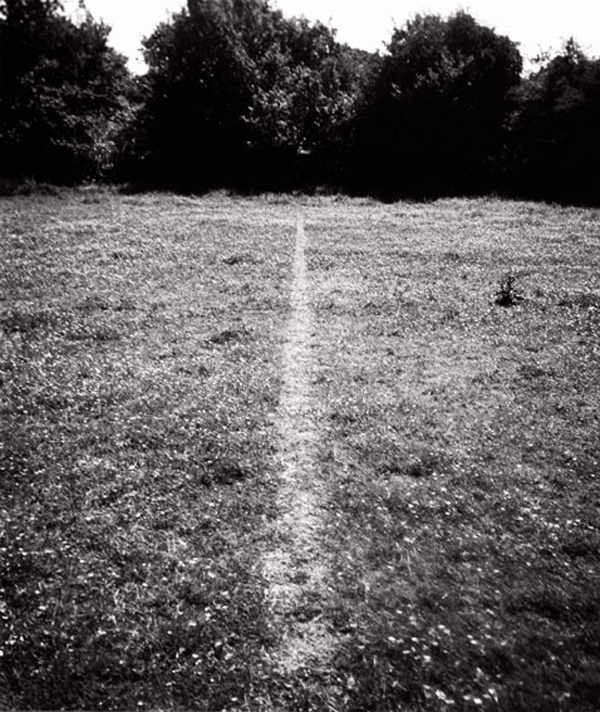 Learning music is a journey: sometimes – often! – it’s an amazing journey of discovery with new horizons and vistas constantly opening up before you as you travel through the score. As you grow more intimate with it, you find interesting bye-ways and twitchells. Sometimes, you come across a short-cut: a clever way to resolve a tricky passage, a fingering scheme which is perfect for a run of difficult chords. Set a piece aside for a few months and then go back to it, and you find even more, things you might have missed first time round, or elements which you appraise in a new or different way.
But occasionally it’s a journey fraught with pitfalls, cul-de-sacs and u-turns. Doors are closed, alleyways prohibited. Access denied. It’s rare for me to give up on a piece of music. I’m tenacious, persistent and perfectionist, and it irks me horribly if a piece gets the better of me, but now and then I take on something which just does not suit me, and no matter how long I spend with it, I just don’t progress. And so, in the end, I become a hostage to it, confronting the same page of score day after day and not moving forward. Shades of ‘Groundhog Day’! A few examples:
Delius – ‘Scherzando’. A really beautiful, lyrical piece, playful and spritely, which I started learning last year when I was going through my “English Romantics” phase (including Ireland and Bridge). but my hands – and head – simply could not cope with all its weird and awkward arpeggios, which did not sit comfortably under the fingers. It’s harder than it looks!
Gershwin – No. 1 of Three Preludes, Allegro ben ritmato e deciso. I learnt the middle piece of this trio and performed it in my students’ concert last summer, a lazy, languid prelude with motifs redolent of the composer’s more famous work ‘Summertime’ from Porgy and Bess. The first Prelude is exuberant, opening with a 5-note blues motif on which virtually all the material in the piece is based. This was no problem for me: but the syncopated rhythms, based on a Brazilian baião, completely foxed me. Unfortunately, I mis-learnt the rhythm and then found it virtually impossible to un-learn and re-learn it. After days spent playing the rhythm on the fall of my piano – and nothing else – I had to admit defeat. But it’s a piece I would like to return to when I have the time to learn it properly.
Shostakovich – Prelude in D Major, Op. 87, No. 5. This piece, from the LTCL repertoire list, was supposed to herald my first serious foray into Shostakovich’s repertoire for the piano. Arpeggiated chords over a simple, tranquil melody, first in the bass, then in the treble. Sounds easy? Looks easy too…. But my left hand refused to play the game of arpeggiated chords, and the right hand got tired too easily. Even with some helpful tips from my teacher to relax the hands, I found this piece painful and awkward. It was with great reluctance that I had to set it aside, and rest my right hand. I intend to return to this piece, but when, and only when, my right hand is 100% fit.
When I was learning the piano as a child, I remember labouring over the same wretched piece week after week, my teacher insistent that I was jolly well going to learn it. It was demoralising to have to struggle through the same thing each week, and I grew to despise certain pieces. Thus, when I am working with my students, I always play through a new piece to them so they can hear it and tell me whether they like it, and, most importantly, would like to learn it. There’s no point forcing a child (or indeed an adult student) to learn something they don’t like (though I do occasionally impose certain pieces on students for the purposes of improving technique or studying a particularly aspect). Some of my students have very clear ideas about what they would like to learn: one child, Sam, 8, is keen on jazz and has a real affinity for it. Sadly, I do not teach jazz, but I do try to accommodate his wishes. Another, Ben, loves Beethoven, and his treat this week will be to start learning a simplified version of the Moonlight Sonata. (Ben can already play the opening measures by ear, correctly transposed into D minor.)
If a child is really struggling with a piece, despite requesting to learn it, we will abandon it. Much as I dislike admitting failure, sometimes it’s necessary to just move on and select a new piece. It also reminds students that there is a wealth of fantastic repertoire out there just begging to be discovered.




 The Cross-Eyed Pianist