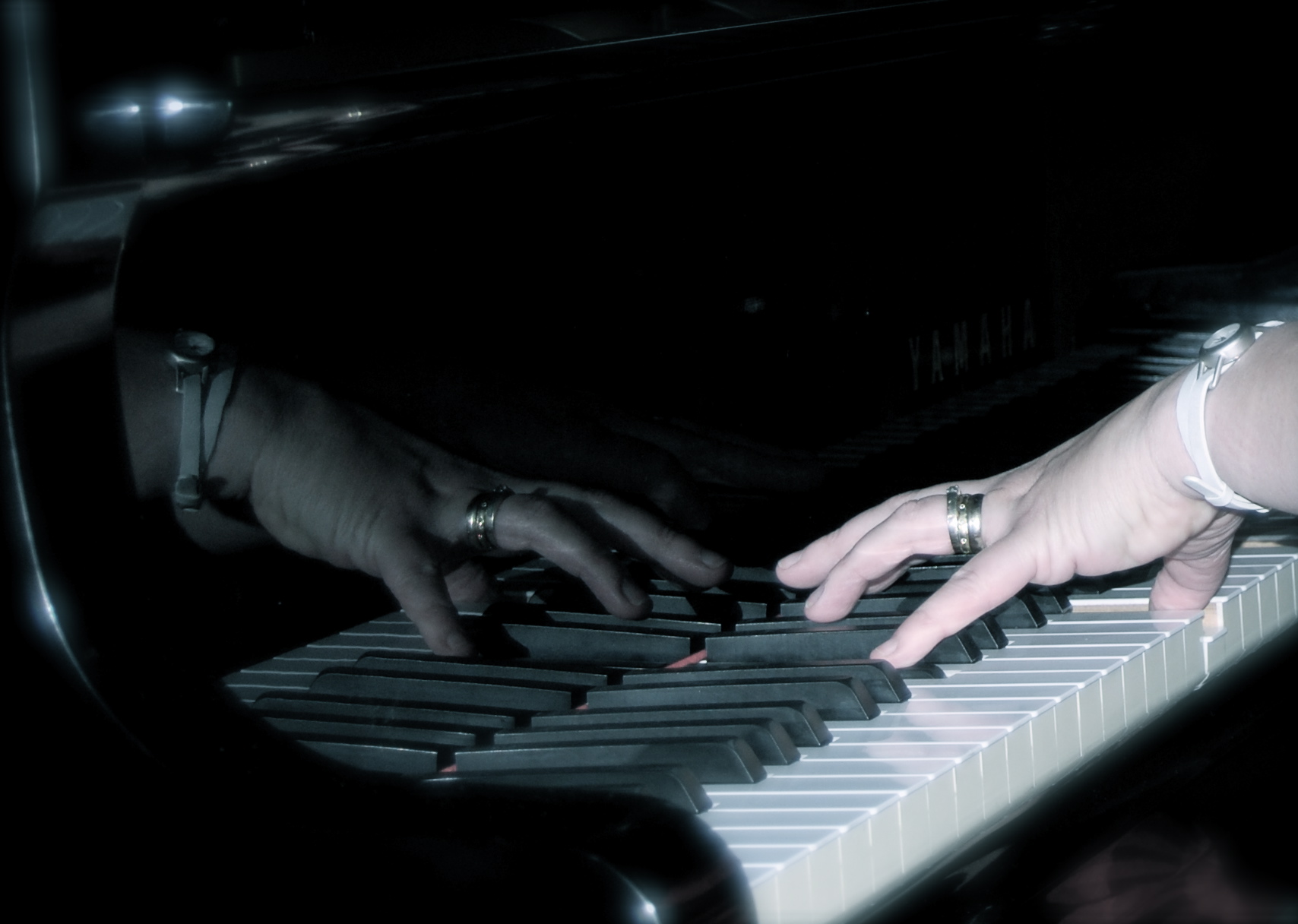
There was an expectant hubbub of chatter, and some rather nervous laughter, when we arrived at Steinway Hall on Saturday for the first EPTA Piano Day, hosted by Scottish pianist and UK EPTA Chairman, Murray McLachlan. I met my friend Lorraine ahead of the event for strong coffee, and, in Lorraine’s case, a big breakfast, at a nearby Carluccio’s. Thus fortified, we walked the short distance from St Christopher’s Place to the hallowed ground that is Steinway & Sons London showroom on Marylebone Lane.
Like many an aspiring pianist, I have pressed my nose to the windows of the Steinway showroom ever since I can remember, marvelling, as a kid, at the big black shiny beasts squatting in the spotlit window displays. I’ve never, until now, had the chutzpah to go in and actually play one. My friend Michael, a fine amateur pianist with a penchant for Rachmaninov and Debussy, bought his Model B there a few years ago: apparently, the level of service was beyond superb. Well, so it should be if you are spending a cool £67,000 on what is, for some people, a glorified piece of sitting room furniture.

Behind the grand showroom, and the Steinway Hall of Fame, there is a small recital space, complete with a big black shiny Model D, a full-size concert grand. The event, the first, (hopefully of many) organised by EPTA, was open to EPTA members and their adult students, and was run in the form of a workshop, with verbal and written feedback on each individual performance by Murray McLachlan.
Although I have attended several courses at my teacher’s house, and performed in her house concerts, I had never participated in an event like this before, which would involve playing in front of 30 people I’d never met before. However, I regarded it as useful preparation for my performance Diploma – plus an opportunity to play a really fine piano.
The repertoire offered was quite varied, with, perhaps unsurprisingly, a good helping of Liszt, some Chopin Nocturnes, two of Schubert’s Opus 90 Impromptus, the opening movement of Beethoven’s Opus 109 Sonata and his Rondo ‘Rage Over a Lost penny’ (energetically played by my friend), Messiaen’s Prelude La Colombe (‘the Dove’) and my own piece, his Regard de la Vierge, from the ‘Vingts Regards de l’enfant Jésus’. The standard was generally advanced; thus, we all had great admiration for a woman who played a piece from her Grade 4 repertoire. As she told me afterwards, “I was determined to come, no matter. I just wanted to play this piece in front of other people.”. The atmosphere was supportive and sympathetic, and, as Murray kept saying, there was a strong sense of a real love for the instrument and its literature amongst the participants: we were all there because we love it!
Formerly a very reluctant performer, I have learnt the benefits of playing for other people. Interesting things can emerge from a performance and can offer a wholly new perspective on one’s music. Also, it is very important to put it “out there” and to offer it up for scrutiny before an audience. Performing also endorses all those lonely hours we spend practising, and reminds us that music is for sharing. After a fairly rigorous morning the day before having my playing critiqued by a pianist friend, I was fairly clear about what I wanted to do with the Messiaen. It was therefore very cheering and encouraging to receive such positive feedback after my performance. Murray was extremely understanding, kind to those people whose nerves got the better of them, or those who stumbled. This was not a professional concert, after all, but rather a gathering of committed amateurs. It was a very enjoyable and encouraging day; my only criticism is that is was perhaps too long. The day finished with a performance of Liszt’s Italian Années de Pèlerinage by Angela Brownridge, but I did not stay for this as I had to get home – and Lorraine was playing in a competition.
Just before we left, we nipped into the Steinway Hall of Fame, and, like proper “piano tourists”, photographed each other at a Model D with a price tag of £115,000.
It was an excellent day of piano music, and I do hope EPTA will organise further events like this in the future.
Some of the repertoire played (links open in Spotify):
Bach/Busoni – Chaconne in D Minor
Beethoven – Rondo a capriccio in G, Op.129 ‘Rage over a lost penny’
Schubert – Impromptus, D. 899 (Op. 90): Impromptu No. 1 in C minor. Allegro molto moderato
Chopin – Nocturne No.13 in C minor Op.48 No.1
Messiaen – 8 Préludes : I La colombe
The author playing Messiaen’s Regard de la Vierge