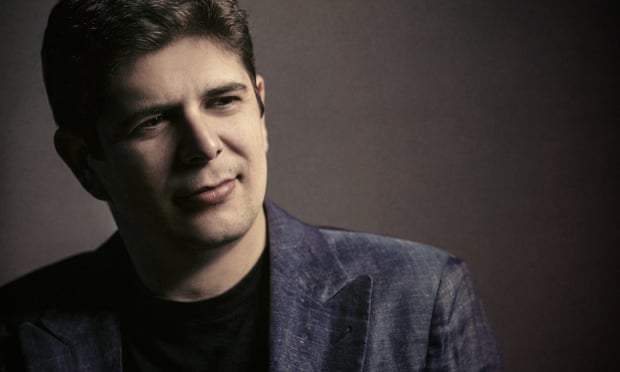
(Photograph: Josep Molina/PR)

Who or what inspired you to take up the piano, and pursue a career in music? 

I actually took my first musical steps playing the clarinet in the marching band of Nerva, the village where I grew up.  This was the first instrument I ever learned, and I could see myself taking it further.  But then an aunt introduced me to the incredible sound world of the piano and from the beginning. I was absolutely fascinated .  As for the second part of the question, I feel that things have always progressed very naturally: I never had to make any decision as to whether or not to pursue a career in music.

Who or what have been the most important influences on your musical life and career? 

I’m really lucky in that I’ve always had extraordinary teachers: Julia Hierro (my first teacher), María Ramblado, Ana Guijarro, and Josep Colom have been a source of wisdom and inspiration throughout my student years. I’ve also had the chance to get great advice from Daniel Barenboim, Richard Goode, or Alicia de Larrocha, all of whom I deeply admire.

What have been the greatest challenges of your career so far? 

Every new piece I learn – I like to think of that as the greatest challenge!

Which performance/recordings are you most proud of?  

It is quite hard to pick a particular concert or recording, but perhaps for its special significance maybe I’d pick having taken part in one of the last concerts of the Tokyo Quartet during their farewell season, doing the Brahms and Schumann Quintets. It was a highly emotional experience and unforgettable for me as I was a long-time admirer of the Quartet.

Which particular works do you think you play best?

I prefer to leave that to audiences, but I also like to think that what I should play best is what I’m performing or working on at the moment.

How do you make your repertoire choices from season to season? 

One consideration is to link recording plans with the launching of recordings with Harmonia Mundi and, on the other, to consider particular requests from promoters as well as any lines of programming that orchestras and conductors might have. In any case, when I work on devising a recital program I like to find some unifying principle and/or connections amongst the works being presented.

Do you have a favourite concert venue to perform in and why? 

It’s difficult to choose just one among so many extraordinary concert halls where I’ve had the great pleasure to perform. Suntory Hall in Tokyo presents a very special combination between its admirable acoustics and great audience capacity; another wonderful hall that is a favourite for its forward-looking conception is the New World Center in Miami. And how to forget the magic and tradition one can feel in temples of music like London’s Wigmore Hall, Amsterdam’s Concertgebouw or New York’s Carnegie Hall.

Favourite pieces to perform? Listen to? 

I hesitate to even begin answering the first question: the repertoire is so vast, rich and varied! Like I said before, perhaps whatever piece I’m working on or performing at the moment becomes my favourite. As to my listening habits, let me just give you a small glimpse through my iPod playlist: Granados’ Goyescas with Alicia de Larrocha, Tchaikovsky Symphonies with St. Petersburg Philharmonic and E. Mravinsky, Brahms Symphonies with N. Harnoncourt, Chopin Nocturnes with MJ Pires, the last Schubert Sonatas with Radu Lupu, Beethoven Sonatas with Daniel Barenboim, Mozart piano concertos with Mitusko Uchida, Schubert Trios by the Beaux Arts, Debussy by Michelangeli and a very long etcetera.

Who are your favourite musicians? 

As a pianist I’m such an admirer of many of today’s musicians such as Barenboim, Pires, Lupu or Sokolov. At the same time, I must also say that I’m fascinated by past musicians like Schnabel, Lipatti, Michelangeli, Rubinstein, Myra Hess, Hoffman, Cortot, etc. If we add to the list other instrumentalists, singers, and conductors the list would prove to be endless!

What is your most memorable concert experience? 

In addition to my collaboration with the Tokyo Quartet during their farewell season I should single out my debut in Lucerne with Zubin Mehta, my recent collaborations with Tabea Zimmermann, Beethoven’s Emperor with Daniel Barenboim, Ravel’s G Major with Daniel Harding and the London Syphony, the Schumann with Michael Tilson Thomas, and my debuts with Yuri Temirkanov and Maazel, among many others. I greatly cherish those memories.

What do you consider to be the most important ideas and concepts to impart to aspiring musicians? 

Honesty, dedication, personality, work and passion.

Where would you like to be in 10 years’ time? 

I’d like to be exactly the same but of course with the maturity, experience and depth ten years will bring!

What is your present state of mind? 

Searching, exploring, discovering and delving deeper!


www.javierperianes.com

haefliger-andreas-065bmarco_borggreve5d
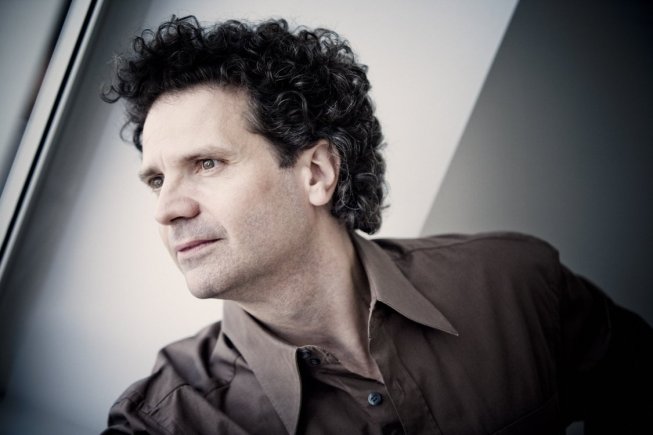
(Photo: Marco Borggreve)

Who or what inspired you to take up the piano, and pursue a career in music

I was born into a musical family. My father Ernst (a tenor) was the preeminent Evangelist (in the Bach Passions) of his time and also a wonderful Liedersinger.

Under these circumstances it is difficult to describe when the passion for music arose. It was simply always there and, maybe as the smell of leather permeates the childhood of the son of a shoemaker, the smell of music permeated mine.

My mother talked about me always being drawn to the piano – at three years of age I would walk over and start playing, my arms reaching up to the keyboard.

The conscious decision to pursue the career was thus more like an acceptance of the inevitable.

Who or what have been the most important influences on your musical career and life?

Again I must start with the earliest and biggest influence – my father.

From the earliest age I was immersed into going to operas, oratorios and lieder recitals. Wonderful musicians like Karl Richter, Erich Werba, Dietrich Fischer-Dieskau came to our house to make music and as soon as I was able to I had to accompany for pupils who came to the house for lessons. What better training could a child wish for.

In early adulthood my dreamy childhood fantasies were quickly adjusted to the reality of music-making through my studies at the Mozarteum in Salzburg with Hans Leygraf and then through my Juilliard studies with Herbert Stessin and the iconic William Masselos.

At age 17 the towering presence of Alfred Brendel came into my life and studies and dialogue continued for many years for which I am thankful to this day.

What have been the greatest challenges to your career so far?

The pianist’s life is one of constant growth.

As an interpreter you have to find just the right mix of ego and humility and this requires tremendous investment not just in the art of music, but also in the growth as a human being. Therefore challenges are omnipresent in your daily life as you walk through this growth.

Which performances/recordings are you most proud of?

I am still very pleased with my early recordings of Mozart, Schumann and Gubaidulina for Sony. Later I challenged myself with the Perspectives Recordings of which the Beethoven op 106 was a milestone of sorts. The human growth I talked about in the last question is audible however in the last recording of Schumann Fantasy and op 109- so may be I could say this one is the one that has reached an intermediate goal. My public perfomances have always been mirrored by the CDs so therefore I am also at a new level of expression in this medium.

Which particular works do you think you play best?

I do believe that my talent lies mostly in the interpretation of the central european repertoire. I also very much however enjoy commissioning new music from all over the world.

How do you make your repertoire choices from season to season?

I am a strong believer in the importance of programming. The piano recital offers to the pianist an opportunity to combine pieces  and lead the audience from work to work much as a curator would in a museum. In the past six seasons I have made the Beethoven Piano Sonatas the central part of this exhibition and I combine them with works that intuitively or intellectually  share or juxtapose ideas, keys or moods.

Do you have a favorite concert venue to perform in?

I love the famous halls in this world- each one has something particular and stunning to offer. All share the component of facilitating densely concentrated moments in time, thus making the creation of great art possible.

I also sense however that there will be evermore a branching away from these platforms of high culture  and that music in less formal settings will become more and more popular. In the best circumstances this can aid the art form tremendously as it will create an atmosphere of accessibility without watering down the content.

Favourite pieces to perform? Listen to?

I always enjoy the pieces that I am working on at the moment. In listening  I like to be surprised by repertoire I don’t know.

Who are your favorite musicians?

Edwin Fischer,  Wilhelm Kempf, Bruno Walter

Edwin Fischer once said that the perfect interpretation is to enliven a work without violating it. These three performers all shared this ability.

What is your most memorable concert experience

May be in an odd turnaround from my previous answer this still remains Leonard Bernstein with New York Philharmonic performing Mahler 2nd symphony. A wildly involved performance that was stirring to attend- oddly I am much less fond of the recording of this very concert.

What do you consider the most important ideas and concepts to impart to aspiring musicians?

Where does work begin and inspiration end?

We find ourselves in a very strange profession. Ultimately we are the flag bearers of a great achievement of human civilization. Ideally we go on stage in front of thousands of other human beings and transport them to never before experienced emotional heights. Years of study in matters both musical and philosophical have brought us to the point where we find ourselves capable of presenting phrases with such intensity and knowledge that they reach the listeners ear without distraction. Great art is made.

At the same time we live in an age of crippling competition and ability. Worldwide travel and immediate availability are a matter of course in a world where the other one will go and play if you don’t. Quick fix artistry is rampant in a selfie culture that looks to propagate the own achievement through any means possible. The music world is a confusing place.

At some point the student today has to make a decision to involve herself in the slow process of musical growth. At the same time modern aspects of musical performance cannot be ignored but must be incorporated in order for artistic intensity to be realized.

The young student must address this dichotomy early on in order to be able to successfully navigate the art form.


Coming from a rich tradition, the pianist Andreas Haefliger is: “consummately lyrical. Exhibitionism and pretence are antithetical to his musical personality”; he has “a vision of musical architecture second to none and a tender, profoundly cultivated sensibility, from which music flows unimpeded” ( International record review, September 2014). He has won many plaudits for his Beethoven Perspectivesrecitals on disc (Avie) and at major halls and festivals. He is also much sought-after as a chamber musician – past highlights include Mostly Mozart New York with the Takacs Quartet, and Salzburg Festival with Mathias Goerne. In 2014 he gave the premiere at the BBC Proms of a new concerto written for him by Chinese-American composer Zhou Long.

Haefliger was born into a distinguished Swiss musical family and grew up in Germany, going on to study at the Juilliard School in New York. He was quickly recognised as a pianist of the first rank, and engagements with major US orchestras followed swiftly – the New York Philharmonic, Cleveland Orchestra, Los Angeles Philharmonic, Boston Symphony, Pittsburgh, Chicago and the San Francisco Symphony Orchestras among them. In his native Europe too, Haefliger was invited to the great orchestras and festivals – such as the Royal Concertgebouw, Rotterdam Philharmonic, Munich Philharmonic, Budapest Festival Orchestra, Deutsche Symphonie-Orchester Berlin, Orchestre de Paris, London Symphony Orchestra and Vienna Symphony. He also established himself as a superb recitalist, making his New York debut in 1988, and has since performed regularly at major venues in Europe such as the Lucerne, Salzburg and Edinburgh Festivals and the Vienna Konzerthaus, as well as at major halls across North America and Asia.

Haefliger is a regular visitor to London’s Wigmore Hall, where he appears in December 2015 for the next instalment of his Perspectives series, in which he performs the complete piano works of Beethoven alongside works by other composers from Mozart to Ligeti. This series has formed the focus of Haefliger’s solo recital appearances and CD recordings in recent years. His latest chamber music project gathers friends Benjamin Schmid and Karen Gomyo (violins), Lise Berthaud (viola) and Christian Poltera (cello) for intensive rehearsal periods and concerts every year at the Louisiana Museum in Copenhagen, which the group will then take further afield. In spring 2016 he performs with his wife, the distinguished flautist Marina Piccinini, on an extensive tour of the USA.


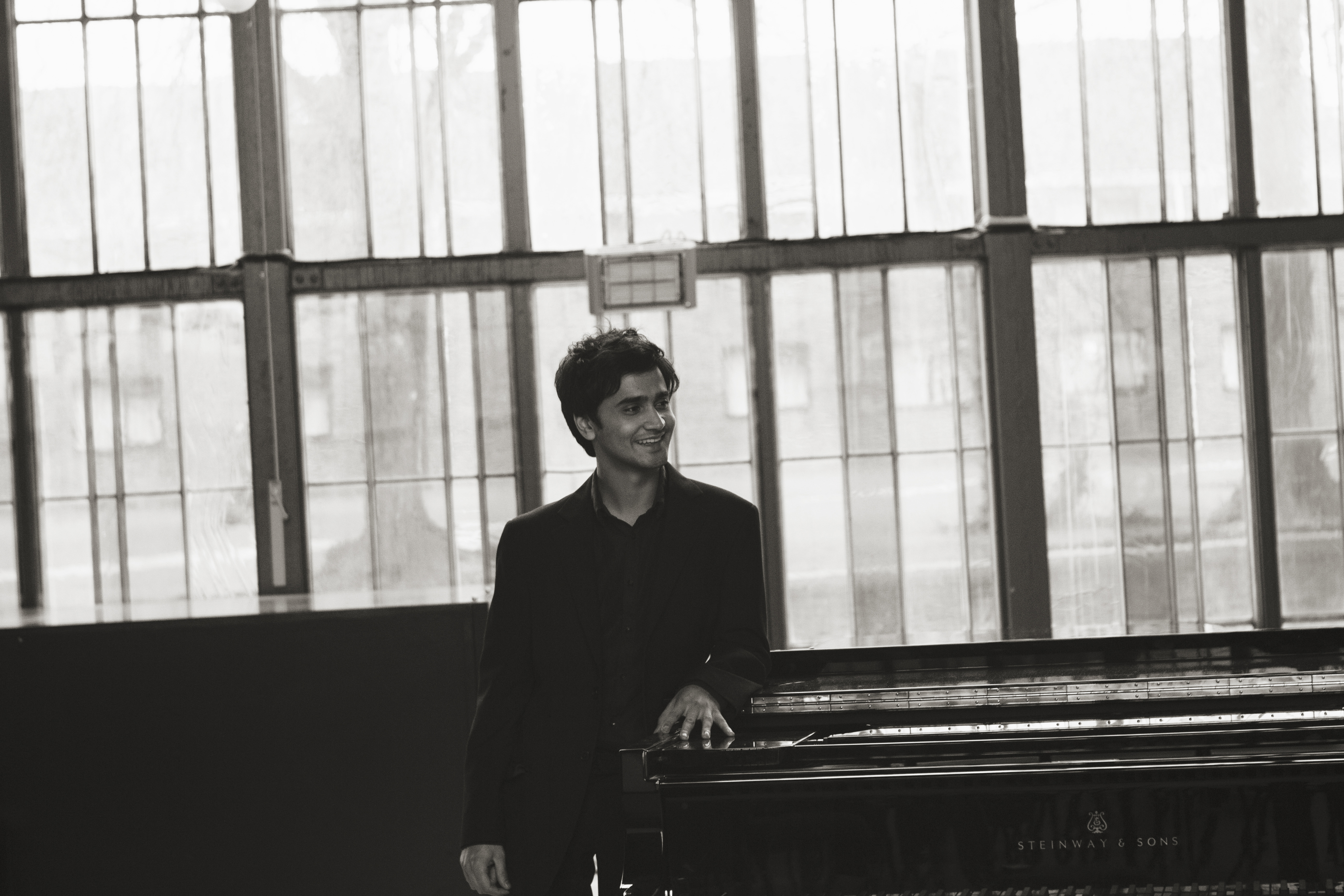
ben-socrates_0464_1 copy

Who or what inspired you to take up the piano and pursue a career in music?

I have a half brother to thank for this – Luke, who lives in Arizona, or at least he used to, and I’ve only met him once in my life. He came to visit us in Devon when I was younger, and my mother convinced my father to get an old pub piano – Luke is a singer/songwriter and she hoped we would appreciate hearing his music. I did, and I took a particular liking to that creaky piano, began making noises and was soon taking lessons. I don’t come from a musical family, and there wasn’t exactly a fertile scene for it in my hometown, so the desire for a career in music came later, when I enrolled on a music course at The University of Chichester, met some inspiring musicians and mentors, and discovered the breadth and potential of what was out there

Who or what were the most important influences on your musical life and career?

My first major influence would be my first band The Plastic Hassle – which helped me learn how to improvise and write music, play with rhythm and make naïve psychedelic jazz-rock noise, at the age of 15. My first piano teacher had moved to Yorkshire by then and I was feeling a bit discouraged about music so this was a welcome kick! When I came back to classical piano aged 19 I found I had much more to express and ‘something to say’, and I never lost my love of improvisation. Adam Swayne, my teacher at university, switched me on to modern music, and showed me the scope and variety of piano repertoire outside the repressive ABRSM exam bubble. Finally, my teacher at Trinity Laban, Douglas Finch, who has always challenged conventions and collaborated successfully within other disciplines, which is something that became very important to me. There are of course many more influences, but these are the most important!

What have been the greatest challenges of your career so far?

Finding time and a space to practice away from irritable neighbours. Finding other musicians and artists to work with, which is easy enough when you’re part of a big collaborative conservatoire but harder when you’re in the wider world chasing up jobs, gigs, and endless life admin! Organising interesting concerts and events myself, which I would like to do more of, it is a huge investment of time and energy but incredibly worthwhile, and can raise awareness for good causes. I would like to pursue my other musical interests – whether that’s composition, jazz, harmony, learning accordion, or electronic music – but as is known, getting and staying half decent at piano is time consuming enough in itself!

Which performance/recordings are you most proud of?

My debut recital at Chichester Cathedral last year was special for me, so much of my musical development happened in that area, and coming back to perform for an audience of over 500 was quite overwhelming. I’ll be back there on the 8th March next year, excuse the plug. While studying for my Bachelors I was invited to perform the Shostakovich Piano Concerto No 2 with the university orchestra – the support and goodwill from the musicians, conductor and audience, and how it all came together on the night, is an enduring memory. Other than that, I enjoyed putting together a performance of Ravel’s La Valse, arranged for two pianos, with a choreography devised by contemporary dance students at Laban, for the first CoLab festival at Trinity Laban. I got to play some of Eric Satie’s Vexations at 4 in the morning, for a project at Chichester University. The performance, split between all the pianists that the university could muster, had been broadcast online for a good 12 hours prior to this and the music was firmly lodged in my psyche before I dragged myself out of bed to the concert hall!

Which particular works do you think you perform best?

I think it’d be easier to say what I perform badly! I suppose I feel most at home with music of the 20th century, which is very vague, and in itself contains a vast variety. I never tire of exploring whats out there, trying to find out how it all came about, and it’s place in history. Alex Ross can help with this.

How do you make your repertoire choices from season to season?

I try and learn a programme or two worth of new repertoire every season, but then it is also satisfying to come back to something I struggled with years ago and find that I now better understand the music or am no longer wrestling with the technical problems, or I might find a whole new approach to take. A teacher told me that the best performances are of the pieces we learn and forget, then relearn, then forget, then relearn, and by then they are just so well internalised and part of our musical DNA.

When it comes to programming, I try and include a diverse selection from across the four main periods of Western music, but the challenge is in giving it some kind of unifying  thread. My recitals this year are loosely themed around the title ‘Visions & Dances’, with the music grouped around Visions (visionary, impressionistic, colourful, innovative, imaginative pieces, usually of the 20th century and beyond) and Dances (self explanatory), which really means I am able to incorporate all the music I love to play! I find that unpretentious and demystifying introductions can really help ‘sell your idea’ also.

I like to include contemporary repertoire in most of my concerts, not so much the wilfully difficult and obtuse stuff, but experiments in sound by Henry Cowell, Rautavaara, Somei Satoh and Frederic Rzewski have all been memorable for audiences (for good or bad!).

I occasionally start to write a ‘bucket list’ of the music I want to perform in the next year, 5 years, decade, lifetime, but such a list is never finished and can be overwhelming. It’s good to be spontaneous in our selections also.

Favourite pieces to perform? Listen to?

I never get tired of performing Prokofiev – I haven’t yet approached the sonatas but I became hopeless addicted to the Visions Fugitives, the Ten Pieces opus 12 and some of the etudes. There is something very seductive about the expressive language, the kaleidoscopic colours, the hallucinatory changes of character. It seems like this kind of music emerged out of nowhere, from a timeless and intangible place, and I can’t really figure out where it went after Prokofiev departed. I admire the nationalistic, folkloric strain in music at the turn of the century – the Dvorak Slavonic Dances, and of course Brahms’ Hungarian Dances that inspired Dvorak, are pretty much the most fun I’ve had at the piano, and I love Janacek’s piano music.

When it comes to listening that is a very difficult question in the age of Spotify, as there is so much that I have loved, forgotten, come back to – but at the moment I am enjoying the more meditative music of Olivier Messiaen, Morton Feldmann, John Adams, Arvo Pärt. Also anything with a rhythm that makes me stop in my tracks, or want to dance, whether it’s Scarlatti, Villa Lobos, Gershwin or all kinds of electronic and world music.

Who are your favourite musicians?

I have a lot of admiration for musicians that have taken creative U-turns, in spite of achieving a certain amount of success, and turned their hand to different styles rather than play it safe, bringing a new audience and appreciation to other forms – Jonny Greenwood, Scott Walker, Robert Wyatt, David Byrne, PJ Harvey, for example. As far as pianists go I love what Chilly Gonzales is doing, bringing back the somewhat lost character of composer/performer, he is also a formidable improviser, and I recommend you listen to the online snippets from his 27 hour marathon piano performance (he was the Guinness World Record holder for the longest solo performance, but only for a few months!) you’ll be impressed by the variety of music at his fingertips. In the classical world it’s hard not be in awe of Daniel Barenboim at the piano or the podium, Grigory Sokolov for the Romantic repertoire, Martha Argerich in everything she does. Alice Sara Ott has done some really wonderful things with Chopin. They’re my favourites for now. I have to mention Art Tatum and Bill Evans also, for their boundless creativity at the piano, and the music of Charles Mingus never fails to blow me away. Why are all my favourite jazz musicians dead??

What is your most memorable concert experience?

Can I pick a few?

The second time I heard an orchestra was in Ravel’s Daphnis et Chloe, which set the bar rather high. I heard three quarters of Wagner’s Ring Cycle in the space of a week, it was the Berlin Statskapelle conducted by Barenboim at the 2013 Proms, and time seemed to stop for those 12+ hours. I was transfixed by Steve Reich’s Music for 18 Musicians performed by the Colin Currie Group, and Cordelia Williams performing Messiaen’s 2.5 hour Vingt Regards sur l’enfant Jésus from memory, with this superhuman ferocity and passion. I vividly remember when Douglas Finch improvised a set of subversive variations on Christmas themes we’d suggested, in the dark, at a party. There is a German composer called Haushcka who prepares a grand piano by filling it with ping pong balls, contact microphones, E-Bows (magnetic devices invented for guitarists to sustain sounds indefinitely), other gizmos – I expected a load of gimmicks and party tricks but it was quite an amazing transformation. When I was younger I was inspired by some of the modern jazz artists who for some reason came to play in my sleepy hometown of Barnstaple, particularly Seb Rochford’s Polar Bear, and Basquiat Strings, a string quartet of incredible improvisers backed by double bass and drums. When I got a place at Trinity Laban and found some of these very musicians were on the faculty, I was very excited; unfortunately my jazz chops hadn’t really kept up!

What do you consider to be the most important ideas and concepts to impart to aspiring musicians?

Despite my philosophical sounding name I don’t have a lot to say that hasn’t been said better already. I went to hear Daniel Barenboim speak at this year’s Edward W. Said Lecture and wrote down loads of quotes I considered important. They’ve been lost since I moved house, but essentially – use music to understand life, and life to understand music, and always impart this to everyone you encounter as a musician and teacher.

Happily the lecture is on YouTube for anyone who wants it in a bit more depth/less paraphrased!

Where would you like to be in 10 years’ time?

In some remote part of the world with some good companions, a piano and just enough free time!

Who or what inspired you to take up the piano, and make it your career? 

A relative had a battered old upright that she was getting rid of. My parents thought I showed some musical talent and saved the instrument from the breaker’s yard so I could have some piano lessons. It got me through Grade 6 before it fell to bits!


Who or what were the most important influences on your musical life and career? 

As a youngster, I have to say it was my school music teacher, who conducted the local choral society. He took me to a performance of Haydn’s Creation he was conducting one evening. When the big C major chord arrived (‘and there was LIGHT’) I was hooked forever! My parents were wonderfully supportive. Later, Denis Matthews was a strong influence, teaching me to look beyond the notes and certainly beyond piano music for an understanding of musical language. I’ll never forget one lesson where he simply played (from memory) huge chunks of Mozart string quartets at the piano, explaining how the music worked conversationally and how that should underpin my own playing at the keyboard. But of all the influences, the strongest has to be my wife, Jane (a clarinettist), who makes music speak in ways I could never have imagined possible.

You are a noted performer on harpsichord, clavichord and fortepiano. When and how did your interest in early keyboard instruments develop? 

My main interest has always been in music of the ‘long’ eighteenth century, and there came a point when I realised that I simply couldn’t capture the sound I was seeking on a modern piano. The much lighter and articulate touch of clavichords, harpsichords and fortepianos suited my physical connection to this music far more effectively, and I made the decision to ‘emigrate’ from the modern piano. I’ve never looked back since. A strong inspiration has been Ronald Brautigam. His complete Beethoven piano cycle (recorded exclusively on pianos by Paul McNulty copied from originals by Stein, Walther and Graf) is in a league of its own. Partly, too, it’s the fascination I have with fine craftsmanship. It’s a great privilege to know some expert keyboard makers and restorers, and understanding the instruments from their perspective is something that crucially influences my approach to producing sound at the keyboard. There’s something deeply satisfying about the connection between the instrument and the way it can (through my physical actions) produce sound. Incidentally, I make no claims to ‘authenticity’ (a term those of us in the period instrument world never use anymore). I’m not ‘recreating the sound of Mozart’s sonatas as the composer intended’. How could we ever know that? I’m exploring sound possibilities that might be produced by instruments carefully and lovingly built using techniques and materials known in Mozart’s day. I also choose to play in ways that are informed by documentary evidence from his time (including his father’s very famous book on violin playing), rather than approaches that were developed a hundred years or more later and which were, willynilly, just imposed retrospectively on Mozart’s very different musical language.

What have been the greatest challenges of your career so far? 

It has to be achieving the balance between the academic and performing sides of my life. I worked for many years in the music department at Bristol University (where I was Professor) and latterly as Director of London University’s Institute of Musical Research. I now split my time (theoretically) 50:50 between being Reader in Historical Performance at Trinity Laban Conservatoire of Music and Dance, and performing. Finding enough time to practise is the key!

Which performance/recordings are you most proud of?  

Probably the DVD documentary on Mozart’s “Kegelstatt” Trio and also the complete Clarinet and Piano sonatas of Vanhal (issued on sfzmusic last year as part of the Vanhal bicentenary), with my wife sounding amazing on 5-keyed B flat and C Viennese boxwood clarinets.

Which particular works do you think you play best? 

I should say Mozart, really, given that I’ve published five books on his music! But at the moment, I think I’m making serious progress with Haydn (I’m recording four of his sonatas at the end of April). Played on fortepiano, I’m so much more aware of the extent to which Haydn’s music depends on colour and on silence – which suits my approach to sound production on the Viennese instrument with its much shallower key-dip and the immediacy and clarity of sound. I couldn’t possibly do this justice on a modern piano (which isn’t to say that it can’t be done).

How do you make your repertoire choices from season to season? 

First and foremost, it revolves around what my group, Ensemble DeNOTE is performing. DeNOTE was founded in 2010 when I was Director of the IMR in London, and was intended originally as a workshop for exploring ideas in Historically Informed Performance, bringing together players and scholars. But the group took off and soon gained an identity of its own, bridging the gap between scholarship and performance in hopefully accessible ways. We’ve done a huge amount in the university and conservatoire environments, as well as the Brighton Early Music Festival, and other festivals across the UK. At the moment, there’s lots of Beethoven (another CD recording at the end of March of the composer’s own arrangements of the Septet as a Trio, and the Piano and Winds Quintet as a Piano Quartet). Next season we are looking forward to Mozart’s Gran’ Partita in a quintet version dating from around 1800, as well as more performances of the “Kegelstatt” Trio at Finchcocks. I try to fit solo repertoire around this (and sometimes around CD releases). Despite the Vanhal disc last year, I don’t really plan repertoire around composer anniversaries. I’m more interested in connections of music and place (I have a Bach and Leipzig programme coming up with oboist Leo Duarte next month), and in the culture of arrangements, which were common in Beethoven’s day. That extends to commissioning new arrangements. Last year I premiered a version of Mozart’s E flat Piano Concerto, K.271 for piano and wind sextet; in June I’ll be doing K.488 for the same forces.

Do you have a favourite concert venue to perform in and why? 

I absolutely adore St Cecilia’s Hall in Edinburgh, mainly because it houses one of my all-time favourite instruments, a glorious 5-octave clavichord by Johann Adolphe Hass (1763). The moment I first played this clavichord I just knew it was right for Mozart, and I was lucky enough to record a CD on it (which appeared last year).

Favourite pieces to perform? Listen to? 

Mozart’s Piano and Winds Quintet, K.452. I never tire of that. The piano part is wonderful in itself, but what really fascinates me is the colours of the ensemble as a whole – on period instruments, at least. For instance, the middle episode in the finale, features a descending chromatic scale on the horn (yes, contrary to popular belief, natural horns can produce lots of notes other than the harmonic series!), each one of which is a subtly different colour from the last. On a valve horn it’s just not the same, really…

To listen to, I don’t really have a favourite piece. The shortlist would include Bach’s “St Anne Prelude and Fugue”, Corelli’s Op.5 Violin Sonatas, Haydn’s Creation, Beethoven 7th Symphony, Schubert’s last Sonata in B flat, large doses of Sibelius and Messiaen (the latter especially if played by Peter Hill, another of my teachers from university days), and at least 626 compositions by Mozart!

What is your most memorable concert experience? 

One is a piano duet recital with Ronald Brautigam where, contrary to what you might think from listening to his recordings of Mozart, he indulged in the most astonishing improvised embellishments, to the point where we were almost making the content up in musical conversation as the recital progressed! Another is a performance of Beethoven’s Piano and Winds Quintet last year, which was the world premiere outing of an exceptionally fine fortepiano by Yorkshire-based maker, Johannes Secker, whose instruments I’ll be featuring in a historical keyboard course in Lythe this July.

What do you consider to be the most important ideas and concepts to impart to aspiring musicians?

First and foremost, to study and respect the score, but never be enslaved by it. The music lies beyond the notes. Notes are symbols for sound. They represent possibilities for the imagination. Resist the notion that the score prescribes what you have to do; that it is something to be robotically obeyed. It’s actually a basis for negotiation, mainly with your own imagination.

Also, remember that humility goes a long way! There are plenty of musicians who have no idea of that concept, who believe their own publicity. Quite a few of them are “famous”. But is that the point, ultimately? Surely music is bigger than that?

What are you working on at the moment? 

For starters…Beethoven Op.16 (quartet version) and Op.38 (his trio arrangement of the Septet); a Mozart Piano Quartet; a clutch of Haydn sonatas for a forthcoming CD recording; a couple of Mozart sonatas; Bach 4th French Suite; Mozart Piano Concerto, K.488.

Tell us a little more about your forthcoming digital book ‘The Mozart Project’. 

I was asked to participate in this project when it was but a twinkle in the eye of two enterprising young men at Pipedreams Collective, Harry Farnham and James Fairclough. It just spiralled from there really. I wrote chapters on the Concertos and Chamber Music, recorded a series of video performances and eventually became their consultant editor. Several other Mozart specialists have contributed chapters, and the result will be an interactive experience that goes way beyond what a traditional book and a single author could achieve. We all hope The Mozart Project will introduce Mozart’s genius to new generations of admirers. You can follow tweets at @themozartproj and it’s due out at the end of this month on the AppStore.

John Irving discusses the immediate impact of Mozart’s Concertos.

JOHN IRVING is Professor of Historical Performance at Trinity Laban Conservatoire of Music and Dance, London, and Associate  Fellow of The Institute of Musical Research, School of Advanced Study, University of London. Previously Director of the IMR – the UK’s national music research institution – John has been Professor of Music at the University of Bristol and at the University of London. He now divides his time between his academic work at Trinity and his performing career as a fortepianist.

www.johnirving.org.uk