Musicians, especially young musicians, are bombarded with advice over the course of their career, especially in those early, fledgling years. Most advice will come from teachers, but also from peers, colleagues, friends, promoters, agents and critics. Knowing how to take and react to advice is an important part of the musician’s skillset, and the ability to sift through advice and take it on board or reject it is an art in itself. The way such advice is given also has an impact on how one values it.

Young and amateur musicians in particular may find it hard to strike a balance between taking advice which will be useful to them and rejecting that which is not. In part, this is due to confidence: if your teacher suggests playing a passage in a certain way, or taking a particular interpretative stance on a piece of music, you may feel obliged to bow to what you perceive to be their greater wisdom, and blindly accept what they are telling you. I encounter this attitude quite frequently amongst amateur pianists in particular. Some years ago at a piano course which attracts highly regarded professional pianists and teachers from around the world, not just the UK, I chatted to a student who had participated in masterclasses with a number of internationally-renowned pianist-teachers. “I’ve got five different ways to play the end of this Schubert sonata”, he said to me over tea, “and now I don’t know which version is the right one!”. Such confusion suggests, to me at least, a student who is either not very confident about their own interpretative choices or who believes that because such-and-such Famous Pianist told him to play the passage in a particular way, it must be the ‘right way’.

As we grow more confident as musicians – whether amateur, student or professional – we learn how to filter and question advice to suit our needs, and also to appreciate the importance of reflecting on that advice, because its usefulness may not be immediately apparent. It is not necessary to blindly accept everything that a teacher, or teachers, tell us. Instead, we need to be selective about the advice we are given and ensure that it is the right advice for us. A good teacher or mentor will understand this too and make suggestions, rather than didactically “telling” the student how to play the music. One of the most useful aspects of attending masterclasses and courses, where one will meet and play for other teachers, is that one is exposed to a broader range of expertise and viewpoints, which can fuel one’s ideas on how to approach the music, from a technical and artistic point of view.

The way advice is given also has an impact on how it is received. I have been lucky in my experiences with both my regular teachers and those I have encountered on courses and in masterclasses that their advice has always been given in a positive and supportive way. This makes one far more receptive to the advice, and suggests a degree of respect between teacher and student.

Sadly, now and then one will be given advice which may be well-meaning but is delivered in such a way that one feels discouraged or demoralised, or the advice is just given at the wrong time; many musicians are at their most sensitive in the moments immediately after a performance. Some years ago, I played a late work by Mozart at a concert at the end of a piano course, and during the post-concert reception, another of my teacher’s adult students told me in no uncertain terms that the ornaments were “all wrong”. This statement was made without any context nor suggestion as to how I might have played the ornaments “correctly”. I was so astonished, and hurt, that I couldn’t reply and despite receiving praise from my teacher, and very positive comments from other students on the course and audience members, this comment stung for some time afterwards and affected my attitude to the music I’d played. It proves that advice should be given discreetly and with care.

One of the rules of the piano club, which I co-founded in 2013, is that comments are kept positive and supportive. The club includes some players who are less advanced than others, and they can be particularly sensitive to negative feedback, which may affect their attitude to their practising and dent their confidence.

The teacher with whom I studied for six years, after returning to the piano seriously after a long absence, was adept at giving feedback and advice which was practical and supportive. Even when highlighting an error or weakness, she could frame her comments in such a way that one did not feel discouraged, and her skill in imparting advice clearly and articulately was a mark of her experience as a teacher and respected pedagogue.

“Best are those times when, as you listen to suggestions, you feel as if you’ve always known them to be true, somehow – but now you’re hearing them from another voice. There will always be degrees, shades; one can accept certain ideas from one musician, reject others. The only rule, perhaps, is that one should constantly remain alert, constantly ask oneself: ‘Is that true for me? For the music as I feel it inside?’”

– Steven Isserlis, cellist

Who or what inspired you to pursue a career in music and who or what have been the most important influences on your musical life and career? 

My parents foremost – there was music around the house at all times, and my mother had a beautiful voice and sang often with my father accompanying. Then my first teacher, from age 5, Barbara Boissard. Then Kathleen Long, a natural pianist and musician with a beautiful sound. I stayed with her until I was 12 when I went to study at the Paris Conservatoire for 6 years. By then my mind was firmly made up – but these people were good early influences who would have helped my resolve to be a musician grow. 

What have been the greatest challenges of your career so far? 

In my younger years, there was an injury or two which involved some important last minute cancellations, which I hated being obliged to do. You have to keep faith that you will heal completely, which of course I did. However emerging from the pandemic is really challenging – planning impossible and great flexibility needed, as well as zen-like qualities. 

Of which performances/recordings are you most proud? 

It depends on which period of my life. The Philips recordings of Lieder with Wolfgang Holzmair were very special for me. As were the Schubert Live recordings from South Bank Centre a little over a decade ago. They were tough days, the rehearsal was recorded, as was the concert, with a patch session until late into the night. Each was a real marathon. 

But my set of recordings for Chandos have been, still are, a wonderful journey – all done at the amazing Snape Maltings with an excellent team. I have a particular fondness for the Liszt/Wagner recording, as well as for the Beethoven Diabelli Variations and “Iberia y Francia” , a lovely mix of French and Spanish masterpieces, large and small. 

Which particular works/composers do you think you perform best? 

It’s not really for me to say. I don’t take up any work if I am not 150% convinced by it, and feel that I have something really personal to express through a piece. I guess that Schubert and Schumann are particularly close to me. 

What do you do off stage that provides inspiration on stage? 

Get away from music! Read, be in the great outdoors, preferably walking..

How do you make your repertoire choices from season to season?

Dominated either by practicalities (recordings, requests from promoters, festival themes) or, simply by a movement of the heart that impels me to such and such a composer..

Do you have a favourite concert venue to perform in and why? 

There are so many. The Wigmore Hall is particularly dear to me as to so many of us – but also Spivey Hall near Atlanta GA in the US, Severance Hall in Cleveland, the Recital Hall in Melbourne, the Concertgebouw in Amsterdam…I hate to leave any out, but am obliged to!

What do you feel needs to be done to grow classical music’s audiences?

I would like to think that the amount of filming of concerts on the web during the pandemic, and their easy availability, might entice new audience members when venues open up more. If only newly interested viewers could realise what an even richer experience it is sitting in a hall sharing an amazing musical experience with others – the synergy between platform and audience…There is honestly nothing like it.

What is your most memorable concert experience? 

One was certainly the first time I played the last three Schubert Sonatas together in one concert, a marathon if ever there was one. It was in the hall at Westminster School, on a freezing cold night – a packed audience sat huddled up in their coats and listening so attentively. It was a two hours-and-ten concert, and I was like a rag doll at the end, but proud to have stayed the course..

As a musician, what is your definition of success? 

When I see that the music for which I have been a vessel has really reached the depths of people’s hearts and souls and that they are the better, or the wiser, for it. It is like speaking a message that has been clearly heard. If music-making is not about that, then for me it is not about anything. This has nothing to do with commercial success which is another story. 

What do you consider to be the most important ideas and concepts to impart to aspiring musicians? 

Be humble about your ambition, whilst keeping your vision and goals clear. Be patient. And work work work – it is never enough. 

Where would you like to be in 10 years? 

Alive!

What is your idea of perfect happiness? 

Walking in the Italian countryside in spring, with the prospect of a simple meal with friends at the end of the day. 

What is your most treasured possession? 

My house and garden.

What is your present state of mind? 

Sane, mostly. 

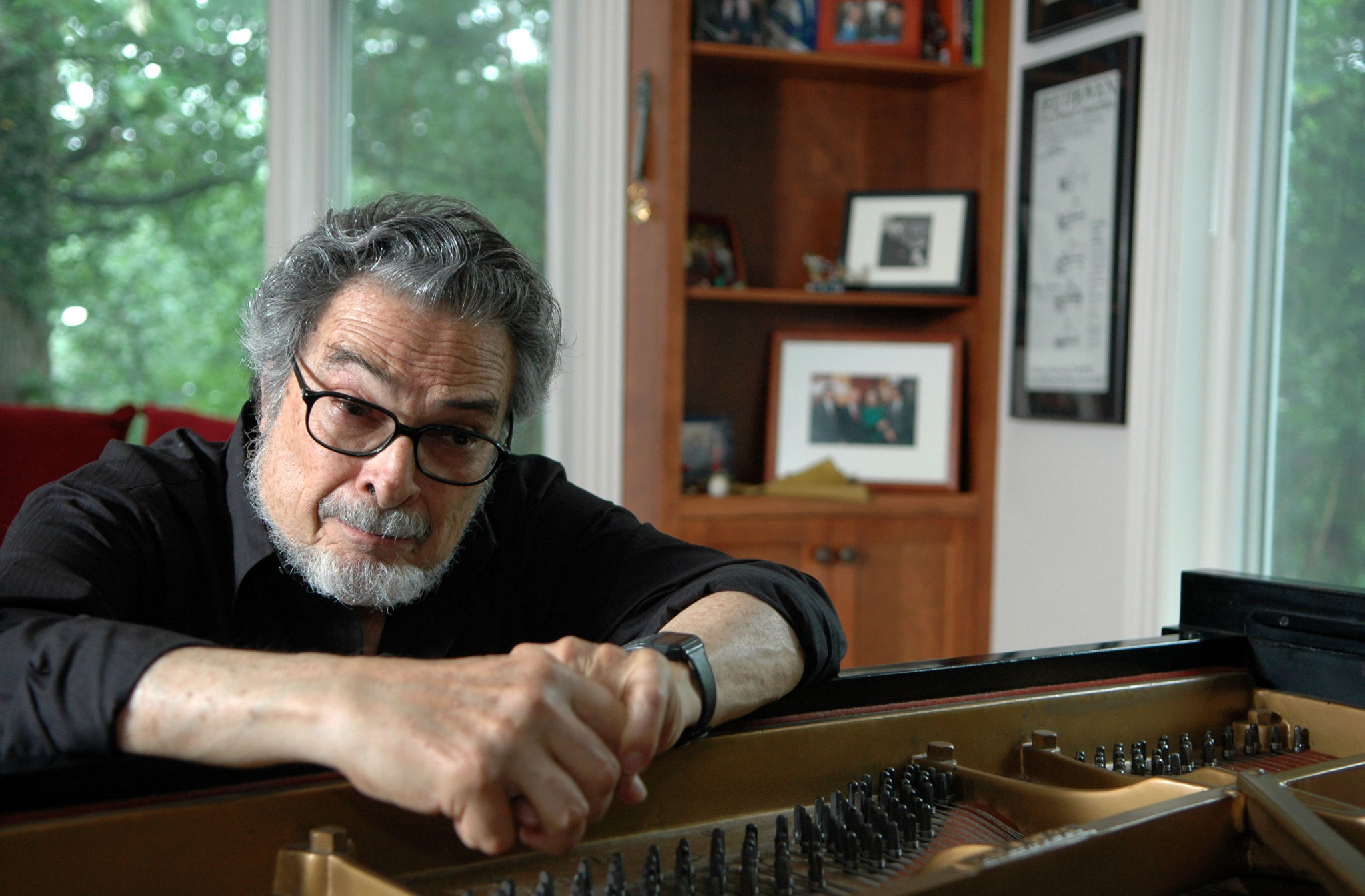
Imogen Cooper performs at this year’s Petworth Festival on 24 July, playing music by Schubert, Liszt and Brahms. More information/tickets


Regarded as one of the finest interpreters of Classical and Romantic repertoire, Imogen Cooper is internationally renowned for her virtuosity and lyricism. Recent and future concerto performances include the Berliner Philharmoniker and Sir Simon Rattle, Sydney Symphony with Simone Young and the BBC Scottish Symphony Orchestra with Ryan Wigglesworth.

Read more

(Photo credit: Sim Canetty-Clarke/Askonas Holt)

Pianist Haley Myles introduces her new album of the complete Nocturnes of Fryderyk Chopin


Chopin – and more specifically his Nocturnes – is the reason why I decided to become a classical pianist professionally.

I was fifteen when I first heard Yundi Li playing Op. 9 No. 1 (in B-flat minor). Upon listening, I had the feeling ‘this is what it means to fall in love’. Even though I couldn’t play a scale, I was determined to pursue classical piano, and here I am today.

As all of my concerts in 2020 were postponed, I decided to focus on expanding my repertoire. I delved deeply into concerti and explored musical languages that I wasn’t as familiar with, including works by Prokofiev, Shostakovich, Rachmaninov, Ligeti, and others.

Perhaps after widening my musical language, I felt a pull to return to the reason why I began playing the piano. When I first began the Chopin Nocturne Project in February, I was determined to post a full-length video of a nocturne each Friday. After about eight weeks, I was inspired to record these nocturnes professionally and include them on an album. With the help of generous donations from my followers and supporters, I was able to record and produce this album. On the 5th of May, I was at the piano for ten hours while I recorded the complete set. With the exception of a trill and a chord, I recorded everything in one day, and after two days of editing, this album is the result. This is the first album that I recorded at home on my Steinway M and produced myself.

Op. 48 No. 1 (from Chopin Nocturne Project):

On my album, I decided to include the two posthumous nocturnes which aren’t often heard in other sets of Chopin Nocturnes. These posthumous works have a charm of their own and I strongly feel that they deserve to be heard.

Music has a special ability to connect and heal. Chopin’s music, even in its most despondent moments, always maintains elements of hope and pride. I think this is a message that we all need to feel, especially after such a difficult time as this pandemic. It is my motivation and hope that, through my interpretations, I can give my listeners a moment of peace.


Selected reviews:

All I could do was sit in wonder at her musical insights and truthfulness, as though a veil had been lifted between player and listener. Haley goes between and behind the notes to discover the essence of their original interpretation, with countless subtle musical intakes of breath, as if she was discovering the music’s special qualities for the first time. – Julian Haylock (former editor of International Piano)

I really admire the intensity and full-bodiedness of Haley’s playing and her sense of timing. – Jed Distler (pianist, writer, composer, and WWFM host):


About the album:

Inspired by the intimate salon aesthetic prevalent in Chopin’s time, Haley recorded and produced the album on her Steinway and Sons M at her home in Lyon, France.

‘The Complete Nocturnes’ is a natural extension of her Chopin Nocturne Project, where Haley undertook the challenge of recording and releasing a new nocturne each Friday from February until June 2021 until completing the set. As a result of delving deeply into these works, Haley recorded the album in three days.

Interpreting each nocturne as a story, Haley invites her listeners on an inward journey. Her natural sense of rubato, attention to nuances, and extended phrasing create heartfelt interpretations from beginning to end.

The Complete Nocturnes is released on 2nd July 2021


Haley Myles’ website

Haley Myles on Spotify

Meet the Artist interview with Haley Myles


This is a paid featured post. For more information about advertising on this site, click here

Ensemble La Notte announce the release of their second recording, La Folia, a selection of baroque repertoire on the themes of chaos, madness and the bizarre.

Released to coincide with the anniversary of Telemann’s death, and at a time when the world is still grappling with the chaos of a global pandemic, La Folia is particularly appropriate for our curious times.


From the liner notes:

Nowadays, we often associate the characteristics of Baroque music with order, but before the 17th century, the word “baroque” was used to describe art, architecture and music that was irregular, extravagant and ornate. French philosopher Michel de Montaigne associated the term ‘baroco’ with that which was ‘bizarre, and uselessly complicated’ – and this is how baroque music must have sounded to those used to the Renaissance style.

Many of the descriptive titles in this programme suggest these ideas of madness and chaos, and were often used to show a deliberate contrast to music that was more orderly. This CD is a celebration of this baroque idea of the bizarre, the chaotic and the mad, explored over a vast range of styles, nationalities and musical forms.


Launch video:

Track list:

Jean-Féry Rebel (1666 – 1747) arr. M.Wilson – ‘Le Chaos’, from Les Élémens & ‘Les Caractères de la Danse’

George Frideric Handel (1685 – 1759) – Trio Sonata Op.2 no.5 in g minor, HWV 390a

Nicola Matteis (c.1670 – c.1720) – ‘Diverse bizzarie Sopra la Vecchia Sarabanda ò pur Ciaccona’

Nicholas L’Estrange (1603 – 1655) – Collected antimasque music: ‘The Furies’ and ‘The Apes Dance at the Temple’

Georg Philipp Telemann (1681 – 1767) – Trio Sonata in d minor, TWV 42:d10

Henry Purcell (1659 – 1695) – ‘Dance for the Green Men’ Act 3 from ‘The Fairy Queen’, Z 629

Jean Philippe Rameau (1683 – 1764) – ‘Les Sauvages’ from Les Indes Galantes

Antonio Vivaldi (1678 – 1741) – Trio Sonata in d minor Op 1 no. 12 ‘La Folia’, RV 63


Performers:

Kate Allsop – Recorders

Maxim Del Mar – Violin

Mark Wilson – Bassoon

Mary Walton – Cello

Jonatan Bougt – Theorbo

Callum Anderson – Harpsichord

Recorded at St Francis of Assisi Church, Hemel Hempstead, Hertfordshire, UK, 5 – 10 April 2021


For further press information, review copies and interviews, please contact Frances Wilson