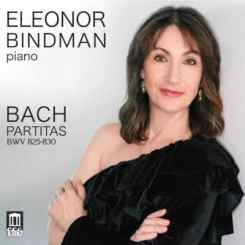
J S BACH – PARTITAS BWV 825-830, 2 CDs

Release date: 6 May 2022 on the Delos label

Eleonor Bindman, piano

‘Bach playing of the highest order – Andrew Eales/Pianodao.com

Bach’s six keyboard Partitas have long been regarded as one of the most important milestones of the Baroque keyboard repertoire and remain amongst Bach’s most popular works for pianists and listeners alike, with their wealth of invention, drama, intimacy, wit and emotion.

Praised for her musical sense and appreciation of the majesty in Bach’s music, Latvian-American pianist Eleonor Bindman follows her critically-acclaimed recordings of her own transcriptions of Bach’s Brandenburg Concertos for piano-four-hands and the Cello Suites for solo piano, with her latest release of the complete keyboard Partitas.

Bach published the six keyboard Partitas himself in 1731 as his “Opus 1,” clearly indicating that he was satisfied with his work. The keyboard Partitas follow a similar template to his English and French Suites, with a succession of popular Baroque dance movements which also appear in all six Partitas. But unlike the French Suites, each begins with a form of Prelude with a different title for each of the six (for example, Sinfonia, Fantasia, Praeambulum and Toccata), demonstrating Bach’s flexibility and personality. With the inclusion of a diverse selection of dance movements, the Partitas are the most varied and cosmopolitan of Bach’s keyboard suites.

Eleonor Bindman’s experience of working with the complex counterpoint of the Brandenburg Concertos, which she transcribed for piano-four-hands, as well as with the expressive possibilities of a single melodic line of the Cello Suites (her most recent transcription for solo piano), results in some fresh interpretive insights in the Partitas – for example, in the choice of pace and tempi to allow listeners the opportunity to enjoy the emotional connotations of rhythm, harmony, counterpoint and ornamentation, and in the creative treatment of repeats.

Eleonor explains:

‘I find the variety of keys and the character (largely implied by the opening movements of course) of each suite gratifying. I also believe that the Partitas, as an oeuvre, include some of Bach’s most diverse, ingenious and intimate writing for the keyboard (aside from the Well-Tempered Clavier to an extent, of course). They deserve a lot more attention than the Goldbergs, in my humble opinion.  Rather than a series of exercises in canons, they are in fact a kaleidoscopic representation of Bach’s genius.  The incredible sincerity and communicative warmth of the Allemandes from Suites 4 and 6, the jazzy Courante from No. 6, the comical Aria and Burlesca from Partitas 4 and 3, respectively, the scintillating Praeambulum of Partita 5 and the challenging fugues or Capriccio of Partita 2 as endings – these are unique emanations of Bach’s personality. In the Partitas there isn’t a single even semi-boring page.  The aforementioned Allemandes are my favourite keyboard playing experiences.  Bach doesn’t even try to disguise them into dance form, save for the titles.  Playing the Allemande from Partita No. 4 in D major brings me into a state which I can only – inadequately and clumsily – describe as “participating in a revelation of truth.”’ 

Produced, engineered and edited by Sam Ward Recorded Dececember 20-21, 2020, and January 9-10, 2021 at President Street Studios, Brooklyn, NY

Instrument: Bösendorfer #48862


About Eleonor Bindman

Praised for her “lively, clear-textured and urbane” Bach performances and her ”impressive clarity of purpose and a full grasp of the music’s spirit,” New York-based pianist, chamber musician, arranger and teacher Eleonor Bindman was born in Riga, Latvia, and began studying the piano at the E. Darzins Special Music School at the age of five. After her family emigrated to the United States, she attended the High School of Performing Arts in New York City while studying piano as a full scholarship student at the Elaine Kaufman Cultural Center. She received a BA in music from New York University and completed her MA in piano pedagogy at the State University of New York, New Paltz, under the guidance of Vladimir Feltsman.

Ms. Bindman’s recital appearances have included Carnegie Hall, The 92nd Street Y, Merkin Hall and Alice Tully Hall; concerto appearances have included engagements with the National Music Week Orchestra, the Staten Island Symphony, the Hudson Valley Philharmonic, the New York Youth Symphony, and the Moscow Radio and Television Symphony Orchestra. Classical Archives declared: “Prepare to be surprised” when encountering Ms. Bindman’s vast range of activity.

In the past few years, she has been focusing on the music of J.S. Bach. Her Brandenburg Duets, a new arrangement of the six Brandenburg Concertos for Piano-four-hands, with pianist Jenny Lin, was declared 7 “breathtaking in its sheer precision and vitality” by Pianist Magazine, while the Cello Suites for Piano, an accurate transcription of Bach’s iconic set, made its debut at #7 on the Billboard® Traditional Classical Charts. Both recordings were best-selling releases for Grand Piano Records in 2018 and 2020. A recording of Ms. Bindman’s arrangement of the Orchestral Suites, also for Piano-four-hands, is forthcoming.

eleonorbindman.com


For further press information, review copies and interviews, please contact Frances Wilson frances_wilson66@live.com
Guest post by William Howard


Two years ago I wrote some words on Howard Skempton’s piano music for this site, having just recorded a cycle of 24 Preludes and Fugues that he had written for me in 2019. Skempton was inspired to write these pieces after hearing (and reviewing) my recording of another cycle of 24 Preludes and Fugues, written for me by the Czech composer Pavel Zemek Novák between 1989 and 2006. Skempton’s 24 Preludes and Fugues were published by Oxford University Press within a year of their completion, but it is only now that Novák’s extraordinary cycle has become available, thanks to a new edition released this month by Music Haven.

Both cycles of Preludes and Fugues were composed to be performed in their entirety, but whereas Skempton’s are typically pared down and distilled, with very few notes on the page, Novák’s are written on an epic scale. His cycle, which lasts 75 minutes, is inspired by the Bible, the first twelve Preludes and Fugues based on the Old Testament and the second twelve on the New Testament. Composer David Matthews has described the work as ‘one of the finest piano works of our time, a worthy companion to Ligeti’s three books of Études’. This is a bold claim, given the fact that Novák’s music is comparatively little known, but it is one that I fully support myself. I am confident that other pianists around the world will now take up this powerful and dazzlingly original work.

I first came across Novák’s music in 1987, when composer David Matthews invited me to take part in a concert at the King’s Lynn Festival featuring works by Brno composers. I was sent a number of recordings to listen to in order to choose a programme and liked many of the works that I heard, but one that made the by far greatest impact on me was a tricky-sounding piece for oboe, cello and piano, which I had an immediate desire to play. I had been passionate about Janáček’s music for many years, and something about Pavel’s oboe trio made a similar kind of impact on me. Its strong, almost acerbic flavour seemed to me distinctly Moravian. Pavel made his first visit to the UK to hear the performance of this work, The Garden of Delights, in King’s Lynn, and for both David and myself a much-valued friendship was born.

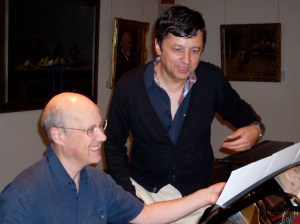
William Howard and Pavel Novák

At the time Novák was hardly known outside his hometown of Brno. As a practising Christian working under a communist regime, and unwilling to be a party member, he could expect to be offered very few opportunities as a composer. Since that time his reputation has grown, both in the Czech Republic and abroad. For some years, he received more performances of his music in the UK than in his own country, composing several new works for the Schubert Ensemble and for myself, and receiving commissions from Chroma, the Composers’ Ensemble, the Associated Board of the Royal Schools of Music, and Dartington International Summer School. In the last couple of decades his most important commissions have come from major institutions in the Czech Republic, including the Czech Philharmonic and Brno State Symphony Orchestras.

As a student, Novák was immersed in the Janáček tradition of building form through working with small motifs and fragments, but he went on to develop his own distinctive style and to explore a wide range of other kinds of music. Believing that dissonance had had its day and that everything that could be said with it had already been said, he arrived in the 1990s at a new means of expression through imaginative use of consonance and unison, with voices supporting each other rather than working in opposition. The integrity and purity of his musical voice has its roots in his deep Catholic faith, which is the ultimate source of inspiration for all his music.

If his music has not been more widely performed, the reason is at least in part because scores have been unavailable. Fortunately, this situation is now changing. Many pieces are now available through the Czech Music Information Centre’s database and a few chamber works have been published by Madrid-based Da_sh Music, including a superb piano quintet, Royal Funeral Procession to Iona, that he wrote for the Schubert Ensemble in 1995.

In the case of the 24 Preludes and Fugues, several music publishers took an interest in the work following the positive reaction to the London premiere of the work in 2007 and to the recording (released in 2011) but found the scale and the complexities of the hand-written manuscript too daunting to take on. The great news is that, with the help of a handful of sponsors, three years of heroic typesetting by the composer Cydonie Banting and many dozens of hours of proof-reading and editing by the composer and myself, the score is now finally available.

 Before and after typesetting/editing (Prelude 23)

The complete score is now available on the Music Haven website.


William Howard has recorded Pavel Novák’s 24 Preludes and Fugues on the Champs Hill Records label

Listen to the album via Spotify


William Howard is established as one of Britain’s leading pianists, enjoying a career that has taken him to over 40 different countries. His performing life consists of solo recitals, concerto performances, guest appearances with chamber ensembles and instrumentalists. In 1983 he founded the Schubert Ensemble, with which he performed for the full 35 years of the Ensemble’s existence (it gave its final concert in June 2018). Winner of the 1998 Royal Philharmonic Society Award for Best Chamber Ensemble, the Schubert Ensemble earned a worldwide reputation as one of the finest piano and string ensembles, as well as setting up several ground-breaking educational projects and commissioning 50 concert works.
His solo career has taken him to many of Britain’s most important festivals, including Bath, Brighton and Cheltenham, and he has been artist in residence at several others. He has performed many times in the Wigmore Hall and the South Bank in London and has broadcast regularly for BBC Radio 3. For many years he has been invited to perform and teach at the Dartington International Summer School.

Read more

Hertfordshire Festival of Music (HFoM) rejoices in the resurgence of live music in Hertfordshire with an exciting programme of glorious music, both old and new.

This year’s principal artist is the wonderful horn player Ben Goldscheider.  Ben has gone from strength to strength since being the BBC Young Musician finalist in 2016, giving recitals in major concert halls around the world. Ben is from Hertfordshire and is delighted to be involved in several Festival events: his Goldscheider Quintet with narrated pieces by Ruth Gipps and Ravel; a recital with pianist Richard Uttley; and a masterclass given to selected aspiring horn performers.

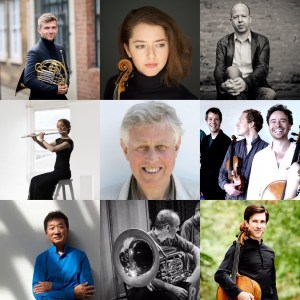
Musicians Guy JohnstonMelvyn TanMathilde Milwidsky and Huw Watkins also join the roster of acclaimed artists visiting HFoM for the first time and there be a visit from the celebrated Maggini String Quartet in performances of music by both David Matthews and Malcolm Arnold.

Hertford will enjoy a return visit by two local artists with an outstanding national and international following. The flautist Emma Halnan and organist William Whitehead perform concertos by Malcolm Arnold with the HFoM Festival Orchestra conducted by Matthew Taylor in what will surely be one of the Festival highlights – and a fitting tribute to the late and much-loved Co-Founder of HFoM, Tom Hammond.
HFoM marks the Queen’s Platinum Jubilee with two special events in Hertford. Our Festival Concert Band will bring local community musicians together to perform arrangements of music associated with royalty in a fun, relaxed performance in the grounds of Hertford Castle. And with a thriving choral tradition in Hertford, we relish the opportunity to hear three local choirs from St AndrewsAll Saints’ and the Hertford Chamber Choir as they join forces in honour of the Queen’s Jubilee, together with organist William Whitehead.

The Featured Living Composer is David Matthews – one of the UK’s foremost composers who will be visiting many events and engaging in conversation about in his remarkable life in music. There’s a fascinating retrospective of the music of Sir Malcolm Arnold too as his music runs a thread through the festival.

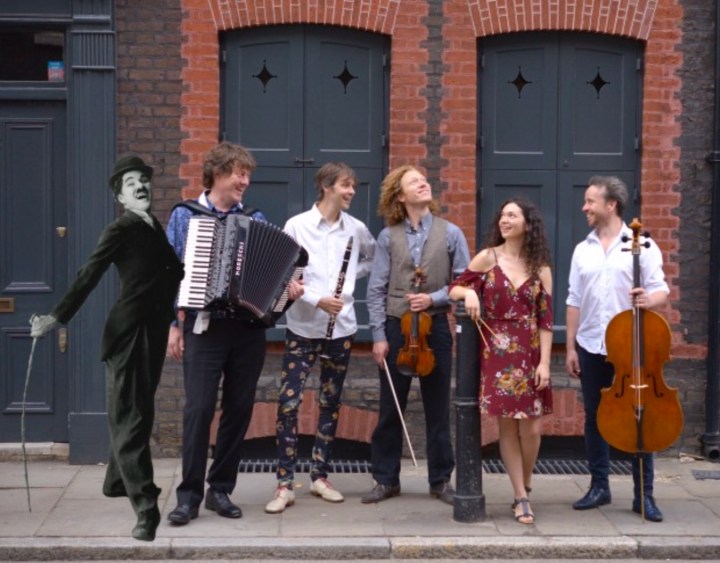
Festival favourites ZRI make a return appearance in an evening of musical fun.  ZRI’s “Adventures with Charlie Chaplin” is part concert, and part film screening with live score. ZRI will bring their musical interpretation to the classic ‘The Adventurer’, including tunes by Django Reinhardt, Georges Boulanger, and much more.

Full details of all the events are on the Festival website. Events take place in Hertford, Ware, St Albans, Harpenden, Hitchin, and Hatfield.

Guest post by Daniel Tong


The second edition of the Birmingham International Piano Chamber Music Competition will take place as part of the Conservatoire’s November Festival celebrating the role of the piano in chamber music. Six young ensembles, chosen at preliminary audition, will be invited to join the festival, give a recital, take part in masterclasses and compete for prizes that include a Wigmore Hall debut, commercial recording with Resonus Classics, mentorship and further concert engagements.

But why another competition? The arguments against are often-repeated: music is an art, not a sport; competitions encourage perfect technical performances of lowest-common-denominator artistic merit; it’s all a fix anyway, and the jury merely choose their own students. There has been some truth in all of these arguments, but none of them are essential to the idea of a music competition. The arguments in favour are made less often, and perhaps less clearly; it is down to the competitions themselves to take a lead.

In Birmingham I have created a competition that, I believe, does all within its power to make the experience positive for everyone involved. Of course there will be a winning ensemble, and those who are not chosen will be disappointed, but there is something on offer for everyone in a collegiate atmosphere of musical celebration. The competition takes place within a festival, where leading professional artists will perform alongside Royal Birmingham Conservatoire students and the six competing ensembles. These six young chamber groups will all be given the opportunity to take part in masterclasses, and their performances will be publicised as part of the Festival and livestreamed. The grand final livestream will be shared by Classic FM. All of the jury members will also play in concerts, dismantling some of the barriers between them and us. They will take their seats in the audience to listen to the young artists, rather than behind a desk with bottles of mineral water.

A competition gives anyone a chance. We have undertaken to hear all applicants at preliminary audition, either in person or by unedited video. Jury members will not be given references or biographies of the musicians that they hear. In a way, this is a fairer process than one in which an agent takes on an artist who is recommended to them by a friend, or who is already successful. To me, the argument that personal networking is a fairer process than a structured competition doesn’t make sense, and it can be guaranteed that all of our competitors will have plenty of chance to hone their networking skills in life before and after the event. Our competition also endeavours to make sure that there are no barriers to application, and that the open and accessible nature of video and livestream performance, which blossomed during the pandemic, are not lost in the rush to return to ‘normal’.

I have created a mark scheme for the competition that encourages artistic understanding and flair. So, although a performance that is a mess technically is unlikely to succeed, there are far more scoring categories that address artistic considerations than technical perfection. Of course ‘technique’ and ‘artistry’ are intertwined, the former being the means of producing the latter, but we have all been deeply moved by performances that couldn’t necessarily have been put out into the sanitised world of CD recording. Our mark scheme recognises this; music will inevitably be beautifully subjective, but this will be the case when our young artists gain reviews and are received by audiences in concert. And this is the nub: I would far rather that we rewarded artistry, communication, beauty, feeling and all of the attributes of music that elevate it above so much else in life, than focussed on the rather more mundane and measurable, even if highly-skilled, qualities. This is, I think, another important idea for our competition to own: we are looking for the ensemble who win on the night. The music that touches us and somehow steals the show. We are not trying to conjecture as to who are the ‘best’.

Oh, and the jury aren’t allowed to score or advocate for any ensembles with which they have a prior connection.

So, I hope that many young ensembles will throw their hat into the ring, and I look forward to welcoming six of them to Birmingham in November, when we will celebrate piano chamber music in all of its many guises.


Birmingham International Piano Chamber Music Competition takes place between 14th and 16th November 2022. Applications are welcomed from duos, trios and quartets with an average age of 28 or under, as long as the ensemble includes a single piano.

Find out more / apply


Daniel Tong


Daniel Tong’s website