Here’s a helpful post from Gretchen Saathoff’s blog Gretchen’s Pianos for those of us who are feel certain parts of our anatomy need some care & attention.
Any type of pain associated with playing an instrument needs to be addressed.
Let’s talk about neck pain in this post, though, to keep things manageable for readers.
Onset
When and how did your neck pain start? What were you doing at the time?
What do you do when not playing the piano? For example, do you drive long distances? Work at a desk? Use a computer for long periods of time?
Possible causes
Your work setup, car seat, steering wheel angle, different mattress, different pillow, bicycle handlebars, even not wearing sunglasses outdoors can all be factors.
Look at your practice setup.
Bench too high or too low?
Enough light?
Music at a comfortable height?
Have you had your eyes checked recently?
Body alignment
Drafty room
Cold room
A glare on the music
Recent changes in technique
Practicing too long without a break
Learning a lot of notes all at the same time
Sight-reading for hours
A look at some other factors
Not getting enough sleep.
Not eating regular meals.
Being under the weather.
Anaemia
Virus
Having a cold
Coming down with something
Dental issues
Possible solutions
Ask a friend to watch you play
Videotape yourself playing
Make small changes as indicated above
Stretch before and after practice
See a doctor who treats musicians
Get a massage
See a chiropractor
Work with a physical therapist or sports trainer to strengthen back and shoulder muscles
Letting pain continue while proceeding as usual is not a solution, but will exacerbate the problem. Even if you are busy, have several performances coming up, or can think of a list of reasons not to address the pain, you must. Your longevity as a musician depends on it.
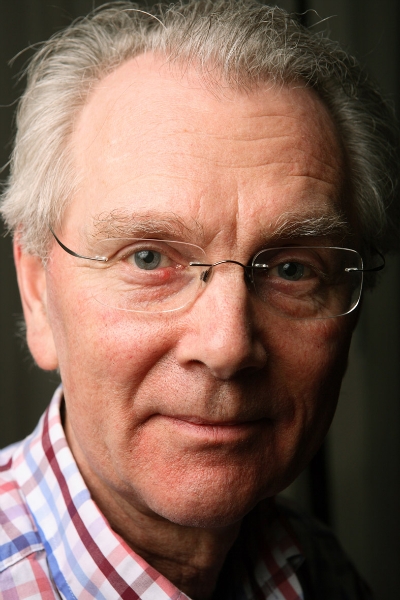
Who or what inspired you to take up composing, and make it your career?
It grew as I made my way into the musical world. From early childhood composers inspired me – and still do. The ‘urge’ to create is not unlike feeling hungry or any other ‘needs’, part genetic (nature), part imparted (nurture). The rest is discipline and hard work as you keep learning (which is also an urge) and developing (which keeps the urge alive) – voilà, a virtuous circle. Out of all the things I have done in music, practical and theoretical, composing slowly began to take over.
Who or what are the most important influences on your composing?
‘Inspiration’ or ‘influence’ comes from many sources, from nature to books, from people to science and technology, from a musician’s special skills to the nature of a commission, from a problem to the search for a solution. In different stages of my career, different influences dominated. For example, when I was infatuated with Xenakis, his music and writings, his persona and reputation left noticeable traces in my music.
What have been the greatest challenges of your career so far?
To stay alive and make a living out of a profession which has become ever harder to pursue in a musical world that tends to cling on to the familiar rather than to taking risks – especially in times of hardship, such as now.
Apart from that, the greatest challenge was to discover my strengths and weaknesses, to acknowledge that I cannot be Bach, Beethoven, Debussy, Stravinsky or Varėse, and find Jan Vriend.
Which compositions/recordings are you most proud of?
Huantan (1968), Heterostase (1981), Jets d’Orgue (1985-91), Hallelujah II (1988), Hymn to Ra (2002), Anatomy of Passion (2004), Echo 13.7 (2006), Meden Agan (2006)…
Who are your favourite musicians?
Young people, who are still full of curiosity and passionate in their commitment to the cause of the music they play, as opposed to the pursuit of fame and fortune or as a chore to making a living.
What is your most memorable concert experience?
A concert in Amsterdam in the 1960s, when Yuji Takahashi performed Eonta by Xenakis with a brass ensemble from Paris conducted by Konstantin Simonovich. Details of that experience are in a book I am about to finish.
What do you consider to be the most important ideas and concepts to impart to aspiring musicians/composers?
The question encompasses too many issues (ideas and concepts) for an easy answer. But here is a thought: whatever sounds you choose to work on in whatever combinations, the point of their interactions is to make musical sense. To find out what that means is a lifelong preoccupation, something we put to the test again and again in each new composition (project) we undertake.
What are you working on at the moment?
A work for string orchestra – a challenge, an ambition I have been harbouring for many years but never had the chance to concentrate on. The difficulty is that I haven’t yet been able to find an ensemble to take it on, which makes it a somewhat fortuitous (gratuitous?) enterprise and has given me my first ‘writer’s block’ in many years.
Where would you like to be in 10 years’ time?
On holiday in a sunny resort by the sea.
What is your idea of perfect happiness?
Being in love and in the closest possible proximity of the beloved.
What is your most treasured possession?
My piano – since I cannot claim my two daughters among my ‘possessions’.
What do you enjoy doing most?
Work… when it goes well.
What is your present state of mind?
It’s in survival mode. But, overall, I look on the bright side.
More details are on my website and the real ‘story’ is, of course, in my music.
Jan Vriend’s ‘Degrees of Freedom’, written specially for Ensemble Matisse, receives its premiere on 3 November 2014 in music and media event ‘Interference Patterns’ at London’s Kings Place . The work aims to explore the provocative idea that freedom cannot exist without boundaries. Further information and tickets here
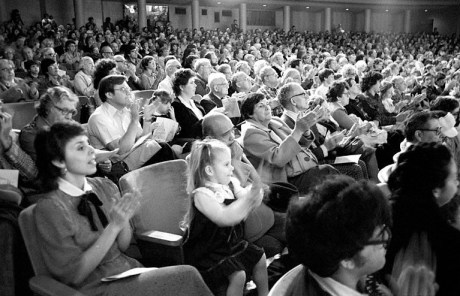
Recently, The Guardian published an article by Leo Benedictus on the subject of badly behaved audiences at theatre, film, concerts, and similar events. The article included a sort of ‘manifesto’ for audiences, with tips and advice on how not to behave. It is both amusing and true. I ran an informal poll amongst Twitter and Facebook followers, asking for people to submit their particular “audience irritations”. The best ones follow below:
People who sit behind and scratch their knees… An odd one I know, but sat in a tiered theatre their knees are at ear level!
Flash photography when one is performing – very distracting!
People talking through overtures is my worst bugbear. I was at South Pacific in Cardiff recently and it was so noisy throughout the overture, and the chap behind me constantly was singing and humming along to most of the songs and making comments….
At a Proms concert once, I saw a Prommer reading a John Grisham novel while Abbado conducting the Bruckner’s 9th symphony provided some no doubt pleasant background music.
Child unwrapping sweets during a Bach Suite… grrrrrr!
People who go to a concert with a cold! Sniffling every other minute. So distracting, inconsiderate and unhygienic!
Re. hummers, I remember childhood carol services at church where every year, without fail, one old man who couldn’t sing in tune to save his life would persist in joining in with the solo first verse of Once in Royal. Pity whichever poor child had been given that dubious privilege…
I was at a Chopin recital where the man next to me hummed tunelessly throughout Chopin’s last Piano Sonata (indeed, throughout the entire concert!). It reminded me of a sketch from ‘Alas Smith & Jones’ in which a certain concert-goer (Smith) hums throughout the performance. Another (Jones) becomes very irritated by this and starts shushing the hummer, only to be told by others around him: “Would you please be quiet? We have come here tonight specifically to hear Mr Smith humming!”
Because of the average age of its audience (very elderly), the Wigmore auditorium is often a cacophony of whistling hearing aids, snuffling, stentorian snoring, and – particularly at lunchtime recitals – satisfied, fruity farting (the sign of a good lunch in the Wigmore restaurant!)
My father’s first visit to Carnegie Hall was marred by a man in front of him who conducted, from his seat, with full score, throughout a Beethoven Symphony.
Please feel free to share your own particular “audience irritations” via the comments box!
Who or what inspired you to take up the piano, and make it your career?
An old friend of mine who is an accomplished amateur pianist was playing Beethoven’s Waldstein Sonata and I just absolutely fell in love with everything about the piano. It was at this time I decided I wanted to be a concert pianist. Every time I hear the Waldstein Sonata I have the same sense of excitement that I remember experiencing when I first heard my friend play it. It is one of the few pieces (along with Tchaikovsky Concerto No.1) that makes me wish I had two hands so I could play it.
Who or what were the greatest influences on your playing?
The greatest influences on my playing are the two teachers I feel I’ve learnt the most from over the years. I studied with acclaimed pianist Lucy Parham whilst I was at the Junior Guildhall School of Music & Drama. It was then that I was introduced to left hand repertoire and my journey as a left hand pianist properly began. I gained so much from Lucy and I always hold her in high esteem as I feel that without her guidance and high expectations I would not have been awarded a place at the Royal College of Music where I’m currently in my graduation year.
My second greatest influence is my current teacher Nigel Clayton. I have found out so much about myself as a pianist since learning with him: he seems to be able to explain things to me in such a way that it instantly transfers into my playing. Aside from being a great teacher he is also very supportive of the things that I do outside of the Royal College. Whether I have a concert or a television interview he always calls or texts to see how it went or to wish me luck.
Which CD in your discography are you most proud of, and why?
One of the first classical CD’s that I bought and am still proud of owning is a box set of Bach and Chopin performed by Martha Argerich. A few of the pieces on the disc really astounded me, the English Suite in A Minor by Bach and Chopin’s Piano Sonata No.2. I couldn’t seem to stop listening to these two pieces in particular; in my opinion they are the perfect recordings of these works.
Doyou have a favourite concert venue to perform in?
I adore playing in St Martin in the Fields. The acoustic is great and I really love the piano they have there. I also think the central location gives any concert a bit more of a ‘grand’ feeling. It is exciting for a performer.
Favourite pieces to perform? Listen to?
My favorite piece that I perform a lot is the Prelude and Nocturne Op.9 by Scriabin. I have a lot of nostalgia over these beautiful pieces as they were the first pieces for the left hand that I learnt. Ever since I mastered them I have included them in every single recital that I have played and just adore performing them. I would play Scriabin all day long if I could.
Who are your favourite musicians?
As mentioned before, Martha Argerich is a real favorite of mine. Though I also enjoy listening to Stephen Hough, especially his Rachmaninoff. I also listen to the violinist Nicola Benedetti a lot, I think her musicianship and technique is unsurpassed.
What do you consider to be the most important ideas and concepts to impart to students/aspiring musicians?
I think that the most important concept for students is to always be musical. One could walk down the practice corridor of any conservatoire and hear perfect notes coming from all the students practicing, yet sometimes I think musicians easily forget about the music itself and worry far too much about correct notes. I personally would rather go to a recital and hear an exciting, atmospheric and electric recital with a few wrong notes thrown in as opposed to a note-perfect performance with no excitement. I always try to impress on my students that correct notes are very important but are certainly not the be all and end all.
What is your idea of perfect happiness?
Perfect happiness to me is being content and fulfilled in both work and personal life. I think that if you have problems in your work life or problems in your personal life you cannot be fully happy. For me it’s about finding a fine balance between both.
Nicholas McCarthy was born in 1989 without his right hand and only began to play the piano at the late age of 14 after being inspired by a friend play Beethoven’s Waldstein Sonata.
Having once been told that he would never succeed as a concert pianist, Nicholas would not be discouraged and went on to study at the prestigious Royal College of Music in London. His graduation in July 2012 drew press headlines around the world, being the only one-handed pianist to graduate from the Royal College of Music in its 130 year history.
Nicholas is a champion of the dynamic and brave world of left hand alone repertoire, a repertoire that first came into being in the early 19th century and developed rapidly following the First World War as a result of the many injuries suffered on the Battlefield. Paul Wittgenstein was responsible for its 20th century developments with his commissions with Ravel, Prokofiev and Benjamin Britten amongst others.
The Cross-Eyed Pianist is free to access and ad-free, and takes many hours every month to research, write, and maintain.
If you find joy and value in what I do, please consider making a donation to support the continuance of the site