Jane Wilkinson

Who or what inspired you to take up singing, and make it your career?

As a child I went to dancing class at a very early age. I would often get picked to sing solos in the annual dancing shows and I discovered that I was a better singer than dancer! So I started singing lessons at the age of nine and never looked back.

Who or what were the most important influences on your singing?

I was always a big musicals fan, and I would go to see West End shows and would be desperate to join in! I also loved Phantom of the Opera. To play Christine would have been a dream! Consequently, many years later, I auditioned for the role and was told I was too tall!

What have been the greatest challenges of your career so far?

One of the biggest challenges for a singer is that you have to wait for your voice to mature and as an impatient teenager that can be very frustrating. There is no rushing nature but at the same time you seem to be wishing your years away. Not anymore! I still feel as though my voice will improve with age, but I’m no longer in any hurry!

Which performances/compositions/recordings are you most proud of?

I am most proud of my concerts in South Africa in 2011. I went on a tour for 2 weeks and did 10 concerts in the space of those 2 weeks. I was part of a trio – The Nightingale Trio – which was voice, flute and piano. We flew the flag for English Songs and the audiences loved it. The travelling was amazing and I was so thrilled to just get through the concerts without any sore throats or illnesses.

Do you have a favourite concert venue to perform in?

Generally I love performing in churches and cathedrals. They always have amazing acoustics which are fantastic for the voice. They also have a great sense of stillness about them which is so calming. They are fascinating places full of history and are like little museums of the local area.

Favourite pieces to perform? Listen to?

One of my favourite pieces to perform is Da Tempeste by Handel from his opera Guilio Cesare. It is like gymnastics for the voice. It’s such a showy piece full of runs and acrobatics. I also love playing around with ornaments. It’s a real chance to stretch the voice to the extreme. Sometimes the ornaments are different every time I perform them. It just depends on the day and I like to keep my accompanist on their toes! I also love the other Cleopatra arias, especially Ah! Mio cor. It’s beautiful in many ways and just shows the versatility of Handel’s compositions. They are a real work out for the voice but so rewarding to sing.

Who are your favourite musicians?

I really admire Renée Fleming. She has such a shimmering voice with so much depth and body to it. She is extremely charismatic when she performs and never fails to deliver. She has had a wonderful career and deserves all of her successes.

What is your most memorable concert experience?

I once did a concert in a restaurant and the owner had two big Great Dane dogs. I am not the biggest fan of dogs and so I was very nervous when they lumbered into the room and came to sit at my feet. I couldn’t concentrate on performing for the fear of being licked!

What do you consider to be the most important ideas and concepts to impart to aspiring musicians?

My most important bit of advice to aspiring singers would be to enjoy the journey. Training can be frustrating but it’s also a time for experimentation. Use the training years as a time to explore a vast array of repertoire. You will then hopefully find your niche which will eventually allow yourself to carve out a career based upon your area of expertise.

What are you working on at the moment?

At the moment I am working with a composer called Andrew Keeling on a new album. It has a rocky feel to it which is totally new for me! We are in the middle of recording it and it is all very exciting. Then I’m back to opera with a new production in the Autumn.

What is your most treasured possession?

The article that has been with me throughout my career to date is my black leather music bag. My mum bought me it when I started singing lessons at the age of nine and I still keep music in it. It was my pride and joy!


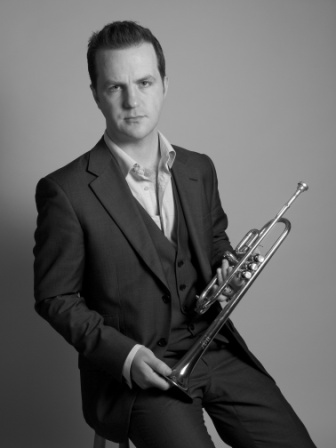
English soprano Jane Wilkinson grew up on the Fylde Coast in Lancashire and began her vocal training with singing teacher Brenda Waddington. After a year studying with Barbara Robotham, she was accepted in 2002 to study at the Royal Scottish Academy of Music and Drama, Glasgow, on the Bachelor of Music course with Helen Lawson. Jane then studied as a post-graduate at the Royal College of Music, London, with Jennifer Smith. Her current teacher is Jane Irwin.

Jane is an experienced performer in all aspects of singing – opera, recitals, concerts, choral singing and competitions. She currently sings and teaches in London.

Jane recently was short listed for the BBC Radio 2 Kiri Te Kanawa Prize. She was lucky enough to sing for Dame Kiri in a masterclass at the Royal college of Music.

www.janewilkinson.co.uk

Peter Donohoe’s Tchaikovsky Competition Diary

It’s thirty years since British pianist Peter Donohoe won joint silver medal at the 1982 Tchaikovsky Competition in Moscow. Hard to believe now that at that time Russia was still the Soviet Union, under the iron rule of an old guard communist leadership, when people’s rights and freedom was severely restricted and when visiting foreigners, such as Peter and his co-competitors, were treated with suspicion and were subjected to close surveillance.

To mark the thirtieth anniversary of his fine achievement, Peter has published his Tchaikovsky Competition diary on his blog. It’s a fascinating document, charting not just the highs and lows and daily anxieties of participating in an international competition, but also an insightful and entertaining glimpse behind the iron curtain. Despite the fact that we know the final outcome, this is a thrilling account.

Download the text here

[Peter Donohoe will feature in a future Meet the Artist interview in August]


Who or what inspired you to take up the piano, and make it your career?

I was brought up by a musical mother who studied the piano with Moisés Moleiro, and sang in the choir in the premiere of the ‘Cantata Criolla’ by Antonio Estévez. Unfortunately she fell ill very young and had to abandon music. When I was 7 I was accepted as a student at the Conservatorio Juan José Landaeta in Caracas where I had the most wonderful and generous teachers. My piano teacher was Guiomar Narváez, strict and very artistic, with a great passion for the classical composers and Latin American music. At 16 I won a scholarship to come to the Royal College of Music in London, where I was assigned to Phyllis Sellick as the teacher who would carry on developing what Mrs. Barbara Boissard and Michael Gough Matthews saw in my style of playing when they heard me in the audition in Caracas. For that I am very grateful: Phyllis was an extraordinary human being who taught me the art of piano playing.

Who or what were the greatest influences on your playing?

My main teachers obviously, including Polish pianist Regina Smenzianka and Paul Badura-Skoda, and also the many concerts I went to as a child growing up in Caracas. I remember listening to Martha Argerich, Claudio Arrau, George Demus, Willhem Kempf, Yoyoma, Alicia De La Rocha, and conductors such as Charles Dutoit, Cuban Nicolás Guillén reciting his poetry, popular singers like Mercedes Sosa, the cinema of Carlos Saura, Stanley Kubrik, Herzog, Chaplin….all these wonderful true artists, giving us the best of their knowledge and gigantic talents, seeing, listening and receiving all the universal and most humane expression and energy.

Then in London I have enjoyed many concerts of classical music and jazz, plus all my friends who also play and are now the great musicians of our time.

What have been the greatest challenges of your career?

Every concert you play, every CD you make is a challenge. To teach very gifted children is also a challenge. I think we face climbing Everest nearly every day! Nothing is easy. To play phrases in the most clear of ways, respecting the intentions of the composer is a challenge. When you decide that you are a pianist you understand that the challenge is what motives you, that’s what takes you out of bed.

A big challenge we face today is that classical music has been marginalised by the media, and by the idea that fashion, cookery and frivolous cinema or football stars are more important than profound thought, creativity and art. We have to keep going, as it is now up to us to make sure that this precious legacy we have acquired through centuries survives. It is a very hard and heavy burden!

Which CD in your discography are you most proud of?

Although I have recorded about 9 hours of music from Venezuela, by Venezuelan composers, I consider them all to be very different from each other. I have also recorded one CD of music by Chopin and another one by Ernesto Lecuona, which will come out in the autumn. I am sensitive to the qualities of the piano, acoustics and sound engineer. I have produced most of my CDs and am in general satisfied with the results; perhaps sometimes I am over critical and cannot bear listening to something that is too slow (I can think of one piece that I let myself be influenced by the engineer and now I do not agree with the tempo…). I think each CD is a world of its own: they are “concepts” and represent moments of our lives.

Critics are not familiar with Venezuelan music and a few years ago those CDs represented a kind of “political statement”. What’s good now is that those critics are more receptive, less “Eurocentric” and are beginning to understand (after 500 years) that Latin America is part of western culture.

Do you have a favourite concert venue to perform in?

I love the Purcell Room, the Wigmore Hall, St John’s Smith Square, Invalides in Paris, and the Teatro Teresa Carreño and Municipal in Caracas. Any hall with a decent piano and lovely audience will be always great!

Favourite pieces to perform? Listen to?

I love every piece I play, and with each of them there really is a love affair. From Bach, Scarlatti, Mateo Albéniz, Mozart, Beethoven, Schubert, Brahms, to Chopin, Liszt, Rachmaninov, Debussy, Ravel, Gershwin, Scriabin…the list is very long. Equally I have to constantly listen to classical music, salsa and Latin American popular music.

Who are your favourite musicians?

All the musicians that show passion, love, understanding, involvement, imagination… There are millions of fantastic musicians in our planet.

What do you consider to be the most important ideas and concepts to impart to students/aspiring musicians?

I think I have answered this above, but there is a concept I have discovered recently and it is to do with sharing with the young one’s knowledge, experiences and very importantly giving these young, very talented musicians the opportunities to perform and express their ideas and art. I think experienced, successful musicians should open the path for the young. Not many people in the “business” will do it for them now days.

What are you working on at the moment?

Beethoven ‘Emperor’ Concerto, Mozart Sonatas, Villa-Lobos, Chopin, Piazzolla, exploring Colombian music…

What is your idea of perfect happiness?

Perfect happiness can be found anywhere, at any time, the thing is to be aware of this and enjoy it while it lasts.

‘Joropo’ by Moisés Moleiro

Caracas-born pianist, Clara Rodriguez studied with Phyllis Sellick after winning a scholarship from the Venezuelan Arts Council to train in London at the Royal College of Music. There she was the recipient of numerous prizes and performed as a soloist with the RCM orchestras including De Falla’s Nights in the Gardens of Spain and the Ravel Concerto in G at St. John’s Smith Square.

In Caracas she made her debut playing Mozart’s last piano concerto with the Simón Bolívar Orchestra under the baton of José Antonio Abreu at the age of sixteen; from then on Clara Rodriguez’s career as a concert pianist has taken her to perform all over the world. Her large and interesting repertoire covers works of the best known Baroque, Classical, Romantic and Modern composers; she has also intensely promoted the music of the Latin American continent.

Her discography includes CDs of the piano music of the Venezuelan composers Moisés Moleiro, Federico Ruiz and Teresa Carreño; her catalogue also includes Popular Venezuelan Music Vol. 1; El Cuarteto con Clara Rodríguez en vivo as well as the piano works by the Cuban composer Ernesto Lecuona and of Frederic Chopin late works.

Her recordings are regularly played on BBC Radio3, Classic FM, Radio Nacional de Venezuela, Radio France International, and networks from Argentina to the USA, Australia and China.

Clara Rodriguez teaches piano at the Junior Department of The Royal College of Music in London.


Updated: 2 June 2014. Today I received an email from the UK agent for Fazioli Pianos in response to this post. He took issue with a number of points and asked me to correct some factual errors and remove some phrases which were deemed “offensive”. For the sake of clarification, his comments are highlighted in red.

“The piano was parked across the room like a sleek, black limousine. It occupied nearly a third of the room and gleamed expensively in the light of the chandeliers. It was a Fazioli, the most expensive piano in the world, beautifully, exquisitely crafted, a triumph of design and modern piano technology. He eyed it suspiciously, and the vast, shining minotaur glared back at him, challenging him: “Tocchilo se osate. Touch me, if you dare”, it seemed to say. He had never played a Fazioli before; indeed, had never even been close to one, and, until now, never had any inclination to try one. Its reputation went before it: some people raved about its crystal clear tone quality, that once played, one would never want another piano, ever…. Others that it was just over-engineered Italian histrionics; nothing more than a show-piece, an instrument without heritage or integrity. A piano for the Ferrari owner who valued image and exclusivity above ultimate usability……..

……the sound was amazing, flooding the large room with an absolute purity and luminescence he had not encountered before in a piano. A sound of effortless clarity and depth. The treble was brightly translucent, the middle register had a viola-like mellowness, the bass enormous. The further down the register he went, the notes began to blossom, then growl, now swelling, like an organ, the sound rising from the great belly of the instrument and pouring into the elegant music room. The tone was brilliant and rich, right across the entire register, the touch perfectly even, and Stephen realised that he had never before, not even on the most impeccably set up concert Steinway, played an action that had better control. There was no forgiving middle ground in between with this instrument. It would, he knew, be impossible to conceal the slightest unevenness of touch or rhythm. There would be nowhere to hide….”

Like the protagonist of my novel, I’d never played a Fazioli – until now – though I’d heard it in concert, at the Wigmore and the Royal Festival Hall, on both occasions played by Canadian pianist Angela Hewitt. And on both occasions, I disliked the piano’s sound. In the relatively intimate setting of the Wigmore Hall, the Fazioli concert grand, which, at just over 3 metres, is even larger than a full-size Steinway Model D, was just too big. Its treble was strident, its bass booming. It dominated the music (Bach and Chopin) more than it should have done. Even in a hall as big as RFH, the voice of the Fazioli was still too big. (A pianist (who likes Fazioli) argued with me that it was not the piano, but the pianist who was responsible for the sound.)

The piano in question was not a 308cm but 278cm. FYI as yet no 308’s have come into the UK


The debate continues, and Fazioli, like Marmite, divides opinion. I decided the only way to settle the debate in my own mind was to try a Fazioli myself. As it happens, Jaques Samuels Pianos, on London’s Edgware Road, is an agent for Fazioli in the UK; even better, they have a Fazioli in one of their rehearsal rooms at the moment.

Fazioli is not a long-established piano maker, like Steinway or Bosendorfer. The company was founded in 1981, by Paolo Fazioli, a pianist and engineer, whose aim was to create the most beautiful, perfect and highly-crafted piano possible. The factory is located in the northeast of Italy, in a region famous for its ancient and prestigious tradition in woodworking. The soundboards of Fazioli pianos are made from red spruce from the Val de Fiemme (Antonio Stradivari used the same red spruce to produce his violins). Each Fazioli piano is hand made by a team of workers, and only around 100 pianos are produced each year.

130 are made annually

Paolo Fazioli’s family are furniture makers

Mr Fazioli obtained his doctorate in engineering in 1969. It was never his intention to enter a professional career as a pianist, nor did he do so, piano was always a passion and he achieved his diploma in 1971 two years after his engineering studies had ceased.

But he never lost interest in the piano and became increasingly dissatisfied to find that the pianos he played were not especially well made, neither mechanically nor musically, and he became convinced that he could do better. He consulted experts in acoustics, metal foundry, harmonics and woodworking; he did his research and silenced his detractors, and by 1980 Fazioli and his team had produced their first prototype. He now believes his pianos are the best. His overriding criteria are as follows

  • To produce grand and concert grand pianos exclusively, aiming for the highest quality with no concern for large production
  • Not to imitate any other existing pianos, rather to create an original sound
  • To hand-craft each piano individually using time honored traditional methods combined with the latest technological advances
  • To strive constantly to improve the piano by using cutting edge technology. [source: Wikipedia]

They are certainly the biggest and most expensive on the market today, and the demand for an instrument with greater power and richness to be used in larger concert halls inspired the creation of the F308 model, the longest piano available, of any brand, at 10 feet. Fazioli pianos are endorsed by a number of top international artists, including Stephen Hough, Angela Hewitt and Louis Lortie.

I did not check to see which model was in the rehearsal room at JS Pianos, but it was not a monster, not by any means (I think it was a F183 model). A quick burst of Schubert’s E flat Impromptu confirmed what I’d read about the Fazioli’s action and touch: extremely even across the entire register, if a touch heavy for my liking. It felt “easy” to play, presumably because of the ultra-fine engineering in it, but one had the sense sometimes of playing at one remove from it. Difficult to explain, but my student, who played her exam pieces on it, remarked on this sensation as well. Listening to it, it had an incredibly rich bass, full-bodied and chocolatey. The middle registers were also very pleasing, with a smooth mellowness. But it was the upper register that bothered both of us. As a listener, it was just too bright; even when playing quietly, the sound was too much, and at one point, my student Sarah commented that it actually hurt her ears. (This was my experience when I heard Angela Hewitt play a Fazioli at the Wigmore; interestingly, the two friends who were with me on that occasion, and who are both hard of hearing, commented that the treble was too “strident”, brash even.)

The Rachmaninov G minor Étude-Tableaux was definitely more successful than the Bach D minor Concerto BWV974: the Rachmaninov dwells quite a lot in the lower registers, and the richness of the Fazioli’s bass voice made for a very atmospheric reading. I had to remind myself not to push the treble too much, even in the forte and mezzo-forte passages. The Liszt Sonetto 104 also came across well, again benefitting from the bass richness, but the Mozart Rondo in A minor K511 was less successful (admittedly, I was tired when I came to play it at the end of our session).

I am not sure I would want to own a Fazioli: it seemed almost too perfect for my liking, and so impeccably engineered that it actually came across as rather false. It was almost like the world’s best digital piano, and without a long heritage, like Steinway or Bechstein, it lacks integrity, in my view (maybe after Fazioli has been in production for 100 years, it will have gained that heritage). It’s really beautiful, but it has no soul. You don’t have to work too hard at it, to make it louder, or quieter: because of the way it is set up, it responds instantly to the touch. Strangely, this aspect of it irritated me: I like to feel I am “working” at the sound, but I don’t want a piano that it is just “raw sound”. Despite the hard acoustic of my piano room, even my little Yahama has a sweeter treble than the Fazioli, while my teacher’s Bechstein [actually a Blüthner] has the most mellifluously cantabile treble, a really lovely sound (if a rather floppy touch).

However, I am glad we had the opportunity to play a Fazioli, and it has certainly helped to inform my thoughts about what kind of grand piano I will choose when I come to buy one (hopefully next year).

For the purposes of fairness, I am also publishing the comments made in response to my personal opinion of the Fazioli I played:

Although this is your personal opinion it is far from the norm and as you yourself are not a professional pianist it does seem rather harsh. You may be interested to note that five of the six finalists at this year’s Rubinstein Competition chose Fazioli over Steinway. Four of the six switched to Fazioli after hearing it played by Ms Mazo in the semi-finals, clearly, as professionals, they hold a different view to you and none of  them described the piano as the ‘best digital piano’ (again with hindsight you may find this comment a little aggressive).  Further, at Wigmore Hall on Thursday evening, Francesco Piemontesi, told the Artistic Director John Gilhooly, and myself, that the Fazioli piano he had just performed on was the most beautiful piano he had ever played.


Jaques Samuels Pianos

Fazioli Pianoforti