BBC Media Centre press release:

This Autumn, Saturday 15 September until Tuesday 6 November, the BBC will be dedicating a suite of programmes to the music, history and beauty of one of the world’s most iconic instruments, the piano.

Piano Season on the BBC is a major six-week season celebrating a single instrument. The season will explore the piano’s wide-ranging influence from the 1700s to the present day, as well as delve into the lives of the people behind the piano and the music created for it.

Highlights of the season include an in-depth insight into The Leeds International Piano Competition, a Jazz Battle live from Trinity Laban College Greenwich, a downloadable A-Z of the piano, Peter Donohoe’s 50 Greats, an online masterclass for budding pianists and well-loved personalities from around the UK, such as Woman’s Hour’s Jane Garvey, Radio 1’s Dev and Olympic medal winner Samantha Murray, taking up the challenge of learning the piano for the first time, with eight of them taking part in the season finale, Gala Concert in Cardiff on the 29 October 2012.

The season begins with extensive coverage of the Leeds International Piano Competition with live broadcasts of the final on BBC Radio 3 and a six-part series about the finalists on BBC Four. The season will culminate on 6 November with a special episode of Imagine on BBC One focusing on Lang Lang as he turns 30.

Roger Wright, Controller of BBC Radio 3, comments: “The piano is a single instrument that has the ability to convey a range of emotions and the power of a whole orchestra. Over six weeks we will be exploring this remarkable instrument: its history, mechanics and influence, as well as delving into the lives of the people behind the instrument and the music created for it. Piano Season on the BBC embodies everything that makes Radio 3 unique, offering listeners a distinctive range and depth of classical music, jazz and discussion.”

Richard Klein, Controller BBC Four, comments: “As the gold card channel for arts and culture, BBC Four is delighted to give our viewers an insight in to the Leeds Piano Competition through a series of six documentaries focussing on the finalists of this world class competition. The BBC is committed to partnering with arts and music organisations and BBC Four is delighted to be continuing the relationship with the Leeds Piano Competition to bring such a high calibre of classical music, performances and artistry to viewers as part of Piano Season on the BBC.”

The Leeds International Piano Competition on BBC Four will be presented by Suzy Klein, herself a pianist, and will showcase the six finalists and their concerto performances in full. The series will also take viewers behind the scenes to discover why ‘The Leeds’ is admired worldwide, take a closer look at the mechanical marvel that is the piano, speak directly to the woman behind the competition, Dame Fanny Waterman, who has inspired a generation of young musicians and delve into what makes a world-leading concert pianist. With arguably one of the piano world’s biggest stars taking an ambassadorial role with the competition, we’ll also hear from Lang Lang on why ‘The Leeds’ still matters as it approaches its 50th birthday.

Radio 3 listeners can follow the competition live with both Concerto Finals nights and the Sunday Afternoon Gala Concert broadcast live from Leeds. Piano Season on Radio 3 continues with artists such as Lang Lang, the Labeque Sisters and Malcom Martineau sharing their musical inspirations, as well as hearing from experts such as David Owen Norris and Peter Donohoe. Programmes will feature some of the greatest piano music ever written by composers who themselves loved and played the piano; including Mozart, Beethoven, Schumann, Liszt, Beethoven, Debussy and Chopin alongside late night jazz programming exploring some of the greatest names in jazz pianism.

Monday nights will be ‘Piano Night’ when Radio 3’s Live in Concert will offer listeners a series of unique piano recitals, from different corners of the nation, given by an array of international artists. Past Leeds finalist Sunwook Kim will play Beethoven and Schubert and Russian Evgenia Rubinova presents a programme of music from her native country; Ukrainian Alexei Grynyuk plays Chopin and Liszt; Pascal and Ami Rogé play French music for two pianos; while Radio 3 New Generation Artist Igor Levit performs Rzewksi’s celebrated and fiendishly difficult Variations on “The People United Will Never Be Defeated”; Ashley Wass and Huw Watkins team up to perform Robin Holloway’s pianistic tour-de-force “The Gilded Goldbergs”.

In Radio 3’s morning programmes, listeners will have the chance to hear the 50 Great Pianists – a short daily focus on one of the 50 greatest names from the world of pianism as selected by Peter Donohoe, while regular programmes such as Composer Of The Week will explore the lives of composers who wrote for the instrument, from Clementi to Rachmaninov.

Special guests and piano lovers including as Kathryn Stott, Valentina Lisitsa, James May, Alan Rusbridger and Benjamin Frith will be joining the regular Radio 3 presenters through the season to talk about their passion and experiences with the iconic instrument. There will also be online masterclasses, exploration of the historical and social history of the piano and an entertaining A-Z of the piano in Radio 3’s late afternoon programme In Tune.

Trinity College London and the ABRSM [Associated Board of The Royal Schools of Music] will be helping budding pianists hone their skills in ‘110%’ on Friday nights. We’ll be treated to great performances of Piano Syllabus pieces and hear from the experts on what make them so special and how to get 110% in their exams.

Later on in the Autumn, BBC One’s Imagine will return with a special documentary presented by Alan Yentob on Lang Lang, arguably one of the greatest pianists of his generation, as he turns 30. Lang Lang’s dazzling technique and musicality have inspired a generation of young pianists and delighted audiences throughout the world.

Imagine follows him on an impressive schedule of concerts in Shanghai, New York, London and Berlin and reveals a personal story that began with great hardship and a family dream that nearly ended in tragedy. In this auspicious ‘Year of the Dragon’ Lang Lang celebrates his 30th birthday at a concert in Berlin with Herbie Hancock, opens his own piano school in China, plays for the Queen at the Diamond Jubilee, performs sell-out concerts at the Royal Albert Hall, and becomes the first classical musician to headline at a British pop music festival.

BBC Four will also celebrate Lang Lang being appointed as the Global Ambassador of the Leeds International Piano Competition with two one-off documentaries on Friday 2 November. Lang Lang At The Roundhouse will give viewers an opportunity to see this stunning performance at London’s legendary Roundhouse, recorded at the iTunes festival in July 2011. Lang Lang performs a remarkable Liszt recital as the only classical music artist in a true rock-star surrounding, next to international pop stars like Coldplay, Adele and Linkin Park. And Lang Lang: The Art Of Being A Virtuoso follows Lang Lang through China, the US and Europe and offers a glimpse into life on tour with the superstar.


Tomorrow, I will be attending a live recording of a masterclass hosted by David Owen Norris, to be filmed for Radio Three website as part of the piano season on the BBC. The masterclass will explore how pianists set about discovering and conveying the poetic musical message of much loved piano pieces. In a neat coincidence, one of the participants is pianist Emmanuel Vass, who will be featured in my ‘Meet the Artist’ series.
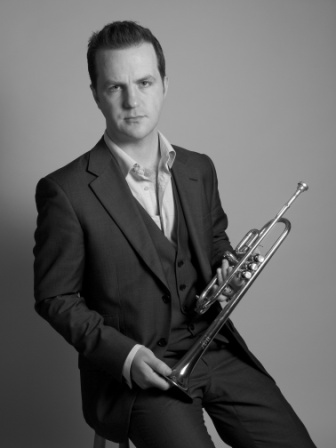
Simon Desbruslais

Who or what inspired you to take up the trumpet and make it your career? 

I began learning the trumpet in year five in primary school – so I would have been around the age of nine – with a local peripatetic teacher. Funnily enough, I actually wanted to take up the trombone, but there was no option! I took my music very seriously, although I did not decide to pursue it professionally until I was around the age of sixteen. This was after filling out, but never sending, an application to university to study physics. I found that music was the only path where I could express myself, which was brought on by a typically challenging adolescence. I also had a very strong focus on composition, which is an avenue I will return to one day.

Important pedagogical influences upon me included early lessons with Brendan Ball as a teenager, and then Iaan Wilson, who taught me to expect standards that I did not realise were possible. Paul Archibald, Andrew Crowley and Neil Brough also did wonders for my playing at the Royal College of Music.

Who or what are the most important influences on your playing?

Wynton Marsalis’ ‘Carnival’ album had a tremendous influence on me as a young teenager. I love the way that the music excites the audiences, through a combination of physical and musical virtuosity. Apart from the trumpet, the canonical Romantic piano repertoire – from late Beethoven through to Scriabin – will always affect me in a way few other genres can. I am also a massive fan of Gesualdo and JS Bach’s fugue writing.

What have been the greatest challenges of your career so far? 

Adapting to ‘Classical’ pitch (A=430). While Baroque pitch can be understood as a semitone below modern pitch, the Classical version is somewhere in between. This can really affect intonation, and something I had to acclimatise to on stage in Covent Garden!

The other big challenge for me is balancing performing with academia. I take both very seriously, and I am just about to complete my doctorate in musicology at Oxford. The two areas are mutually beneficial, and despite the extra work commitment, I am always surprised by how few people try to tackle both. For me, it comes down to a matter of motivation and time management.

What are the particular challenges/excitements of working with an orchestra/ensemble? 

As a solo performer, there is a great deal of freedom; the ensemble follows you. This comes with some obvious artistic satisfaction. In an ensemble, however, the freedom is much less – you can shape the musical lines in a personal way, but the degree of precision must be very high, otherwise you can let down your fellow ensemble musicians. You rely on them, and they rely on you – this is quite a special bond, and a very different reward from solo performance.

Which recordings are you most proud of?

Johann Wilhelm Hertel’s Third Trumpet Concerto – I recorded this piece on the natural trumpet aged 26, and it has received some very positive international reviews. It was my first commercial recording, so it will always hold special memories for me. I also recorded David Bednall’s Christmas Cantata a few months ago, which is a very special piece for solo trumpet, choir and organ, of around one hour in length.

Do you have a favourite concert venue? 

The Barbican – it is just such a pity that there is no built-in organ!

Who are your favourite musicians? 

Wynton Marsalis, Hakan Hardenberger, Pierre Boulez and Daniel Barenboim.

What is your most memorable concert experience? 

On the 15th June, I performed three trumpet concertos in one concert: Robert Saxton’s ‘Psalm: A Song of Ascents’, John McCabe’s ‘La Primavera’ and Deborah Pritchard’s ‘Skyspace’. The last two were also world premieres. I had been recording these concertos for around four and a half hours on the same day for Signum Classics, so getting through them in concert was the biggest challenge to stamina and concentration that I have ever faced. The Orchestra of The Swan, conducted by Kenneth Woods, were so wonderful and supportive throughout – I do not know what I would have done without them.

What is your favourite music to play? To listen to? 

I love playing the natural trumpet, but Arban’s theme and variations on the cornet/modern trumpet are always a joy. I also use them frequently in educational workshops. I have recently been enjoying Messiaen, particularly his Vingt Regards for piano solo, which combines an extraordinary, advanced sound world with a clear theoretical compositional technique. After obtaining a flugelhorn to play the second movement of John McCabe’s new trumpet concerto, I am also considering a foray into jazz – watch this space!

What do you consider to be the most important ideas and concepts to impart to aspiring musicians/students? 

Music stems from desire. If you want something enough you will always achieve it. Likewise, if you do not reach your goals, chances are you did not want them enough. So, to achieve in life, simply isolate that thing you want the most, and follow it with all the energy that you can muster.

What are you working on at the moment? 

Following on from my recent work on British trumpet concertos, I am focusing on a brand new repertoire for the combination of trumpet and string quartet – more about this another time! I am also preparing Robin Holloway’s solo trumpet sonata for what may be the first ever complete live performance – the work is generally performed only a single movement at a time, due to the intense stamina demands on the performer. Other works on my practice pile at the moment include concertos by Peter Maxwell Davies and James MacMillan.

Where would you like to be in 10 years’ time? 

A critically recognised international trumpet soloist and a university lecturer. I also hope to have at least a couple of books published by then, the first of which will be on the music theory of Paul Hindemith.

What is your idea of perfect happiness? 

Looking back on my life and feeling no regrets about the difficult choices, and sacrifices, I have had to make. You only get one chance in life, and I intend to make it count.

What do you enjoy doing most? 

Spending the day with my wife and daughter, perhaps including a visit to the river Thames. I proposed to my wife on Waterloo Bridge after dinner at the Savoy – that whole area of London will always be the most perfect place in the world to me. It is also just round the corner from King’s College London, my Alma Mater.

I am also a massive football fan – Arsenal, of course (!!) – and an avid brewer of beer. I grow hops in my back garden, although I am yet to have a suitable harvest! Close friends like to offer names for my home-brew, the daftest solution as a play on my surname, ‘De-Brew’…

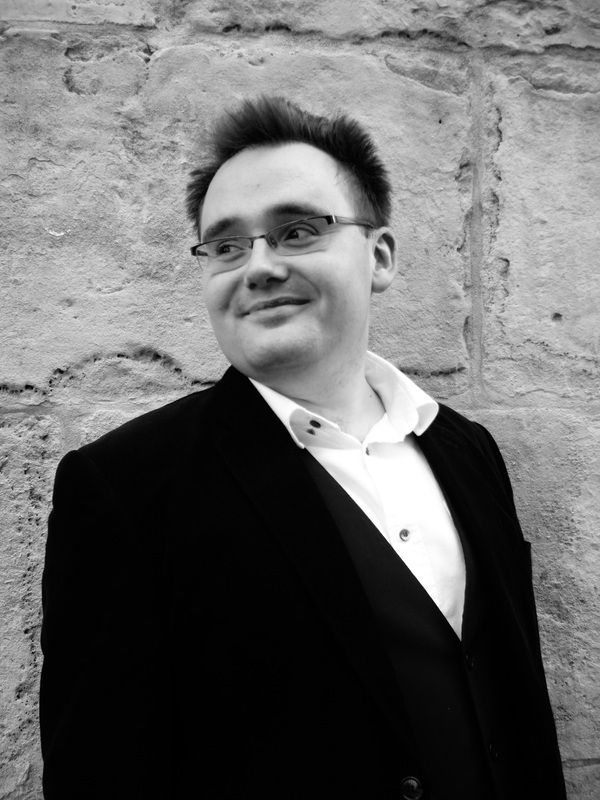
Richard Bates, composer & conductor (photo credit: Scott Inglis-Kidger)

Who or what inspired you to take up composing and make it your career? 

I would say that composing chose me, rather than the other way round. Almost as soon as I started learning to play piano, I started coming up with music of my own when I was bored of the pieces set me by my teacher. I always listened to classical music a lot as a youngster. And as a teenager, I suppose my writing mirrored what I was listening to – Beethoven in my early teens then later, Rachmaninov, Prokofiev, Poulenc, Morton Feldman…

Who or what were the most important influences on your composing? 

As I say, I always listened to music growing up, and I was lucky enough that my piano teacher in those years was interested in furthering the scope of my musical knowledge, and gave me music and recordings to explore that I otherwise would not have chosen. These expanded my horizons considerably. A great favourite of mine is Francis Poulenc, whose unique and instantly recognizable style really caught my interest. I also owe a great debt of gratitude to Michael Finnissy and Giles Swayne, who taught me my compositional craft, the guts to write what I want to write, the intricate skill of orchestration, and how to express what you hear with the instruments you have.

What have been the greatest challenges of your career so far? 

When I graduated from Cambridge, I thought: “nobody makes a living from writing music, and the world doesn’t really need another composer anyhow”, so I followed another passion of mine and went into music direction for theatre – leading pit bands and singers. Over the years since, I have taken every professional composing opportunity that arose for me, but it was only really embarking on Platinum Consort’s recording of my Tenebrae and commission In The Dark, and their subsequent commercial success, which exceeded my hopes, never mind my expectations, and that really convinced me writing music could be a viable life for me.

Which compositions are you most proud of?  

Of the works of mine that have been premiered so far, probably the Tenebrae are my favourite. I took a good deal of trouble to get each response just right, and the weaving of Renaissance-style counterpoint to create 21st-century harmonies was the biggest skill I had to master. I’m very proud of the result, and feel this is one of my most significant works to date.

Favourite pieces to listen to? 

I’m sure it’s a very infuriating answer, but I’m not the sort of person who has a clear favourite. It will depend on my mood and what I’m doing at the time. I also admire music for different reasons: some pieces are guilty pleasures – pieces which are not fantastically put together, but mean a great deal to me either because of their ambience, or a personal significance; other pieces are good for my musical health – pieces I admire because they are so perfectly ingenious in their construction or employ compositional tricks I can’t help but wish I’d thought of.

Who are your favourite musicians? 

Again, I’m going to be annoying and fudge that question and say it depends. I suppose my single, favourite group, is the Platinum Consort, for whom I was recently named Composer in Residence. I have worked with them over a long period, which is unusual in the music business, and have developed a very honest and open relationship with them and their director Scott Inglis-Kidger. I have great admiration for the dedication and skill they employ, and they in turn give me whatever feedback they honestly feel, without fear of my taking offence or umbrage. But I also have a great deal of admiration for the singers and musicians I work with in my conducting career, who turn up night after night and deliver consistently great performances.

What do you consider to be the most important ideas and concepts to impart to aspiring musicians? 

Stephen Sondheim once said that composition without craft is just masturbation. I agree. Without craft, and I would add discipline, you’re just improvising. That’s fun in the sense that you sit at your piano and think: “aren’t I jolly clever to be able to sit here and come up with this”, but the interest of what you come up with soon fades unless there’s a supporting framework. Musical ideas in themselves have little power; it’s their juxtaposition that gives them strength to move listeners. This is the message I would like to convey to my 14 year old self.

What are you working on at the moment? 

Two things: a motet setting of the plainchant Veni Veni Emmanuel for double choir and semi-chorus for the Platinum Consort; and The Vigil, a work for choir, soloists and orchestra – it’s a meditation on the stations of the cross – for Thomas’s Choral Society in London.

What is your present state of mind?

Relaxed. I am on holiday, just doing some writing, and unconstrained by the iPhone ringing or having to go out later and conduct a musical.

What is your most treasured possession? 

My steel tipped conductor’s baton. It’s the perfect weight and length for me, and the polished steel tip catches the light beautifully in darkened theatres and ball-rooms, so the musicians can see my beat. It’s also been around with me quite a few years.

Richard Bates was born and raised in London. He was educated as a music scholar at Winchester College and Cambridge University. He studied composition with Michael Finnissy and Giles Swayne, as well as participating in seminars with John Woolrich, Howard Skempton and John Rutter.

Upon graduation, Richard was appointed organist at the church of St Magnus The Martyr in the City of London, a position he held until 2008 when he moved to be Director of Music at Holy Trinity, Northwood. Richard also pursues a wide range of activities in the British and USA musical theatre and cabaret scenes. He is in demand as a conductor and accompanist and recently made his band‐leading debut in New York City.

Richard was officially appointed Composer in Residence to the Platinum Consort in 2012, after having written for the ensemble on an informal basis for a number of years. His music featured on their album In The Dark was described by BBC Music Magazine as “particularly impressive”, and the Observer said “Bates…knows how to raise hairs on the back of the neck with his smoky eight‐part writing”. 

Keep an eye on www.richardbatesmusic.com and @richbatesmusic on Twitter for details, premieres and performances coming up this Autumn and into 2013.

Platinum Consort will be performing at King’s Place, London, on Saturday 1st September, in a concert which features Richard Bates’ In the Dark. Further information here.


