A guest post by Nora Krohn
One night after a concert I was having a drink with a colleague who told me a bizarre story about a graduate school audition he’d taken. While entering the subway en route to the audition, weighed down by his violin case and a large suitcase, he walked through the service gate behind someone else rather than swiping his card at the turnstile. Since he had an unlimited monthly pass, he had essentially pre-paid his fare and assumed there was nothing unlawful about walking through the gate. So he was stunned when a police officer stopped him, arrested him for fare evasion, and took him to jail.
With his violin case sitting on the other side of the bars enclosing his cell, he called the audition committee to explain the situation, and then waited anxiously, not knowing when he would be released. A few hours later, the officer finally let him go with a summons to appear in court a few weeks later. He grabbed his violin, rushed to the hall, made it there 20 minutes before his audition, played beautifully, and was accepted.
When he got to the end of his story, I was astounded. “How could you possibly stay focused with so much stress and distraction? Weren’t you furious?” I asked. “ I would have been a mess.”
“I wasn’t nervous or angry, I was totally relaxed actually,” he replied with a smile. “You see, the situation was so over the top I’d already let go of the outcome. Whatever happened I knew it wouldn’t be my fault.”
My colleague could relax and allow his great talent and preparation to shine through in spite of these acutely stressful events because he knew whatever flaws that resulted from them were clearly not his responsibility. The absurdity of the whole thing disarmed him, and he let go.
For many of us it’s not so easy to hold the things that go wrong with lightness—to regard them as vicissitudes of fortune rather than as tactical errors, character flaws, or divine punishment. But as I pondered my friend’s story, I began to see that letting go of the impulse to assign blame for our past and future mistakes—whether to others or to ourselves—is crucial for our growth. Instead of defining ourselves by our missteps, we can learn to see them as vital steps toward greater wisdom.
Here is an example from my own experience.
Trying to Be Right
This past spring I arranged a play-through of my recital program for a colleague in preparation for an upcoming concert. In starting to collaborate more with piano, I’d discovered that my knee-jerk habit, honed from years of orchestral playing, is to blend with and defer to what’s going on around me, instead of taking charge. After that realization I’d worked hard to learn what it meant to fully occupy, or request, if necessary, the musical space I needed to play with the command that performing as a soloist requires.
As the pianist and I played through our program for my colleague, I started to feel that the music was tumbling by too quickly and I that didn’t have space to execute things the way I wanted to. In my frustration, I tried to slow down, but the pianist and I weren’t aligning, and my frustration persisted through the end of the play-through.
After we finished, my colleague offered us warm praise, and then gently suggested that in my efforts to play everything as exquisitely as I’d set out to, I was blocking the flow of the music. I countered that I had been trying to slow things down to give myself space and strength. But she replied that while my intention was good, it couldn’t work in performance, when the music of the moment required me to join up with a gesture or tempo that was already in motion. Her words and voice were kind, but I felt chastened and confused. I’d been trying so hard to be “right.” Now I felt I was back to being “wrong.”
But as I thought about it, I saw the wisdom in my colleague’s advice. In rehearsal, it was important to lead by communicating how I thought the music should flow. But in the moment of performance, I had to let go of all of that effort and be flexible in working with the particular demands of the situation instead of fighting them, no matter how “right” or “wrong” they might feel.
“Just Relax”
A few weeks ago I encountered another situation where my desire to be “right on” was inhibiting I was playing with a pianist in a master class at Madeline Bruser’s Art of Practicing Institute summer program, and we were trying to get the ensemble of a particular cadence just right. From my previous experiences, of first trying to follow the pianist, and then trying too hard to lead, I instinctively knew that for us to be together, the main thing I needed was to be solidly connected to myself—that if I could stand clearly in my own feelings and convictions, I could naturally connect with the pianist and she would know exactly where to place her notes. But I also knew that making a big effort to connect to myself would tie me up in knots. It had to just happen, but I didn’t know how.
When I explained this predicament to Madeline she said, “It sounds like you just need to let your mind relax.” Luckily we had been meditating for two hours a day for the previous five days, so after closing my eyes for a few moments I was able to let go and merge my mind with the sounds I was hearing and with the feeling in my body. We played the passage again, and the cadence flowed effortlessly. Buoyed with confidence, we tried the same idea at another cadence and were again completely in sync. But at the last second the pianist was so relaxed she played a glaring wrong note, and everyone in the room burst out laughing. It was a really great mistake, because it loosened us up, and brought everyone closer together for a moment.
When “Wrong” is Just Right
While I was at the summer program, another friend told me he was in the process of writing a piece for a student orchestra. The previous day he’d gone on a walk and felt very inspired, and sat down to write several minutes of music. But he went on to confess that after listening to it the next day he found it mawkishly sentimental and embarrassing. He dubbed it “The Happy Bunny Farm,” and played it for me, and we laughed about it. But the day after we talked he felt fresh and full of good ideas, and ended up finding the thread that became the piece he did write. He just had to get the Happy Bunny Farm out of his system first. One songwriter I know recently told me he asks his students to do what he calls the “Bad Songs Challenge.” They write one complete “bad” song per day for a week, and in the process they accumulate valuable insights about what works, what doesn’t, and why. And presumably they share a few good laughs.
I’ve spent the last few years trying to get more comfortable with the idea of screwing up, but the truth is it’s still hard to deal with. I’d always heard the phrases “mistakes are inevitable,” or “you learn from your mistakes,” but it’s taken a long time to start acquainting myself with the palpable meaning of those words. In reflecting on the missteps I’ve made as a performer, I’ve begun to see them not as pitfalls I could have avoided by being better or smarter, but as necessary steps on the path toward true confidence, a confidence based not on protecting myself from being wrong, but on becoming big and bold enough to welcome any experience that comes my way, wrong or right.
The word “forgive” comes from the Old English forgiefan. Another translation of that word is “to give up.” In my case, forgiving myself for my mistakes means giving up feeling any certainty about whether I’m on the right track. I often feel lost, uncertain whether my next step will take me closer to or further from what I desire, which is to communicate truth and beauty. But the alternative is to remain paralyzed by the fear of being wrong, which makes it impossible to take even one step forward into the vast and beautiful wilderness that is ours to know. Getting lost is not only inevitable, but vitally important. When we can hold our missteps with gentleness and humor, we are exactly where we need to be. The path is in the walking of it.
 A versatile performer and recording artist in the New York area, Nora Krohn has performed on three continents in a diverse range of venues and styles. She is the Assistant Principal violist of the Ridgefield Symphony, section violist in the Binghamton Philharmonic, and she performs frequently with a dozen other orchestral ensembles throughout the Northeast. Her numerous recording credits include collaborations with Phil Dizack and Declan O’Rourke, and commercial projects for Budweiser and Tiffany and Co. She can also be seen in several episodes of Amazon’s web series “Mozart in the Jungle.”
Founding member of pioneering viola duo Folie à Deux, Nora is also an avid chamber musician. As a recitalist, she has performed on the St. John’s Noontime Concert Series in Williamstown, MA, on the Turtle Bay Music School Artist Series, the Project 142 Series at The Concert Space at Beethoven Pianos, and for the inaugural Art of Practicing Institute fundraising concert. In October 2011 she was featured as a soloist in Paul Hindemith’s Trauermusik with the Chelsea Symphony.
Nora graduated magna cum laude and Phi Beta Kappa from Brown University, where she earned a BA in Music and Spanish Literature and was the recipient of the Buxtehude and Muriel Hassenfeld Mann Premiums in Music. She received her MM in Viola Performance from SUNY Purchase College, where she studied with Ira Weller.
www.norakrohn.com

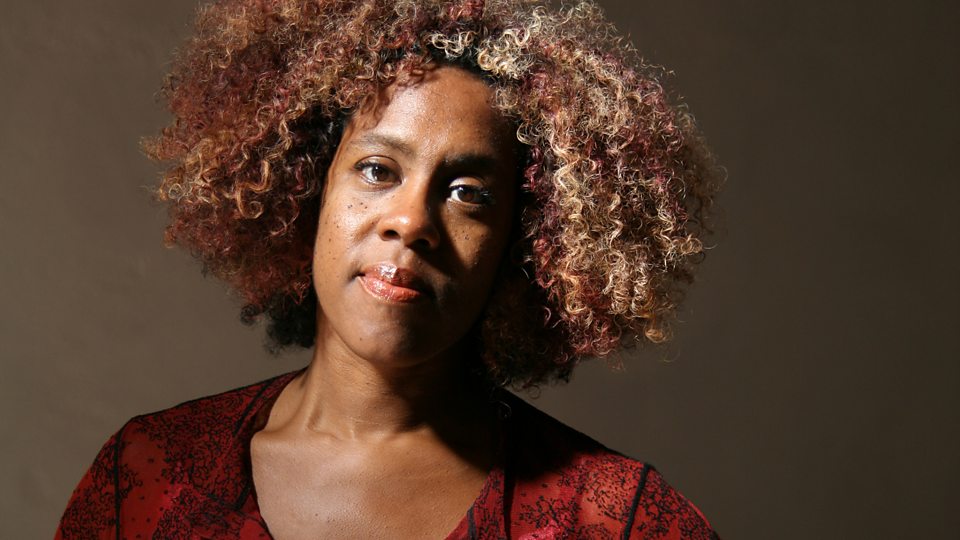





 The Cross-Eyed Pianist