6c67ebf49b
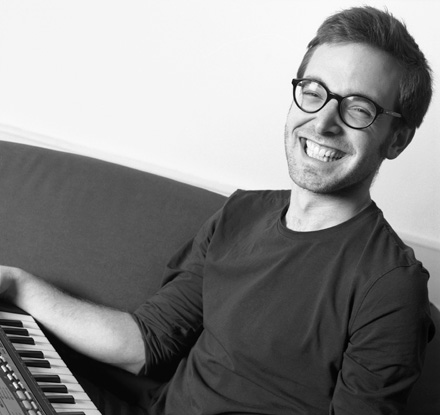
(photo Susie Knoll)

The Croatian pianist Dejan Lazić first came to my attention, perhaps for the wrong reasons, when I read about his 2014 fracas with The Washington Post over the “right to be forgotten” in Google searches. He asked for a review from 2010, which he felt was unfair, to be removed. The incident sparked a lively debate across the networks about whether artists should respond to negative reviews or make such requests, and whether critics and reviewers need to be more careful about what they say. To me, it was a rather neat example of “there’s no such thing as bad publicity”: I read about Lazić, my curiosity was piqued and I wanted to hear him live.

I missed his Queen Elizabeth Hall concert in winter 2014 so I was pleased to see him on the roster of the Wigmore Hall’s lunchtime concerts. And how glad I am that I decided to go to the concert, for he presented an imaginative programme of music: two greats of German music – Haydn and Schumann – were juxtaposed with dances by Shostakovich and Lazić himself, all of which revealed his strengths.

Anyone who makes me smile in Haydn gets my applause……

Read my full review

I believe that our personal musical tastes should not influence the way we teach, and that we should try not to impose our preferences or prejudices on our students. Our role as teachers should be encourage students to explore as wide a range of music as possible – whether it is purely ‘classical’ music (in fact, a very broad term which encompasses music from the Renaissance to the present day) or a mixture of classical music, jazz, world or pop. This is not to say that I do not enthuse to my students about the kind of music which interests and excites me, and the “what is your favourite composer/piece of music?” conversation takes place regularly in my piano studio. But I wouldn’t dream of dismissing a piece of music a student had, for example, discovered and learnt by themselves just because I didn’t like it or thought it was “bad” music.

As a teacher, it is very interesting to find out what kind of repertoire makes students tick and what music appeals to specific students. For example, I find that boys tend to prefer lively, rhythmic, jazzy music. One of my teenage boy students has developed a real fondness for the music of Kabalevsky, while another, the older brother of this student in fact, is showing remarkable sensitivity towards a piece by Chopin which he is learning for Grade 6 (and I admit I was surprised when he selected this piece to learn). Other students like music with clear melodic lines and opportunities for expressive playing. I encourage my students to develop their musical taste by exploring a variety of repertoire and suggesting music for them to listen to as well (easy to do since many of them like to use YouTube or music streaming services), but I also urge them to learn music which is outside their normal comfort zone to enable them to explore different technical and musical challenges. Of course, if they really dislike a piece there is no point in continuing with it as there is no pleasure or usefulness to be gained from playing music you don’t enjoy.

Interpretation is a far more complex area, and more advanced/mature students and adults often have firm ideas about interpretation, either based on their own musical experience or their listening, knowledge and appreciation of music. Sadly, I have come across teachers who try to impose their own interpretation on students, sometimes to the extant that they seem to want the student to sound like they do: in such instances, this, to me, seems to be nothing more than an exercise in self-aggrandisement. It serves no real pedagogical purpose, nor does it allow the student to develop their own musical voice. (As the pianist Stephen Hough said in one of his blog posts, he would be worried if he listened in on a class of students at a conservatoire to discover that they all sounded identical to their teacher.)

The majority of my students are now intermediate and early advanced level players who are beginning to be able to make their own judgements about interpretation in their pieces based on their ongoing musical development and knowledge. In this case, I feel my role is to guide them into making decisions about interpretation which are stylistically in keeping with the genre and period of the music, faithful to the score, and tasteful. However, I would not dismiss a more romantic reading of the music of Bach or Scarlatti, for example, provided the interpretation offered is both consistent and convincing.

I am fortunate to be working with a teacher who does not impose his interpretation on me, but who sets the bar for me to explain and justify every interpretative decision I make in the music. Nearly all of this is based on detailed examination of the score, rather than preconceived ideas about how the music should sound or any attempt to imitate great/famous performers (which could lead to an insincere and inauthentic version). He allows the music making to be my business and encourages me to take ownership of the music and make it mine (more on taking ownership here). Thus, I feel I am offering a reading which is both personal and also faithful to the score.

Fundamentally, our teaching should be about imparting our musical values rather than our preferences, and encouraging our students to be curious, open-minded and non-judgmental. In addition to offering them a wide variety of repertoire, we should also be encouraging “listening around” the music they are studying to familiarise themselves with, for example, the very distinct soundworld of Chopin, as well as what I call “lateral listening” – a case of “if you like this, why not try?”, which I use a lot with students who enjoy the music of Ludovico Einaudi (I encourage them to sample the minimalist music of Philip Glass and Michael Nyman). Thus students can develop their own individual tastes and opinions about the music they are playing and enjoying.


Impostor syndrome (also spelled imposter syndrome, also known as impostor phenomenon or fraud syndrome) is a term coined in the 1970s by psychologists and researchers to informally describe people who are unable to internalize their accomplishments. Despite external evidence of their competence, those exhibiting the syndrome remain convinced that they are frauds and do not deserve the success they have achieved. Proof of success is dismissed as luck, timing, or as a result of deceiving others into thinking they are more intelligent and competent than they believe themselves to be. Notably, impostor syndrome is particularly common among high-achieving women, although some studies indicate that both genders may be affected in equal numbers. (Source: Wikipedia)

There’s a wealth of knowledge out there to be explored, absorbed, considered and acted upon. Sometimes it can fee like a whole lifetime would never be enough to take in a tiny fraction of the information which is flung at us every second of the day.

As our circle of knowledge expands, so does the circumference of darkness surrounding it.
Albert Einstein

I have days when I think I don’t know anything, or when I feel that I will soon be “found out”, revealed as a fraud and impostor, that I am not really a pianist or piano teacher, just someone acting out the role.

Such feelings of inadequacy are very common – and understandable,  given the way we are bombarded with messages about how we should develop, be smarter, be more attractive, have more and better sex, be slimmer, eat the right food, take more exercise, be confident, have self-belief. Is it any wonder that sometimes we feel totally overwhelmed by information? Sifting through all these conflicting messages to find the ones which are relevant to us can be a Sisyphean task. Then there are peers, friends and colleagues who urge us to do this, see that, try this, think that…. Some days I just want to withdraw and become a “piano hermit”, to shut out all the noise.

At every turn, there is some kind of resource which could be useful or beneficial to our development. These may be books and journals, websites or online groups and forums where people can meet to exchange ideas. I have enjoyed lively exchanges in such online groups (notably on Facebook) and I enjoy the fact that people are willing to share information and knowledge via this medium. But I have also found such groups detrimental: observing what others are doing, or comparing oneself to others is not the best way to assess one’s abilities, progress and development, especially if these groups become a vehicle for some else to parade students’ exam successes, or seek endorsement from group members for their own achievements. Such parading of egos or mutual appreciation can make others feel inadequate.

A healthy way to move on from such feelings of inadequacy is to accept that one is at the tip of the iceberg in terms of knowledge. This should not be regarded as something negative, but rather the spur to encourage one to be inquisitive, questioning and always open to new ideas. Learning requires and encourages humility: one should be willing to accept there are different ways of doing things, or alternative ways to develop the same skills. Many teachers, myself included, engage in continuing professional development (CPD) as a more formal way of enhancing and broadening our knowledge. This may involve attending courses or workshops, being mentored by another teacher, reading, studying and interacting with others in the profession. I don’t believe we should ever stand still as teachers, or rest on the laurels of students’ achievements such as exam successes, for this attitude can breed complacency. By all means look at what others are doing, consider suggestions and ideas which are put to us and choose to embrace or reject them as we see fit.

Fundamentally, I know I am good at what I do and that I deserve to be respected (and paid appropriately) for my knowledge and skill. I do not need to measure my own success against other people’s achievements because I have confidence and self-belief in my own abilities. My students return each week for lessons which they seem to enjoy. I see them progressing and I show them ways to measure their own success (and I don’t mean through exam results, which can be useful benchmarks, nothing more). Over the decade in which I have been teaching, I’ve realised that confidently carving one’s own course leads to a greater sense of personal fulfilment and job satisfaction. In recent years, I’ve made significant changes to my teaching studio, including reducing the number of students I teach (to allow me more time to pursue my own musical studies), being selective about which students I take (I do not teach beginners or very young children, for example), and setting my fees at a rate which I feel reflects my experience. Consequently, I enjoy my teaching a great deal more and I am sure that this benefits my students too. I also find I am treated with more respect by clients, prospective clients and colleagues. I do not believe we should shy away from this kind of “self care” to enable us to do our job well, with passion and commitment.

Here’s a comment on this subject from another teaching colleague:

Despite the fact that I’ve undertaken much professional development over the past few years, I feel more aware of my shortcomings as a teacher than ever before.  Rationally, I know that not to be true – my students enjoy their lessons, play well and do well in exams.  But the more I learn the more I really do realise how much I still have to learn and how vast the area of knowledge is in relation to piano teaching.  I find the internet a really double-edged world in all of this.  On one hand it is a fantastic source of support and inspiration and I have met many wonderful colleagues online and learnt loads from them.  On the other hand, scrolling through various piano teaching forums can lead me to a pit of despair as it seems as if everyone else is more experienced, knowledgeable and creative than me!   So I find it’s important to keep a balanced view, be specific and targetted about my use of online forums and continue to remind myself that I’m doing my best, learning all the time and – most importantly – my students are happy and keep coming back!!

****
As a practicing musician, feelings of inadequacy always lurk at the fringes of my consciousness – and my many conversations and interviews with other musicians confirm that I am absolutely not alone in feeling this. Despite the physical proof of my abilities (two performance diplomas in quick succession and positive endorsements from pianist colleagues and mentors), I often feel a fraud. In fact, I think this feeling is helpful, for it enables me to remain humble, an important attribute for a musician, in my opinion.
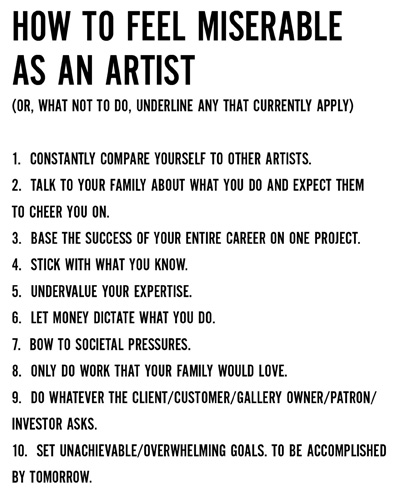
Awhile ago, I stumbled across this list, which seemed to me to encapsulate many of the things that can create and fuel feelings of inadequacy:
miserable
Turn each of these points around, and one has a manifesto by which to work and develop as a musician which is both realistic and achievable, and ensures the necessary self-compassion to allow us to flourish within our own comfort zone.
Of course whenever we open a new score, the sense of how little one knows, at that point (regardless of one’s knowledge of the composer or genre of the piece), is palpable, and when one truly cares about something, one’s standards are set very high.
The pianist Adele Marcus once said “The older I get the more I disdain the intellect.” As a colleague of mine stated, “I think that means that we become closer to the music instinctively, rather than by how we think it should sound based on knowledge of the music, the composers and history” (JB). Such a state of being can be hard won, and may take many years of study, hard graft and living with the music. Humility before the music and the composer is important; also a sense of continual striving, that one is on a journey. Sure, read the books, do the research, understand the social and historical context in which the music was created, but there must also come a point where we step away from the intellectual and the academic and liberate our personal creative impulse to “make music”
Further reading:

francoise

Who or what inspired you to take up the piano and pursue a career in music?

As a kid, my parents asked if I wanted to play an instrument. I loved the saxophone but teachers said I was too small for it so I turned to the piano instead. I was six and I loved it. At the age of 13, I eventually took saxophone lessons and have enjoyed playing it since but piano always stayed my main instrument. It was definitely chamber music experiences that made me decide to become a professional. The idea of sharing the music not only with an audience but also with other performers on stage was the most beautiful thing I could imagine.

Who or what were the most important influences on your musical life and career?

I’ll never forget as a kid listening to Murray Perahia playing Schubert on Sunday afternoons with my mother while eating chocolate, I realised then the power and beauty of classical music. I can easily say that the most important influences were the people I played with and still now every new musician I meet and perform with has an influence on me. I love discovering and sharing new ideas about music that will eventually change my own playing. From my very early chamber music experiences to my two groups formed as a student (Mercury Quartet and FranÇoise-Green piano duo) up until my current ensembles (NEC, Contrechamps, Nikel), every single person in those groups have challenged my playing and made me a better musician. And of course my teachers Paul Coker and Yonty Solomon that shared with me their knowledge and their passion for music. I also reserve a special place for the hungarian teacher and pianist Denes Varjon who opened a completely new world of understanding music for me.

What have been the greatest challenges of your career so far?

Hard to say, I’d like to think that every project is a challenge, and the ones that aren’t, I try to forget about them quite quickly. I love challenges so they become a pleasure. My most intense and draining experience may have been to embark on the complete performance of Beethoven’s symphonies for piano four hands with Robin Green, 5 concerts in 3 weeks, never have I worked that hard in my life. I also played recently ‘Opus Contra Naturam’ by Brian Ferneyhough, if you don’t know his music, people label him as a ‘new complexity’ composer, just have a look at his scores and you’ll understand the word challenge. Six months of six hours a day on one 15min long piece. It was so worth it though.

Which performance/recordings are you most proud of? 

Probably the Ferneyhough mentioned above, it was such a huge amount of work that I really became one with the piece. But I tend to love performances as they happen and the moment it is finished, I simply cannot wait for the next one, I don’t really like to think that one was better than the other, I simply hope that the next one will be even better.

Haven’t recorded many CDs but very proud of Mercury Acoustic, a free improvisation album with the Mercury Quartet, there was something very special in the studio and the quality of recording is unique. I also believe that the Bach, Schubert and Kurtag CD with the Françoise-Green piano duo (release planned for 2016) could be very special. We recorded music that was so dear to us and I hope people will hear this on the album.

Which particular works do you think you perform best?

Since a teenager, I have always loved performing new music, I feel like I understand the language of contemporary music and I love learning new pieces, especially if written for me or my groups. There are certain pieces that I have performed so many times like Messiaen’s Quartet for the End of Time or Schubert’s Fantasie in f minor that I know I can perform under any circumstances.

How do you make your repertoire choices from season to season?

I play with many new music groups that have an artistic director and decide the repertoire for me, like an orchestra, but the difference with an orchestra is that the repertoire is always new. It is so exciting, sometimes, I may not like certain choices as much as others but it’s the risk to take when we want to discover new things, and I definitely stick to that choice. If I discover a piece or a composer and fall in love with it, then I simply do everything in my power to programme it, and if there is nothing written for piano solo or my ensembles, then I commission.

Do you have a favourite concert venue to perform in and why?

Hard to say, it depends on the repertoire and the context. An audience can easily make a venue good or bad, and of course a great piano will change my perception of it. Yet I remember amazing gigs on bad piano just because the atmosphere and the audience was incredible.

Favourite pieces to perform? Listen to?

I have always had a special place for Luigi Nono’s …sofferte onde serene…, it is a piece for piano and electronics and the electronic part is made of recordings Nono did with Maurizio Pollini. There is so much poetry in this piece and you can really feel the connection and friendship between the composer and the pianist. When you perform it, it may look as if you are alone on stage but it is really a duo with the sound technician. Even though the electronic part is completely fixed, every performance feels so different. A masterwork.

Who are your favourite musicians?

All the people I have mentioned in the previous questions, all the people that forced me to think about music and be a better musician. Some are performers, some composers. I always have huge admiration for people that really brought a brand new way of understanding music, Glenn Gould is one of them. Not only his playing but his thinking and his entire body of work.

Recently I have found those kind of artists more in the pop/electronica world. There are so many geniuses that are breaking new barriers and changing the pre-conceptions of music, that’s what I love.

And of course also all the great story tellers, we should all learn from singers that could take the stage and tell you the most incredible stories. Belgium singer Jacques Brel for example is a real hero.

What is your most memorable concert experience?

As much as I love concerts and sharing music with audiences, I think my most memorable moments are often in rehearsals, when there isn’t so much pressure and you feel very free. I will never forget being in tears at the end of a play through of Beethoven 9th symphony with the piano duo, I had just realised for the first time how incredible this music was and simply couldn’t stop crying.

There are always wonderful moments shared with composers when a brand new piece finally comes to life for the first time, when you realise you’ve just created something together, those are my favourite moments.

What do you consider to be the most important ideas and concepts to impart to aspiring musicians?

Discover new things, always question yourself and learn from everyone around you. And never forget to tell stories. As a classical music interpreter, it can sometimes be a strange feeling to perform someone else’s music, so you have to feel like it’s your own story that you share with the audience.

Where would you like to be in 10 years’ time?

Somewhere new

What is your idea of perfect happiness?

Perfect happiness would be boring, happiness is about the journey towards something better. If it is perfect, where do you go?

What do you enjoy doing most?

Discovering new places

What is your present state of mind?

Tired – it was actually tough to answer all those questions…

Antoine Françoise is one half of the Françoise-Green Duo, who begin a residency at St John’s Smith Square, London on 21st January with the first in a series of concerts entitled The Viennese Salon.

After studying in Switzerland and United Kingdom with professors Paul Coker, Yonty Solomon, Andrew Ball, Ashley Wass (piano), Laurent Estoppey (saxophone) and Michael Oliva (composition), Antoine Françoise performs nowadays in Europe and further as a soloist, chamber musician, with ensembles and orchestras. At the term of his studies at the Royal College of Music in London, he was awarded the prestigious Tagore Gold Medal, for his outstanding talent and dedication to music. Antoine now is a professor of piano (contemporary specialism) at the RCM.

Fascinated by the chamber music of the 20th and 21st centuries, as well as all new expressions of modern music, Antoine is founding member of the Mercury Quartet and the Francoise-Green piano duo, 2011 winners of Concours Nicati (Switzerland). He is also principal pianist of Nouvel Ensemble Contemporain (NEC, Switzerland) and London Contemporary Orchestra. He also played with the London Sinfonietta, Ensemble Contrechamps, Philharmonia Orchestra and the London Philarmonic Orchestra. He played with conductors such as Diego Masson, Pierre-Alain Monot, Nicholas Collon or Vladimir Jurowski.

Antoine worked closely with composers such as Julian Anderson, Rebecca Saunders, Hans-Peter Kyburz (giving the uk premiere of his concerto) and Eric Gaudibert (who dedicated his last concerto GONG to him).

In the classical field, he has performed widely in Switzerland, France and the United Kingdom, including concerti by Grieg, Hindemith or Poulenc and is hugely in demand as an orchestral pianist and chamber musician.

www.francoise-green.com

Meet the Artist…..Robin Green