This week I hosted and spoke at ‘Writing the Piano’, an event I conceived out of the Music into Words project which I launched with some blogging colleagues in February 2016. The purpose of the event was to explore writing about the piano, piano playing, pianism…..with presentations by Graham Fitch, Andrew Eales and myself and a Q&A session with the audience. Because the focus of the event was the piano, I invited pianist Elspeth Wyllie to give a short recital to open and close the event, which turned the evening into something really special.
The presentations were varied and interesting, with each of us giving an overview of how and why we decided to start writing a blog. As Andrew said, “if you are posting or commenting on Facebook or Twitter, you are writing”, and he highlighted the fact that the internet and social media has made writing possible for everyone. Deciding to create a blog is just an extension of this activity.
Videos/transcriptions of Andrew’s and Graham’s presentations will follow shortly.
A lively Q&A/discussion session followed our presentations, with questions ranging from “how long do you spend at the computer as a blogger and does this affect your piano playing?”, to how to get new music heard and programmed in concerts, learning from listening at concerts (something I will cover in a future blog post), reviews and how to write about a negative concert experience in a sympathetic way, and how reviews should be seen as a way of encouraging people to come to concerts.
I would like to thank Elspeth Wyllie for performing a beautiful selection of music by Nicholas Sackman, Gabriel Fauré and Peter Maxwell Davies, and my colleagues/friends Graham Fitch and Andrew Eales for their insightful contributions, to the audience who helped make the event so enjoyable and stimulating, and to Glenn and Daniel at the 1901 Arts Club for making everyone feel welcome and, as always, creating a convivial, relaxed atmosphere. The club, whose ethos and ambiance is very much in keeping with that of the 19th-century European cultural salon, seems just about the perfect place to host such an event: if you have suggestions for a future event along the same lines, do get in touch.
Graham Fitch’s blog Practising the Piano (from here you can access Graham’s eBook and new Online Academy)
Andrew Eales’ blog Piano Dao
Elspeth Wyllie, pianist
1901 Arts Club
Transcription of my presentation at Writing the Piano:
People have been writing about the piano for almost as long as the instrument has existed, from early treatises on technique to manuals of exercises, student guides, pianist autobiographies, pianists writing about other pianists or the great works in the piano literature, and novels about pianists and piano playing. It’s a mark of our ongoing fascination with the complexity, beauty and appeal of the instrument that so much has been written – and continues to be written – about the piano. Today the piano seems to be more popular than ever, as evidenced by the wealth of study books, technique manuals, glossy magazines for pianists and piano lovers, books by and about pianists, and of course blogs on the piano, piano playing, piano teaching – and myriad other subjects more or less related to pianists, the piano and its literature. We will be exploring some of this tonight.
I met the three people here with me tonight – Elspeth, Graham and Andrew – via the Internet. Elspeth and I met through Twitter, I met Andrew via Facebook, and Graham via his Practising the Piano blog which I discovered in 2010 shortly after I starting my own blog. Without the internet there would be no blogs and no community of bloggers and readers. The internet is a wonderful resource for pianists and musicians in general and can be a force for good in forging relationships and creating communities and forums where like-minded people can exchange ideas.
What is a blog?
I am sure most of you understand what is meant by the word blog. The word itself is a shortened form of “weblog”, and a blog is a website containing a writer’s or group of writers’ own experiences, observations, opinions, etc., and often having images and links to other websites. It differs from a website in that the content is regularly updated, whereas a website is often static, and it is usually interactive so that readers can leave comments and engage in discussion with the author and other readers. In effect, a blog is more like a magazine or journal with regularly changing content.
Why a blog?
When I first started The Cross-Eyed Pianist, I did so without any expectation of gaining readers or followers. My main motivation for writing CEP a means of recording my own thoughts about the music I was playing, studying and hearing at concerts. In effect, it initially began as a kind of informal practise diary: rather than hunt around my piano room for a notebook each time, I could record ideas and thoughts about the music in one place – a blog. I had returned to the piano after a break of nearly 15 years, and I was rediscovering repertoire I had learned and enjoyed as a teenager, as well as exploring new repertoire.
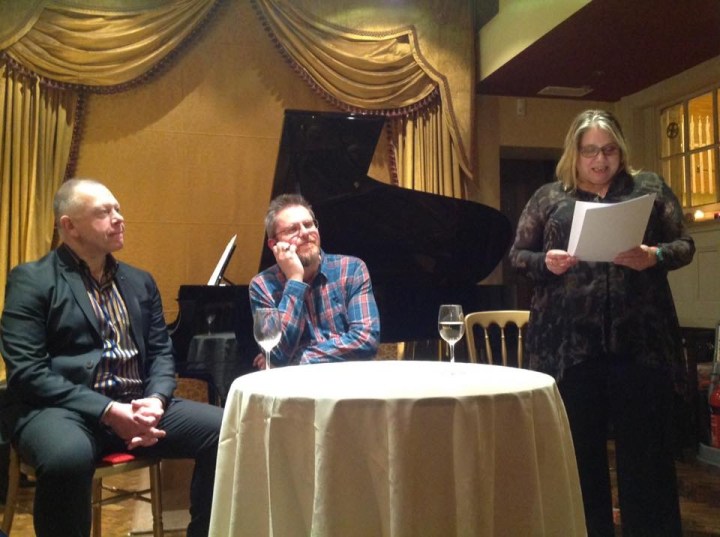
L to R: Graham Fitch, Andrew Eales & Frances Wilson (The Cross-Eyed Pianist)
Since my teens, I’ve been interested in writing about music, about the process of learning and playing certain repertoire, what the music of Bach, Schubert, Chopin, Debussy or Debussy feels like under the hand and the emotional responses it provokes in us, and I have long been fascinated by the pianist’s special connection to the instrument and the feel of certain chords, passages or entire pieces under the fingers and hand. Some years before I started the blog, I interviewed a concert pianist and asked him what it “felt like” to play Chopin’s B-flat minor Piano Sonata. He replied that it was “horrible”, that one felt “utterly exposed”, “like having one’s entrails picked over in public”. This is partly because in the final movement there is literally nowhere to hide: it’s a whirlwind of unison notes of unvarying and unremitting tempo and dynamics, an elusive, enigmatic stream of musical consciousness. The words he used to describe this music are those more usually applied to the human body, particularly the body in pain: visceral, gut-wrenching (painful, stomach-turning, extremely unpleasant or upsetting) – but they perfectly describe the music: the final movement is painful – its briefness, the swirling motif that turns back on itself and never seems to fully free itself of its tethers, the unsettling notation
It is things like this which fascinate me as a pianist and a writer, and the blog became a way of exploring them more deeply.
So I wrote about these things, and gradually people began to take notice of my blog, read and comment on my posts, and even sign up to follow the site. It took a few years to become established: it now enjoys an average readership of 20,000 visitors per month.
Through the blog I have made connections, made new friends in the piano and music worlds, become a concert reviewer, and I now feel part of an important and vibrant community whereas previously I felt rather alone with just the piano and dead composers for company……
And this brings me to what is, for me – and I suspect many other pianists – one of the primary reasons why I think blogs such as Graham’s, Andrew’s, and mine, and many many others, together with the spin-offs they create (Facebook groups, piano meetups, courses etc), are so important for us as pianists:
Playing the piano can be a very solitary activity. In fact, I enjoy the loneliness but it is also important to meet other pianists, share ideas, go to concerts and so on. A blog can provide a bridge from the lonely piano room to a community of other pianists and piano teachers – online and in real life.
Writing about the piano is not easy – how to explain the activity, both physical and emotional, of being a pianist, the complexities of piano technique or particular genres or styles of piano music in a way that is engaging, comprehensive and intelligent takes a certain skill. In my articles about piano playing and piano music, I write entirely from my own perspective and experience. These are my own observations and I make no claims to be right, nor an authority.
It seems that the piano can exert an almost mystical attraction over us, an inexplicable magic which draws us back to the instrument time and time again. I have tried to explore and explain this in some of my writing – what are the psychological and emotional factors which motivate us to spend hours and hours conjuring sounds out of that big black box of wood and wires. What motivates some of us to perform, why people go to hear live concerts and the special fascination with the pianist alone on the stage…..
I’m an avid concert goer, and as a reviewer, I get to combine two activities which I love – going to concerts and writing about music! In my reviews of piano concerts, I try to approach the subject from a non-specialist angle, to recreate in words the sense of being there at the concert with me. In order to do this, I write less about the performer’s technique or artistry per se, and choose instead to use descriptive words or metaphors which are not necessarily directly related to the piano or music. It’s not easy to capture in words something so elusive, and personal, as music, and the piano offers so many sonic possibilities that a single word such as “staccato” or “legato” is simply not sufficient to describe that sound
The piano is an instrument which can whisper, stutter, jangle, chime, pulse, throb, hum, spiral, clatter…… phrases and melodies sing, spool, meander, scurry, tumble, question, breathe…… chords declaim, shout, growl and float.
And here, just a few examples from actual reviews which describe both the sounds the performer makes and the manner in which he or she makes them:
“scurrying and spidery, metallic, stamping, tinkling, growling, manic.” (from my own review of Maurizio Pollini in the Boulez 2nd Sonata)
“Each and every note placed with thought and imagination”
“Tense, heavy-handedness”
“Trudging through the music”
“Aristocratic subtlety”
“Mumbled into the piano with blurry pedaling”
Many of the words used to describe the piano are drawn from other walks of life – art or nature, for example – to create metaphors for the experience of hearing and playing the piano.
And sometimes it’s almost impossible to describe what one has heard: words like “Intense, profound, breathtaking, spellbinding” seem inadequate in the face of truly exceptional piano playing.
The blog is now a huge part of my musical life. I love being part of an online community of like-minded people, and I relish the exchange of ideas that comes from people commenting on my posts. My writing, concert-going, teaching, and playing all feed into my own musical landscape, creating a wonderful continuous circle of stimulation and inspiration.
And the name? Well, surely that is obvious? I am a pianist who also happens to be cross-eyed!
For more on reviewing piano concerts, do listen to this podcast which I made for Bachtrack.com a couple of years ago

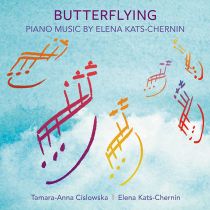 Andrew Eales of Pianodao nominates ‘Butterflying’ by Elena Kats-Chernin
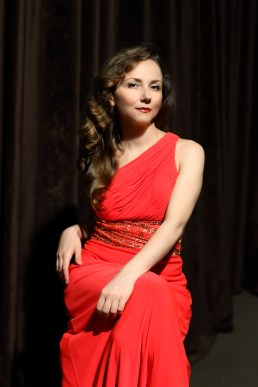 Who or what inspired you to take up the piano, and pursue a career in music?
 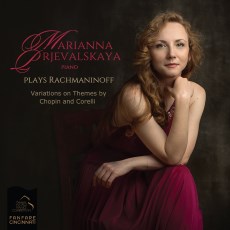 Marianna Prjevalskaya’s all-Rachmaninoff CD is available now. The recording features two works for solo piano: Variations on a Theme of Chopin, Op.22, and Variations on a Theme of Corelli, Op.42. (Fanfare Cincinnati FC-008)



 The Cross-Eyed Pianist