DSC_2926

“Practise makes perfect” – that oft-quoted phrase beloved of instrumental teachers the world over…. It’s a neat little mantra, but one that can have serious and potentially long-lasting negative effects if taken too literally.

Musicians have to practise. Repetitive, committed and quality practise trains the procedural memory (what musicians and sportspeople call “muscle memory”) and leads to a deeper knowledge and understanding of the motor and aural components of the music. Practising in this way leads to mastery and enables us to go deeper into our music so that we become intimate with its myriad details, large and small. Meanwhile, setting ourselves high standards is fundamental to our improvement and continued growth as musicians.

But perfectionism is a human construct, an ideal as opposed to a quantifiable reality, and as such it is an impossibility. No matter how hard you practise the fine motor skills involved in playing a musical instrument there is still no guarantee that you will never make a mistake. Go to a concert by the greatest virtuosos in the world and you will hear errors, if you listen carefully. As human beings we are all fallible, and despite our best efforts, we are subject to things outside our control, no matter how long we spend in the practise room.

Unfortunately, the desire for perfection surrounds us in modern society, and the need to achieve perfectionism is inculcated in us from a very young age. “Getting it right” is drilled into children from the moment they enter the formal education system, where they are continually assessed and tested, where correct answers are rewarded with stickers and other symbols of approval and mistakes are regarded as “wrong”.

As musicians, if we carry the unrealistic ideal of perfectionism into our practise rooms we can easily grow frustrated with our playing if it is not note-perfect. This can lead to perpetual feelings of dissatisfaction, resentment and anxiety about practising and performing. It can put undue pressure on the musician, leading to issues with self-esteem, performance anxiety, and even chronic injury, such as RSI and tendonitis. And the striving for this unrealistic goal can destroy our love of the music we play and rob us of joy, spontaneity, expression, communication and freedom in our music making. In short, it can lead us to forget why we make music.
Perfection is not very communicative

Yo-Yo Ma, cellist 
The “practise makes perfect“, and alongside it the “practise until you never make a mistake” mantras encourage unhealthy working habits which lead to mindless, mechanical practising, which in turn can cause us to overlook crucial details in the music. Perfectionism filters into the subconscious and creates a pervasive, hard-to-break personality style, with an unhealthily negative outlook. It prevents us from engaging in challenging experiences and reduces playfulness, creativity, innovation and the assimilation of knowledge – all crucial activities for a musician. If you’re always focused on your own “perfect” performance, you can’t focus on learning a task. Because by making mistakes we learn.

A mistake can and should lead us to evaluate what we are doing: a misplaced chord or run of notes may indicate an awkward or incorrect fingering scheme – something which can be easily rectified. All errors and slips should be seen as opportunities for self-analysis and critique, resulting in self-correction, adjustment, improvement and progress. Repetitive practising should be more sensibly reassigned the mantra “practise makes permanent” – and it is the permanence, an intimate in-depth knowledge of the music, that comes from intelligent practising which ensures that in performance we won’t be derailed by slips or errors, and that we can continue to perform “in the moment” with creativity, freedom and vibrant expression.

People frequently – and wrongly – equate perfection with excellence. While perfectionism is negative and damaging, excellence, on the other hand, is realistic, achievable and positive. Excellence involves enjoying what you are doing, feeling good about what you’ve learned and achieved, it develops confidence and responsiveness and offers continued inspiration. And by striving for excellence we can stay connected with our artistic muse, our desire to make music, and the overall meaning of that music.
Launched in August 2015, IDAGIO is a music streaming platform where musicians can share their recordings and connect with a growing global classical community.

I’ve recently joined the IDAGIO team as a creator/curator of playlists, compiled from their archive of both new and vintage recordings. My first playlist for IDAGIO explores the ‘Nocturne’ – music evocative of the evening and night-time, generally calm, mellifluous, expressive and rather languid in character, perfect for evening or late-night listening.

Listen to the playlist

Read more about IDAGIO here


listen

There are many benefits in listening to the repertoire you are working on, on disc and in concert, as well as “listening around” the music – works from the same period by the same composer, and works by his/her contemporaries. Such listening gives us a clearer sense of the composer’s individual soundworld and an understanding of how aspects such as orchestral writing or string quartet textures are presented in piano music, for example. You are unlikely to pick up any nuggets of technique in the concert hall – you’re often too far away from the stage to see details – but listening attentively is helpful. Keep ears and mind alert to details such as articulation, phrasing and breathing space, dynamic shading and nuance, wit and humour, giving rests their full value (or slightly more) to create drama, tempo, and a sense of the overall architecture and narrative of the piece. We should never seek to imitate what we hear, but there is much to be learned from this kind of focused listening and I regularly come away from concerts of music I am working on with new ideas and insights.

Conversely, hearing a performance which I may dislike is never a waste of time. When I heard Andras Schiff perform Schubert’s penultimate piano sonata (in A, D959), a work with which I have spent a long time in recent years, and continue to work on, I found myself balking at certain things he did to the music – not that anything was “wrong”, it was simply not to my taste. But one thing I took away from that performance was his pedantic treatment of rests (Schubert uses rests to create drama, rhythmic drive and moments of suspension or repose) and this has really informed my practising.

In broader terms, hearing a group of pieces in performance is instructive in demonstrating how a good (or bad!) programme is put together. At one time, performers were concerned with things like key relationships between pieces, but now a programme that “works” tends to be one which contains a variety of contrasting moods, tempi and characters which help to create flow from the start of the concert to the end, or which focuses on a particular theme. Audiences – and performers – enjoy different levels of energy within a programme, while a programme with too many longeurs of tempo and mood can seem overly long or dull.

Most of us are limited by our own imagination, experience and knowledge and great performances and interpretations can broaden our horizons, inspire us and inform our own approach to music. But listening at concerts, and particularly to recordings and YouTube clips does have its pitfalls too. Recorded performances capture a moment in time and while they can certainly offer ideas and inspiration, they can also become embedded in our memory and may influence our sense of a piece or obscure our own original thoughts about the music. This may lead us to imitate a magical moment that another performer has found in a note or a phrase – a moment over which that particular performer has taken ownership which in someone else’s hands may sound contrived or unconvincing. It is important that we form our own special relationship with our music, and in order to do that we must investment time and effort in our study, while remaining open-minded and receptive to new ideas or approaches.

The other problem with recordings is that some performers may take liberties with the score to make certain passages or an entire piece more personal. This tends to happen in very well known repertoire, where an artist will put their own mark on the music to make it more distinctively their own, while not always remaining completely faithful to the score. Thus, some recordings may not truly represent what the composer intended, yet these recordings have become the benchmark or “correct” version.

So when we listen we should do so with an advisory note to self: that recordings and YouTube clips can be helpful, but we should never seek to imitate what we hear. It is the work we do ourselves on our music which is most important, going through the score to understand what makes it special, and listening around the music to gain a deeper understanding of the composer’s intentions so that our own interpretation is both personal and faithful.

Guest post by Mark Ainley

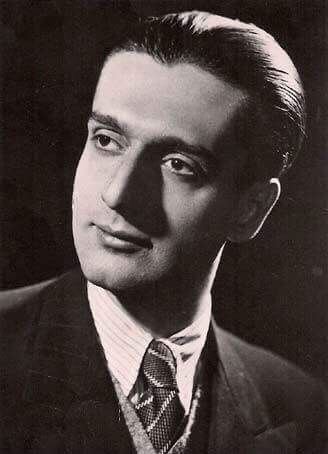
Today officially marks the 100th anniversary of Dinu Lipatti’s birth and the fascination with this pianist continues unabated, his name continuing to be held in the highest esteem amongst piano fans and professionals alike due the truly exquisite craftsmanship of pianism found in the few recordings that he made before his premature death in 1950. His traversal of Chopin’s Waltzes is regularly singled out as the reference recording, as are his readings of the same composer’s Barcarolle and Third Sonata, and his Bach First Partita and ‘Jesu, Joy of Man’s Desiring’ are among the most beloved Bach piano recordings ever made. It seems that each recorded performance by Lipatti is an example of pianistic mastery on every level – technically, emotionally, interpretatively, spiritually.

There are some who have wondered how much of Lipatti’s posthumous fame is the result of his tragic demise at the age of 33. Indeed, a good deal of mystique may be due to testimonials featuring religious terms: his recording producer Walter Legge said he had ‘the qualities of a saint’ and called him ‘a chosen instrument of God’ while Francis Poulenc apparently referred to him as ‘an artist of divine spirituality’. The story of his last recital in Besançon, France – where he was too weak to play the last Chopin Waltz he had programmed and played ‘Jesu, Joy of Man’s Desiring’ instead – reads like something out of a Hollywood melodrama.

(Photo credit: Michel Meusy)

However, Lipatti received abundant praise for his playing and musicianship well before Hodgkin’s Lymphoma took its grip. The grandfather of cellist Steven Isserlis was on the jury of the 1933 Vienna Competition (Lipatti famously did not win first prize, much to Alfred Cortot’s consternation) and came home from the first round raving about “a 16-year old pianist from Romania who was so outstanding that he was convinced that he would win and become a world-beater.” The great Alfred Cortot, with whom Lipatti trained for five years, declared him “a second Horowitz” and stated that there was nothing to teach him – “one could, in fact, only learn from you.” Lipatti’s standing as a world-class pianist was evident in his teens, more than a decade and a half before his death, and his fame continued growing with each year.


The only large-scale solo work that Lipatti set down at EMI’s Abbey Road Studios was the Chopin Third Sonata, which won the Charles Cros Academy’s Grand Prix du Disque in 1949. The magnificent performance features a beautiful robust sonority, elegant phrasing, patrician timing, and subtle nuancing that is utterly beguiling:

Lipatti’s most famous recordings were made in Geneva under rather remarkable circumstances. Bolstered by outrageously expensive cortisone injections (paid for by wealthy patrons like Münch, Menuhin, and Sacher), Lipatti was enjoying renewed vitality and so at his doctor’s suggestion Legge had a van of recording equipment sent to Geneva from the Prades festival. A Radio Geneve studio was procured and over the course of ten days in July 1950 Lipatti set down critically acclaimed readings of works by Bach, Mozart, and Chopin that have never been out of the catalogue. The Bach Partita No.1 is particularly transcendent, with Lipatti’s incredibly consistent articulation and voicing, transparent textures, rhythmic momentum, and stunningly clear projection of motifs:

As remarkable as these performances are, Lipatti’s earlier recordings reveal a pianist with far more fire and bravura. A 1947 reading of Chopin’s Waltz in A-Flat Op.34 No.1 is much more virile, bold, and daring than his well-known 1950 account, with sparkling tone, a grand bass sonority, and brilliant runs, as well as some fascinating ‘breaks’ between phrases:

The recording that gives the greatest glimpse of the fullness of Lipatti’s pianistic and interpretative abilities is his April 1948 account of Ravel’s Alborada del Gracioso. With rapid-fire repeated notes, taut rhythmic bite, breathtaking runs of extraordinary lightness, creative voicing and pedalling, and graduated glissandi (4:25-4:31) of staggering ferocity and dynamic control (how that last one fades into the faintest pianissimo!), this is a performance needs to be heard (multiple times) to be believed. It is worth keeping in mind that recordings made on 78rpm discs were unedited, with no tape splicing possible, so what you’re hearing is exactly what he played:

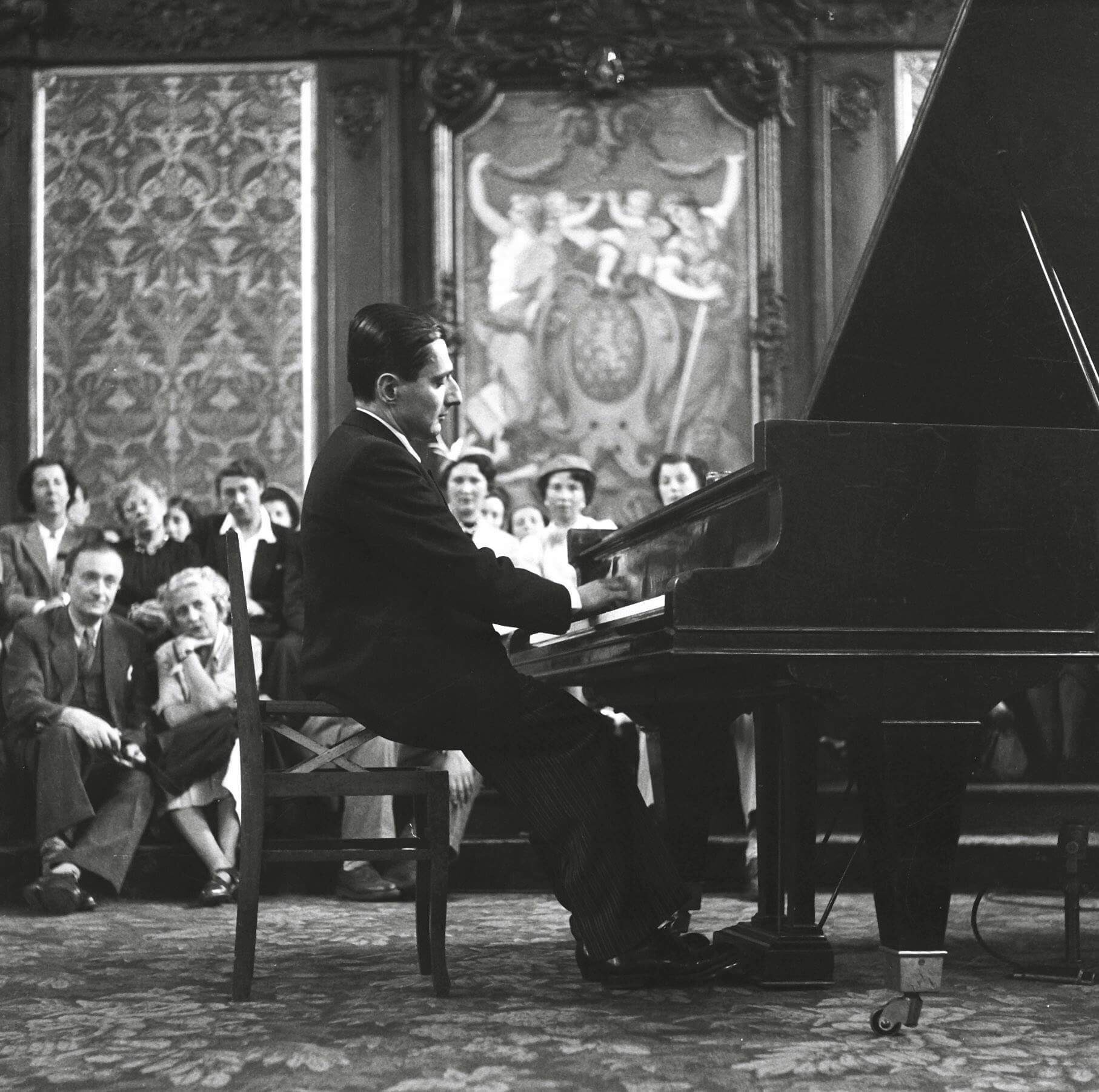
The pianist’s last public performance has become the stuff of legend and the recording of that recital is one of the glories of the gramophone. The emotion of the concert comes through in the recording, as well as in images by local photographer Michel Meusy – the transfixed look of intensity on the faces of the audience members reveals the magnetism of the event, and those who were present stated that it was clear that Lipatti did not have long to live (he died 11 weeks later). Most intoxicating to my ears is his mournful reading of Schubert’s G-Flat Impromptu, with a gorgeous singing line soaring over an undulating murmur in the accompaniment, with gloriously peaked phrasing with fluid legato:

A century after Dinu Lipati’s birth, his legacy continues to grow. There are now two websites devoted to his memory – dinulipatti.com and dinulipatti.org – and new publications are forthcoming, with a new edition of his biography being published in Romania alongside the first ever publication of a series of his letters (currently in Romanian but due to be translated). And new recordings by this supreme musician are coming to light: 15 minutes of previously unpublished material – private discs of Scarlatti and Brahms – was recently discovered and will be released in a multi-pianist compilation on the Marston Records label, and the search for more continues. In the meantime, we can continue to enjoy the stellar playing of this master musician, whose playing was, in the words of Herbert von Karajan, “no longer the sound of the piano but music in its purest form.”


Mark Ainley is an internationally recognized authority on the art of piano playing and historical recordings of great pianists. His clear insights provide important details about the mastery of the pianists of the past and present through his magazine articles, blog (The Piano Files) and social media pages, CD productions and liner notes, and lecture-demonstrations.

More about Mark Ainley here